Which NLP Tools Support Real-Time Analytics in 2026?
Businesses increasingly rely on real-time insights to improve customer experiences, automate workflows, detect issues faster, and make better decisions. As organizations process growing volumes of text, conversations, support tickets, emails, social media content, and operational data, Natural Language Processing (NLP) tools with real-time analytics capabilities have become essential. Understanding which NLP tools support real-time analytics can help decision-makers select solutions that align with their business objectives and operational requirements.
What Is Real-Time Analytics in NLP?
Real-time analytics in NLP refers to the ability to process, analyze, and extract insights from text or language data as it is generated. Instead of waiting for batch processing or scheduled reports, organizations receive immediate insights that support faster decision-making.Real-time NLP analytics typically includes:
Sentiment analysis of customer conversations
Intent detection in chat interactions
Live transcription and speech analytics
Entity extraction from incoming documents
Social media monitoring
Customer service intelligence
Fraud and risk detection
Real-time compliance monitoring
Organizations across industries use these capabilities to respond more quickly to customer needs, identify emerging trends, and optimize operational performance.
Leading NLP Tools That Support Real-Time Analytics
Several NLP platforms offer real-time processing and analytics capabilities. The right choice depends on business requirements, scalability needs, integration preferences, and deployment models.
Google Cloud Natural Language AI
Google Cloud provides NLP services capable of analyzing text streams in near real time. Businesses use it for sentiment analysis, content classification, entity recognition, and customer feedback monitoring.Key strengths include:
Scalable cloud infrastructure
Integration with Google Cloud ecosystem
Multilingual language processing
Streaming data support
Amazon Comprehend
Amazon Comprehend supports real-time text analysis through AWS infrastructure. Organizations can process customer communications, support tickets, social content, and operational documents with minimal latency.Common use cases include:
Customer sentiment monitoring
Topic modeling
Entity recognition
Compliance analysis
Business intelligence enhancement
Microsoft Azure AI Language
Azure AI Language enables organizations to deploy NLP capabilities within enterprise environments while supporting real-time processing requirements.Features often include:
Text analytics
Conversational AI support
Custom language models
Real-time customer service applications
Enterprise-grade security controls
IBM Watson Natural Language Understanding
IBM Watson offers advanced NLP capabilities for organizations requiring sophisticated text analytics. The platform supports real-time analysis across multiple business applications.Organizations commonly use Watson for:
Customer experience monitoring
Risk management
Regulatory compliance
Market intelligence
Document analysis
Open-Source NLP Frameworks
Organizations with specialized requirements often deploy open-source NLP technologies combined with streaming analytics platforms.Popular options include:
spaCy
Hugging Face Transformers
Apache OpenNLP
Stanford NLP
Flair
When integrated with technologies such as Apache Kafka, Apache Flink, or real-time data pipelines, these frameworks can deliver highly customized analytics environments.
Why Real-Time NLP Analytics Matters for Modern Businesses
Business environments have become increasingly data-driven. Waiting hours or days to analyze language data often results in missed opportunities and delayed responses.Real-time NLP analytics provides several advantages:
Faster Customer Response
Organizations can identify negative sentiment immediately and route issues to appropriate teams before customer dissatisfaction escalates.
Improved Operational Visibility
Companies gain continuous insight into customer interactions, employee communications, and business processes.
Better Decision-Making
Decision-makers can act on emerging trends as they develop rather than relying on historical reporting alone.
Enhanced Risk Detection
Real-time language monitoring can identify compliance concerns, security threats, or operational risks more quickly.
Competitive Advantage
Organizations that react faster to customer feedback and market changes often improve customer retention and operational efficiency.
Key Features to Evaluate When Selecting an NLP Tool
Not all NLP platforms provide the same level of real-time performance. Businesses should evaluate solutions based on practical implementation requirements.
Processing Speed
Low-latency processing is critical when immediate action is required. Evaluate how quickly the platform analyzes incoming text and generates insights.
Scalability
The platform should support increasing data volumes without sacrificing performance.
Language Coverage
Global organizations often require multilingual NLP capabilities across customer-facing and internal operations.
Integration Capabilities
Modern NLP solutions should integrate with CRM systems, customer support platforms, analytics tools, business intelligence software, and enterprise applications.
Customization Options
Industry-specific terminology, workflows, and business processes frequently require customized NLP models.
Security and Compliance
Organizations handling sensitive information should ensure the platform supports relevant security standards, privacy controls, and compliance requirements.
Real-Time NLP Analytics Use Cases Across Industries
Real-time NLP applications continue expanding across sectors as businesses seek more actionable insights from language data.
Customer Service
Live sentiment monitoring
Automated ticket categorization
Agent assistance recommendations
Conversation quality analysis
E-Commerce
Product review analysis
Customer feedback monitoring
Purchase intent detection
Personalized recommendations
Financial Services
Fraud detection
Regulatory compliance monitoring
Customer communication analysis
Risk intelligence
Healthcare
Clinical documentation processing
Patient feedback analysis
Medical record insights
Operational workflow optimization
Technology and SaaS
User feedback analytics
Support ticket prioritization
Product improvement insights
Customer retention analysis
How Viston AI Supports NLP-Driven Business Intelligence
As organizations increasingly seek practical Natural Language Processing solutions, the focus extends beyond simply selecting an NLP engine. Businesses need scalable systems that integrate language analytics into operational workflows, customer experiences, and decision-making processes.Viston AI specializes in Natural Language Processing solutions designed to help organizations transform language data into actionable business intelligence. By combining advanced NLP capabilities with automation, analytics, and integration expertise, businesses can derive greater value from customer interactions, documents, support conversations, and enterprise content.For organizations implementing NLP initiatives, important considerations include solution architecture, deployment strategy, scalability, integration requirements, model optimization, data governance, and ongoing performance management. A structured approach helps ensure NLP investments generate measurable business outcomes while supporting long-term growth objectives.As real-time analytics becomes increasingly important in 2026, businesses benefit from NLP solutions that align technical capabilities with operational and strategic goals.
Frequently Asked Questions
Which NLP platform is best for real-time analytics?
The best platform depends on business requirements. Google Cloud Natural Language AI, Amazon Comprehend, Microsoft Azure AI Language, and IBM Watson are widely used for real-time NLP applications.
Can open-source NLP tools support real-time analytics?
Yes. Frameworks such as spaCy and Hugging Face Transformers can support real-time analytics when integrated with streaming and processing infrastructure.
What industries benefit most from real-time NLP analytics?
Customer service, e-commerce, financial services, healthcare, technology, telecommunications, and media organizations often gain significant value from real-time language intelligence.
What are the main benefits of real-time NLP analytics?
Faster decision-making, improved customer experiences, enhanced risk detection, operational efficiency, and better business visibility are among the primary benefits.
How does real-time NLP differ from batch processing?
Real-time NLP analyzes incoming language data immediately, while batch processing analyzes accumulated data at scheduled intervals.
How can Viston AI help businesses implement NLP solutions?
Viston AI helps organizations develop and implement Natural Language Processing solutions that support analytics, automation, customer experience improvements, and business intelligence initiatives aligned with operational goals.
Conclusion
Choosing NLP tools that support real-time analytics is increasingly important for organizations seeking faster insights, stronger customer engagement, and more informed decision-making. Modern platforms such as Google Cloud Natural Language AI, Amazon Comprehend, Azure AI Language, IBM Watson, and advanced open-source frameworks provide powerful capabilities for analyzing language data as it is generated. For businesses evaluating Natural Language Processing solutions, success depends not only on technology selection but also on implementation strategy, scalability, integration, and long-term business alignment. Organizations that invest in effective real-time NLP capabilities are better positioned to respond quickly, operate efficiently, and gain meaningful competitive advantages in 2026.

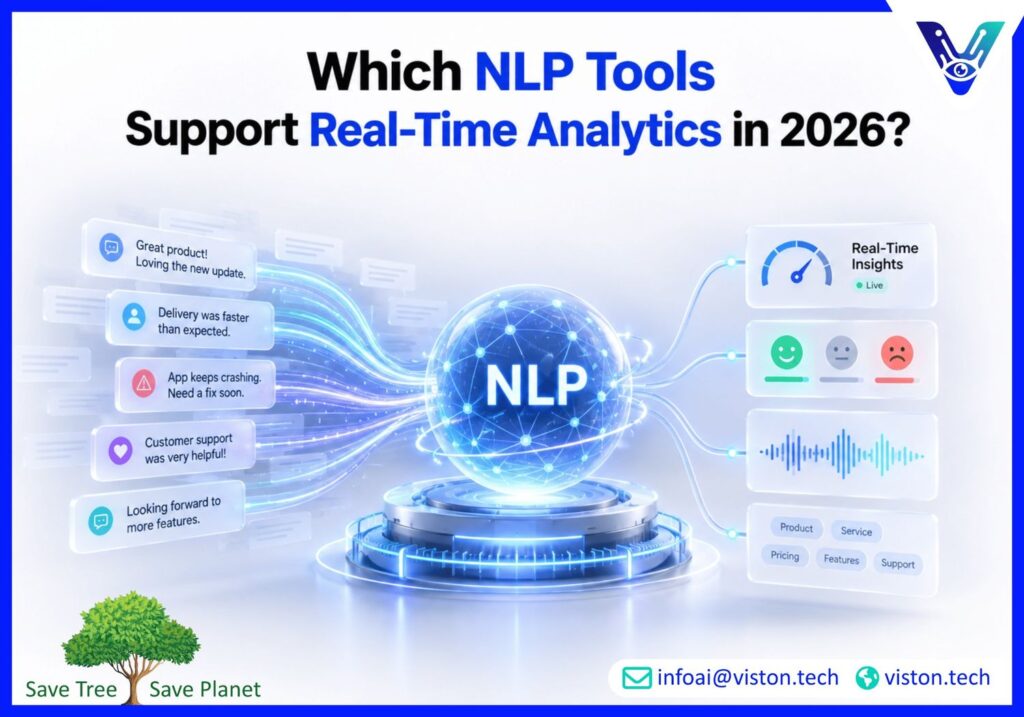 Businesses increasingly rely on real-time insights to improve customer experiences, automate workflows, detect issues faster, and make better decisions. As organizations process growing volumes of text, conversations, support tickets, emails, social media content, and operational data, Natural Language Processing (NLP) tools with real-time analytics capabilities have become essential. Understanding which NLP tools support real-time analytics can help decision-makers select solutions that align with their business objectives and operational requirements.