
Which Industries Use AI Agents the Most? A 2026 Industry-by-Industry Guide
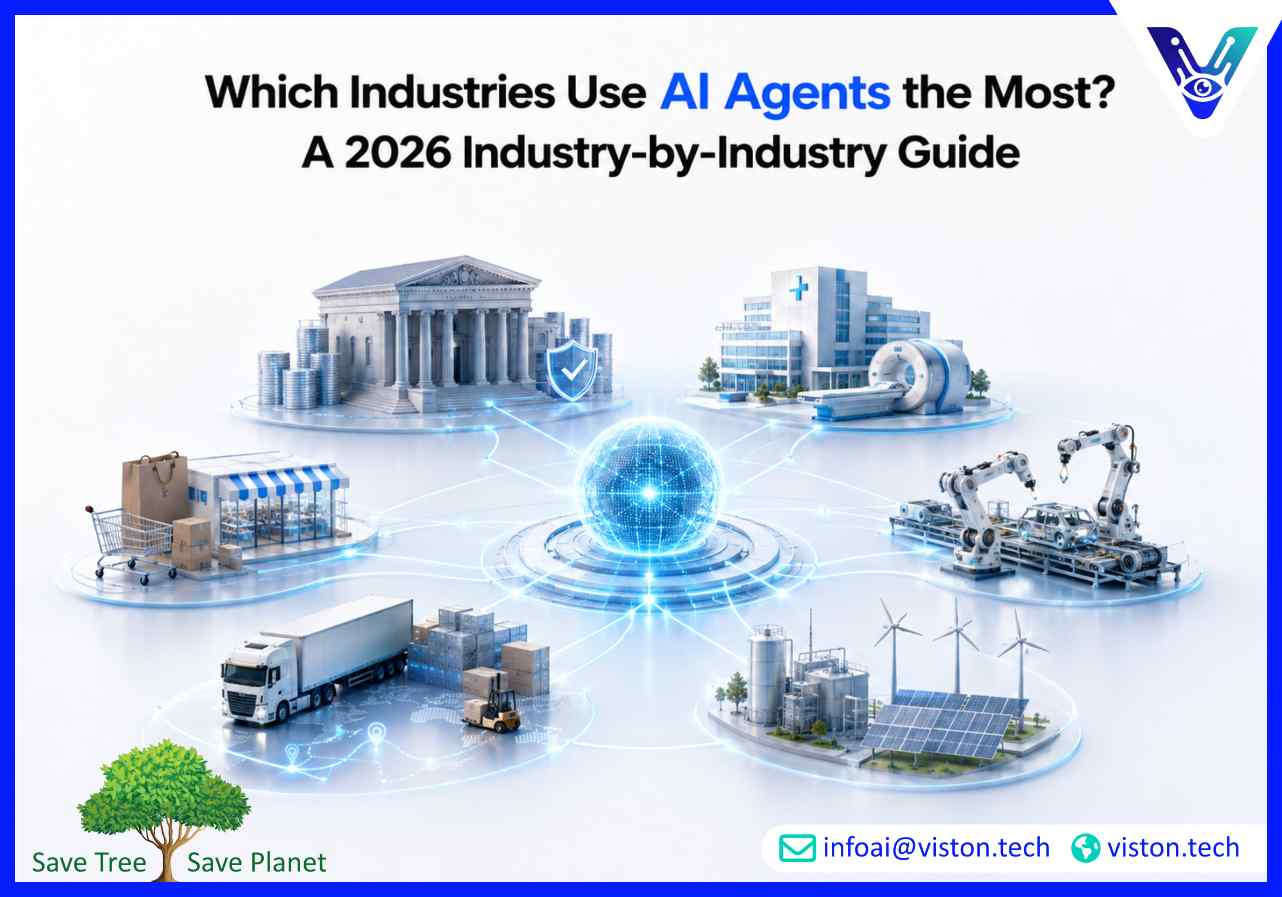
AI agents have moved from experimental pilots to production deployments across virtually every major sector. In 2026, the question is no longer whether industries will adopt AI agents, but how deeply and how effectively. Some sectors have moved faster, driven by data density, process complexity, regulatory pressure, or the sheer volume of decisions that need to be made at speed. Understanding where AI agent adoption is most mature, and why, helps business leaders make sharper decisions about where to focus their own investment.
What Makes an Industry Ready for AI Agent Deployment
Not all business environments are equally suited to AI agents at the same stage of maturity. The industries seeing the strongest results tend to share a common set of characteristics: high transaction or interaction volumes, structured and repeatable workflows, large amounts of operational data, clear decision criteria, and measurable outcomes that make ROI visible.
When these conditions are present, AI agents can take on meaningful work autonomously, whether that is classifying, routing, predicting, monitoring, or executing, and the value they generate is both substantial and trackable. The industries examined below are the ones where these conditions are most firmly in place.
Financial Services and Banking
Financial services consistently ranks among the heaviest adopters of AI agents globally. The process-driven, rule-governed nature of banking and insurance creates exactly the conditions where agents compound value quickly. Fraud detection agents monitor transactions in real time, correlating signals across channels to identify coordinated attack patterns that static rule systems miss. Compliance monitoring agents scan operations continuously against regulatory requirements, flagging deviations before they become reportable incidents.
Claims processing in insurance has been transformed by multi-agent workflows that extract data from submitted documents, verify policy terms, assess damage evidence, and recommend settlements, compressing processes that previously took weeks into hours. Algorithmic trading environments use agents to monitor market signals and execute decisions at speeds impossible for human analysts. Regulatory reporting, a significant operational burden for banks operating across jurisdictions, is increasingly handled by agents that aggregate data, apply formatting rules, and generate audit-ready documentation automatically.
Healthcare and Life Sciences
Healthcare carries one of the heaviest administrative burdens of any sector, and AI agents are addressing it directly. Clinical documentation agents handle note generation, freeing clinicians to focus on patient care rather than record-keeping. Patient intake, scheduling, insurance verification, and prior authorization workflows are being automated with agents that integrate directly into existing health information systems.
Remote patient monitoring is a growing deployment area, where agents on connected devices track vital signs, identify deviations from baseline, and alert clinical staff to cases requiring human review. In pharmaceuticals, agents are accelerating drug discovery by analyzing molecular data and research literature at a scale no human research team could match. Clinical trial matching, a labour-intensive process of identifying eligible patients from large record sets, is another area where agent deployment is producing measurable time savings.
The governance demands in healthcare are significant, with HIPAA compliance and patient data privacy being non-negotiable architectural constraints. This has pushed healthcare organizations toward partners with proven experience deploying agents within strict data governance frameworks.
Retail and E-Commerce
Retail operates at the intersection of high transaction volume, real-time data, and intense competitive pressure, all conditions that favour AI agent deployment. Personalization engines using agents analyse browsing and purchase behaviour to deliver product recommendations that adapt in real time. Dynamic pricing agents monitor competitor pricing, demand signals, and inventory levels, recommending adjustments that protect margin while maintaining competitiveness.
Inventory management is another area of strong adoption. Agents that monitor stock levels, predict demand based on sales patterns, seasonality, and external signals, and trigger automated reordering are reducing both stockout and overstock situations that directly erode profitability. Customer service in retail is increasingly handled by agent networks that can resolve order queries, process returns, answer product questions, and escalate complex cases to human agents, providing consistent service at scale without proportional staffing costs.
Manufacturing and Industrial Operations
Manufacturing has embraced AI agents with particular focus on operational continuity and quality. Predictive maintenance is among the most widely adopted use cases, where agents analyse sensor data from machinery to identify patterns that precede failure. Moving from time-based maintenance schedules to condition-based intervention reduces unplanned downtime and extends asset lifespan.
Quality control automation using computer vision agents is deployed on production lines to inspect components at speeds and consistency levels that manual inspection cannot match. Supply chain agents monitor upstream supplier performance, logistics status, and demand signals simultaneously, generating recommendations that prevent disruption before it reaches the factory floor. Energy management in manufacturing facilities is another growing application, where agents optimize consumption based on production schedules and tariff structures.
Logistics and Supply Chain
Logistics is inherently data-intensive and time-critical, making it a natural environment for AI agent deployment. Route optimization agents analyse real-time traffic, weather, delivery constraints, and vehicle capacity to generate efficient routing decisions continuously. Shipment tracking agents monitor freight across carriers and geographies, proactively identifying delays and recommending rerouting options before customers are impacted.
Customs documentation and compliance agents reduce the administrative burden of cross-border freight by extracting data from shipping documents, validating it against regulatory requirements, and generating compliant submissions. Warehouse operations increasingly rely on agents that coordinate picking sequences, manage labour allocation, and optimize storage layouts based on demand patterns.
Energy and Utilities
Energy is an emerging but fast-moving sector for AI agent deployment. Grid management agents balance supply and demand loads in real time, integrating renewable energy sources that introduce variability into the system. Predictive maintenance agents monitor infrastructure such as turbines, transformers, and pipelines, identifying deterioration signals that allow proactive intervention.
Carbon footprint tracking and ESG reporting, increasingly mandatory for energy companies operating under regulatory frameworks in Europe and elsewhere, are being automated with agents that aggregate consumption and emissions data across operations and generate audit-ready reports. Consumer-facing energy management agents help commercial customers optimize their usage profiles against tariff structures, supporting both cost reduction and sustainability targets.
Education and E-Learning
Education is adopting AI agents primarily in the areas of personalized learning and administrative efficiency. Agents that adapt content delivery to individual learning pace, style, and performance history are being deployed by online learning platforms and higher education institutions. Student support agents handle enrolment queries, course information, and administrative requests, reducing load on administrative staff while maintaining response quality.
Assessment agents can evaluate written work, provide structured feedback, and flag academic integrity concerns, freeing educators to focus on higher-order teaching and mentoring activity.
Gaming and Entertainment
Gaming studios and entertainment platforms use AI agents for content generation, player behaviour analysis, and dynamic experience personalization. Agents that adapt game environments to individual player behaviour, manage in-game economies, and detect fraudulent activity in online platforms are increasingly standard in large-scale gaming operations. Content moderation agents that assess user-generated content against community standards at volume, and with the contextual nuance that simple keyword filters cannot provide, are a critical deployment area for platforms operating under regulatory obligations such as the EU Digital Services Act.
Real Estate
Real estate organizations are deploying AI agents to automate lead qualification, schedule property viewings, and deliver personalized property recommendations based on buyer profiles. Agents integrated into CRM platforms can manage ongoing prospect communication, ensuring consistent follow-up without relying on manual activity from sales teams. Contract analysis agents review lease and purchase agreements for non-standard clauses and risk factors, supporting legal review teams in managing large document volumes.
How Viston AI Supports AI Agent Development and Deployment Across Industries
Viston AI’s AI agent development and deployment practice spans the full range of industries where agent adoption is most active, including healthcare, financial services, e-commerce, manufacturing, logistics, energy, retail, education, gaming and entertainment, and real estate. Their capability is built around end-to-end delivery, from agent architecture and custom development through to integration, governance, and production monitoring.
What distinguishes Viston’s approach is the combination of deep technical capability and genuine industry context. Their agents are built to integrate with the specific data systems, compliance frameworks, and operational workflows of each sector rather than being generic tools applied to industry problems. For healthcare clients, this means HIPAA-compliant architectures and federated data handling. For financial services clients, it means agents designed around fraud detection, compliance monitoring, and regulatory reporting requirements. For manufacturing clients, it means IoT-connected agents deployed on edge devices with low-latency decision capability.
Viston supports deployments using frameworks including LangChain, LangGraph, CrewAI, AutoGen, and LlamaIndex, alongside cloud platforms such as AWS, Azure, and Google Vertex AI. Their ISO-certified AI operations and compliance-first delivery methodology make them a credible development partner for organizations in sectors where governance and auditability are as important as performance.
Frequently Asked Questions
Which industry is currently the biggest adopter of AI agents?
Financial services and healthcare consistently rank among the highest adopters in 2026, driven by high transaction volumes, complex compliance requirements, and significant administrative burdens that agents can address directly. Manufacturing and retail are also among the leading sectors, with strong use cases in predictive maintenance, quality control, personalization, and inventory management.
What types of business processes benefit most from AI agent deployment?
Processes that involve high volumes of structured decisions, multi-step workflows requiring data from multiple systems, real-time monitoring requirements, or significant manual effort in documentation and communication tend to show the strongest results from AI agent deployment. Fraud detection, claims processing, patient scheduling, predictive maintenance, and customer service automation are among the most consistently successful use cases across industries.
Do AI agents need to be built differently for different industries?
Yes. Industry-specific compliance requirements, data structures, integration environments, and operational workflows mean that agents built to production standards for regulated industries such as healthcare or financial services require substantially different architecture from those deployed in retail or logistics. Generic tools rarely meet enterprise requirements in heavily regulated sectors. Custom development aligned to the specific operational and compliance context of each industry is the more reliable path.
How long does it typically take to deploy an AI agent in an enterprise environment?
Well-scoped deployments using pre-built frameworks and reusable components can reach production in four to six weeks for focused use cases. Larger, more complex deployments involving deep system integration, compliance architecture, and multiple agent types typically take several months. Experienced development partners with industry-specific delivery experience reduce both timeline and risk significantly.
Can Viston AI build agents for industries with strict data privacy requirements?
Yes. Viston’s development practice is built around compliance-first architecture. For healthcare clients, their deployments incorporate HIPAA-aligned data handling and access controls. For financial services clients operating in Europe, their architectures address GDPR and sector-specific regulatory requirements. Federated learning approaches are available for use cases where sensitive data cannot be centralized.
What should businesses evaluate when selecting an AI agent development partner?
Key criteria include demonstrated experience in your specific industry, understanding of the relevant compliance and governance requirements, integration capability with your existing technology infrastructure, a structured delivery methodology, and evidence of production deployments with measurable outcomes. A partner that has delivered agents in your sector and operating environment is substantially lower risk than one applying generic AI development practice to a specialized context.
Conclusion
AI agents are reshaping operations across financial services, healthcare, retail, manufacturing, logistics, energy, education, gaming, real estate, and beyond. In each case, the industries making the most meaningful progress are those deploying agents that are purpose-built for their specific workflows, data environments, and compliance requirements. For organizations evaluating AI agent development and deployment, the starting point is identifying the workflows where data volume, decision frequency, and process complexity make autonomous execution genuinely valuable. Viston AI’s cross-industry experience and compliance-first delivery approach make it a relevant partner for businesses across these sectors looking to move from pilot programmes to production-grade deployments that generate measurable operational impact.
