Which Chatbot Tools Support API Integration? A Business Guide for 2026
As businesses increasingly rely on automation and AI-powered customer interactions, selecting a chatbot platform that supports robust API integration has become a critical decision. API-enabled chatbots can connect with CRM systems, ecommerce platforms, support tools, databases, and business applications, transforming simple conversations into valuable business workflows. Understanding which chatbot tools offer strong integration capabilities helps organizations choose solutions that align with long-term digital transformation goals.
Why API Integration Matters for Modern Chatbots
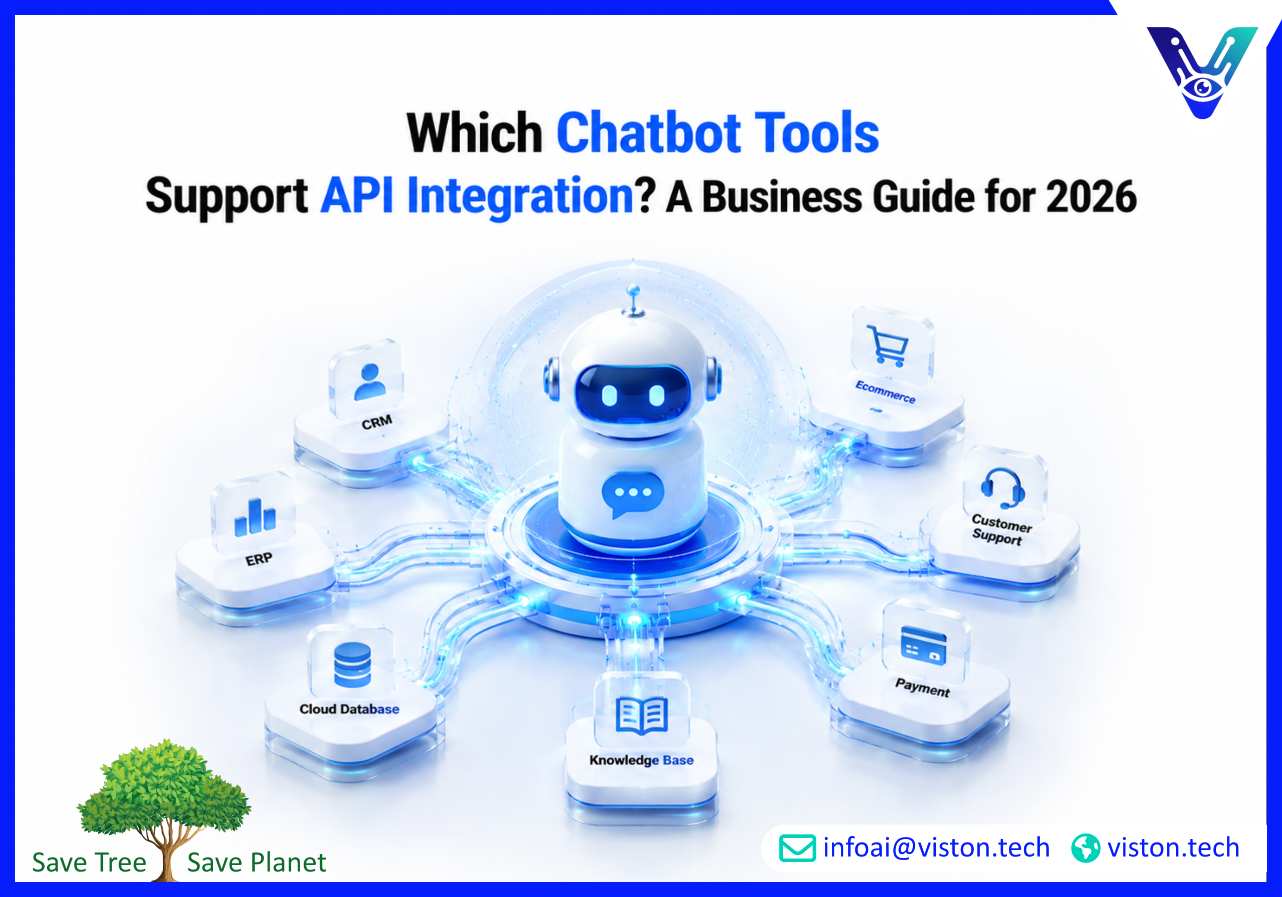
API integration allows a chatbot to communicate with external systems in real time. Instead of providing static responses, integrated chatbots can retrieve customer information, update records, create support tickets, process transactions, and automate business processes.Without API integration, chatbots often operate as standalone tools with limited business value. Organizations seeking scalable automation typically require chatbot platforms that can connect seamlessly with their existing technology ecosystem.Common business systems connected through chatbot APIs include:
Customer Relationship Management (CRM) platforms
Enterprise Resource Planning (ERP) systems
Helpdesk and customer support software
Marketing automation platforms
Ecommerce systems
Knowledge bases and content repositories
Payment gateways
Scheduling and booking systems
Internal business applications
Leading Chatbot Tools That Support API Integration
Several chatbot platforms provide API capabilities designed for different business requirements, technical environments, and scalability needs.
Microsoft Copilot Studio
Microsoft Copilot Studio offers extensive API connectivity through the Microsoft ecosystem. Businesses can integrate chatbots with Dynamics 365, Power Platform, Microsoft Teams, SharePoint, and external applications using connectors and custom APIs.It is particularly suitable for organizations already invested in Microsoft technologies and enterprise automation initiatives.
Google Dialogflow
Dialogflow remains one of the most widely used conversational AI platforms for API-driven chatbot development.Key integration capabilities include:
REST APIs
Webhook support
Google Cloud services integration
CRM connectivity
Custom backend integrations
Real-time data retrieval
Dialogflow is often chosen by organizations requiring highly customized conversational experiences.
IBM watsonx Assistant
IBM’s conversational AI platform provides enterprise-grade integration capabilities for businesses operating in regulated industries and complex environments.Its API framework supports:
Backend system integration
Enterprise application connectivity
Knowledge management systems
Customer support workflows
Advanced AI orchestration
Organizations with strict governance and security requirements often consider this platform.
Salesforce Agentforce
Salesforce’s AI-powered chatbot ecosystem integrates naturally with Salesforce CRM and customer service environments.API capabilities enable:
Lead management automation
Customer profile access
Case management workflows
Marketing campaign interactions
Sales pipeline updates
Businesses using Salesforce extensively can benefit from streamlined implementation and data synchronization.
Zendesk AI
Zendesk AI supports API integration focused on customer support and service automation.Typical integrations include:
Support ticket creation
Customer history retrieval
Help center content access
Agent escalation workflows
Customer service reporting
It is particularly valuable for businesses prioritizing customer support automation.
Intercom Fin AI
Intercom’s AI platform offers API access that allows businesses to connect conversational experiences with customer engagement workflows.Common use cases include:
Customer onboarding
Product support automation
Account management
Knowledge base integration
Lead qualification processes
Companies focused on SaaS customer engagement frequently adopt this approach.
Botpress
Botpress has become increasingly popular among organizations seeking flexible API integration and customization options.Its capabilities include:
Custom API integrations
Webhook support
Database connectivity
Third-party platform integrations
Custom workflow automation
Botpress is often favored by development teams requiring greater control over chatbot functionality.
Rasa
Rasa provides open-source conversational AI capabilities with extensive API flexibility.Organizations can build integrations with:
Internal applications
Custom databases
Enterprise systems
Proprietary workflows
Specialized business tools
Rasa is particularly attractive for enterprises seeking maximum customization and data control.
Key Features to Evaluate When Comparing API-Enabled Chatbots
Not all chatbot API integrations provide the same level of functionality. Businesses should assess several factors before selecting a platform.
API Accessibility
The platform should provide well-documented APIs that enable developers to connect business systems efficiently.
Webhook Support
Webhooks enable real-time communication between the chatbot and external applications, improving responsiveness and automation.
Security Controls
Modern integrations should support:
OAuth authentication
Role-based access control
Data encryption
Audit logging
Compliance management
Scalability
The chatbot should handle growing interaction volumes while maintaining reliable API performance.
Prebuilt Connectors
Platforms offering ready-made integrations often reduce implementation complexity and deployment timelines.
Custom Integration Flexibility
Businesses with unique requirements should verify support for custom APIs, middleware solutions, and proprietary systems.
How API Integration Improves Business Outcomes
When implemented effectively, API-connected chatbots provide significantly greater business value than standalone conversational tools.Benefits include:
Personalized customer experiences
Faster response times
Reduced manual workload
Improved operational efficiency
Enhanced data accuracy
Automated workflow execution
Better customer satisfaction
More effective lead management
Improved reporting and analytics
In 2026, businesses increasingly view chatbot integration as part of broader automation and digital transformation strategies rather than isolated customer service initiatives.
Choosing the Right Chatbot Tool for API Integration
The best chatbot platform depends on organizational requirements, existing technology investments, security expectations, and long-term business goals.Businesses should evaluate:
Current technology stack
Integration requirements
Technical resources available
Compliance obligations
Scalability needs
Customer experience objectives
Budget constraints
Future automation plans
Rather than selecting a chatbot solely based on AI capabilities, organizations should focus on how effectively the platform integrates with critical business systems and workflows.
How Viston AI Helps Businesses Implement API-Integrated Chatbots
For organizations exploring AI chatbot integration, selecting the right platform is only part of the process. Successful deployments require thoughtful integration planning, workflow design, system connectivity, security controls, and ongoing optimization.Viston AI specializes in AI Chatbot Integration, helping businesses connect conversational AI solutions with CRM platforms, support systems, business applications, knowledge bases, and operational workflows. By focusing on practical integration strategies rather than standalone chatbot deployment, businesses can create AI experiences that support measurable operational and customer engagement outcomes.Whether integrating chatbots with existing enterprise systems or building scalable automation frameworks, Viston AI helps organizations align chatbot technology with broader business objectives while maintaining flexibility for future growth.
Frequently Asked Questions
Which chatbot platform offers the best API integration capabilities?
The best platform depends on your environment. Dialogflow, Microsoft Copilot Studio, Botpress, Rasa, Salesforce Agentforce, and IBM watsonx Assistant are among the leading options for API-driven chatbot integration.
Can chatbots connect directly to CRM systems?
Yes. Many chatbot platforms support direct CRM integration through APIs, allowing access to customer records, lead data, support histories, and sales information.
Do API integrations require custom development?
Some integrations use prebuilt connectors, while others require custom API development depending on system complexity and business requirements.
Are API-integrated chatbots secure?
When implemented correctly, API-integrated chatbots can be highly secure through encryption, authentication protocols, access controls, and compliance-focused architecture.
Can Viston AI help with chatbot API integration projects?
Yes. Viston AI provides AI Chatbot Integration services that help businesses connect chatbot platforms with operational systems, automate workflows, and improve customer engagement processes.
Conclusion
Choosing chatbot tools that support API integration is essential for businesses seeking meaningful automation and connected customer experiences in 2026. While platforms such as Dialogflow, Microsoft Copilot Studio, Salesforce Agentforce, Botpress, Rasa, and IBM watsonx Assistant offer strong integration capabilities, the right choice depends on business objectives, technical requirements, and scalability needs. Effective AI Chatbot Integration enables organizations to connect conversations with real business processes, delivering greater efficiency, personalization, and operational value. Businesses looking to maximize these benefits can benefit from specialist integration expertise from providers such as Viston AI.