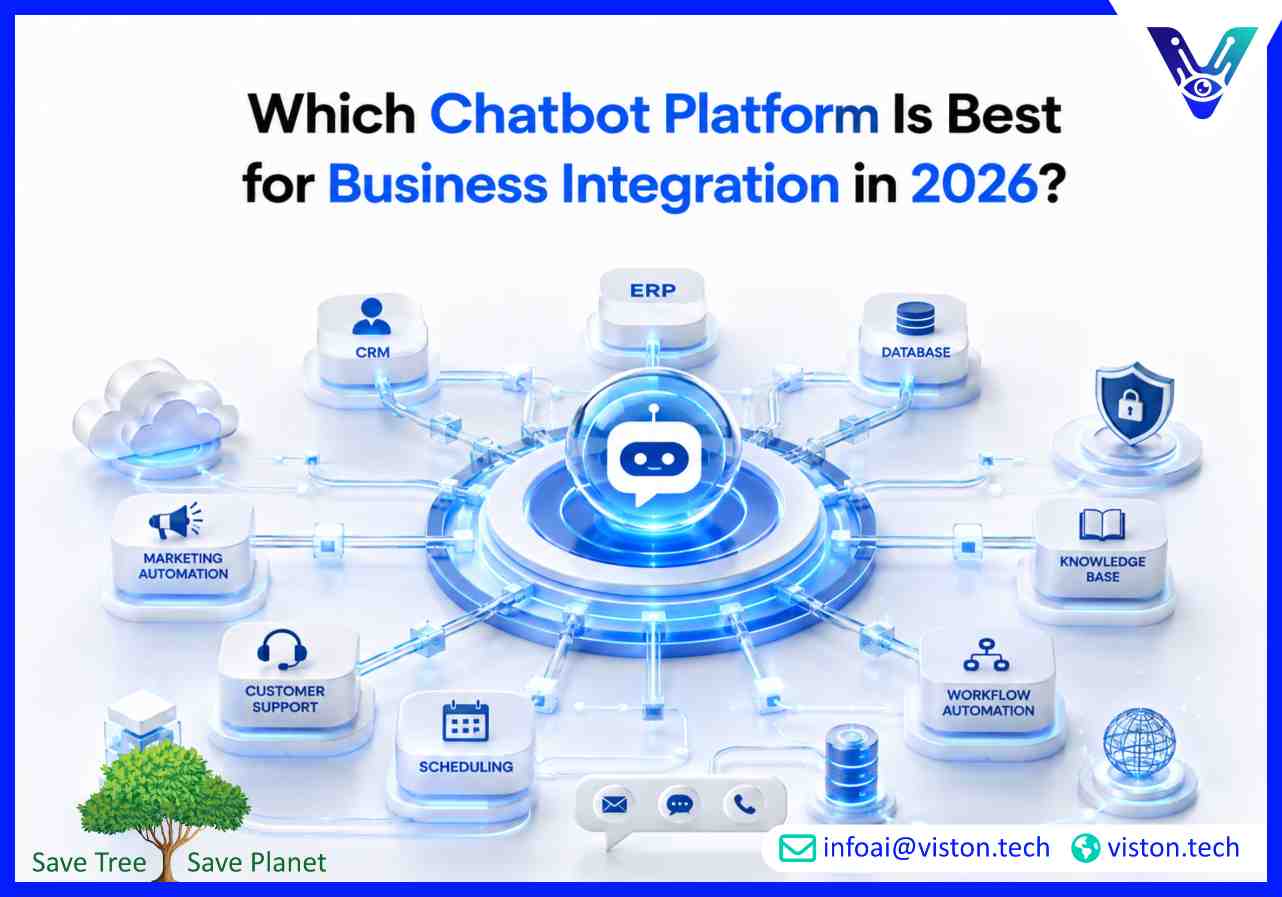
Which Chatbot Platform Is Best for Business Integration in 2026?
Choosing the best chatbot platform has become a strategic technology decision for businesses looking to improve customer engagement, automate support, generate leads, and streamline operations. While dozens of chatbot solutions are available in 2026, the right platform depends on a company’s integration requirements, business objectives, scalability needs, and existing technology ecosystem. Rather than focusing solely on chatbot features, organizations should evaluate how effectively a platform integrates with their workflows, data sources, and customer-facing systems.
What Makes a Chatbot Platform the “Best”?
There is no universal chatbot platform that fits every business. The most effective solution is the one that aligns with operational goals, customer expectations, and technical requirements.Businesses typically evaluate chatbot platforms based on:
Integration capabilities
AI and natural language processing performance
Omnichannel support
Scalability
Security and compliance features
Customization flexibility
Analytics and reporting
Total cost of ownership
Ease of deployment and management
In 2026, integration capability has become one of the most important evaluation factors because chatbot value increases significantly when connected to CRM systems, helpdesk platforms, databases, scheduling tools, and business applications.
Leading Chatbot Platform Categories Businesses Consider
Instead of looking for a single winner, organizations should understand the major chatbot platform categories and where each excels.
Enterprise AI Platforms
Enterprise-focused platforms are designed for large-scale deployments requiring advanced AI capabilities, governance controls, and complex integrations.Common strengths include:
Advanced conversational AI
Enterprise-grade security
Multi-department deployment
Custom workflow automation
Large-scale analytics
Complex API integrations
These platforms are often suitable for enterprises handling high interaction volumes and sensitive customer data.
Customer Support Chatbot Platforms
Support-focused chatbot solutions are optimized for ticket deflection, self-service experiences, and customer service automation.They typically offer:
Knowledge base integration
Live agent handoff
Support workflow automation
Customer satisfaction tracking
Helpdesk connectivity
Organizations focused on reducing support workloads often prioritize these capabilities.
Sales and Lead Generation Platforms
Some chatbot platforms specialize in lead qualification, appointment booking, and sales funnel optimization.Key capabilities may include:
Lead scoring
CRM synchronization
Meeting scheduling
Visitor qualification workflows
Marketing automation integration
These platforms are commonly used by B2B organizations seeking to improve conversion rates.
No-Code and Low-Code Chatbot Platforms
Businesses with limited development resources often choose no-code or low-code solutions that allow internal teams to build and manage chatbot experiences.Advantages include:
Faster deployment
Reduced development costs
Easier workflow updates
Business-user accessibility
However, customization and integration flexibility may vary between vendors.
Key Factors to Consider Before Selecting a Chatbot Platform
Many chatbot projects underperform because organizations focus on features rather than business requirements.
Integration Requirements
The chatbot should connect seamlessly with critical business systems.Common integrations include:
CRM platforms
ERP systems
Customer support software
Marketing automation tools
Ecommerce platforms
Knowledge bases
Communication channels
A chatbot that cannot access relevant business data often delivers limited value regardless of its AI capabilities.
Scalability
Organizations should assess whether the platform can support future growth, increased conversation volumes, additional channels, and expanding use cases.Scalability becomes particularly important for businesses planning long-term automation initiatives.
Security and Compliance
Modern chatbot implementations frequently process customer information, making security a critical consideration.Evaluation areas include:
Data encryption
Authentication controls
Role-based access management
Audit logging
Data retention policies
Regulatory compliance support
Businesses operating in regulated industries should prioritize platforms with strong governance capabilities.
Analytics and Optimization
The best chatbot platforms provide detailed visibility into performance metrics.Organizations should look for reporting capabilities that track:
Conversation success rates
User engagement
Customer satisfaction
Lead generation outcomes
Support automation effectiveness
Conversion metrics
Continuous optimization depends on reliable performance data.
Why Integration Often Matters More Than the Platform Itself
Many businesses assume chatbot success depends entirely on selecting the most advanced platform. In reality, successful deployments are usually driven by effective integration strategies.A moderately advanced chatbot connected to business-critical systems often delivers better results than a sophisticated chatbot operating in isolation.When properly integrated, chatbots can:
Retrieve real-time customer information
Create and update CRM records
Manage support tickets
Schedule appointments
Process workflows
Access knowledge repositories
Trigger automation sequences
The quality of these integrations directly impacts customer experience, operational efficiency, and return on investment.
How Businesses Can Evaluate Chatbot Platforms Effectively in 2026
Rather than comparing platforms based solely on feature lists, organizations should evaluate solutions using structured business criteria.A practical evaluation framework includes:
Define business objectives.
Identify required integrations.
Map customer and employee use cases.
Assess security requirements.
Evaluate scalability needs.
Review analytics capabilities.
Test conversational performance.
Calculate total implementation costs.
Consider long-term support requirements.
This approach helps organizations select solutions based on business outcomes rather than marketing claims.
How Viston AI Helps Businesses Select and Integrate Chatbot Platforms
For many organizations, the challenge is not finding chatbot platforms but determining which solution best fits their business environment. As an AI chatbot integration specialist, Viston AI helps businesses evaluate chatbot technologies based on integration requirements, workflow needs, operational objectives, and scalability expectations.Successful chatbot deployments require more than platform selection. Businesses must connect conversational AI with CRM systems, support platforms, marketing tools, databases, communication channels, and internal workflows. Viston AI focuses on building integrated chatbot ecosystems that align with real business processes rather than standalone chatbot implementations.By prioritizing interoperability, security, automation, and measurable business outcomes, organizations can select chatbot platforms that support long-term growth while delivering practical value across customer service, sales, and operational functions.
Frequently Asked Questions
Which chatbot platform is best for most businesses?
The best chatbot platform depends on business goals, integration requirements, scalability needs, and industry-specific use cases. There is no single platform that suits every organization.
Should businesses choose AI-powered chatbot platforms?
For most organizations in 2026, AI-powered platforms offer significant advantages through natural language understanding, automation capabilities, personalization, and continuous learning.
What is the most important factor when selecting a chatbot platform?
Integration capability is often one of the most critical factors because chatbot effectiveness depends heavily on access to business systems and operational data.
Can chatbot platforms integrate with existing CRM systems?
Most modern chatbot platforms support CRM integration through APIs, connectors, and automation frameworks, although capabilities vary by provider.
Can Viston AI help businesses choose the right chatbot platform?
Yes. Viston AI helps organizations evaluate chatbot technologies, identify integration requirements, and implement chatbot solutions that align with business objectives and operational workflows.
Conclusion
Determining which chatbot platform is best requires more than comparing features or AI capabilities. Businesses should evaluate platforms based on integration flexibility, scalability, security, workflow compatibility, and long-term business value. In 2026, successful chatbot initiatives are increasingly driven by how effectively conversational AI connects with existing systems and supports measurable outcomes. Organizations that take a strategic approach to platform selection and AI chatbot integration are better positioned to improve customer experiences, automate processes, and achieve sustainable operational benefits. For businesses seeking guidance, Viston AI provides expertise in selecting and integrating chatbot solutions that align with real-world business requirements.