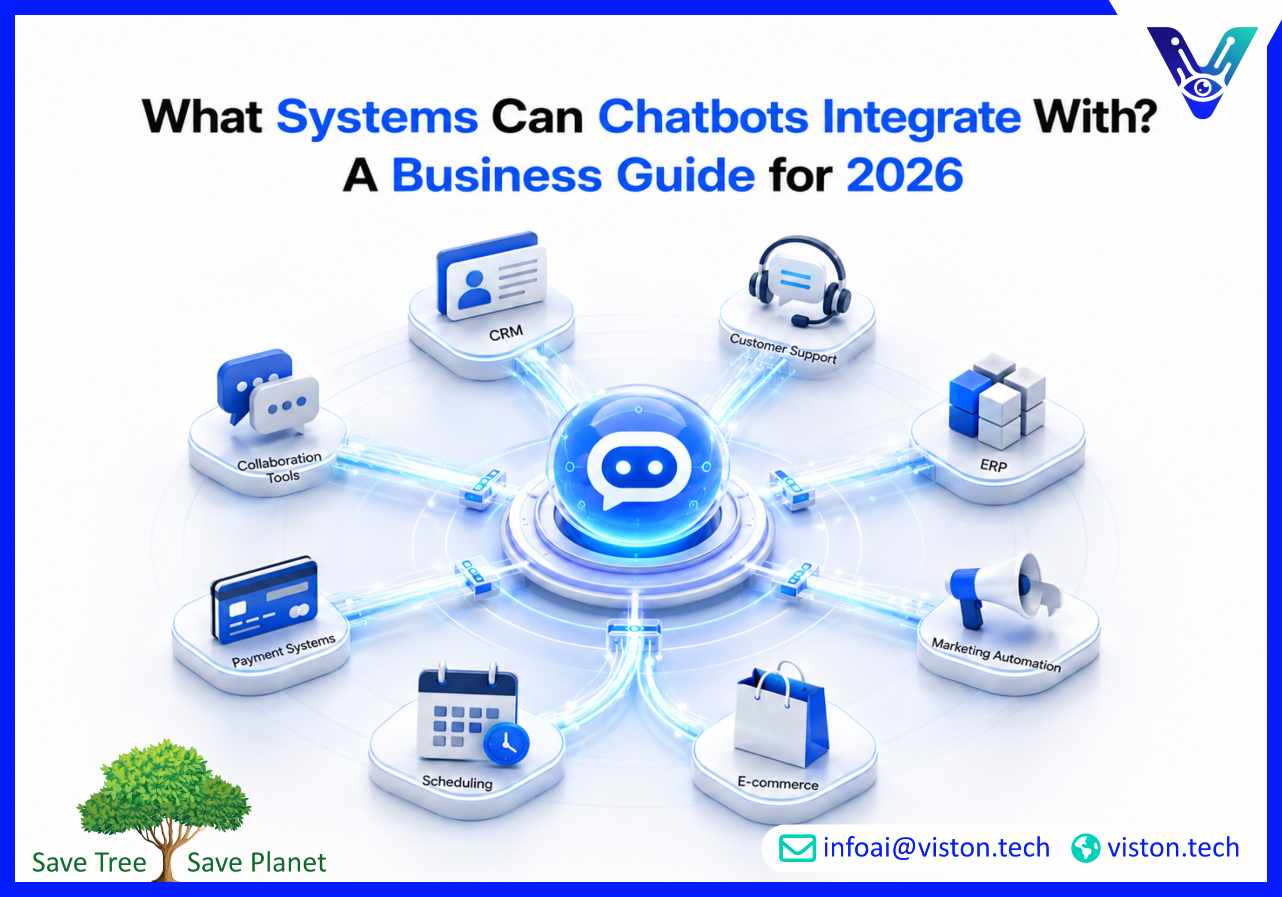
What Systems Can Chatbots Integrate With? A Business Guide for 2026
As AI adoption continues to accelerate, businesses are no longer asking whether they should use chatbots—they are asking how chatbots can connect with the systems they already rely on. Effective chatbot integration allows organizations to automate workflows, improve customer experiences, reduce manual work, and create seamless data flows across business operations. Understanding what systems chatbots can integrate with is essential for maximizing the value of AI chatbot integration in 2026.
Why Chatbot Integration Matters for Modern Businesses
A chatbot operating in isolation can answer basic questions, but its true business value emerges when it connects with existing software platforms and databases. Integration enables chatbots to access information, trigger actions, update records, and provide personalized responses based on real-time business data.Modern organizations use dozens of software platforms across sales, marketing, customer support, operations, finance, and human resources. AI chatbot integration bridges these systems, creating a unified customer and employee experience.Benefits of chatbot integration include:
Faster customer support resolution
Automated lead qualification
Improved operational efficiency
Reduced manual data entry
Enhanced customer personalization
Better reporting and analytics
Consistent omnichannel experiences
Common Business Systems That Chatbots Can Integrate With
Customer Relationship Management (CRM) Systems
CRM integration is among the most valuable chatbot use cases. Chatbots can access customer records, update contact information, log interactions, create opportunities, and qualify leads automatically.Common CRM integrations include:
Salesforce
HubSpot
Microsoft Dynamics 365
Zoho CRM
Pipedrive
Freshsales
When integrated with a CRM platform, a chatbot can instantly identify returning customers, provide personalized assistance, and route inquiries to the appropriate sales or support teams.
Customer Support Platforms
Many organizations integrate chatbots with customer service software to improve ticket management and response times.Popular support platform integrations include:
Zendesk
Freshdesk
ServiceNow
Help Scout
Intercom
LiveAgent
These integrations allow chatbots to create support tickets, retrieve ticket statuses, escalate issues, and provide automated updates to customers.
E-commerce Platforms
Online retailers increasingly rely on AI-powered chatbots to improve customer journeys and streamline purchasing processes.Chatbots commonly integrate with:
Shopify
WooCommerce
Magento
BigCommerce
Adobe Commerce
With e-commerce integration, chatbots can provide product recommendations, check inventory availability, track orders, process returns, and assist customers throughout the buying process.
Marketing Automation Platforms
Marketing teams use chatbot integrations to capture leads, nurture prospects, and automate campaign workflows.Examples include:
HubSpot Marketing Hub
Marketo
Mailchimp
ActiveCampaign
Pardot
Klaviyo
Integrated chatbots can segment audiences, trigger email campaigns, collect customer preferences, and support lead generation initiatives.
Advanced Chatbot Integration Possibilities in 2026
Enterprise Resource Planning (ERP) Systems
ERP integration allows chatbots to access operational and financial data across the organization.Common ERP systems include:
SAP
Oracle ERP
Microsoft Dynamics ERP
NetSuite
Infor
Employees and customers can retrieve order information, inventory levels, invoice details, and operational updates through conversational interfaces.
Communication and Collaboration Tools
Internal business chatbots are increasingly integrated with workplace communication platforms.
Microsoft Teams
Slack
Google Chat
Zoom
Cisco Webex
These integrations support employee self-service, knowledge management, HR assistance, IT support, and workflow automation.
Appointment and Scheduling Systems
Organizations that manage bookings and appointments often connect chatbots to scheduling software.
Calendly
Google Calendar
Microsoft Outlook Calendar
Acuity Scheduling
Bookeo
Customers can schedule, reschedule, or cancel appointments directly through chatbot conversations without human intervention.
Payment and Billing Systems
Businesses increasingly integrate chatbots with payment platforms to simplify transactions.
Stripe
PayPal
Square
Authorize.net
Razorpay
These integrations support payment collection, invoice delivery, subscription management, and transaction tracking.
Key Considerations When Choosing Chatbot Integrations
Business Objectives
Integration priorities should align with specific business goals. A sales-focused organization may prioritize CRM connectivity, while a customer service operation may focus on helpdesk integration.
Data Security and Compliance
Integrated chatbots often access sensitive customer and business information. Organizations should evaluate:
Data encryption capabilities
Role-based access controls
Audit logging
Compliance requirements
Data residency policies
Privacy regulations
API Availability
Most modern chatbot integrations rely on APIs. Businesses should verify that their existing software platforms provide robust API access and integration support.
Scalability Requirements
As chatbot usage grows, integrations must handle increasing transaction volumes, user interactions, and data requests without performance degradation.
Reporting and Analytics
Integrated systems should provide visibility into chatbot performance, customer interactions, workflow automation outcomes, and business impact metrics.
How AI Chatbot Integration Supports Business Growth
Organizations that successfully integrate chatbots into their technology ecosystem often achieve improvements across multiple business functions. Customer support becomes faster, sales processes become more efficient, employee productivity increases, and customers receive more personalized experiences.Rather than replacing existing software investments, chatbot integration enhances their value by creating conversational access to business systems. This allows users to complete tasks, retrieve information, and receive support through natural interactions instead of navigating multiple applications.As AI capabilities continue to evolve throughout 2026, businesses are increasingly viewing chatbot integration as a strategic component of digital transformation initiatives rather than a standalone customer support tool.
How Viston AI Helps Businesses Implement AI Chatbot Integration
For organizations seeking to connect chatbots with existing business systems, Viston AI provides AI chatbot integration services designed to align with operational requirements and business objectives. Effective chatbot deployment often requires more than simply installing a chatbot interface—it involves connecting customer data, workflows, communication channels, automation tools, and business applications into a unified ecosystem.Viston AI supports businesses in designing and implementing chatbot integrations that work across CRM platforms, customer support systems, marketing automation tools, scheduling platforms, e-commerce environments, and enterprise applications. The focus is on creating practical solutions that improve efficiency, automate repetitive tasks, and enhance user experiences.Businesses evaluating chatbot integration projects often face challenges related to system compatibility, data security, workflow design, scalability, and long-term maintenance. A structured integration approach helps ensure that chatbot functionality delivers measurable business value while fitting seamlessly into existing technology infrastructures.As organizations continue expanding their AI initiatives, reliable integration capabilities remain essential for turning chatbot investments into meaningful operational and customer experience improvements.
Frequently Asked Questions
Can chatbots integrate with multiple systems simultaneously?
Yes. Modern AI chatbots can connect with multiple systems such as CRM platforms, helpdesk software, marketing tools, scheduling applications, and databases at the same time.
Do chatbot integrations require custom development?
It depends on the systems involved. Many platforms offer pre-built integrations, while more complex workflows may require custom API development and configuration.
Which integration provides the highest business value?
CRM integration is often one of the most valuable because it enables personalized customer interactions, lead management, and sales automation.
Are chatbot integrations secure?
When implemented properly, chatbot integrations can be highly secure through encryption, authentication controls, role-based permissions, monitoring, and compliance-focused architecture.
Can Viston AI help integrate chatbots with existing business software?
Yes. Viston AI provides AI chatbot integration services that help businesses connect chatbots with operational systems, customer platforms, communication tools, and workflow applications.What industries benefit most from chatbot integrations?Retail, healthcare, financial services, education, real estate, professional services, manufacturing, and technology companies all benefit from chatbot integration when it aligns with their business processes.
Conclusion
Understanding what systems chatbots can integrate with is essential for businesses looking to maximize the value of AI chatbot integration. From CRM platforms and customer support software to ERP systems, payment gateways, and collaboration tools, integrations transform chatbots into powerful business productivity assets. Organizations that approach chatbot integration strategically can improve customer experiences, automate workflows, and unlock greater operational efficiency. For businesses exploring AI chatbot integration opportunities, working with experienced specialists such as Viston AI can help ensure integrations support long-term business goals and scalable growth.