
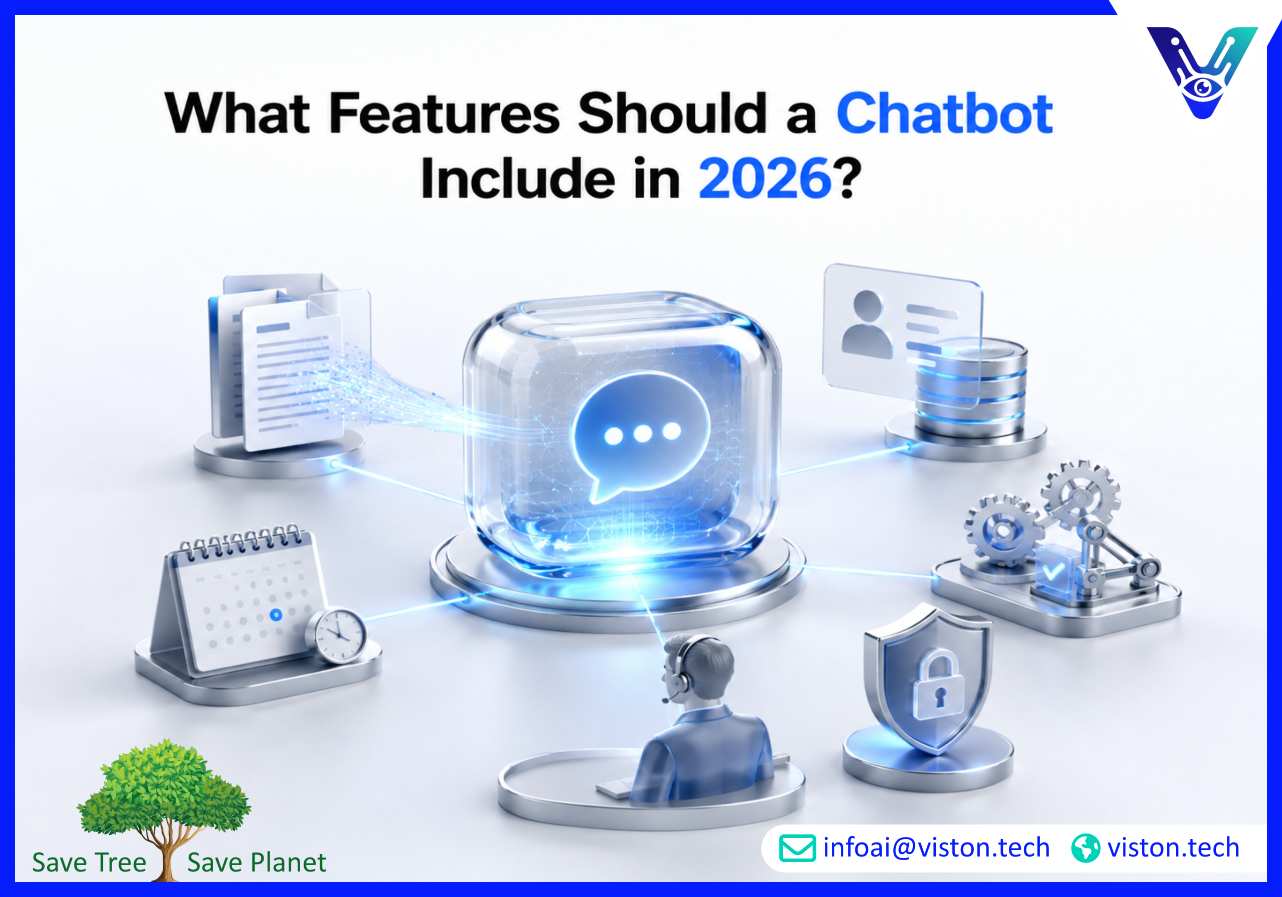
What features should a chatbot include? For modern businesses, the answer depends on more than automated replies. In 2026, an effective chatbot must combine natural conversation, secure integrations, business workflow automation, analytics, escalation, and continuous improvement so it can support customers, teams, and revenue goals reliably.
A business chatbot should be designed as a practical digital assistant, not just a message box on a website. The right feature set depends on the company’s goals, customer journeys, service model, data environment, and operational processes. A chatbot built for lead qualification will need different capabilities from one built for customer support, employee onboarding, appointment booking, or internal workflow automation.
The most important starting point is clarity of purpose. A chatbot should solve real business problems such as reducing repetitive inquiries, improving response speed, capturing qualified leads, supporting customers outside office hours, routing requests to the right team, or helping staff access internal knowledge faster. Features should be selected around these outcomes rather than added simply because they sound advanced.
In 2026, companies are also expecting chatbots to work inside connected digital ecosystems. A useful chatbot may need to interact with CRM platforms, helpdesk systems, calendars, payment tools, product databases, knowledge bases, marketing automation platforms, and internal applications. This is where AI chatbot integration becomes especially important. The chatbot must not only answer questions; it should also retrieve data, trigger workflows, update records, and create a smoother user experience across systems.
At a minimum, a business-ready chatbot should include strong conversation design, accurate intent recognition, clear escalation paths, integration capabilities, analytics, privacy controls, and a reliable admin interface. More advanced AI chatbots may also include generative AI responses, retrieval-augmented generation, multilingual support, user personalization, sentiment awareness, and automated task execution.
User experience is one of the strongest indicators of whether a chatbot will succeed. A chatbot may have advanced technology behind it, but if users feel confused, trapped, or misunderstood, adoption will suffer. The best chatbot features are those that make the conversation feel clear, useful, and efficient.
Natural language understanding allows users to ask questions naturally instead of selecting from rigid menus. This is especially important for customer support, sales inquiries, product guidance, and internal knowledge assistance. A chatbot should be able to identify user intent, understand variations in wording, handle spelling mistakes, and recognize when a question needs clarification.
For AI-powered chatbots, this may involve large language models, traditional NLP, intent classification, entity recognition, or a combination of methods. The goal is not simply to sound conversational. The goal is to understand the user’s actual need and respond with the right next step.
A chatbot should answer using approved, current, and relevant business information. This may include FAQs, service pages, product documentation, policy documents, support articles, pricing guidance, onboarding materials, or internal process documentation.
For AI chatbots, retrieval-augmented generation is now a common approach. Instead of relying only on model memory, the chatbot retrieves relevant information from trusted business sources and uses that information to generate a response. This helps reduce inaccurate answers and gives businesses more control over what the chatbot can say.
Not every chatbot interaction should be open-ended. Many business tasks are better handled through structured flows. For example, booking a consultation, qualifying a lead, checking order status, submitting a support request, or collecting onboarding details should follow a clear process.
Good chatbot integration combines AI flexibility with structured workflow design. The chatbot can understand natural input, but it should still guide users through the required steps in a controlled and logical way. This prevents incomplete data capture and improves completion rates.
A useful chatbot should remember what the user has already said during the conversation. If a user provides their company size, location, preferred service, or issue type, the chatbot should not repeatedly ask for the same information. Session-level context makes the experience smoother and more human.
For more advanced use cases, businesses may also use authenticated user profiles or CRM data to personalize responses. However, personalization should be handled carefully, with clear privacy rules and appropriate permission controls.
No chatbot will understand every query perfectly. That is why fallback handling is essential. A weak chatbot says, “I don’t understand,” and leaves the user stuck. A better chatbot asks a clarifying question, suggests relevant options, searches the knowledge base again, or offers human assistance.
Fallback data is also valuable for improvement. Unanswered questions show where content, integrations, or conversation flows need to be improved.
AI chatbot integration is where a chatbot moves from basic communication to practical business automation. A chatbot that only answers static questions may be useful, but a chatbot that connects to business systems can save time, improve accuracy, and support measurable outcomes.
CRM integration is one of the most valuable chatbot features for sales, marketing, and customer success teams. A chatbot can capture lead details, qualify prospects, assign lead scores, update contact records, record conversation summaries, and notify the right sales representative.
For B2B companies, this can reduce manual data entry and improve follow-up speed. Instead of asking users to fill out a long form, the chatbot can collect information conversationally and push structured data into the CRM.
Customer service chatbots should connect with helpdesk platforms so they can create, update, route, and summarize support tickets. This helps service teams avoid fragmented communication and gives agents better context when a chatbot escalates an issue.
Useful helpdesk integration may include ticket categorization, priority tagging, customer identification, conversation history, file attachments, internal notes, and automated status updates. The chatbot should make the support process easier for both the customer and the agent.
For service businesses, appointment booking is often a high-value chatbot feature. The chatbot can collect requirements, check availability, suggest time slots, confirm bookings, send reminders, and update the business calendar.
This is especially useful when a company receives repeated inquiries for consultations, demos, onboarding sessions, interviews, maintenance visits, or service appointments. When integrated properly, the chatbot reduces scheduling friction and avoids back-and-forth messages.
Modern chatbots can trigger actions across business systems. They may submit forms, send confirmation emails, update records, create tasks, notify teams, generate summaries, route requests, or start approval workflows.
This type of automation must be designed carefully. The chatbot should have clear rules around what it can do independently, what needs user confirmation, and what should be escalated to a human. For business-critical workflows, audit logs and permission controls are essential.
Customers and employees may interact with a business through websites, mobile apps, WhatsApp, social messaging platforms, email, Slack, Microsoft Teams, or customer portals. A strong chatbot strategy considers where users already communicate and how the chatbot should behave across those channels.
Omnichannel support does not mean every business needs every channel. It means the chatbot should be deployed where it creates the most value and should deliver a consistent experience across those touchpoints.
As chatbots become more deeply connected to business systems, security and governance become more important. A chatbot that handles customer data, employee information, sales records, support history, or operational workflows must be designed with responsible controls from the beginning.
Security features should match the sensitivity of the chatbot’s use case. Basic website chatbots may need consent notices, secure data transmission, and limited data storage. Enterprise chatbots may require user authentication, role-based access, encrypted data handling, audit logs, secure API connections, and strict data retention rules.
Access control is especially important when the chatbot connects to internal tools. Users should only be able to retrieve or update information they are authorized to access. The chatbot should not expose private records, confidential policies, or restricted operational data.
Businesses should be clear about what data the chatbot collects, why it is collected, where it is stored, and how long it is retained. Users should not be asked for unnecessary sensitive information. When personal or regulated data is involved, chatbot design should reflect relevant privacy, consent, and compliance requirements.
Privacy-ready chatbot integration also includes vendor review, API security, model usage policies, and data processing controls. This is especially important for companies operating in industries such as healthcare, finance, legal services, recruitment, education, insurance, and enterprise software.
A chatbot should provide reporting that helps the business understand whether it is working. Useful analytics may include conversation volume, containment rate, escalation rate, lead conversion, booking completion, unanswered questions, average response time, user satisfaction, drop-off points, and intent trends.
Analytics should not be treated as a dashboard for vanity metrics only. The real value is in optimization. If users repeatedly ask questions the chatbot cannot answer, the knowledge base may need improvement. If users abandon a booking flow, the conversation design may be too complex. If many conversations escalate to humans, automation rules may need refinement.
Human handoff is one of the most important features of a reliable chatbot. A chatbot should recognize when a user is frustrated, when the request is complex, when sensitive judgment is required, or when policy prevents automated resolution.
A good handoff should include conversation history, user details, intent summary, and any information already collected. This prevents users from repeating themselves and helps agents respond faster.
A chatbot should be built to improve over time. Businesses change their services, pricing, policies, workflows, products, and customer expectations. The chatbot must be easy to update without rebuilding everything from scratch.
Scalability includes technical performance, integration stability, content governance, language expansion, workflow flexibility, and support for higher conversation volumes. In 2026, a chatbot should not be treated as a one-time project. It should be managed as a connected business system that requires monitoring, maintenance, and optimization.
Viston AI is relevant to businesses asking what features a chatbot should include because its AI service portfolio aligns with the practical requirements of modern chatbot projects. The company works across AI chatbot development, generative AI, custom models, predictive analytics, computer vision, and enterprise-focused AI solutions, with an emphasis on integrating AI into existing business systems.
For organizations considering AI Chatbot Integration, this matters because a chatbot’s value depends heavily on how well it connects with real workflows. A business may need a chatbot that captures leads, supports customers, automates repetitive service requests, retrieves answers from internal knowledge, or connects with CRM, helpdesk, calendar, and operational tools. These needs require more than front-end conversation design; they require AI planning, integration architecture, data readiness, workflow logic, and post-launch optimization.
Viston AI’s experience with AI chatbots powered by technologies such as ChatGPT, Gemini, and custom models can support businesses that want flexible conversational systems rather than basic scripted bots. Its broader AI and automation capabilities are also relevant when chatbots need to move beyond answering questions and begin supporting measurable business processes.
For companies evaluating chatbot features in 2026, Viston AI can be considered a practical specialist for designing and integrating chatbot solutions around business outcomes, user experience, scalability, and reliable automation.
The most important chatbot features include natural language understanding, accurate knowledge base access, structured conversation flows, CRM or helpdesk integration, human handoff, analytics, privacy controls, and ongoing optimization tools. The best feature set depends on the chatbot’s business purpose.
Many effective chatbots use both. AI helps users ask questions naturally and receive flexible answers, while rule-based flows are useful for structured tasks such as lead capture, booking, onboarding, and ticket creation. A balanced approach often delivers better reliability.
Integration allows a chatbot to connect with business systems such as CRM, helpdesk, calendars, databases, and internal tools. This enables the chatbot to update records, create tickets, book appointments, retrieve information, and automate workflows instead of only answering basic questions.
An AI chatbot should include secure API connections, encrypted data handling, access controls, privacy notices, data retention rules, audit logs, and authentication where needed. The required level of security depends on the type of data the chatbot handles.
Analytics show how users interact with the chatbot, which questions are unanswered, where users drop off, how often conversations are escalated, and whether the chatbot is meeting business goals. These insights help teams improve content, workflows, and automation rules.
Yes. Viston AI’s AI chatbot development and integration capabilities can help businesses define chatbot requirements, plan integrations, design user journeys, connect workflows, and build AI-powered chatbot solutions around practical business objectives.
What features should a chatbot include? In 2026, a strong chatbot should combine natural conversation, accurate information retrieval, workflow automation, secure integrations, analytics, human handoff, and continuous improvement. Businesses should choose features based on real goals such as better customer support, faster lead qualification, smoother appointment booking, or more efficient internal operations. AI Chatbot Integration is especially important because the most valuable chatbots do more than respond; they connect with systems and help work get done. Viston AI offers relevant expertise for businesses that want chatbot solutions built around practical value, scalable architecture, and reliable automation.
