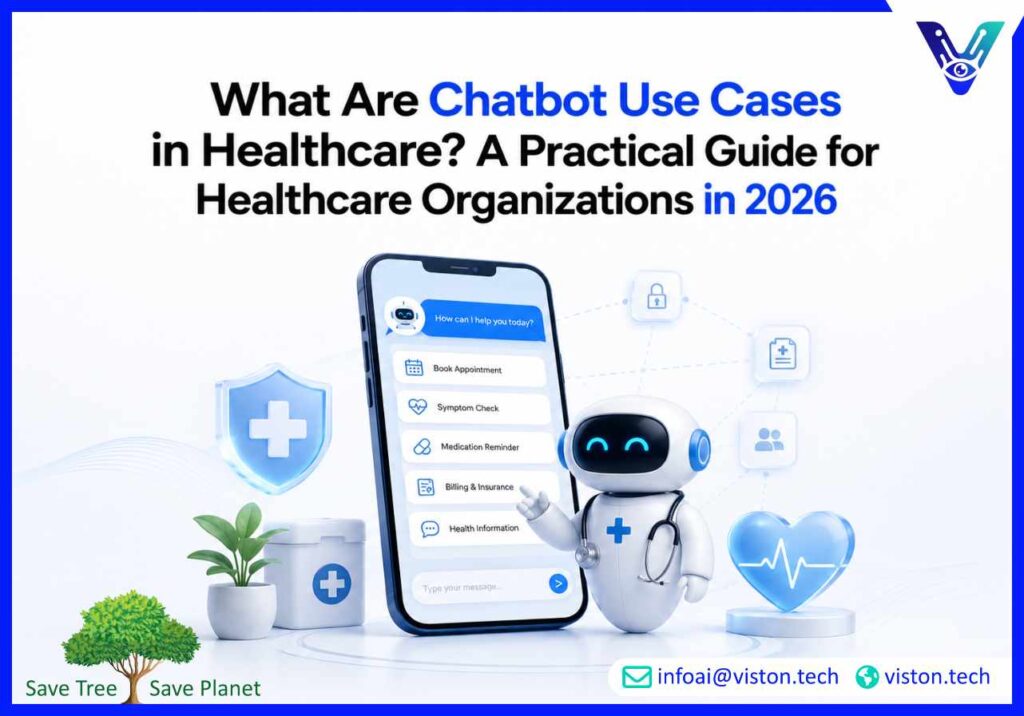
What Are Chatbot Use Cases in Healthcare? A Practical Guide for Healthcare Organizations in 2026
Healthcare providers are under increasing pressure to improve patient experiences, reduce administrative workloads, and deliver timely support while maintaining compliance and operational efficiency. As a result, healthcare chatbot use cases have expanded significantly in 2026, helping organizations automate routine interactions, improve accessibility, and streamline patient communication across multiple digital channels.
Why Healthcare Organizations Are Adopting Chatbots
Healthcare systems generate thousands of patient interactions every day. Many of these interactions involve repetitive tasks such as appointment scheduling, prescription inquiries, insurance questions, and patient education.AI-powered chatbots help healthcare organizations manage these interactions more efficiently by providing instant responses, reducing staff workloads, and supporting patients outside normal operating hours.Key drivers behind healthcare chatbot adoption include:
Growing demand for digital patient experiences
Staff shortages and administrative burdens
Need for faster patient communication
Increasing healthcare service volumes
Support for omnichannel engagement
Improved operational efficiency
Enhanced patient accessibility
When integrated properly with healthcare systems, chatbots can support both patients and healthcare professionals while maintaining secure and structured workflows.
Key Chatbot Use Cases in Healthcare
Appointment Scheduling and Management
One of the most common healthcare chatbot use cases is appointment scheduling. Patients can book, reschedule, or cancel appointments through conversational interfaces without needing to call a clinic or hospital.Chatbots can:
Check appointment availability
Confirm bookings instantly
Send reminders
Reduce no-show rates
Manage waiting lists
Handle follow-up scheduling
This automation helps healthcare staff focus on higher-value patient interactions.
Patient Triage and Symptom Assessment
Healthcare chatbots can guide patients through structured symptom-checking conversations before directing them toward appropriate care pathways.These systems may help:
Assess symptom severity
Recommend care options
Identify urgent situations
Provide self-care guidance
Route patients to appropriate departments
While chatbots do not replace medical professionals, they can support initial screening and improve patient routing efficiency.
Patient Education and Information Delivery
Patients often seek reliable information about conditions, treatments, medications, and recovery processes.Healthcare chatbots can provide:
Treatment explanations
Medication guidance
Pre-procedure instructions
Post-operative care information
Wellness and preventive care education
Answers to frequently asked questions
Providing consistent and accessible information can improve patient understanding and engagement.
Prescription and Medication Support
Medication-related inquiries represent a significant portion of healthcare communication.Chatbots can assist by:
Providing medication reminders
Supporting prescription refill requests
Sharing dosage instructions
Offering medication-related information
Sending treatment adherence reminders
This can contribute to better patient compliance and improved treatment outcomes.
How Chatbot Integration Improves Healthcare Operations
Electronic Health Record (EHR) Connectivity
Modern healthcare chatbots become significantly more valuable when integrated with Electronic Health Record systems.Through secure integrations, chatbots may provide:
Appointment history access
Patient-specific information
Care plan guidance
Test result notifications
Personalized patient interactions
Integration allows healthcare organizations to create more connected and efficient patient experiences.
Healthcare Contact Center Support
Many healthcare organizations use chatbots as a first line of communication before transferring complex cases to human agents.Benefits include:
Reduced call volumes
Faster response times
24/7 availability
Improved service consistency
Better resource allocation
Human staff can then focus on sensitive or medically complex situations that require personal attention.
Insurance and Billing Assistance
Insurance verification and billing inquiries often create significant workloads for healthcare providers.Chatbots can help patients access information regarding:
Coverage eligibility
Billing status
Payment options
Claim updates
Administrative documentation
Automating these processes can improve patient satisfaction while reducing operational overhead.
Important Considerations for Healthcare Chatbot Implementation
Data Security and Privacy
Healthcare organizations handle highly sensitive patient information. Any chatbot implementation must prioritize data protection, secure authentication, encryption, access controls, and regulatory compliance requirements.Healthcare providers should evaluate chatbot platforms based on their ability to support privacy standards, audit requirements, and secure integrations with healthcare systems.
Human Escalation Capabilities
Not every patient interaction can or should be handled through automation.Effective healthcare chatbots include clear escalation paths that allow patients to connect with healthcare professionals when needed. This ensures that urgent, complex, or emotionally sensitive situations receive appropriate human attention.
Accuracy and Clinical Governance
Healthcare information must be accurate, current, and appropriately governed. Organizations should establish review processes for chatbot content, workflows, and responses to ensure consistency with clinical guidelines and organizational policies.Regular monitoring and updates are essential as healthcare information and regulations evolve.
How Viston AI Supports Healthcare Chatbot Integration
As healthcare organizations expand their digital transformation initiatives, successful chatbot deployment depends on more than conversational technology alone. Effective healthcare chatbot integration requires secure connections with healthcare systems, workflow automation, patient communication channels, and operational processes.Viston AI specializes in AI Chatbot Integration, helping organizations connect chatbot solutions with business-critical platforms and workflows. For healthcare providers, this may include integrating conversational AI with scheduling systems, patient engagement platforms, CRM solutions, support channels, and other operational technologies.A well-executed integration strategy helps healthcare organizations improve patient accessibility, streamline communication, automate routine administrative tasks, and create more connected digital experiences. By focusing on interoperability, scalability, security, and business outcomes, Viston AI supports organizations seeking practical and sustainable chatbot integration initiatives.
Frequently Asked Questions
What are the most common chatbot use cases in healthcare?
The most common use cases include appointment scheduling, patient triage, symptom assessment, medication reminders, patient education, billing assistance, and healthcare customer support.
Can healthcare chatbots replace medical professionals?
No. Healthcare chatbots are designed to assist with communication, information delivery, and administrative processes. Medical diagnosis and treatment decisions should remain under qualified healthcare professionals.
Are healthcare chatbots secure?
Healthcare chatbots can be secure when implemented with appropriate encryption, authentication, access controls, compliance measures, and secure integrations with healthcare systems.
How do healthcare chatbots improve patient experiences?
They provide faster responses, 24/7 availability, easier appointment management, personalized communication, and quicker access to healthcare information.
Can Viston AI help healthcare organizations integrate chatbots?
Yes. Viston AI provides AI Chatbot Integration services that help organizations connect chatbot solutions with existing systems, workflows, and patient engagement processes.
Conclusion
Healthcare chatbot use cases continue to expand as organizations seek better ways to improve patient engagement, streamline operations, and support digital healthcare delivery. From appointment scheduling and patient education to billing assistance and symptom assessment, chatbots can help healthcare providers automate routine interactions while improving accessibility and responsiveness. Success depends heavily on secure AI Chatbot Integration, thoughtful workflow design, and strong governance practices. As healthcare organizations continue investing in digital transformation throughout 2026, integrated chatbot solutions are becoming an increasingly important part of delivering efficient, patient-centered healthcare experiences. Viston AI helps organizations support these initiatives through practical and scalable AI Chatbot Integration services.