
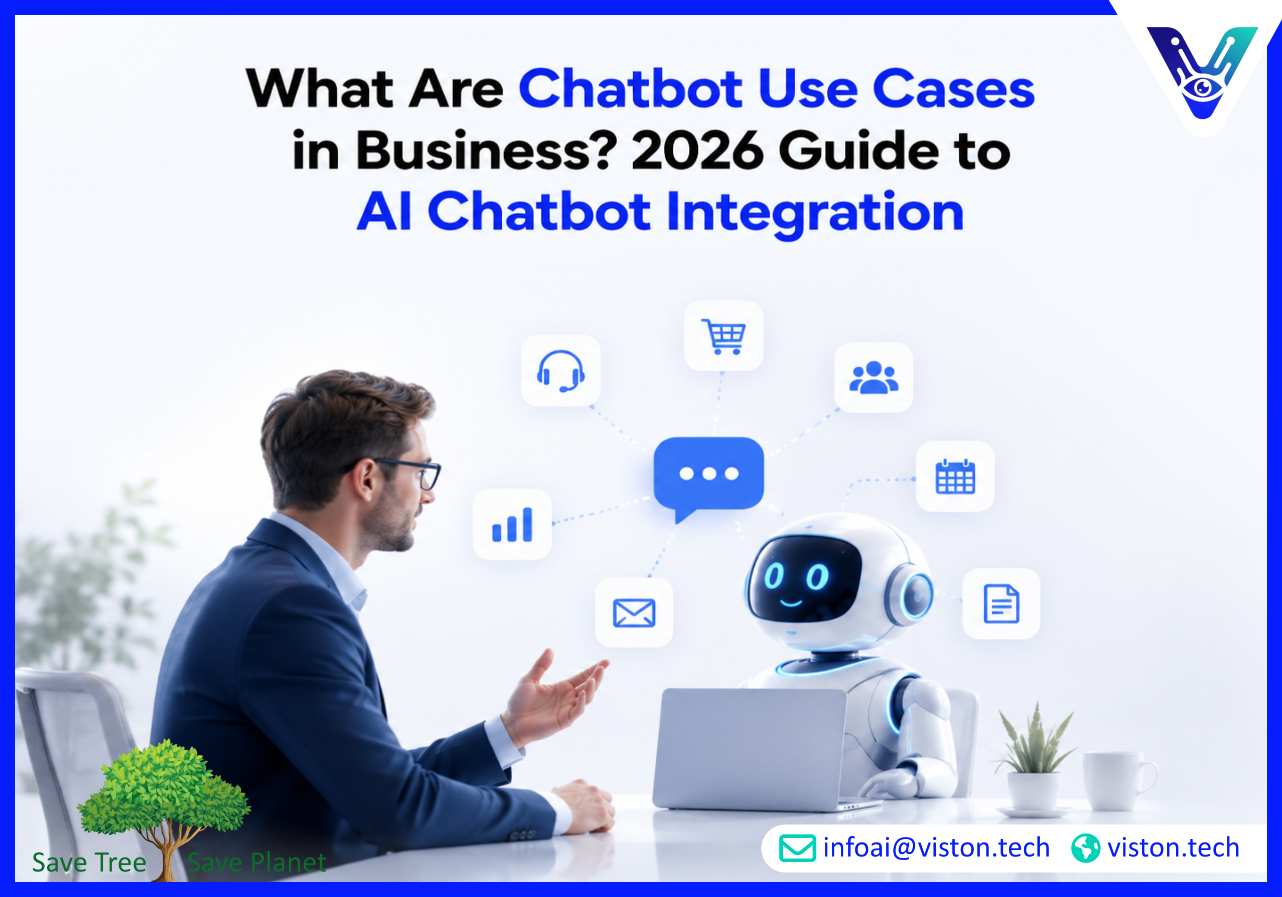
What are chatbot use cases in business? In 2026, the answer goes far beyond answering FAQs. Businesses now use AI chatbots to support customers, qualify leads, automate workflows, improve employee productivity, connect systems, and deliver faster service across digital channels.
Chatbot use cases in business refer to the practical ways companies apply chatbots to improve communication, automate repetitive tasks, support decision-making, and create smoother experiences for customers, employees, partners, and sales teams.
A chatbot use case is not simply “adding chat to a website.” It is a defined business function where conversational automation can solve a real operational problem. For example, a chatbot may answer product questions, collect lead information, book appointments, retrieve order status, route support requests, onboard employees, or summarize internal documents.
The value of a chatbot depends on how well it is integrated into the business environment. A chatbot that only provides generic responses may reduce a few simple inquiries, but an integrated AI chatbot can connect with CRM systems, helpdesk tools, calendars, knowledge bases, ecommerce platforms, databases, ticketing systems, and internal workflow tools. This is where AI Chatbot Integration becomes commercially important.
In a business setting, the strongest chatbot use cases usually share three qualities. They are repetitive enough to automate, valuable enough to improve, and structured enough to measure. A chatbot should help users complete tasks faster, reduce friction, improve response consistency, or give teams better information.
Modern AI chatbots can also use natural language processing, retrieval-augmented generation, conversational memory, intent recognition, sentiment analysis, and workflow automation. These capabilities allow businesses to move from scripted conversations to more useful digital assistants that understand context and support multi-step tasks.
For decision-makers, the question is not whether chatbots can be used in business. The better question is which chatbot use cases are worth integrating first, which systems they must connect with, what risks need to be managed, and how success will be measured after launch.
Businesses are under pressure to respond faster, operate leaner, personalize customer interactions, and support teams across more channels. Customers expect immediate answers, sales teams need better qualification, support teams need lower ticket volume, and operations teams need fewer manual handoffs. Chatbots help address these needs when they are implemented with clear business logic and reliable integrations.
In 2026, chatbots are increasingly evaluated as part of broader automation and AI transformation strategies. They are no longer treated only as customer service widgets. They can act as conversational interfaces for business systems, allowing users to interact with software through natural language instead of navigating complex forms, dashboards, or internal portals.
This shift matters because many business processes involve repeated questions, status updates, data lookups, approvals, and routing decisions. A well-integrated chatbot can reduce the time spent on these tasks while keeping users informed and teams focused on higher-value work.
AI chatbot integration also helps businesses make better use of existing data. Customer policies, product documentation, pricing rules, support articles, HR documents, sales playbooks, and operational procedures often sit across disconnected tools. A chatbot can make this information easier to access, provided the underlying data is accurate, permissioned, and properly maintained.
Another reason chatbot use cases matter in 2026 is the rise of hybrid service models. Businesses do not want automation that blocks users from human help. They want chatbots that can resolve simple issues, collect context, identify urgency, summarize conversations, and hand over complex cases to the right person. This creates a better experience for both customers and internal teams.
Security and governance have also become central to chatbot planning. Businesses must consider what data a chatbot can access, how it authenticates users, how it handles sensitive information, how responses are controlled, and how conversation logs are monitored. Strong AI Chatbot Integration balances automation with privacy, compliance, escalation, and quality control.
The best chatbot use cases in business depend on the company’s goals, industry, systems, and customer journey. However, several use cases consistently deliver value across sales, support, operations, marketing, HR, finance, and IT.
Customer support is one of the most common chatbot use cases. Chatbots can answer common questions, explain policies, troubleshoot simple issues, provide order updates, create support tickets, route inquiries, and collect information before a human agent joins the conversation.
For support teams, this reduces repetitive ticket volume and improves response speed. For customers, it provides faster access to answers without waiting in a queue. When integrated with helpdesk systems, CRMs, and knowledge bases, a chatbot can provide more relevant responses and create a smoother support workflow.
Chatbots can help sales teams qualify leads by asking structured questions about budget, timeline, company size, pain points, service interest, and decision authority. They can score inquiries, route high-intent leads, book meetings, and push lead data into a CRM.
This use case is especially valuable for B2B businesses where website visitors may arrive outside office hours. Instead of relying only on static forms, a chatbot can guide prospects through a conversational qualification process and help sales teams focus on better-fit opportunities.
Businesses that depend on consultations, demos, service appointments, inspections, interviews, or onboarding calls can use chatbots to automate scheduling. A chatbot can check availability, suggest time slots, collect required details, send confirmations, and trigger reminders.
With calendar and CRM integration, appointment booking becomes more reliable and less dependent on manual back-and-forth communication. This can improve conversion rates and reduce administrative workload.
In ecommerce, chatbots can recommend products, answer sizing or compatibility questions, explain shipping and return policies, recover abandoned carts, provide order status, and guide customers through purchase decisions.
For complex products or large catalogs, AI chatbots can help users find relevant options faster than traditional navigation. The chatbot becomes a guided buying assistant that supports both customer experience and sales performance.
Chatbots are increasingly used inside companies to help employees find policies, procedures, templates, training materials, IT instructions, HR information, and operational guidance. Instead of searching through multiple folders or asking colleagues repeatedly, employees can ask a chatbot and receive structured answers from approved internal sources.
This use case is valuable for growing teams, distributed companies, and organizations with complex documentation. It improves knowledge access and reduces interruptions for managers, HR teams, IT support, and operations leaders.
HR chatbots can support onboarding, answer benefits questions, explain leave policies, guide new employees through required steps, collect documents, remind staff about training, and route sensitive issues to the right HR contact.
The benefit is not replacing HR teams. The benefit is removing repetitive administrative pressure so HR professionals can focus on employee experience, compliance, culture, and workforce planning.
IT teams can use chatbots to handle password reset guidance, access requests, software troubleshooting, device support, incident reporting, and system status communication. When connected to IT service management platforms, chatbots can create tickets, classify requests, and provide updates.
This use case can reduce ticket backlog and help employees resolve basic issues faster. It also improves IT visibility by capturing request patterns and recurring problems.
Finance-related chatbots can support invoice questions, payment status updates, billing explanations, purchase order lookups, reimbursement guidance, and expense policy support. These use cases require careful access control because financial information is sensitive.
When implemented properly, a chatbot can reduce routine finance inquiries while maintaining clear escalation paths for exceptions, disputes, or confidential account matters.
Operational chatbots can help teams submit requests, check task status, trigger approvals, update records, generate summaries, and coordinate between departments. For example, a chatbot may help a logistics team check shipment updates, an operations manager review task progress, or an admin team process internal service requests.
This is where AI Chatbot Integration becomes especially powerful. The chatbot is not only answering questions; it is connected to workflows that help work move faster through the business.
Choosing the right chatbot use cases should start with business impact, not technology excitement. A chatbot should solve a real problem, improve a measurable process, or create a better experience for users. The first use case should be focused enough to launch reliably but important enough to justify investment.
Businesses can begin by identifying where conversations repeatedly happen. Common areas include customer inquiries, sales qualification, appointment scheduling, internal support, HR questions, IT requests, billing issues, and order updates. These repeated conversations often reveal strong automation opportunities.
The next step is to evaluate integration requirements. A simple chatbot may only need a website and a curated knowledge base. A more advanced chatbot may need CRM access, helpdesk integration, product catalog data, authentication, calendar connectivity, document retrieval, payment status, or workflow triggers.
Data readiness is another major factor. AI chatbots perform better when the source information is accurate, structured, current, and approved. If a business has outdated support content, inconsistent product documentation, or unclear internal policies, chatbot performance will suffer. Preparing the knowledge base is often as important as building the chatbot itself.
Companies should also define guardrails before launch. This includes what the chatbot can answer, what it must not answer, when it should escalate, how it handles uncertain responses, and how sensitive data is protected. For regulated or high-risk environments, security and compliance planning should be part of the initial scope.
Success metrics should be defined early. Depending on the use case, useful metrics may include ticket deflection, lead conversion, meeting bookings, response time, resolution rate, user satisfaction, escalation quality, completion rate, employee time saved, and cost per interaction.
A practical approach is to start with one or two high-value use cases, launch a controlled version, review real conversation data, and improve the chatbot over time. This reduces risk and helps businesses avoid overbuilding features before they understand how users actually interact with the system.
Viston AI is relevant to businesses exploring chatbot use cases because its service offering includes AI Chatbot Integration, AI Chatbot Development, Enterprise AI Chatbots, NLP and text analysis, custom AI solution development, and AI automation and workflow bots. These capabilities align closely with the practical needs behind modern chatbot projects.
For companies that want chatbots to do more than answer basic questions, Viston AI can support integration planning around business systems, knowledge sources, workflow automation, and user journeys. This matters because many valuable chatbot use cases depend on connected data and reliable execution. A lead qualification bot may need CRM integration. A support chatbot may need helpdesk and knowledge base access. An internal assistant may need permissioned document retrieval and workflow routing.
Viston AI’s broader AI capabilities are also useful when a business needs conversational systems supported by generative AI, natural language processing, automation logic, and model monitoring. This helps organizations think beyond a chatbot widget and toward a scalable conversational layer that supports real business operations.
For businesses operating across industries and global markets, the most effective chatbot projects usually require clear strategy, secure architecture, practical integrations, measurable outcomes, and ongoing optimization. Viston AI’s focus on AI-driven automation and enterprise system alignment makes it a relevant specialist for organizations evaluating which chatbot use cases to prioritize and how to implement them responsibly.
The most common chatbot use cases in business include customer support, lead qualification, appointment booking, ecommerce product guidance, HR support, IT helpdesk automation, billing inquiries, internal knowledge search, and workflow automation.
AI Chatbot Integration improves chatbot use cases by connecting the chatbot with business systems such as CRM platforms, helpdesk software, calendars, databases, ecommerce tools, and knowledge bases. This allows the chatbot to provide relevant answers, update records, trigger workflows, and support real tasks.
Customer service, sales, marketing, HR, IT, finance, operations, and ecommerce teams can all benefit from chatbots. The best fit depends on where the business has high-volume conversations, repeated questions, manual handoffs, or slow response times.
Yes. Internal chatbots can help employees find policies, submit IT requests, access training materials, check workflow status, complete onboarding steps, and retrieve approved company knowledge. These use cases can improve productivity and reduce repetitive internal support work.
Businesses should define the use case, target users, required integrations, data sources, escalation process, security rules, success metrics, and ongoing optimization plan. A chatbot should be designed around a real business process rather than launched as a generic tool.
Yes. Viston AI provides AI Chatbot Integration and related AI development capabilities that can support business chatbot use cases involving enterprise chatbots, workflow automation, NLP, system integration, and custom AI solution development.
Chatbot use cases in business are strongest when they solve clear operational problems and connect naturally with existing systems. In 2026, chatbots can support customers, qualify leads, guide purchases, assist employees, automate workflows, and improve access to business knowledge. The key is choosing focused use cases, preparing reliable data, integrating the right platforms, and measuring real outcomes. For companies exploring AI Chatbot Integration, Viston AI offers relevant expertise in building chatbot solutions that support practical business automation and scalable digital service delivery.
