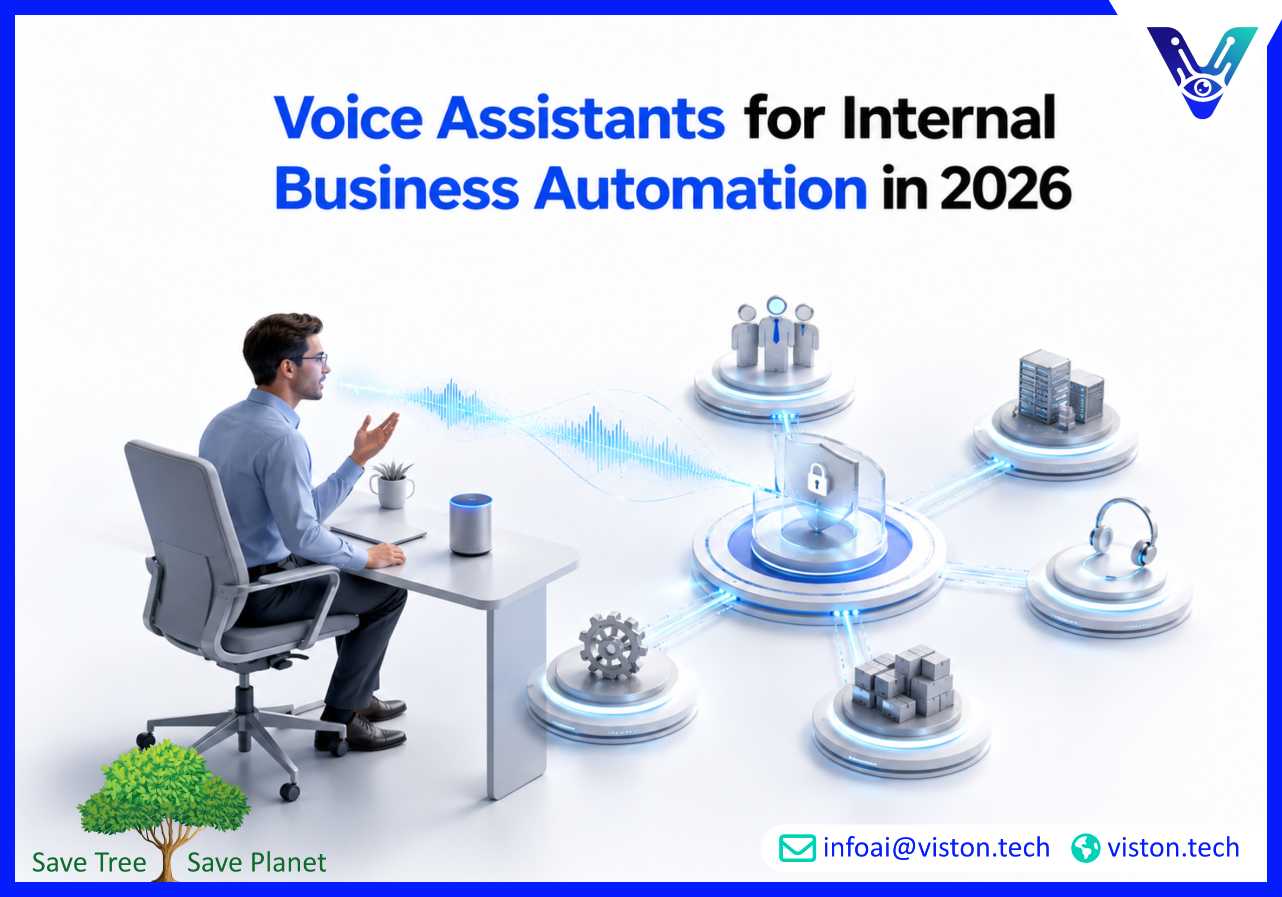
Voice Assistants for Internal Business Automation in 2026
Voice assistants for internal business automation are becoming practical tools for teams that need faster access to information, smoother workflows, and less manual admin. In 2026, businesses are using voice-enabled assistants to support employees, automate routine tasks, and connect everyday operations with business systems.
What Voice Assistants for Internal Business Automation Mean
Voice assistants for internal business automation are AI-powered systems that allow employees to complete work-related tasks through spoken commands or conversational voice interactions. Instead of opening multiple tools, searching dashboards, submitting forms, or waiting for internal support, employees can ask a voice assistant to retrieve information, create requests, update records, trigger workflows, or guide them through a process.These assistants are different from basic consumer voice tools. A business-focused voice assistant needs to understand company-specific terminology, user permissions, internal policies, workflow rules, and the systems employees rely on every day. It may connect with CRM platforms, ERP systems, HR software, IT service management tools, knowledge bases, inventory systems, calendars, project management platforms, and custom applications.For internal automation, the goal is not simply to make work feel more modern. The goal is to reduce friction. Many employees lose time switching between systems, searching for documents, raising repetitive tickets, asking the same operational questions, or manually updating records. Voice-enabled assistants can simplify these tasks by turning natural language into structured actions.
Common internal use cases
HR support for leave policies, benefits, onboarding, payroll questions, and employee requests
IT helpdesk automation for password resets, device requests, access support, and troubleshooting guidance
Sales operations support for CRM updates, meeting summaries, lead lookups, and pipeline reminders
Finance and procurement workflows for invoice status, purchase requests, budget checks, and approval routing
Warehouse and operations support for inventory checks, shipment updates, task confirmation, and safety procedures
Executive and management support for reporting, task summaries, calendar actions, and team updates
When designed well, an internal voice assistant becomes a hands-free productivity layer across business operations. It helps employees interact with systems more naturally while keeping actions structured, secure, and auditable.
Why Internal Voice Automation Matters in 2026
Business automation has matured beyond simple rule-based workflows. In 2026, companies expect AI tools to support real tasks, not just answer basic questions. Internal teams want assistants that can understand context, retrieve accurate information, complete repetitive actions, and escalate complex situations without creating extra risk.This shift matters because internal operations are often fragmented. A single employee request may involve HR records, policy documents, approval rules, identity access, email notifications, and service desk updates. Without automation, these steps create delays and unnecessary manual handling. Voice assistants can reduce that friction by guiding users through approved workflows and triggering the right backend actions.
Employees expect faster access to workplace information
Employees are increasingly used to conversational interfaces in their personal lives. At work, they expect similar speed and simplicity, but with business-grade reliability. A voice assistant can help an employee ask, “How many vacation days do I have left?” or “Create an IT ticket for my laptop issue,” then complete the task without requiring the employee to navigate multiple systems.
Hands-free workflows are valuable in operational environments
Voice automation is especially useful when employees cannot easily type or use a screen. In warehouses, clinics, retail stores, manufacturing floors, field service environments, and logistics operations, hands-free access can improve task flow. Staff can confirm inventory, check instructions, report issues, or receive alerts while continuing physical work.
Internal service teams need workload relief
HR, IT, finance, and operations teams often handle repetitive internal questions. Many of these questions follow predictable patterns: policy clarification, request status, access issues, account setup, approval routing, and document lookup. Voice-enabled assistants can handle these high-volume interactions while sending more sensitive or complex issues to the right human team.
AI governance is now part of automation planning
Internal automation must be controlled. Businesses need permissions, audit trails, access boundaries, data privacy measures, and escalation rules. A voice assistant should not expose restricted information, approve sensitive requests without authorization, or provide uncertain answers as facts. Responsible implementation is now a core requirement, not an optional feature.
How Voice-Enabled Assistants Improve Internal Workflows
Voice-enabled assistants create value when they are connected to real business processes. A standalone voice tool that only answers general questions has limited usefulness. The strongest internal automation happens when the assistant understands employee intent, retrieves trusted information, applies workflow rules, and updates business systems accurately.
Faster employee self-service
Internal teams often depend on shared inboxes, service portals, and helpdesk queues. A voice assistant can make self-service easier by allowing employees to ask direct questions and receive guided answers. For example, an employee can ask about parental leave, device replacement, software access, travel policy, or expense submission and receive an approved response from the company knowledge base.This reduces repetitive support workload and improves employee experience. Instead of waiting for a response, employees can complete routine steps immediately. The assistant can also collect required details before creating a ticket, which helps human teams resolve requests faster.
Better workflow execution
Voice assistants can trigger structured workflows such as creating a support ticket, updating a CRM field, submitting a leave request, checking inventory, routing an approval, generating a task, or sending a reminder. The assistant translates natural speech into the correct workflow action.This is where integration quality matters. The assistant must connect with systems through APIs, webhooks, connectors, or automation platforms. It must also validate user identity, check permissions, confirm critical actions, and record the outcome. Without these controls, automation can create data errors or operational confusion.
Improved knowledge access
Many organizations have valuable information buried across documents, intranets, wikis, ticket histories, policy libraries, and team folders. A voice assistant can help employees find accurate information faster by retrieving answers from approved sources. This supports HR, IT, sales, compliance, operations, and customer-facing teams that need quick internal guidance.For example, a sales representative can ask for the latest pricing approval process. A warehouse employee can ask where a product is stored. An HR manager can ask for onboarding steps for a new hire. The assistant should return concise, role-appropriate guidance and provide next steps when action is needed.
Consistent process compliance
Internal business automation should not only save time. It should also help teams follow the right process. Voice assistants can guide employees through required steps, ask for missing information, warn when a request needs approval, and escalate exceptions. This is useful for compliance-heavy workflows such as procurement, finance, healthcare operations, data access, customer record handling, and employee documentation.
More accessible work experiences
Voice interaction can make workplace systems easier to use for employees who prefer spoken interfaces, work in mobile environments, or need hands-free support. It can also reduce dependency on complex dashboards for simple tasks. Accessibility should be considered from the start, including language support, accent handling, clear confirmation flows, and alternative channels when voice is not appropriate.
What Businesses Should Consider Before Implementing Internal Voice Assistants
Voice assistants for internal business automation require careful planning. The technology can be powerful, but weak implementation can lead to poor adoption, inaccurate answers, security gaps, and workflow failures. Businesses should evaluate the assistant as an operational system, not just a user interface.
Define the business problem first
The best projects begin with a clear internal problem. Examples include reducing HR ticket volume, improving IT self-service, supporting warehouse staff, automating CRM updates, speeding up approvals, or helping managers access reports. A focused use case helps teams design better workflows, measure success, and avoid building a broad assistant that does not solve a specific need.
Connect to trusted data sources
A voice assistant is only as reliable as the information it can access. Businesses should define which systems are authoritative for employee data, policies, tickets, customer records, inventory, approvals, and operational status. Outdated or duplicated content can lead to inconsistent answers, so knowledge governance is essential.
Design for permissions and security
Internal assistants may handle sensitive employee, customer, financial, or operational data. Access control must be built into the design. The assistant should verify identity, respect role-based permissions, limit access to restricted data, redact sensitive information where needed, and maintain audit logs for important actions.
Plan human escalation carefully
Not every internal request should be automated. Sensitive HR matters, complex IT incidents, legal questions, financial approvals, security concerns, and unusual exceptions may need human review. The assistant should recognize when escalation is appropriate and pass context to the right team without forcing the employee to repeat everything.
Measure performance after launch
Useful metrics include task completion rate, self-service resolution rate, fallback rate, employee satisfaction, workflow success rate, average handling time, ticket reduction, escalation quality, and system update accuracy. Businesses should review failed interactions and improve the assistant continuously as policies, systems, and employee needs change.
How Viston AI Supports Voice Assistants for Internal Business Automation
Viston AI is relevant to this topic because its Voice-Enabled Assistants service focuses on enterprise-grade conversational AI that combines speech recognition, natural language processing, business system integration, and LLMOps infrastructure. For internal business automation, those capabilities matter because a useful voice assistant must do more than recognize speech. It must understand workplace context, connect to operational systems, and support secure, repeatable workflows.Viston AI’s voice assistant capabilities align with internal use cases such as HR support, IT helpdesk automation, employee knowledge access, workflow routing, sales operations support, and hands-free operational tasks. Its service positioning includes integration with enterprise platforms, custom APIs, knowledge bases, CRM systems, service management tools, and workflow automation environments. This helps businesses move from basic voice interaction to assistants that can retrieve data, trigger actions, and support real operational outcomes.The company’s broader AI service portfolio also supports the requirements behind internal automation, including enterprise AI chatbots, AI agent development, NLP and text analysis, multilingual support, business system integration, MLOps, model monitoring, and AI automation workflows. For organizations evaluating voice-enabled assistants in 2026, Viston AI can be considered a specialist partner for designing internal voice automation that is practical, scalable, secure, and aligned with business processes rather than isolated from them.
Frequently Asked Questions
What are voice assistants for internal business automation?
Voice assistants for internal business automation are AI-powered tools that help employees complete workplace tasks through spoken commands. They can answer internal questions, retrieve data, create tickets, update systems, trigger workflows, and guide users through approved processes.
Which departments can use internal voice assistants?
HR, IT, finance, procurement, sales operations, customer support, logistics, warehouse teams, field service teams, and management teams can all use internal voice assistants. The best use cases are repetitive, high-volume, process-driven, and connected to business systems.
How do voice assistants connect with business systems?
Voice assistants usually connect through APIs, webhooks, pre-built connectors, automation platforms, and system integrations. They can work with CRM, ERP, HRIS, ITSM, inventory, calendar, project management, and knowledge base systems when properly configured.
Are internal voice assistants secure?
They can be secure when designed with authentication, role-based access, audit logs, encryption, consent controls, data minimization, and clear escalation rules. Security should be part of the implementation plan from the beginning, especially when sensitive employee or customer data is involved.
What should businesses automate first with voice assistants?
Businesses should start with high-volume, low-risk internal tasks such as FAQ support, IT ticket creation, HR policy lookup, meeting reminders, request status checks, inventory queries, or simple workflow submissions. Complex or regulated actions should be added after testing and governance controls are in place.
Can Viston AI help build internal voice assistants?
Yes. Viston AI’s Voice-Enabled Assistants service is aligned with internal business automation because it supports conversational AI, speech recognition, NLP, enterprise integrations, workflow automation, and ongoing optimization for business use cases.
Conclusion
Voice assistants for internal business automation are becoming a practical way to improve workplace efficiency, employee self-service, and operational consistency. In 2026, businesses need voice-enabled assistants that can understand context, connect with trusted systems, protect sensitive data, and complete useful workflows. The strongest results come from focused use cases, reliable integrations, clear governance, and continuous optimization. For companies exploring Voice-Enabled Assistants, Viston AI offers relevant expertise in conversational AI, business system integration, and scalable automation design that can help turn internal voice interaction into measurable operational value.