
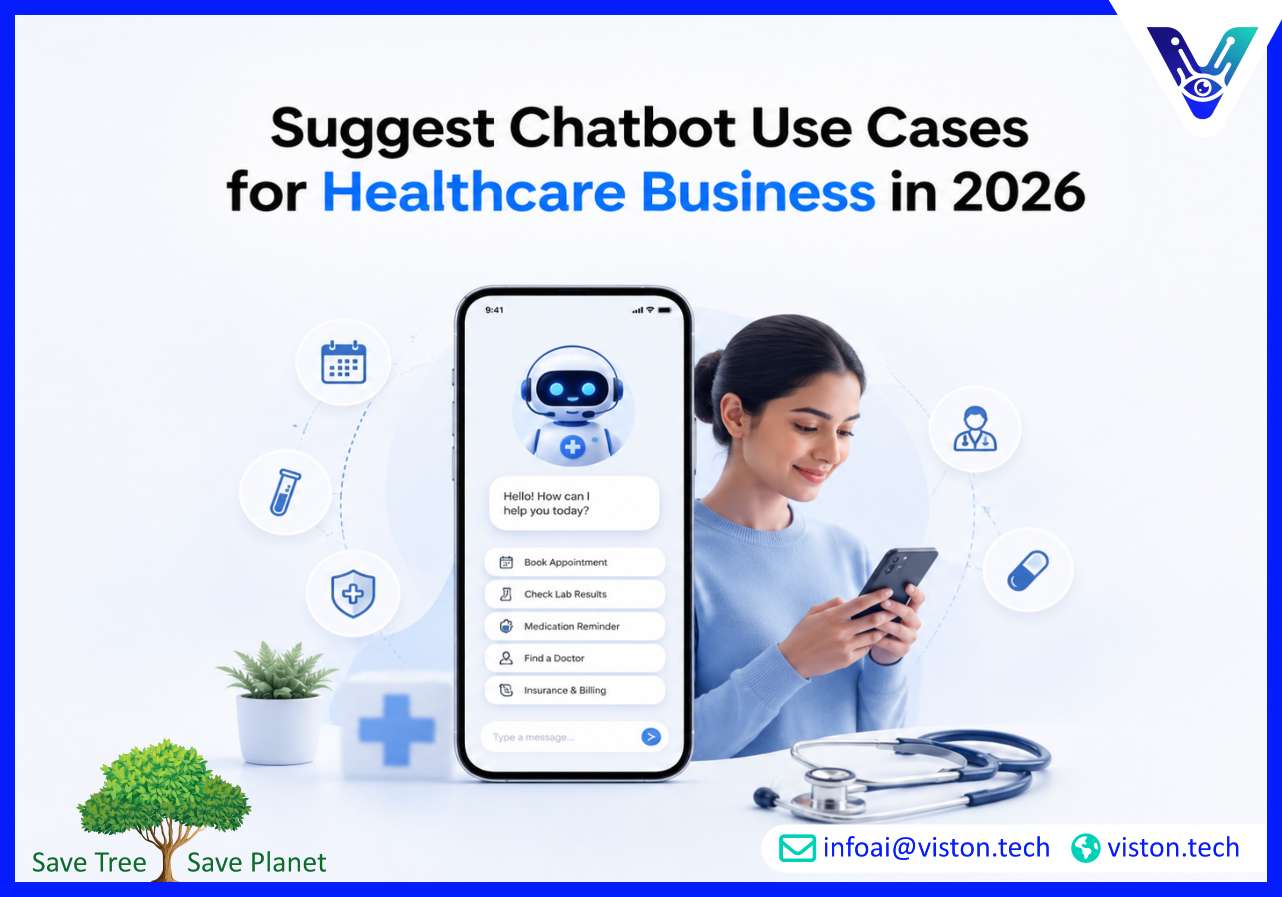
Healthcare businesses are under pressure to improve patient access, reduce administrative workload, and deliver faster communication without compromising safety or privacy. Suggesting the right chatbot use cases for healthcare business means identifying where conversational AI can support patients, staff, and operations while keeping clinical responsibility firmly with qualified professionals.
Healthcare communication is often fragmented. Patients call for appointments, ask about reports, request prescription refills, check insurance details, follow up after visits, and search for basic health guidance across multiple channels. Staff teams handle many of these repetitive interactions manually, which can increase waiting times and reduce capacity for higher-value patient care.
In 2026, healthcare chatbots are no longer viewed only as simple website assistants. A well-designed AI chatbot can act as a patient engagement layer, intake assistant, care navigation tool, administrative support system, and internal workflow helper. It can guide users through structured conversations, collect required information, route requests to the right department, and provide consistent answers based on approved healthcare content.
The important point is that healthcare chatbot development must be handled differently from general customer service automation. Healthcare conversations may involve sensitive personal information, emotional concerns, urgent symptoms, accessibility needs, and regulated data. This makes accuracy, escalation, consent, security, and governance essential from the beginning.
For healthcare businesses, the strongest chatbot use cases are usually not about replacing doctors, nurses, or support staff. They are about removing repetitive friction from the patient journey and giving clinical and administrative teams better context before human intervention is needed. A chatbot can help patients take the next right step, but it should not pretend to provide diagnosis or emergency care unless it is part of a properly validated clinical system.
Common healthcare businesses that can benefit include clinics, hospitals, dental practices, diagnostic labs, telehealth platforms, pharmacies, wellness providers, home care agencies, mental health practices, physiotherapy centers, and health insurance service teams. Each business type has different risks and workflows, so the chatbot use case should match the organization’s actual operating model.
Patient-facing chatbots are often the first place healthcare businesses see value. They improve response speed, reduce routine phone calls, and help patients access information without waiting for staff availability.
Appointment scheduling is one of the most practical healthcare chatbot use cases. A chatbot can help patients find available slots, choose a provider, confirm visit type, reschedule appointments, cancel bookings, and receive reminders. When integrated with a calendar, practice management system, or electronic medical record platform, it can reduce manual coordination and lower missed appointments.
Before a visit, patients often need to provide symptoms, medical history, insurance details, consent forms, medication lists, or reason for consultation. A chatbot can collect this information through a structured intake flow and send it to the right team before the appointment. This helps staff prepare better and reduces repetitive paperwork at the front desk.
Healthcare chatbots can ask structured questions and guide patients toward appropriate next steps, such as booking a routine appointment, contacting a nurse line, visiting urgent care, or seeking emergency help. This use case requires careful design, clear disclaimers, approved clinical protocols, and safe escalation. The chatbot should focus on routing and urgency guidance rather than unsupported diagnosis.
Patients repeatedly ask about opening hours, doctor availability, accepted insurance, location, parking, preparation instructions, pricing policies, test requirements, and post-procedure guidance. A chatbot can answer these questions from an approved knowledge base, making information easier to access and reducing pressure on reception and support teams.
Diagnostic centers and clinics can use chatbots to update patients on report availability, explain turnaround times, and guide them on how to access results securely. For sensitive reports, the chatbot should verify identity and follow strict access rules. In many cases, it should notify patients that results are available rather than displaying clinical details directly in chat.
Pharmacies, chronic care providers, and clinics can use chatbots to remind patients about medication schedules, refill windows, and prescription renewal processes. The chatbot can also route refill requests to the pharmacy or care team. This is useful for recurring prescriptions, but medical advice about dosage changes should always be escalated to qualified professionals.
Some of the highest-value chatbot use cases for healthcare business are behind the scenes. Administrative work consumes significant staff time, and many requests follow predictable patterns that can be automated safely.
Healthcare front desks receive high volumes of repetitive inquiries. A chatbot can handle common questions, collect caller intent, route requests, and create support tickets for human follow-up. Voice-enabled assistants can also support phone-based workflows where patients prefer calling instead of using web chat.
Billing teams often answer questions about accepted plans, invoice status, payment methods, claim submission, pre-authorization, and documentation requirements. A chatbot can explain general billing processes, collect billing inquiry details, and route complex financial questions to staff. For privacy reasons, account-specific billing information should be protected with authentication.
Healthcare employees also need fast access to internal policies, standard operating procedures, escalation rules, HR information, IT support, and training material. An internal AI chatbot can help staff find information quickly, summarize internal documents, and reduce back-and-forth across departments.
After appointments, chatbots can send follow-up instructions, collect satisfaction feedback, remind patients about next steps, and ask whether they need support. This can improve patient engagement and help healthcare businesses identify service issues earlier.
Specialist clinics and hospitals can use chatbots to guide referring providers or patients through referral requirements. The chatbot can collect documents, check whether key fields are missing, and route referral requests to the right department. This reduces delays caused by incomplete submissions.
For wellness programs, chronic care management, maternity support, rehabilitation, or preventive health campaigns, chatbots can explain eligibility, collect interest, answer common questions, and enroll patients into appropriate programs. This supports outreach without requiring every interaction to begin with a phone call.
Once a healthcare business has reliable basic automation in place, more advanced AI chatbot development can support growth, personalization, and better operational insight. These use cases require stronger data architecture, integrations, monitoring, and governance.
A chatbot can deliver approved educational content based on service type, patient journey stage, language preference, or care program. For example, a dental clinic may provide pre-treatment and aftercare guidance, while a physiotherapy provider may share exercise reminders approved by clinicians. Personalization must be controlled so the chatbot does not create unsafe or unsupported medical advice.
Many healthcare businesses serve patients who speak different languages. A multilingual chatbot can reduce communication barriers by offering appointment help, service information, reminders, and administrative guidance in multiple languages. For clinical or high-risk conversations, translation quality and escalation rules should be reviewed carefully.
Telehealth platforms can use chatbots to prepare patients before virtual consultations. The chatbot can check device readiness, collect symptoms, confirm consent, gather medical history, and explain what to expect. This helps clinicians begin the consultation with better context and reduces wasted appointment time.
For long-term conditions, chatbots can support regular check-ins, lifestyle reminders, medication adherence prompts, and escalation when patients report concerning changes. This is particularly useful for diabetes care, hypertension management, respiratory care, and post-surgery recovery programs. However, escalation logic must be reviewed by medical professionals.
Mental health clinics and wellness providers can use chatbots for appointment requests, resource navigation, mood check-ins, and crisis routing. This is a sensitive area. The chatbot should not replace therapists or emergency support. It must be designed with clear boundaries, emergency guidance, and immediate human escalation when risk signals appear.
Healthcare chatbots can reveal patterns in patient questions, service gaps, appointment friction, cancellation reasons, and common confusion points. These insights can help leaders improve website content, staffing, service design, and patient communication. Analytics should be aggregated and governed carefully to protect personal data.
The best chatbot use case is not always the most advanced one. Healthcare businesses should start with a problem that is frequent, measurable, low-risk, and operationally painful. Appointment scheduling, intake automation, FAQs, reminders, and care navigation are often strong starting points because they solve clear business problems and can be implemented with controlled workflows.
Before development begins, leaders should define the chatbot’s role. Is it an administrative assistant, patient support tool, care navigation layer, internal knowledge assistant, or workflow automation bot? A clear role prevents scope creep and reduces the risk of the chatbot giving answers beyond its authority.
Data quality is another major factor. An AI chatbot needs approved source content, clean service information, escalation rules, and integration access. If the knowledge base is outdated or inconsistent, the chatbot may provide poor answers even if the underlying AI model is advanced.
Healthcare businesses should also evaluate privacy and compliance requirements. In the United States, HIPAA establishes standards for protecting medical records and individually identifiable health information, while European healthcare organizations must also consider health data obligations under GDPR and related digital health regulations.
A safe healthcare chatbot should include authentication where needed, encryption, audit logs, role-based access, consent management, data retention rules, human escalation, fallback responses, and monitoring for inaccurate or unsafe outputs. These controls are especially important when the chatbot touches protected health information, prescription requests, symptoms, insurance records, or test results.
Integration planning is equally important. A chatbot may need to connect with EMR or EHR systems, CRM platforms, appointment tools, patient portals, billing systems, helpdesk software, SMS gateways, WhatsApp, email, or voice systems. Every integration adds value, but it also adds testing, security review, and maintenance responsibility.
For most healthcare organizations, a phased roadmap works best. Start with a focused use case, measure adoption and resolution rates, review conversation quality, then expand into higher-value workflows. This approach gives the business evidence before investing in deeper automation.
Viston AI is relevant to healthcare businesses exploring chatbot use cases because its service portfolio includes AI Chatbot Development, Enterprise AI Chatbots, AI Chatbot Integration, Multilingual Support, NLP and Text Analysis, Voice-Enabled Assistants, MLOps and Model Monitoring, AI Automation and Workflow Bots, and Healthcare AI solutions. Its AI chatbot service describes capabilities such as conversational AI, intent recognition, entity extraction, fallback and escalation protocols, multi-channel deployment, and integration with business systems.
For healthcare businesses, these capabilities matter because chatbot success depends on more than a chat interface. A healthcare chatbot needs structured conversation design, secure data handling, approved knowledge sources, reliable routing, human handoff, and integration with operational systems. Viston AI’s healthcare AI positioning also references support for healthcare providers, pharmaceutical companies, and medical research organizations, with attention to privacy, compliance, automation, and scalable AI deployment.
In practical terms, Viston AI can help healthcare organizations identify which chatbot use cases are suitable for automation, design safe patient journeys, connect chatbots with business workflows, and monitor performance after launch. This is especially useful for clinics, hospitals, telehealth providers, diagnostic businesses, and healthcare service teams that want AI Chatbot Development to improve access and efficiency without creating unnecessary clinical, operational, or compliance risk.
The best use cases include appointment booking, patient intake, FAQs, care navigation, medication reminders, billing support, lab report status updates, post-visit follow-ups, referral management, and internal staff assistance. The right choice depends on patient volume, workflow complexity, privacy requirements, and integration needs.
A standard healthcare chatbot should not diagnose patients unless it is part of a clinically validated and regulated system. Most healthcare chatbots are better used for symptom collection, care navigation, routing, education, and administrative support, with escalation to qualified professionals for clinical decisions.
Chatbots improve patient experience by giving faster answers, reducing phone wait times, helping patients book appointments, explaining preparation steps, sending reminders, and routing requests to the correct team. They also help patients access support outside normal office hours.
Healthcare chatbots can be secure when designed with encryption, authentication, consent controls, audit logs, access permissions, privacy policies, and compliant hosting. Security depends on the architecture, integrations, data handling practices, and whether the chatbot processes protected health information.
A healthcare chatbot can integrate with appointment scheduling tools, EHR or EMR platforms, patient portals, CRM systems, billing software, pharmacy systems, helpdesk platforms, SMS, email, WhatsApp, mobile apps, and voice systems. Integration scope should be planned carefully to protect patient data.
Yes. Viston AI offers AI Chatbot Development and healthcare AI-related capabilities that align with healthcare chatbot use cases such as patient engagement, appointment scheduling, symptom assessment support, prescription inquiry routing, medical information delivery, EHR integration, multilingual support, and workflow automation.
Suggesting chatbot use cases for healthcare business requires a balance between patient convenience, operational efficiency, clinical safety, and data protection. The strongest AI Chatbot Development opportunities usually begin with high-volume, repetitive workflows such as scheduling, intake, FAQs, reminders, billing support, and care navigation. More advanced use cases can support chronic care, telehealth preparation, multilingual communication, and patient education when proper governance is in place. For healthcare organizations planning chatbot adoption in 2026, the practical takeaway is clear: start with a focused use case, build around approved workflows, protect sensitive data, and choose a development partner that understands both conversational AI and healthcare operations.
