
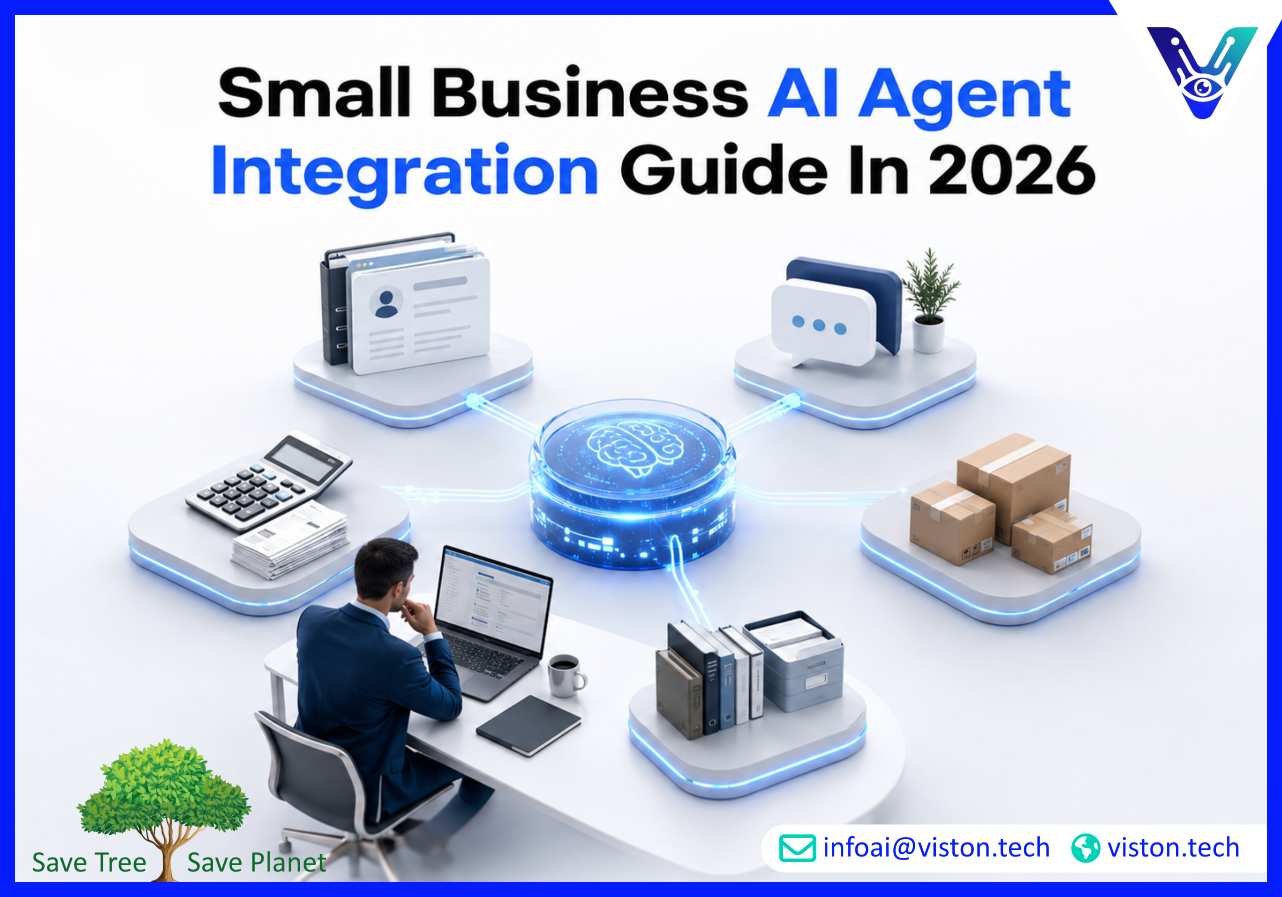
Artificial intelligence is no longer limited to large enterprises with extensive technology budgets. In 2026, small businesses are increasingly adopting AI agents to automate operations, improve customer experiences, and support growth. However, successful implementation depends on proper AI agent integration rather than simply deploying standalone AI tools. Understanding how AI agents connect with existing business systems is essential for achieving meaningful results.
AI agent integration refers to connecting intelligent AI-powered agents with the tools, platforms, data sources, and workflows that businesses use every day. Unlike traditional chatbots that respond to simple requests, modern AI agents can perform tasks, retrieve information, make recommendations, trigger actions, and collaborate across multiple systems.
For small businesses, integration allows AI agents to work within existing operations rather than functioning as isolated applications. This can include connecting agents with customer relationship management systems, helpdesk platforms, accounting software, inventory systems, project management tools, email platforms, and internal knowledge bases.
When properly integrated, AI agents become operational assistants capable of supporting real business processes instead of simply answering questions.
Small businesses often face resource constraints, limited staffing, and growing customer expectations. AI agents offer an opportunity to increase operational efficiency without significantly expanding headcount.
Several factors are driving adoption:
Rather than replacing employees, AI agents frequently support teams by handling repetitive activities, gathering information, preparing responses, updating records, and assisting with routine decision-making.
These use cases can help small businesses operate more efficiently while maintaining service quality.
Many AI initiatives fail because businesses focus on technology before understanding operational requirements. A structured integration approach significantly improves the likelihood of success.
The most effective AI agent projects begin by identifying a clear operational challenge. Examples may include reducing support response times, automating lead qualification, improving employee productivity, or streamlining customer onboarding.
Businesses should avoid implementing AI solely because it is popular. Successful projects are tied to measurable business objectives.
Before integration begins, it is important to assess the software ecosystem already in use. This includes:
Understanding available integrations, APIs, permissions, and data quality helps determine how AI agents can operate effectively.
Each AI agent should have a specific purpose. Overloading one agent with too many responsibilities often reduces reliability.
For example:
Clear role definitions improve governance, testing, and long-term maintenance.
Even advanced AI systems benefit from human review. Businesses should identify which actions require approval, escalation, or verification before execution.
This is particularly important when agents handle:
Human oversight improves accountability and reduces operational risk.
Small businesses often encounter several obstacles during AI adoption. Understanding these challenges early can improve project outcomes.
AI agents rely on accurate information. Outdated customer records, incomplete databases, inconsistent documentation, and fragmented systems can reduce effectiveness.
Businesses should review and organize critical data before deployment.
If AI agents cannot access necessary systems, their usefulness becomes limited. Integration planning should ensure agents have secure access to required tools and information sources.
AI agents should operate under clearly defined permissions. Businesses must control access to sensitive information, establish authentication standards, and monitor activity logs.
Without measurable goals, it becomes difficult to evaluate performance. Organizations should track indicators such as:
These metrics help determine whether integration efforts are delivering value.
As AI technologies mature, certain implementation practices consistently produce better outcomes.
Start with one or two business processes that generate measurable value. Successful early deployments create confidence and support broader adoption.
AI delivers greater value when connected directly to business operations. Integrated agents can access information, update systems, and complete tasks rather than merely generating responses.
Ongoing monitoring helps identify issues, improve performance, and maintain compliance. Businesses should regularly review agent outputs, workflows, and permissions.
AI adoption often expands over time. Integration architectures should support future growth, additional workflows, and evolving business requirements.
The strongest results typically come from collaboration between employees and AI agents. AI handles repetitive work while people focus on judgment, strategy, relationship management, and decision-making.
For small businesses exploring AI adoption, successful implementation requires more than selecting an AI model. Effective integration involves workflow analysis, system connectivity, automation planning, governance, security considerations, and ongoing optimization.
Viston AI provides Agent Integration Services designed to help businesses connect AI agents with operational workflows, business applications, and internal systems. This includes identifying suitable use cases, designing agent responsibilities, integrating business platforms, and establishing processes that support reliable day-to-day operations.
Organizations often need guidance when moving from isolated AI experiments to production-ready business solutions. Through Agent Integration Services, Viston AI helps businesses evaluate integration opportunities, reduce implementation complexity, and create AI-enabled workflows that align with practical business objectives.
Whether supporting customer service operations, sales processes, internal productivity initiatives, workflow automation, or multi-agent environments, the focus remains on creating systems that are scalable, manageable, and aligned with measurable business outcomes.
AI agent integration involves connecting AI agents with business systems, data sources, applications, and workflows so they can perform useful operational tasks rather than functioning as standalone tools.
Yes. Small businesses can use AI agents to automate repetitive tasks, improve customer support, enhance productivity, and streamline operations without significantly increasing staffing requirements.
AI agents can connect with CRM platforms, accounting software, helpdesk systems, project management tools, communication platforms, databases, knowledge bases, and many other business applications.
Project timelines vary depending on workflow complexity, system requirements, data readiness, and integration scope. Simple deployments may take weeks, while larger implementations can require several months.
When implemented correctly with proper authentication, access controls, monitoring, and governance policies, AI agents can operate securely within business environments.
Viston AI provides Agent Integration Services that help businesses design, integrate, deploy, and optimize AI agents within existing workflows and operational systems to support practical business objectives.
A small business AI agent integration strategy is no longer a future consideration—it is becoming a practical competitive advantage in 2026. Businesses that successfully integrate AI agents into customer service, sales, operations, and administrative workflows can improve efficiency, enhance responsiveness, and support sustainable growth. The key is focusing on business outcomes, system connectivity, governance, and scalability rather than standalone AI tools. For organizations seeking structured implementation support, Viston AI’s Agent Integration Services provide expertise that helps transform AI capabilities into practical operational value.
