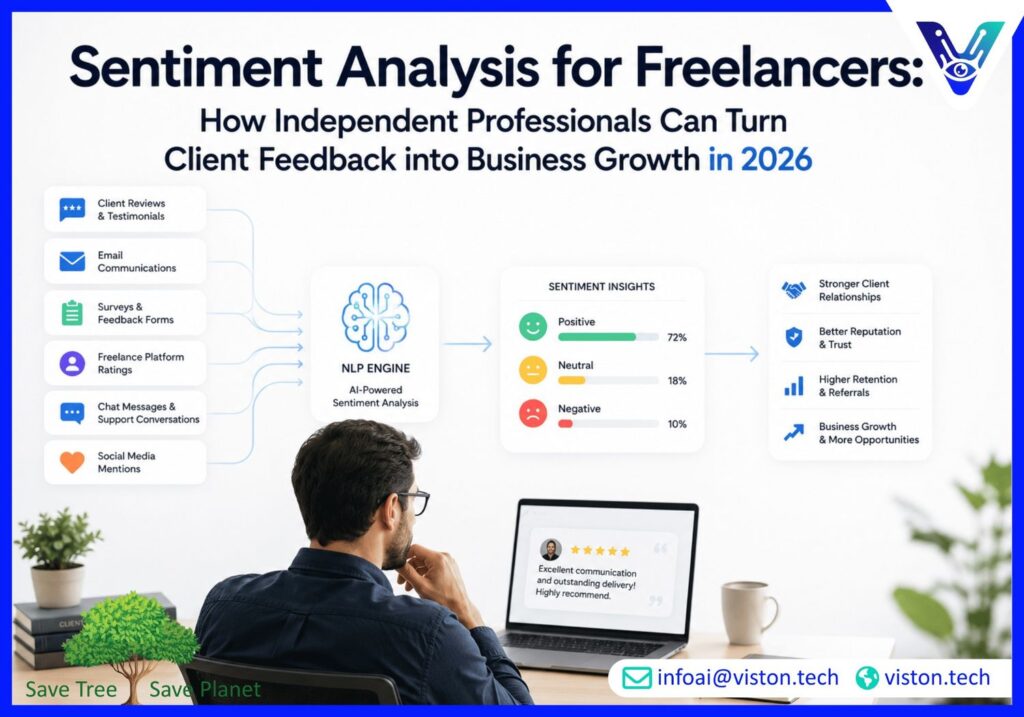
Sentiment Analysis for Freelancers: How Independent Professionals Can Turn Client Feedback into Business Growth in 2026
Freelancers operate in a highly competitive environment where client satisfaction directly impacts reputation, referrals, retention, and revenue. As client communication expands across emails, reviews, surveys, social platforms, and messaging channels, sentiment analysis has become a valuable tool for understanding client perceptions at scale. In 2026, freelancers who leverage sentiment analysis can identify opportunities, address concerns proactively, and strengthen long-term client relationships.
What Sentiment Analysis Means for Freelancers
Sentiment analysis is the process of using natural language processing (NLP) and artificial intelligence to identify emotions, opinions, and attitudes expressed in text. It helps determine whether feedback is positive, negative, or neutral.For freelancers, sentiment analysis can transform unstructured feedback into actionable insights. Instead of manually reviewing every comment, message, or review, freelancers can quickly understand how clients feel about their services.
Common Sources of Freelancer Feedback
Client reviews and testimonials
Project completion surveys
Email communications
Freelance marketplace ratings
Social media mentions
Support conversations
Chat messages and collaboration platforms
By analyzing these interactions, freelancers can gain a clearer picture of client satisfaction and service quality.
Why Sentiment Analysis Matters for Freelancers in 2026
The freelance economy continues to grow across industries, creating more competition and increasing client expectations. Buyers are looking for professionals who deliver excellent results and provide a positive experience throughout the engagement.Sentiment analysis helps freelancers understand client experiences beyond numerical ratings.
Early Detection of Client Concerns
Negative sentiment often appears before a client submits a poor review or decides not to renew a contract. Detecting dissatisfaction early allows freelancers to resolve issues before they affect business relationships.
Improved Client Retention
Retaining existing clients is often more cost-effective than acquiring new ones. Sentiment analysis helps identify recurring concerns and areas for improvement that contribute to stronger client retention.
Better Service Positioning
Understanding what clients appreciate most allows freelancers to refine service offerings, marketing messages, and value propositions.
Enhanced Reputation Management
Online reviews significantly influence purchasing decisions. Sentiment analysis helps freelancers monitor public perception and respond strategically to feedback.
Key Benefits of Sentiment Analysis for Freelance Businesses
Understanding Client Expectations
Clients often reveal valuable information about their expectations through comments and project feedback. Sentiment analysis helps uncover patterns that may otherwise go unnoticed.
Identifying Service Strengths
Positive sentiment reveals which aspects of a freelancer’s work consistently generate satisfaction. These strengths can become core differentiators in proposals and marketing materials.
Reducing Churn and Lost Opportunities
Negative feedback can highlight communication issues, delivery delays, scope misunderstandings, or quality concerns before they become larger business problems.
Data-Driven Decision Making
Rather than relying on assumptions, freelancers can use sentiment insights to make informed decisions about pricing, processes, service packages, and client communication strategies.
Building Long-Term Relationships
Understanding client emotions enables more personalized engagement, helping freelancers build trust and secure repeat business.
How Freelancers Can Implement Sentiment Analysis Effectively
Successful sentiment analysis requires more than simply collecting feedback. Freelancers should establish a structured approach to gathering, analyzing, and acting on insights.
Centralize Feedback Collection
Collect feedback from all available channels, including reviews, surveys, emails, project management tools, and social platforms. A centralized dataset improves analysis quality and provides a complete view of client sentiment.
Monitor Trends Over Time
Individual comments provide value, but trends reveal deeper insights. Tracking sentiment across multiple projects helps identify recurring strengths and weaknesses.
Segment Feedback by Service Type
Freelancers offering multiple services can analyze sentiment separately for each offering. This approach helps determine which services create the highest client satisfaction.
Combine Sentiment with Performance Metrics
Client sentiment becomes even more valuable when paired with operational metrics such as delivery times, revision requests, project completion rates, and retention levels.
Act on Insights Quickly
The greatest value comes from implementing improvements based on findings. Addressing concerns promptly demonstrates professionalism and responsiveness.
Common Sentiment Analysis Challenges for Freelancers
Limited Data Volume
Many freelancers manage a smaller number of clients than larger organizations. However, even modest datasets can provide valuable insights when analyzed consistently.
Multiple Communication Channels
Feedback is often scattered across different platforms. Integrating these sources can be challenging without the right tools and processes.
Context Interpretation
Human language contains nuances, sarcasm, and industry-specific terminology that require sophisticated NLP capabilities for accurate interpretation.
Time Constraints
Freelancers frequently balance client work, business development, and administration. Automated sentiment analysis can significantly reduce manual review effort.
How Viston AI Supports Sentiment Analysis Initiatives
For businesses and professionals seeking advanced sentiment analysis capabilities, Viston AI provides AI-powered solutions designed to transform customer and client feedback into actionable business intelligence.Sentiment analysis is not simply about classifying comments as positive or negative. Effective implementation requires accurate natural language processing, scalable analysis workflows, meaningful reporting, and the ability to uncover patterns that support better business decisions.Viston AI focuses on helping organizations extract valuable insights from customer interactions, reviews, surveys, support conversations, and other feedback channels. These capabilities can support professionals who want deeper visibility into client experiences, service quality, and emerging concerns.As AI-driven customer intelligence becomes increasingly important in 2026, businesses across industries are looking for solutions that provide accurate sentiment detection, automated analysis, scalable processing, and actionable reporting. By leveraging advanced sentiment analysis technologies, organizations can better understand customer perceptions, improve experiences, and make more informed operational decisions.
Frequently Asked Questions
Can freelancers benefit from sentiment analysis even with a small client base?
Yes. Even a limited number of client interactions can reveal valuable patterns regarding satisfaction, communication quality, and service performance.
What types of feedback can be analyzed using sentiment analysis?
Reviews, surveys, emails, chat conversations, social media comments, support messages, and testimonials can all be analyzed for sentiment.
How does sentiment analysis improve client retention?
It helps identify dissatisfaction early, allowing freelancers to address issues before they lead to lost clients or negative reviews.
Is sentiment analysis only useful for large businesses?
No. Freelancers, consultants, agencies, and small businesses can all use sentiment analysis to improve client experiences and strengthen relationships.
How accurate are modern sentiment analysis tools?
Accuracy depends on the quality of the AI models, training data, language support, and industry context. Modern NLP solutions are significantly more advanced than earlier keyword-based approaches.
How can Viston AI support sentiment analysis projects?
Viston AI provides sentiment analysis capabilities that help organizations analyze feedback, identify trends, monitor customer sentiment, and generate actionable insights for better decision-making.
Conclusion
Sentiment analysis for freelancers is becoming an increasingly valuable business tool in 2026. By understanding client emotions, expectations, and experiences, freelancers can improve service quality, strengthen relationships, enhance reputation management, and drive sustainable growth. As feedback volumes continue to increase across digital channels, sentiment analysis provides a practical way to transform client opinions into meaningful business intelligence. For organizations exploring advanced sentiment analysis capabilities, Viston AI offers solutions that help convert customer feedback into actionable insights that support better business outcomes.