
As AI adoption moves from experimentation to operational deployment, more businesses are actively requesting quotes for AI integration services. However, pricing alone does not determine project success. Understanding what AI integration involves, how providers structure engagements, and what factors influence costs is essential for making informed decisions in 2026.
Many organizations have already tested AI tools, chatbots, and automation platforms. The next challenge is connecting these technologies to existing business systems, workflows, and data sources. This is where AI integration services become critical.
AI integration focuses on connecting AI capabilities with business operations, allowing organizations to automate tasks, improve decision-making, enhance customer experiences, and increase operational efficiency without replacing existing infrastructure.
Businesses commonly request AI integration services to:
As enterprise AI adoption accelerates, organizations increasingly require integration expertise that bridges technology and business objectives.
Before requesting a quote, businesses should understand what professional AI integration services generally include. The scope often extends far beyond connecting a single AI model to a software platform.
Successful integrations begin with understanding current workflows, operational bottlenecks, and automation opportunities. Providers evaluate where AI can create measurable business value.
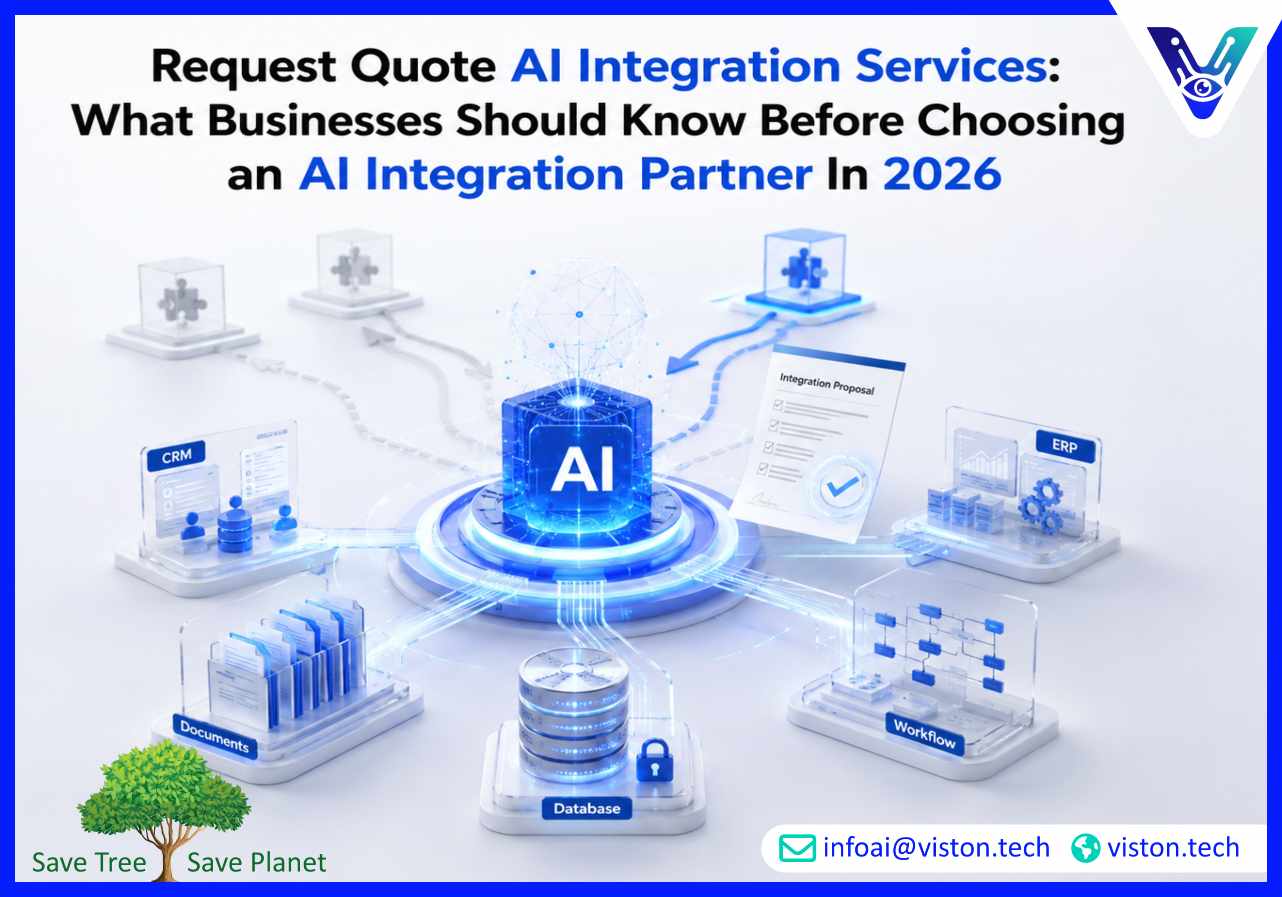
Most projects involve connecting AI solutions with existing platforms such as CRM systems, ERP software, customer support tools, document management systems, databases, APIs, and analytics environments.
Many organizations are moving toward AI agents capable of performing tasks, retrieving information, communicating across systems, and supporting business operations. Integration projects often include designing and deploying these agents.
AI becomes most valuable when embedded into real operational workflows. Integration specialists help automate repetitive processes while maintaining governance and control.
Modern AI deployments must align with data protection policies, access controls, industry regulations, and organizational governance requirements.
Professional integration projects include validation, performance monitoring, workflow testing, and continuous optimization to ensure reliable production performance.
Businesses often expect a standard price for AI integration. In reality, costs vary significantly depending on project requirements, technical complexity, and organizational objectives.
Integrating AI with a single application differs substantially from connecting multiple platforms such as Salesforce, HubSpot, SAP, Microsoft Dynamics, Zendesk, databases, and internal systems.
Simple automations require less effort than workflows involving approvals, decision-making, escalations, exception handling, and cross-department coordination.
Projects involving fragmented, inconsistent, or poorly structured data typically require additional preparation before AI can operate effectively.
Organizations seeking specialized AI agents, multi-agent systems, or advanced orchestration capabilities generally require more extensive development and testing.
Industries with strict compliance requirements often require additional safeguards, auditing capabilities, monitoring systems, and approval workflows.
Accelerated deployment schedules can impact project planning, resource allocation, and overall implementation costs.
Understanding these factors helps businesses request more accurate quotes and compare service providers more effectively.
Organizations can improve vendor evaluations by preparing clear requirements before requesting proposals.
The most successful AI projects focus on measurable business outcomes rather than technology adoption alone.
Creating an inventory of current software platforms helps providers assess integration complexity.
Some businesses need workflow assistance while others seek fully orchestrated AI-driven processes.
Data governance, privacy requirements, and internal security policies significantly influence project architecture.
Defining key performance indicators helps align project objectives and expected outcomes from the start.
Providing clear answers to these questions often leads to more accurate project estimates and implementation plans.
While cost is important, selecting an AI integration partner should involve a broader evaluation of capabilities and experience.
Businesses should consider:
A lower quote may not deliver long-term value if the solution lacks scalability, governance, or operational alignment.
For organizations seeking Agent Integration Services, Viston AI focuses on helping businesses connect AI capabilities with real-world operations. Modern AI adoption often requires more than deploying a chatbot or integrating a language model. Businesses need systems that interact with existing applications, workflows, data environments, and operational processes.
Viston AI’s Agent Integration Services support organizations looking to implement AI agents, workflow automation, agentic systems, and multi-system integrations. This includes helping businesses evaluate opportunities for automation, design integration strategies, connect AI agents with operational platforms, and create scalable workflows that align with business objectives.
As AI ecosystems become increasingly complex in 2026, organizations benefit from structured implementation approaches that balance automation, governance, security, and operational performance. Whether the goal is improving customer engagement, streamlining internal operations, or building AI-powered workflows, successful integration requires careful planning and execution.
By focusing on practical business outcomes rather than isolated technology deployments, Viston AI helps organizations develop AI integration strategies that support long-term operational value.
AI integration services connect artificial intelligence technologies with existing business systems, workflows, applications, and data sources to improve efficiency and automation.
Organizations typically provide information about business objectives, systems requiring integration, workflow requirements, security needs, and expected outcomes to receive a project estimate.
Key factors include system complexity, number of integrations, workflow requirements, AI agent development needs, security requirements, and implementation scope.
Project timelines vary depending on complexity. Small integrations may take several weeks, while enterprise-wide initiatives can require multiple months.
AI agents are software entities that can perform tasks, retrieve information, make decisions within defined boundaries, and interact with business systems to support operational workflows.
Yes. Viston AI provides Agent Integration Services that support AI agent deployment, workflow automation, system integration, and operational implementation strategies.
Requesting a quote for AI integration services is an important step for businesses seeking to transform operations through intelligent automation. However, successful projects require more than comparing prices. Organizations should evaluate integration requirements, workflow complexity, system dependencies, security needs, and long-term scalability before selecting a provider. Professional Agent Integration Services help ensure AI solutions connect effectively with business operations and deliver measurable outcomes. For organizations exploring AI agent deployment and workflow automation, Viston AI offers expertise aligned with practical integration and implementation requirements in 2026.
