
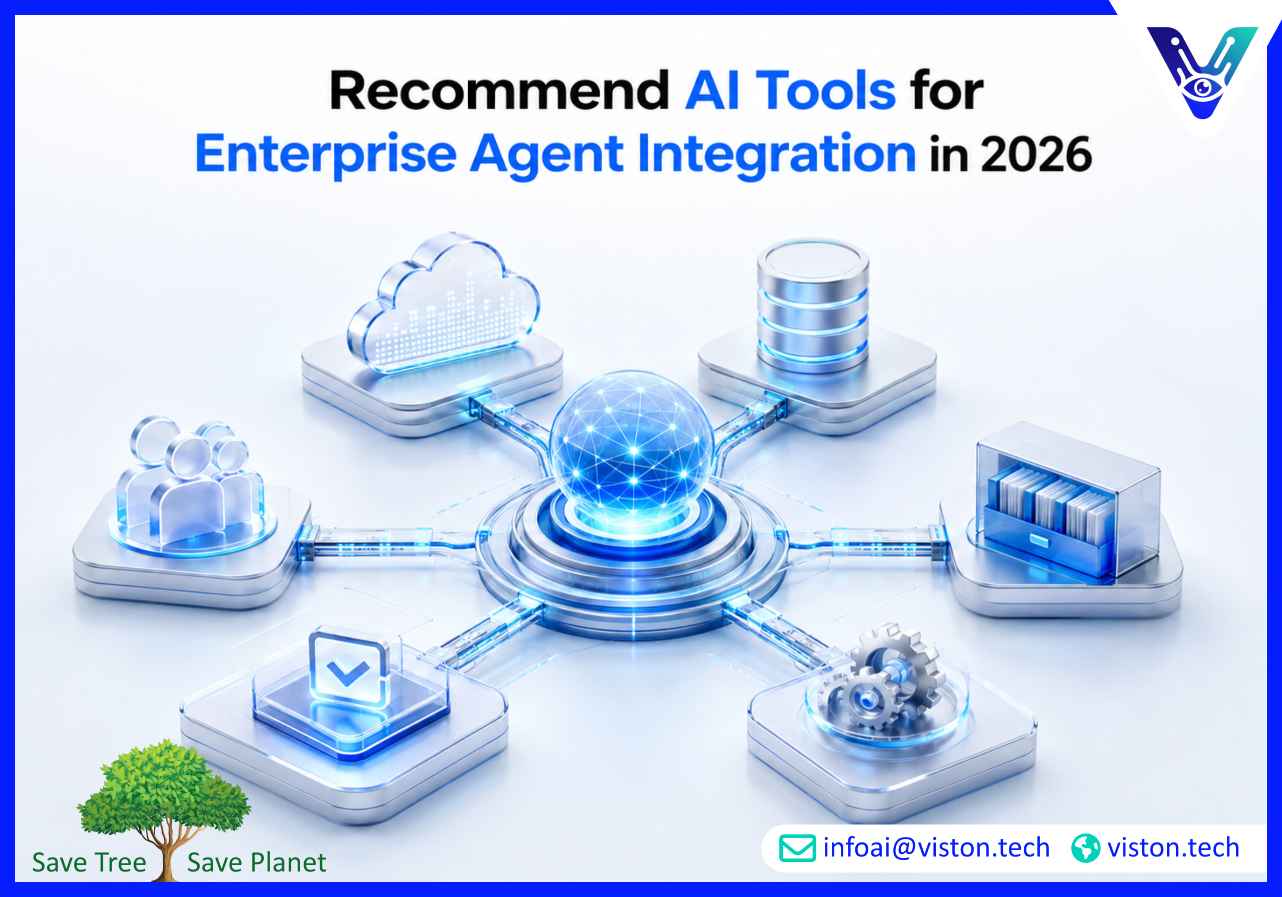
As enterprises move from isolated AI pilots to connected AI ecosystems, selecting the right tools for agent integration has become a critical business decision. Modern AI agents are most valuable when they can securely connect with business systems, access data, automate workflows, and collaborate across departments. Understanding which tools support enterprise agent integration helps organizations build scalable, reliable, and future-ready AI environments.
Enterprise AI agents rarely operate as standalone applications. Most organizations need AI agents to interact with CRM platforms, ERP systems, databases, customer support tools, communication platforms, analytics environments, and internal knowledge repositories.
Without proper integration capabilities, AI agents become isolated assistants that deliver limited business value. Enterprise agent integration focuses on creating connected workflows where AI agents can retrieve information, trigger actions, collaborate with other agents, and support operational processes.
In 2026, organizations increasingly prioritize AI tools that provide:
The best tool selection depends on business objectives, existing infrastructure, compliance requirements, and workflow complexity.
Rather than relying on a single platform, most enterprise AI implementations use a combination of technologies that work together to create an integrated agent ecosystem.
Agent development frameworks provide the foundation for creating specialized AI agents capable of reasoning, tool usage, memory management, and workflow execution.
Common enterprise-focused frameworks help organizations:
These frameworks are often used when businesses require highly customized agent behavior tailored to specific operational processes.
Orchestration tools coordinate how multiple AI agents interact with one another and with business systems. They define workflow logic, approvals, escalation paths, task routing, and exception handling.
Strong orchestration platforms typically support:
These capabilities are essential for enterprise environments where reliability and governance are critical.
Most enterprise agents need access to business applications. Integration platforms enable agents to communicate with CRMs, ERPs, customer service systems, databases, cloud platforms, and internal applications.
Important capabilities include:
Organizations with complex technology stacks often consider integration capabilities a primary selection criterion.
Enterprise agents need access to reliable business information. Knowledge management and retrieval tools allow agents to search documents, policies, product information, internal databases, and organizational knowledge repositories.
These platforms help improve:
For many enterprises, retrieval capabilities are fundamental to agent effectiveness.
Choosing the right AI integration tools requires more than comparing features. Decision-makers should evaluate how each solution aligns with operational requirements and long-term business goals.
Tools should support growth in agent volume, workflow complexity, user adoption, and transaction volumes. Enterprise deployments often expand significantly after initial success.
Organizations must ensure AI agents operate within defined permissions and comply with security policies. Integration tools should support access controls, audit trails, monitoring, and governance frameworks.
Business requirements evolve quickly. Flexible platforms allow organizations to modify workflows, add integrations, create new agents, and adapt to changing operational needs.
Many enterprises operate a mix of cloud applications, legacy systems, custom software, and third-party platforms. Integration tools should minimize disruption while supporting broad connectivity.
Enterprise teams need visibility into agent behavior, workflow performance, exceptions, and outcomes. Monitoring capabilities help maintain trust and support continuous optimization.
While technology selection varies by use case, many successful enterprise implementations combine several categories of tools:
Rather than focusing on individual products alone, organizations should prioritize creating a technology stack that supports long-term integration goals and operational reliability.
Selecting AI tools can be challenging because technology choices affect scalability, integration complexity, governance, maintenance requirements, and long-term costs. Many organizations struggle to evaluate which combination of platforms best supports their business objectives.
Agent Integration Services help businesses assess existing infrastructure, identify integration requirements, evaluate tool compatibility, and design implementation roadmaps that align with operational goals.
A structured integration strategy reduces the risk of fragmented deployments, disconnected workflows, and technology investments that fail to scale.
For organizations exploring enterprise agent integration, Viston AI provides Agent Integration Services focused on connecting AI agents with business systems, workflows, and operational processes. Rather than treating AI agents as isolated tools, the focus is on building integrated environments where agents can interact with enterprise applications, retrieve information, automate tasks, and support business outcomes.
Viston AI helps organizations evaluate integration opportunities, design agent architectures, establish orchestration strategies, and implement secure connections between AI agents and existing platforms. This includes supporting workflow automation, system interoperability, multi-agent coordination, and governance considerations required for enterprise adoption.
As businesses increasingly invest in agentic AI, selecting the right technology stack becomes just as important as developing the agents themselves. A well-planned integration approach helps ensure AI initiatives remain scalable, reliable, and aligned with organizational objectives.
Enterprise agent integration tools enable AI agents to connect with business systems, access data, automate workflows, communicate with other agents, and perform operational tasks across an organization.
Orchestration ensures agents collaborate effectively, follow business rules, manage approvals, handle exceptions, and complete workflows reliably.
Yes. Modern integration platforms allow AI agents to connect with CRM systems, ERP platforms, databases, communication tools, analytics systems, and custom applications through APIs and workflow connectors.
Key priorities include scalability, security, governance, compatibility with existing systems, workflow flexibility, monitoring capabilities, and long-term maintainability.
In most cases, yes. Successful implementations often combine development frameworks, orchestration platforms, integration tools, knowledge systems, and monitoring solutions to create a complete ecosystem.
Viston AI provides Agent Integration Services that help organizations evaluate technologies, design integration architectures, connect AI agents to business systems, and deploy scalable agent-driven workflows.
Choosing the right AI tools for enterprise agent integration is essential for organizations seeking to scale AI beyond isolated use cases. The most successful implementations combine agent development, orchestration, integration, knowledge management, and governance capabilities into a connected ecosystem. As enterprises continue investing in agentic AI throughout 2026, a strategic approach to tool selection helps ensure reliability, security, scalability, and measurable business outcomes. Organizations looking to build integrated AI environments can benefit from specialized Agent Integration Services that align technology decisions with operational objectives and long-term growth.
