
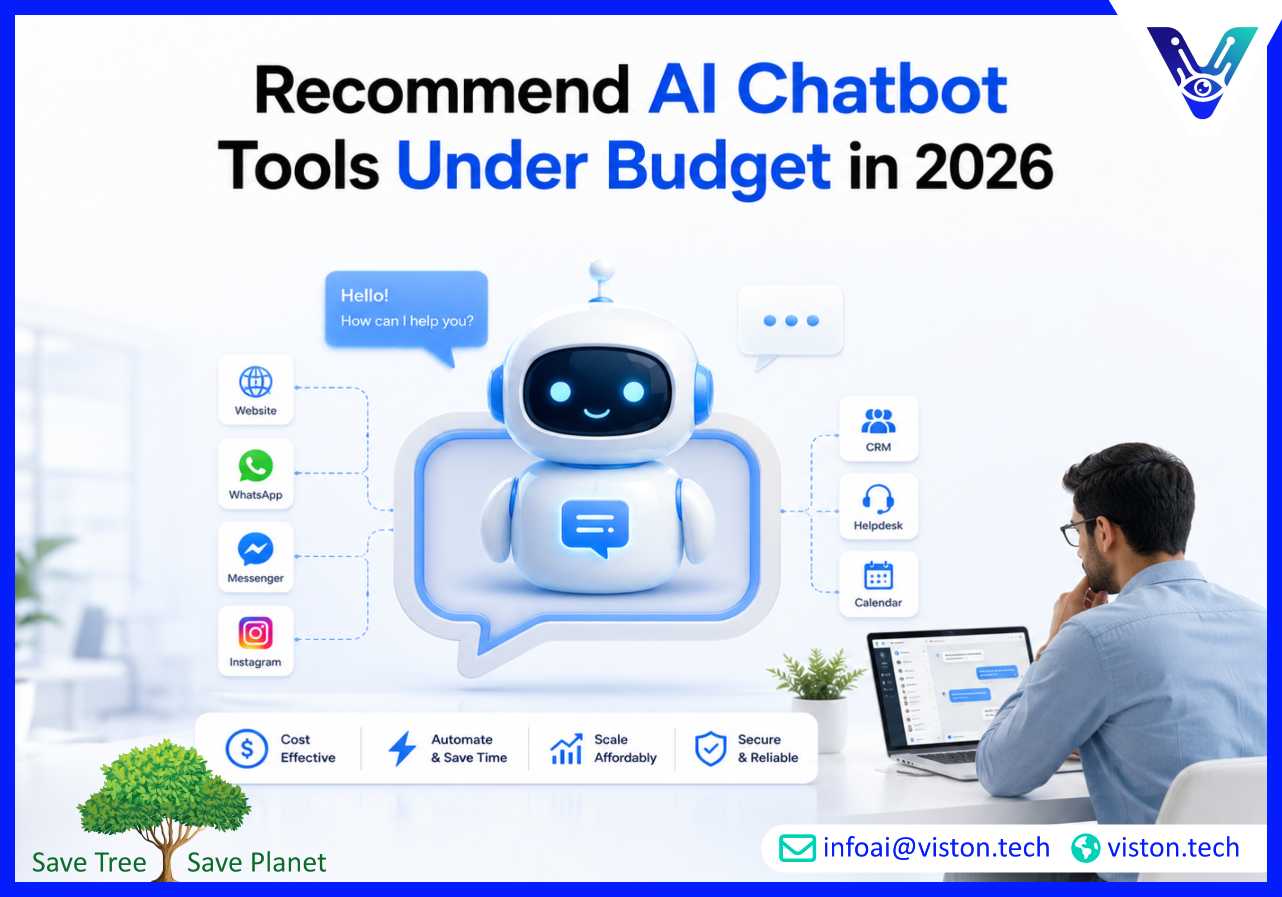
Choosing the right AI chatbot tools under budget is no longer about picking the cheapest software. Businesses need a chatbot that fits their goals, integrates with existing systems, handles real customer questions, and stays affordable as usage grows.
When businesses ask for affordable AI chatbot tools, they usually want a solution that can automate customer support, qualify leads, answer product questions, reduce repetitive workload, or improve website engagement without creating heavy monthly software costs. In 2026, this decision requires more than comparing subscription prices.
A chatbot may look affordable at the entry level but become expensive once message credits, AI conversations, extra seats, integrations, branding removal, WhatsApp access, automation workflows, or advanced analytics are added. A low-cost chatbot can also become costly if it gives inaccurate answers, fails to escalate properly, or cannot connect with CRM, helpdesk, ecommerce, or internal business systems.
The better approach is to define the business use case first. A small business may need a simple website assistant trained on FAQs. An ecommerce store may need a bot that can answer product questions, check order status, and hand over to support. A B2B company may need lead qualification, meeting booking, CRM updates, and sales routing. A growing support team may need AI agents, ticketing workflows, analytics, and strong control over knowledge sources.
Budget-friendly AI chatbot development should therefore balance three priorities: initial affordability, practical functionality, and long-term scalability. The cheapest tool is not always the best value. The right tool is the one that solves the core business problem without forcing unnecessary enterprise spending.
Before choosing a tool, decide whether the chatbot is mainly for customer support, lead generation, ecommerce assistance, appointment booking, internal knowledge search, onboarding, or multilingual communication. This helps narrow the tool category and prevents businesses from paying for features they do not need.
AI chatbot tools usually involve two types of cost. The first is the monthly platform cost. The second is the setup and optimization cost, which includes conversation design, knowledge base preparation, integration, testing, prompt refinement, and ongoing improvement. A budget tool only works well when implementation quality is handled properly.
There is no single chatbot platform that is best for every business. The most practical recommendation is to choose by category, then compare tools within that category based on budget, use case, integration needs, and growth plans.
No-code AI chatbot builders are usually the best starting point for small businesses, startups, service providers, ecommerce stores, and teams without in-house developers. These platforms allow teams to create chatbot flows, upload knowledge sources, connect basic tools, and publish the bot on a website or messaging channel with limited technical effort.
Tools in this category are useful when the chatbot needs to answer FAQs, capture leads, guide visitors, recommend services, or provide basic support. They are budget-friendly because they reduce development time and do not require building a custom chatbot from scratch.
However, businesses should check limits carefully. Some platforms charge by message credits, AI conversations, active contacts, or monthly usage. For example, Chatbase offers a free plan with limited message credits and paid plans that scale by credits, AI actions, training size, members, and add-ons.
Live chat platforms with built-in AI are useful for businesses that still need human agents but want automation for repetitive questions. These tools typically combine live chat, ticketing, inbox management, automation flows, and AI responses.
This category is especially practical for ecommerce, local service businesses, SaaS teams, and support departments that want a gradual move from manual support to AI-assisted support. A platform such as Tidio offers live chat, helpdesk, chatbot automation, and Lyro AI conversations, with free or trial-based entry points depending on the plan and usage limits.
The main advantage is that businesses can keep human support involved while the chatbot handles common questions. The main risk is total cost growth when AI usage, automation flows, and higher conversation limits are added.
Businesses that depend heavily on Instagram, Facebook Messenger, WhatsApp, Telegram, TikTok, or SMS should consider messaging-first automation tools. These tools are often useful for creators, ecommerce brands, coaches, agencies, local businesses, and lead generation campaigns.
Manychat is a common example in this category because it focuses on chat marketing and automation across social and messaging channels. Its AI feature is positioned as an add-on to Manychat Pro, and the company states that Manychat AI costs $29 per month.
This type of tool can be budget-friendly when the goal is campaign automation, lead capture, abandoned cart recovery, or customer engagement through messaging apps. It may be less suitable when a business needs complex backend integration, advanced knowledge retrieval, custom workflows, or enterprise-level security.
Developer-friendly platforms are suitable when a business needs more control over chatbot logic, integrations, workflows, and AI behavior. These platforms are often used by technical teams, SaaS companies, product teams, agencies, and businesses that need more than a simple FAQ chatbot.
Botpress is an example of a platform that supports AI agent building with a free tier and pay-per-usage pricing that can scale with business growth. It may be useful when teams want more flexibility than a basic website chatbot builder but do not want to develop the entire chatbot infrastructure from scratch.
The budget benefit is flexibility. The challenge is that technical planning, configuration, testing, and workflow design still matter. A developer-friendly platform may appear affordable, but implementation quality determines whether it becomes a useful business system or just another underused tool.
Budget control starts with clear requirements. Many companies overspend because they buy a platform before defining the chatbot’s real job. Others underinvest and choose a tool that cannot handle their customer journey, which leads to poor adoption and replacement costs later.
A minimum viable chatbot is the simplest version that solves a real business problem. For a service business, this may include answering common questions, collecting contact details, qualifying inquiries, and sending them to sales. For an ecommerce store, it may include product FAQs, return policy answers, order support, and escalation to a human agent. For a SaaS company, it may include onboarding support, feature guidance, and help article retrieval.
Once the minimum requirement is clear, the business can select a tool that supports those features without paying for unnecessary enterprise capabilities.
Businesses should review how each platform charges for AI usage. Important cost factors include monthly message credits, AI conversations, active contacts, chatbot seats, team members, extra bots, knowledge base size, API access, third-party integrations, WhatsApp messaging, voice features, and branding removal.
A tool that starts with a free plan may still become expensive when traffic increases. A tool that looks more expensive upfront may become better value if it includes the features a business actually needs. Budget evaluation should be based on expected monthly usage, not only the advertised entry price.
If the chatbot only answers website FAQs, basic tools may be enough. If it needs to create tickets, update CRM records, book meetings, check order status, verify user details, or trigger workflows, integration capability becomes essential.
Common integrations include HubSpot, Salesforce, Zoho, Shopify, WooCommerce, Zendesk, Freshdesk, WhatsApp Business, Google Calendar, Slack, email tools, payment systems, and internal databases. Integration gaps often create hidden costs because businesses later need custom development or manual workarounds.
Affordable AI chatbot development depends heavily on content quality. A chatbot trained on messy FAQs, outdated documents, vague service pages, or incomplete product information will produce weak answers. Businesses should choose tools that allow knowledge source management, answer review, fallback controls, human handoff, and continuous improvement.
For sensitive or regulated industries, answer control becomes even more important. The chatbot should avoid making unsupported claims, giving unsafe advice, or pretending to complete actions it cannot perform.
The best way to keep chatbot costs under control is to build in stages. A phased approach lets businesses prove value before investing in deeper automation, custom AI agents, or complex integrations.
The first phase should focus on high-volume, low-risk questions. These may include pricing guidance, service details, business hours, product availability, appointment requests, return policies, support categories, and contact collection. This phase helps businesses understand what users actually ask and whether chatbot engagement is valuable.
After the chatbot proves useful, businesses can add workflows such as ticket creation, lead scoring, appointment booking, quote requests, abandoned cart prompts, customer routing, or follow-up emails. This stage turns the chatbot from a simple answer tool into an operational assistant.
System integration should come after the basic experience is stable. CRM, helpdesk, ecommerce, ERP, or database integrations are valuable, but they require proper planning. The chatbot should pass clean data, follow business rules, and create traceable records.
Once the chatbot is live, businesses should review fallback questions, unresolved conversations, escalation reasons, user satisfaction, lead quality, conversion rate, ticket deflection, and cost per resolved interaction. This prevents waste and helps the chatbot improve over time.
Budget-friendly does not mean basic forever. It means starting with the right scope, proving measurable value, and expanding only where automation creates clear business benefit.
Viston AI is relevant to this topic because affordable chatbot success depends on more than selecting a low-cost platform. Viston AI lists AI Chatbot Development as a dedicated service and describes its work around enterprise-grade conversational AI, generative AI technologies, and LLMOps-based chatbot delivery. Its chatbot development page also highlights practical capabilities such as sentiment analysis, fallback and escalation protocols, intent recognition, entity extraction, security, CRM-style personalization, and integration with business systems.
For businesses trying to recommend AI chatbot tools under budget, this service-led approach can help separate what should be handled with an existing platform from what needs custom development. A simple FAQ bot may be built using a no-code tool. A more advanced chatbot may need custom conversation design, knowledge base architecture, API integration, analytics, compliance planning, and ongoing optimization.
Viston AI can support businesses by mapping chatbot requirements to the right level of investment, avoiding unnecessary enterprise spending, and designing chatbot systems that are practical, scalable, and aligned with operational goals. This is especially useful for companies that want affordability without sacrificing answer quality, integration reliability, security, or long-term maintainability.
Small businesses should consider no-code chatbot builders, live chat platforms with AI features, and messaging automation tools. The best choice depends on whether the business needs website support, lead capture, ecommerce assistance, WhatsApp automation, or CRM integration.
A free AI chatbot tool can be enough for testing, simple FAQs, or early-stage lead capture. It may not be enough for high traffic, advanced automation, human handoff, analytics, CRM updates, or reliable customer support workflows.
Check message credits, AI conversation limits, active contact limits, extra user costs, integration fees, branding removal charges, WhatsApp costs, API access, and support levels before choosing a platform. Estimate monthly usage before committing.
Choose a platform when your requirements are simple and standard. Choose custom AI chatbot development when you need complex workflows, secure integrations, industry-specific logic, advanced analytics, or stronger control over the chatbot experience.
Yes. Many budget-friendly chatbot tools can collect contact details, ask qualifying questions, route inquiries, and trigger follow-ups. For better results, the chatbot should connect with a CRM or sales workflow.
Yes. Viston AI’s AI Chatbot Development service is relevant for businesses that want help selecting, designing, integrating, and optimizing chatbot solutions based on real use cases, budget priorities, and business outcomes.
Recommending AI chatbot tools under budget requires a practical view of cost, capability, and long-term value. The right solution should match the business use case, support reliable customer conversations, integrate where needed, and scale without creating unexpected expenses. In 2026, affordable AI chatbot development is not about choosing the lowest subscription plan. It is about building the right chatbot in the right phase, using the right tool category, and investing only where automation creates measurable business value. With a structured approach, businesses can launch useful chatbots without overspending or compromising quality.
