NLP for Small Business Automation: A Practical Guide for Growing Businesses in 2026
Small businesses face increasing pressure to deliver faster customer service, streamline operations, and do more with limited resources. In 2026, Natural Language Processing (NLP) has become one of the most accessible and impactful technologies for business automation. By enabling software to understand, interpret, and respond to human language, NLP helps small businesses automate repetitive tasks, improve customer experiences, and increase operational efficiency without significantly expanding headcount.
What Is NLP for Small Business Automation?
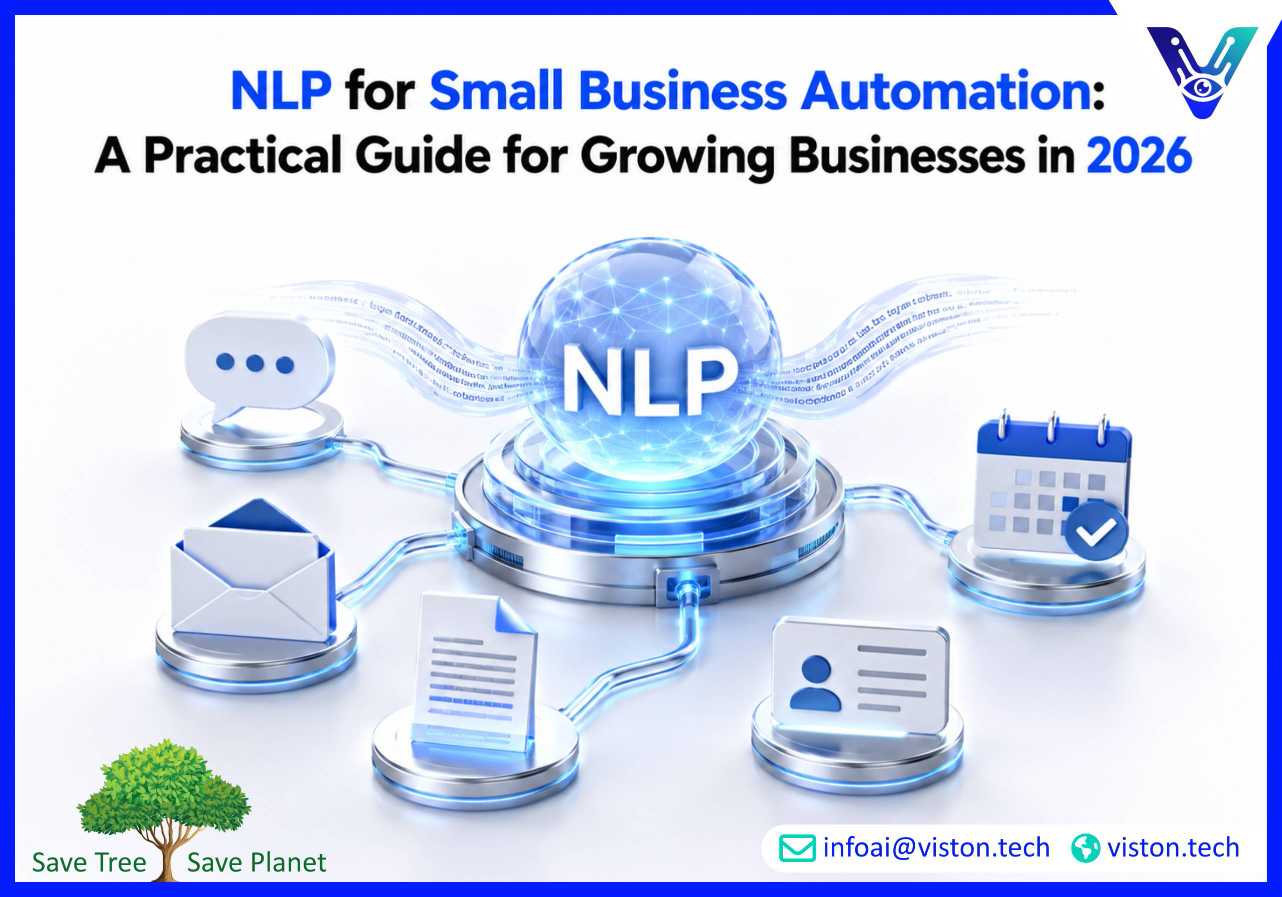
Natural Language Processing (NLP) is a branch of artificial intelligence that allows computers to process and understand human language. For small businesses, NLP automation involves using language-based AI systems to handle customer interactions, analyze text data, automate workflows, and improve communication processes.Unlike traditional automation systems that rely on fixed rules, NLP-powered solutions can understand context, intent, sentiment, and natural language variations, making automation more flexible and effective.Common NLP automation applications include:
Customer support chatbots
Email classification and routing
Lead qualification automation
Appointment scheduling
Customer feedback analysis
Document processing
Knowledge management systems
Voice assistants and conversational interfaces
As AI technologies continue to mature, NLP is becoming a practical tool for businesses seeking scalable automation without enterprise-level budgets.
Why NLP Automation Matters for Small Businesses in 2026
Small businesses often operate with lean teams, limited resources, and increasing customer expectations. NLP automation helps bridge this gap by allowing organizations to automate communication-intensive processes while maintaining responsiveness and service quality.
Improved Customer Support Efficiency
NLP-powered chatbots and virtual assistants can answer common customer inquiries around the clock. This reduces response times while allowing employees to focus on more complex issues that require human expertise.
Reduced Administrative Workloads
Many small businesses spend considerable time managing emails, inquiries, forms, and internal communications. NLP systems can automatically categorize, prioritize, and route information to the appropriate departments.
Better Customer Insights
NLP can analyze customer reviews, survey responses, social media comments, and support conversations to identify trends, recurring issues, and customer sentiment that might otherwise go unnoticed.
Scalable Growth
As businesses grow, communication volumes increase. NLP automation allows organizations to handle larger workloads without proportionally increasing staffing costs.
Key NLP Automation Use Cases for Small Businesses
The versatility of NLP makes it applicable across multiple business functions and industries.
Customer Service Automation
Customer support remains one of the most common NLP applications. AI-powered chatbots can handle:
Frequently asked questions
Order tracking requests
Basic troubleshooting
Appointment bookings
Service inquiries
Account-related questions
When more complex issues arise, conversations can be seamlessly escalated to human agents.
Lead Generation and Qualification
NLP solutions can engage website visitors, collect information, qualify prospects, and guide potential customers through early-stage sales processes.This helps businesses identify high-quality leads while reducing manual screening efforts.
Email Management
Small businesses often receive large volumes of customer emails, supplier communications, and internal requests.NLP-powered email automation can:
Categorize incoming messages
Assign priorities
Route inquiries automatically
Generate draft responses
Identify urgent requests
Document Processing
Many business processes involve extracting information from invoices, contracts, forms, and reports.NLP systems can identify key information, classify documents, and support workflow automation.
Customer Feedback Analysis
Understanding customer opinions can be challenging when feedback comes from multiple channels.NLP-based sentiment analysis helps businesses:
Monitor customer satisfaction
Identify recurring issues
Track brand perception
Prioritize service improvements
How to Successfully Implement NLP Automation
Successful NLP implementation requires more than selecting a software platform. Businesses should approach automation strategically to maximize value and minimize disruption.
Start with Clear Business Objectives
Organizations should identify specific problems they want to solve, such as reducing support workloads, improving lead response times, or automating document handling.Clear goals make it easier to evaluate success and prioritize investments.
Identify High-Volume Repetitive Tasks
NLP automation delivers the greatest value when applied to tasks involving significant amounts of text, conversations, or language-based interactions.Businesses should focus on workflows that consume substantial employee time while following predictable patterns.
Integrate Existing Systems
Modern NLP solutions often work best when connected to existing business tools such as:
CRM platforms
Helpdesk software
Marketing automation systems
ERP platforms
Knowledge bases
Communication channels
Integration ensures that automation supports operational workflows rather than creating isolated processes.
Monitor and Optimize Continuously
NLP systems improve through ongoing analysis and refinement. Businesses should regularly review performance metrics, conversation quality, automation accuracy, and customer feedback.Continuous optimization helps maintain effectiveness as customer needs and business requirements evolve.
Challenges Businesses Should Consider
While NLP automation offers substantial benefits, organizations should be aware of common implementation considerations.
Data Quality
Automation performance depends heavily on the quality and consistency of business data. Inaccurate or incomplete information can reduce effectiveness.
Integration Complexity
Connecting NLP systems with existing business platforms may require technical expertise, particularly when multiple systems are involved.
Security and Privacy Requirements
Businesses handling customer information must ensure that NLP solutions comply with applicable privacy regulations and data protection standards.
Change Management
Employees and customers may require guidance when adapting to new automated processes. Clear communication and gradual implementation often improve adoption rates.
How Viston AI Supports NLP Automation for Modern Businesses
As organizations increasingly adopt AI-driven automation, the success of NLP initiatives depends on selecting solutions that align with operational goals, customer expectations, and long-term scalability requirements.Viston AI specializes in Natural Language Processing Solutions that help businesses automate language-based workflows, improve customer interactions, and enhance operational efficiency. By combining NLP technologies with business process automation, system integrations, conversational AI capabilities, and workflow optimization strategies, organizations can implement solutions that address practical business challenges rather than isolated automation tasks.Whether supporting customer service automation, intelligent document processing, lead management workflows, or conversational AI initiatives, NLP solutions require careful planning, integration, and ongoing optimization. Viston AI focuses on helping businesses build automation frameworks that are scalable, reliable, and aligned with measurable business outcomes.As AI adoption continues to accelerate in 2026, businesses that strategically implement NLP automation are better positioned to improve productivity, enhance customer experiences, and support sustainable growth.
Frequently Asked Questions
What is NLP automation for small businesses?
NLP automation uses artificial intelligence to understand and process human language, enabling businesses to automate customer interactions, document processing, communication workflows, and other language-based tasks.
Is NLP affordable for small businesses?
Many modern NLP solutions are available through cloud-based platforms and scalable service models, making them increasingly accessible for small and growing businesses.
What business processes can NLP automate?
NLP can support customer service, email management, lead qualification, appointment scheduling, sentiment analysis, document processing, knowledge management, and conversational AI applications.
How long does NLP implementation typically take?
Implementation timelines vary depending on project scope, integration requirements, data availability, and business complexity. Smaller projects may be deployed within weeks, while larger initiatives can require more extensive planning.
Can Viston AI help businesses implement NLP automation?
Yes. Viston AI provides Natural Language Processing Solutions designed to help businesses automate communication workflows, improve operational efficiency, and integrate NLP capabilities into existing business systems.
Conclusion
NLP for small business automation has evolved into a practical and valuable technology for organizations seeking to improve efficiency, customer experiences, and scalability in 2026. From customer support and lead qualification to document processing and sentiment analysis, NLP enables businesses to automate language-driven tasks while maintaining high-quality interactions. Successful implementation requires clear objectives, effective integration, and continuous optimization. For businesses exploring Natural Language Processing Solutions, working with experienced specialists such as Viston AI can help ensure automation initiatives align with operational goals and deliver sustainable long-term value.