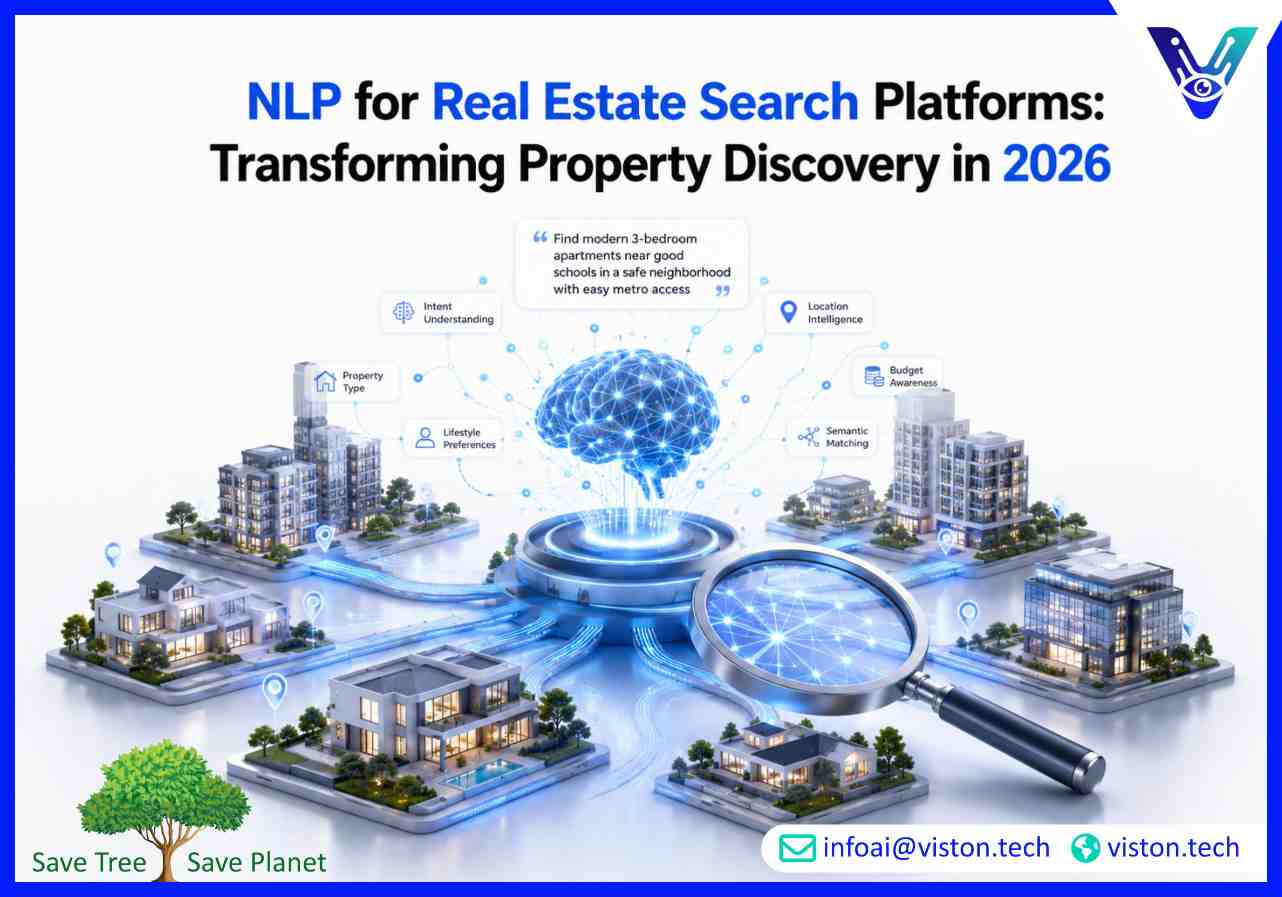
NLP for Real Estate Search Platforms: Transforming Property Discovery in 2026
Real estate search platforms have evolved significantly as buyers, renters, investors, and property professionals increasingly expect faster, smarter, and more personalized property discovery experiences. In 2026, Natural Language Processing (NLP) has become a critical technology for real estate platforms seeking to improve search accuracy, user engagement, lead quality, and operational efficiency. By enabling users to search properties using natural language instead of rigid filters and keywords, NLP helps create more intuitive and effective property search experiences.
Why NLP Matters for Real Estate Search Platforms
Traditional real estate search systems often depend on structured filters such as location, property type, price range, and bedroom count. While these filters remain important, modern users frequently search using conversational language that reflects specific preferences and lifestyle requirements.Examples include:
“Show me family homes near good schools under $500,000.”
“Find luxury apartments with sea views and remote work spaces.”
“Properties close to public transportation and shopping centers.”
“Investment properties with strong rental potential.”
NLP enables platforms to understand intent, context, and meaning behind these queries, allowing users to find relevant properties more efficiently.As competition among property portals increases, delivering intelligent search experiences has become a major differentiator for real estate technology providers.
Key NLP Applications in Real Estate Search Platforms
Natural Language Property Search
One of the most valuable applications of NLP is allowing users to search using everyday language instead of relying solely on predefined filters.NLP models analyze user intent and identify relevant criteria such as:
Location preferences
Property features
Lifestyle requirements
Budget considerations
Investment objectives
Proximity requirements
This creates a more intuitive search experience while reducing the effort required to find suitable listings.
Semantic Search Capabilities
Semantic search goes beyond matching keywords. NLP-powered semantic search understands relationships between words, phrases, and concepts.For example, a search for “work-from-home friendly apartment” may return properties featuring:
Dedicated office spaces
High-speed internet access
Extra bedrooms suitable as offices
Co-working amenities
This improves search relevance and increases user satisfaction.
Property Listing Classification
Real estate platforms often manage large volumes of property descriptions written by agents, developers, and property owners.NLP can automatically classify listings based on:
Property type
Amenities
Neighborhood characteristics
Investment potential
Luxury features
Commercial attributes
Automated classification improves platform organization and search accuracy.
Intelligent Recommendation Engines
NLP helps generate personalized property recommendations by analyzing user behavior, search history, saved properties, and conversational interactions.These recommendation systems can identify hidden preferences that traditional filtering systems may overlook, resulting in more relevant property suggestions.
Business Benefits of NLP for Real Estate Platforms
Improved User Experience
Natural language search reduces friction and helps users find suitable properties faster. This leads to increased engagement and longer platform sessions.
Higher Lead Quality
When users find more relevant listings, inquiry quality improves. Real estate agents and property developers benefit from receiving leads that better match available inventory.
Better Search Accuracy
NLP-powered systems understand context and intent, reducing irrelevant search results and improving conversion opportunities.
Increased Platform Retention
Users are more likely to return to platforms that consistently provide accurate and personalized property recommendations.
Operational Efficiency
Automated listing categorization, content tagging, and search optimization reduce manual administrative workloads while improving platform scalability.
Implementation Considerations for Real Estate Businesses
Data Quality and Property Content
NLP performance depends heavily on the quality of available property data. Consistent listing descriptions, structured metadata, and accurate property information help improve search results.Organizations should establish standards for:
Property descriptions
Amenity tagging
Location data
Image metadata
Neighborhood information
Integration with Existing Platforms
Successful NLP implementation requires seamless integration with existing real estate technologies, including:
Property management systems
Customer relationship management platforms
Listing databases
Marketing automation tools
Mobile applications
Analytics platforms
Well-planned integrations ensure consistent user experiences across all digital touchpoints.
Scalability Requirements
Real estate search platforms often experience fluctuating traffic volumes. NLP solutions should be designed to support growth while maintaining performance and search responsiveness.
Privacy and Compliance
Platforms handling customer inquiries, personal preferences, and user interaction data should implement appropriate security controls, access management policies, and responsible AI governance practices.
Emerging NLP Trends for Real Estate Search in 2026
Conversational Property Search
Instead of entering multiple search queries, users increasingly interact with AI assistants capable of maintaining contextual conversations about property preferences.These systems can ask follow-up questions, refine recommendations, and guide users through complex property searches.
Multilingual Search Experiences
Global real estate markets continue to attract international buyers and investors. NLP enables multilingual search capabilities that improve accessibility and user engagement across diverse audiences.
Voice-Based Property Discovery
Voice search is becoming more common across real estate applications. NLP technologies help interpret spoken queries and convert them into accurate property search results.
AI-Powered Property Insights
Advanced NLP solutions can summarize market reports, analyze property descriptions, and generate user-friendly insights that support better investment and purchasing decisions.
How Viston AI Supports NLP Solutions for Real Estate Search Platforms
Organizations seeking to modernize property discovery experiences increasingly require Natural Language Processing Solutions that go beyond basic keyword matching. Viston AI helps businesses implement NLP capabilities that improve search relevance, user engagement, intelligent recommendations, and language-driven automation across real estate platforms.Its expertise supports the development of natural language search systems, semantic search capabilities, conversational AI experiences, intelligent property classification, and automated content processing. By integrating NLP technologies with existing real estate ecosystems, businesses can create more personalized and efficient property search journeys while improving operational performance.As user expectations continue to evolve, real estate organizations require scalable solutions capable of handling growing data volumes, diverse search behaviors, and increasingly sophisticated customer requirements. Viston AI’s approach focuses on practical implementation, system integration, scalability, and measurable business outcomes that align with modern real estate technology strategies.
Frequently Asked Questions
What is NLP in real estate search platforms?
NLP enables real estate platforms to understand and process natural language property searches, helping users find listings using conversational queries rather than relying solely on predefined filters.
How does NLP improve property search accuracy?
NLP analyzes user intent, context, and semantic meaning, allowing platforms to deliver more relevant search results even when exact keywords are not present in property listings.
Can NLP help real estate platforms generate better leads?
Yes. More accurate search experiences help users discover properties that better match their requirements, resulting in higher-quality inquiries and improved lead conversion opportunities.
What technologies are commonly integrated with NLP solutions in real estate?
NLP solutions are often integrated with CRM systems, property databases, listing management platforms, analytics tools, recommendation engines, and conversational AI applications.
Can Viston AI develop NLP solutions for real estate businesses?
Yes. Viston AI provides Natural Language Processing Solutions that support intelligent search, conversational experiences, semantic property discovery, content automation, and platform optimization for real estate organizations.
Conclusion
NLP for real estate search platforms is reshaping how users discover, evaluate, and engage with property listings in 2026. By enabling natural language search, semantic understanding, personalized recommendations, and conversational experiences, NLP helps real estate businesses improve user satisfaction, increase lead quality, and strengthen platform performance. As property search expectations continue to evolve, organizations investing in Natural Language Processing Solutions can create more intuitive and scalable digital experiences. For businesses seeking to enhance property discovery capabilities, Viston AI offers specialized expertise in developing and implementing NLP-driven solutions that support meaningful business outcomes.