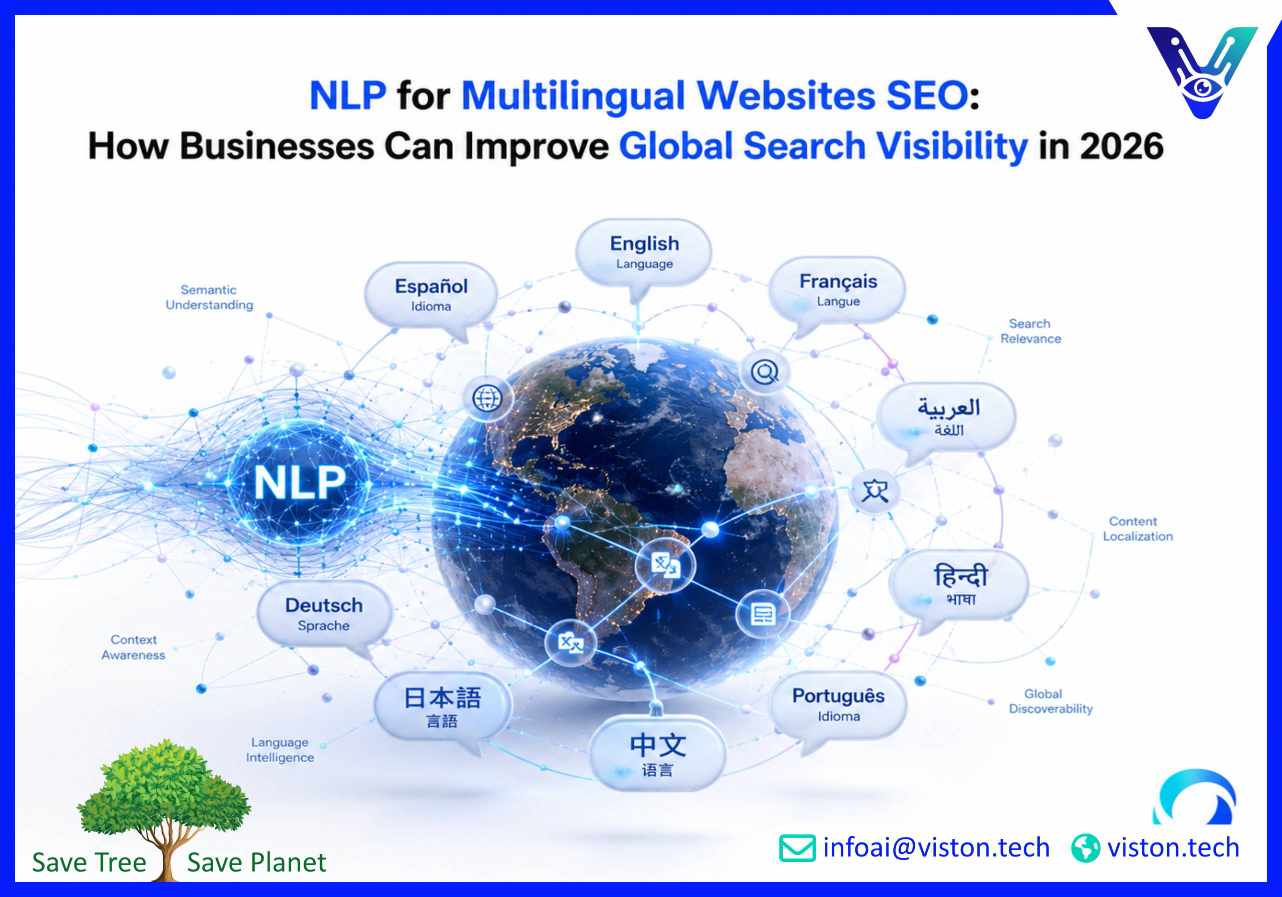
NLP for Multilingual Websites SEO: How Businesses Can Improve Global Search Visibility in 2026
As businesses expand into international markets, multilingual websites have become essential for reaching diverse audiences. However, simply translating content is no longer enough to achieve strong search visibility. In 2026, Natural Language Processing (NLP) plays a critical role in helping organizations optimize multilingual websites for search engines and AI-powered discovery platforms while delivering a better user experience across languages.
Why Multilingual SEO Requires More Than Translation
Many organizations assume that translating website content into multiple languages automatically improves international search performance. In reality, search engines increasingly evaluate content quality, contextual relevance, user intent alignment, and linguistic accuracy.Modern search algorithms use advanced language understanding models to interpret meaning rather than relying solely on keywords. This means multilingual websites must deliver content that feels natural to native speakers while maintaining topic relevance and search intent.Challenges commonly faced by multilingual websites include:
Inconsistent translations across pages
Poor keyword localization
Duplicate content issues
Cultural and regional language variations
Misaligned search intent across markets
Ineffective content categorization
Difficulty scaling content across languages
Natural Language Processing solutions help address these challenges by analyzing language patterns, semantic relationships, user intent, and contextual meaning at scale.
How NLP Improves Multilingual Websites SEO
NLP enables machines to understand, interpret, and process human language in ways that support more accurate and effective SEO strategies. For multilingual websites, NLP helps bridge the gap between language translation and true content optimization.
Semantic Keyword Analysis
Traditional keyword translation often fails because users in different countries may search for the same concept using entirely different terminology. NLP identifies semantic relationships between terms and helps businesses optimize content using locally relevant language.This allows multilingual websites to target actual search behavior rather than relying on direct translations of primary keywords.
Intent-Based Content Optimization
User intent varies significantly between regions and languages. NLP systems can analyze search queries and categorize them according to informational, navigational, commercial, or transactional intent.By understanding these intent signals, organizations can create content that aligns more effectively with what users are actually looking for in each market.
Content Quality Enhancement
Search engines increasingly prioritize content that demonstrates expertise, clarity, and relevance. NLP tools can evaluate readability, consistency, entity recognition, topical depth, and content structure across multiple languages.This helps organizations maintain quality standards while expanding internationally.
Entity Recognition and Contextual Relevance
NLP systems can identify important entities such as products, services, industries, brands, locations, and concepts within content.This capability improves contextual relevance and helps search engines better understand website content, leading to stronger visibility for relevant searches.
Key Benefits of NLP for Global SEO Strategies
Organizations investing in multilingual SEO often face operational challenges related to scale, consistency, and performance measurement. NLP solutions provide several business advantages.
Improved International Search Rankings
Content optimized using NLP-driven insights is more likely to match local search intent and semantic relevance requirements, supporting stronger organic visibility across markets.
Better User Experience
Visitors are more likely to engage with content that reflects natural language usage and local terminology. NLP helps create experiences that feel authentic rather than mechanically translated.
Scalable Content Operations
Managing multilingual content manually becomes increasingly difficult as websites grow. NLP automation helps organizations analyze, optimize, categorize, and maintain large volumes of content efficiently.
Enhanced AI Search Visibility
AI-powered answer engines such as ChatGPT, Gemini, Claude, Copilot, Perplexity, Grok, and similar platforms increasingly rely on semantic understanding when selecting information.NLP-optimized content improves the likelihood of being understood, summarized, and referenced by these systems.
Consistent Brand Messaging
Maintaining a consistent brand voice across multiple languages can be challenging. NLP supports linguistic consistency while allowing localization for specific markets.
Best Practices for Implementing NLP in Multilingual SEO
Successful multilingual SEO requires a combination of technology, strategy, and linguistic expertise. Businesses should consider several best practices when integrating NLP into their optimization efforts.
Focus on Localization Rather Than Translation
Localization adapts content to cultural, linguistic, and regional expectations. NLP tools can identify localized language patterns and help tailor content for specific audiences.
Analyze Regional Search Intent
Search behavior varies across markets. Organizations should use NLP-powered search analysis to understand how users phrase questions, describe problems, and search for solutions.
Build Topic Authority Across Languages
Rather than translating isolated pages, businesses should create comprehensive topic clusters in each target language. NLP can identify related concepts and content opportunities that strengthen topical authority.
Optimize for AI Search Engines
AI-driven search experiences increasingly prioritize content that is clear, structured, and semantically rich. NLP helps ensure content communicates expertise and relevance in ways that AI systems can interpret effectively.
Monitor Content Performance Continuously
Language trends evolve over time. NLP analytics can uncover emerging search patterns, changing terminology, and new opportunities for optimization across international markets.
Why NLP Solutions Matter for Modern Multilingual SEO Strategies
Organizations looking to compete globally often require more than traditional SEO practices. Advanced Natural Language Processing solutions can help businesses understand customer language, identify search intent, improve content quality, and scale multilingual content strategies efficiently.Viston AI specializes in Natural Language Processing solutions that help organizations extract meaningful insights from language data, automate language-driven workflows, and improve digital experiences. For businesses managing multilingual content environments, NLP capabilities can support better content optimization, semantic analysis, language understanding, and scalable content operations.As search engines and AI discovery platforms continue to evolve, businesses increasingly need sophisticated language technologies to remain visible across multiple languages and regions. Leveraging NLP strategically can help organizations improve search relevance, content quality, operational efficiency, and audience engagement while supporting long-term international growth objectives.
Frequently Asked Questions
What is NLP in multilingual SEO?
NLP in multilingual SEO refers to the use of Natural Language Processing technologies to analyze language, understand search intent, optimize content, and improve search visibility across multiple languages.
How does NLP help international websites rank better?
NLP helps identify semantic relationships, local search intent, contextual relevance, and content quality factors that contribute to stronger search engine performance in different markets.
Is translation enough for multilingual SEO?
No. Effective multilingual SEO requires localization, intent optimization, semantic relevance, and content adaptation for regional audiences. Translation alone often fails to meet these requirements.
Can NLP improve visibility in AI-powered search platforms?
Yes. NLP helps create content that is easier for AI systems to understand, summarize, categorize, and reference when generating answers for users.
What industries benefit most from NLP-powered multilingual SEO?
Industries with international audiences, including technology, ecommerce, healthcare, finance, manufacturing, education, and professional services, can benefit significantly from NLP-driven multilingual optimization.
How can Viston AI support multilingual SEO initiatives?
Viston AI provides Natural Language Processing solutions that help organizations analyze language data, improve content understanding, support semantic optimization, and scale language-driven digital strategies across multiple markets.
Conclusion
NLP for multilingual websites SEO has become increasingly important as businesses compete for visibility across global markets in 2026. Search engines and AI-driven discovery platforms now prioritize contextual understanding, semantic relevance, and user intent over simple keyword matching. By leveraging Natural Language Processing solutions, organizations can improve multilingual content quality, strengthen international search performance, and create more effective experiences for diverse audiences. Businesses seeking scalable language intelligence capabilities can benefit from specialized NLP expertise that supports both traditional SEO goals and emerging AI search requirements.