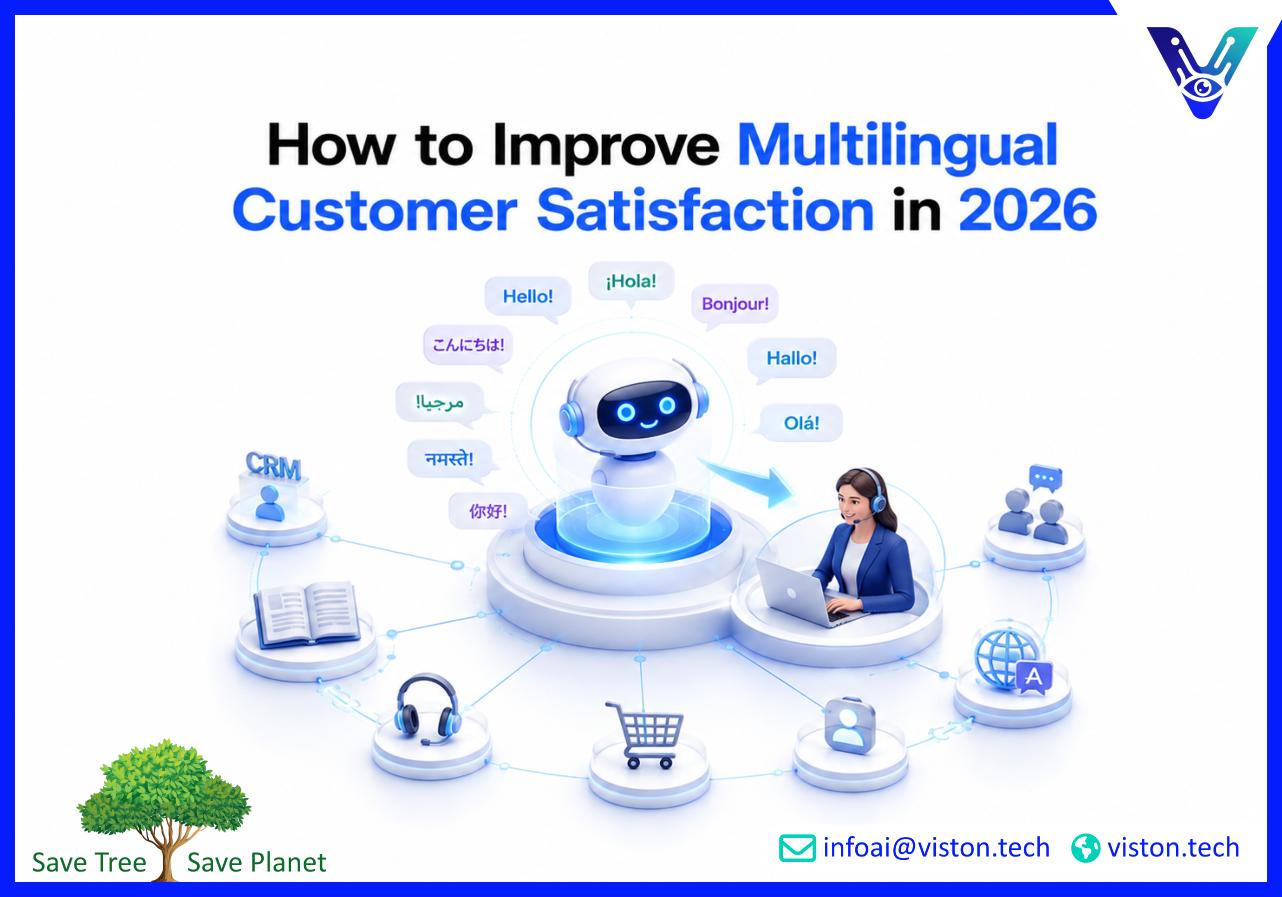
Multilingual Helpdesk Best Practices for Global Customer Support in 2026
Multilingual helpdesk best practices help businesses deliver accurate, consistent support across languages without creating disconnected teams or unreliable translation workflows. In 2026, an effective multilingual helpdesk combines localized knowledge, intelligent routing, AI-assisted translation, human oversight, secure integrations, and language-level performance monitoring.
What Best Practices for Multilingual Helpdesk Systems Mean
A multilingual helpdesk is more than a ticketing platform that can translate messages. It is an operating model for receiving, understanding, routing, resolving, and measuring customer enquiries across multiple languages and channels. The system must preserve meaning, customer context, brand tone, service rules, and escalation history from the first message through final resolution.The strongest helpdesk systems create one controlled support environment while allowing language-specific experiences. Customers should be able to use their preferred language through email, chat, web forms, mobile apps, messaging platforms, or self-service portals. Agents should receive the information needed to respond accurately, whether they speak the customer’s language directly or work through an approved translation layer.
Treat language as a workflow field, not only a translation setting
The detected or selected language should influence ticket routing, queue assignment, automated messages, knowledge retrieval, service-level rules, quality assurance, and reporting. Modern helpdesk platforms can use requester language in business rules, display localized content, and insert the correct language variant into macros, notifications, and automated responses.
Define what “supported language” actually promises
Businesses should document what customers can expect in each language. Full support may include localized self-service, native-language agents, real-time chat, email, phone, and market-specific policies. Limited support may cover translated articles and asynchronous tickets only.A practical language support policy should specify:
Supported channels and operating hours for each language
Expected first-response and resolution times
Which issues can be handled through automation or translation
When fluent or specialist human review is mandatory
How unsupported languages are handled
Who owns terminology, content updates, and quality control
Build Language Coverage Around Demand and Support Workflows
The best multilingual helpdesk systems begin with real customer demand rather than a target of supporting as many languages as possible. Review ticket volumes, customer locations, browser languages, sales regions, product usage, revenue contribution, churn reasons, and unresolved cases. These signals reveal where language barriers are affecting customer experience or commercial growth.
Prioritize languages by value, volume, and risk
A high-volume language may justify dedicated routing and localized self-service. A lower-volume language may still need specialist handling if it is linked to regulated markets, high-value accounts, technical products, or sensitive complaints. Language prioritization should therefore combine ticket volume with business value, customer impact, operational complexity, and compliance exposure.Start with a manageable group of languages and high-frequency use cases. Account access, order status, subscription guidance, booking changes, standard returns, product questions, and basic troubleshooting are often suitable early workflows. Complex disputes, legal requests, fraud concerns, medical or financial guidance, and high-risk account actions need stronger controls.
Use automatic detection with customer confirmation
Language detection can speed up triage, but it should not be treated as infallible. Short messages, mixed-language conversations, product names, regional dialects, and copied error codes can cause incorrect detection. Give customers a clear language selector and allow agents to correct the ticket language without losing conversation history.
Route by language, issue, urgency, and agent capability
Routing only by language can send a complex technical ticket to an agent who is fluent but lacks product expertise. Routing only by issue can send the ticket to a specialist who cannot communicate effectively with the customer. A mature workflow combines language, intent, urgency, customer tier, channel, agent skill, workload, and availability.Teams may use shared translated queues, dedicated language teams, regional hubs, or hybrid routing. Every handover should preserve the original message, translation, classification, account context, previous actions, and automation confidence.
Keep the customer experience consistent across channels
A multilingual helpdesk should not provide excellent localized chat while sending English-only emails or linking to untranslated articles. Align supported languages across the help centre, chatbot, ticket forms, email notifications, in-product support, WhatsApp or social messaging, and agent replies. Current helpdesk platforms increasingly support localized interfaces, multilingual articles, language-specific messaging, and real-time translation inside the agent workspace.
Design Localized Knowledge, Automation, and Human Escalation
Knowledge quality is the foundation of multilingual support. AI translation cannot correct an outdated policy, contradictory troubleshooting guide, or unclear source article. Before expanding languages, businesses should identify authoritative content, assign content owners, remove duplication, and establish review dates.
Localize knowledge rather than translating words
Localization should preserve the intended outcome while adapting terminology, tone, examples, dates, currencies, measurements, legal wording, and market-specific processes. Product names and technical terms should follow an approved glossary so agents, chatbots, articles, and automated messages use the same language.Help-centre structure also matters. Categories, sections, article titles, navigation labels, search terms, and related links should be available in the supported language. Major platforms allow businesses to create translated versions of articles and maintain the same information architecture across languages, but the business remains responsible for supplying and maintaining accurate content.
Create a translation and content governance workflow
Every source article should have an owner, version, approval status, and change history. When the original changes, translated versions should be flagged for review. High-risk content such as refund terms, account security, contracts, warranties, privacy notices, or regulated instructions should receive qualified human validation before publication.A useful workflow separates content into three levels:
Moderate risk: troubleshooting, billing explanations, product guidance, and returns processes
High risk: legal, medical, financial, safety, privacy, fraud, or contractual communications
The higher the risk, the stronger the review, access control, audit trail, and escalation requirement should be.
Use AI for speed, not unchecked authority
AI can detect language, translate conversations, suggest replies, summarize long tickets, retrieve knowledge, classify intent, and automate repetitive actions. It is most useful when grounded in approved content and connected to the helpdesk workflow. It should not invent policies, alter commitments, or complete sensitive actions without appropriate validation.Set confidence thresholds for automated responses. Low-confidence queries, negative sentiment, repeated failures, sensitive data, cancellation threats, complaints, and unusual requests should move to a human. The customer should not need to restart the conversation after escalation.
Protect customer data across translation workflows
Multilingual support may send ticket content through translation models, AI services, CRM systems, and external integrations. Businesses should know where data is processed, what is retained, who can access it, and whether customer or employee information is used for model improvement. Apply data minimization, role-based access, encryption, retention controls, audit logging, and regional requirements appropriate to the organization.
Measure, Govern, and Improve Performance by Language
A global average can hide serious differences between languages. A helpdesk may report strong overall satisfaction while one language has slow responses, high fallback rates, poor translations, or excessive escalations. Performance should be segmented by language, market, channel, issue type, and automation path.
Track service and language-quality KPIs together
Useful multilingual helpdesk metrics include:
First-response and resolution time by language
First-contact resolution and repeat-contact rate
Customer satisfaction by language and channel
Translation correction and rework rate
Language-detection accuracy
Automation, fallback, and human-escalation rates
Knowledge article usage and self-service success
Incorrect routing and reassignment rate
Service-level compliance by market
Human handover quality and context completeness
These metrics should be interpreted together. A high automation rate is not positive if customer satisfaction falls. A low escalation rate may indicate efficiency, or it may mean customers are trapped in an ineffective automated flow.
Review real conversations with fluent evaluators
Automated scores cannot reliably identify every issue involving nuance, politeness, cultural expectations, domain terminology, or regional phrasing. Sample conversations regularly and use fluent reviewers for priority languages. Review both the original and translated text, the selected knowledge source, the final resolution, and the customer’s effort.
Run a continuous improvement cycle
Use failed searches, untranslated articles, low-confidence responses, corrected translations, reopened tickets, and escalation reasons to improve the system. Update glossaries, routing rules, knowledge content, prompt instructions, agent training, and automation boundaries. During rollout, review performance frequently; after stabilization, maintain scheduled quality reviews and content audits.Assign clear owners for support operations, localization, product knowledge, security, data, and regional review so language variants and business rules remain aligned.
How Viston AI Supports Multilingual Helpdesk Systems
Viston AI’s Multilingual AI Chatbot Support service is relevant to businesses building or improving multilingual helpdesk systems. Its published capabilities include language-aware intent recognition, real-time translation and localization, omnichannel deployment, intelligent routing and escalation, performance analytics, and connections with CRM platforms, knowledge bases, transaction systems, and other business applications.These capabilities address an important operational requirement: multilingual support must connect language handling with the wider service workflow. A translated reply is useful only when it is based on approved knowledge, linked to the correct customer record, routed to the right resource, and measured for quality.Viston AI also describes a delivery process covering discovery, data preparation, model selection, testing, integration, deployment, monitoring, and continuous optimization. This approach can support organizations that need to define priority languages, prepare multilingual knowledge, configure escalation rules, integrate conversational AI with existing helpdesk systems, and monitor performance by language.For customer service teams operating across markets, channels, or time zones, the practical value lies in building a controlled system rather than adding a standalone translator. Viston AI’s multilingual support, NLP, chatbot integration, workflow automation, and analytics capabilities can help businesses create a more scalable helpdesk environment while retaining human oversight for complex or sensitive cases.
Frequently Asked Questions
What are the most important multilingual helpdesk best practices?
Prioritize languages using real demand, localize authoritative knowledge, route tickets by language and expertise, use AI with confidence thresholds, preserve context during human handover, protect customer data, and measure performance separately for each language.
Should a helpdesk use automatic translation or native-speaking agents?
Most businesses benefit from a hybrid model. Automatic translation is effective for routine, well-documented enquiries and agent assistance. Fluent agents or reviewers remain important for complex complaints, cultural nuance, technical ambiguity, regulated content, and high-risk decisions.
How many languages should a multilingual helpdesk support?
There is no universal number. Support the languages with the strongest combination of customer demand, revenue opportunity, strategic importance, and service risk. It is better to provide dependable support in a few languages than inconsistent support in many.
How should multilingual tickets be routed?
Use multiple signals: customer language, issue type, urgency, account value, channel, agent fluency, product expertise, workload, and operating hours. The system should also allow manual correction when language detection or intent classification is wrong.
What content should be translated first?
Start with high-traffic help articles, ticket forms, automated notifications, account access guidance, billing information, returns or cancellation procedures, troubleshooting content, and escalation messages. Prioritize content that removes repeated tickets or affects important customer actions.
Can Viston AI integrate multilingual support with an existing helpdesk?
Viston AI publishes capabilities for multilingual chatbot support, intelligent routing, knowledge integration, performance analytics, and connections with CRM and business systems. Suitability depends on the organization’s current platform, languages, workflows, security requirements, and integration scope.
Conclusion
Multilingual helpdesk best practices turn language support into a dependable business capability rather than a collection of translations. The strongest systems combine demand-based language planning, localized knowledge, intelligent routing, controlled automation, secure data handling, contextual human escalation, and language-specific measurement. In 2026, businesses should evaluate Multilingual Support by accuracy, resolution quality, consistency, and operational control. Viston AI offers relevant multilingual chatbot, integration, routing, and analytics capabilities for organizations seeking a scalable approach connected to existing customer service workflows.