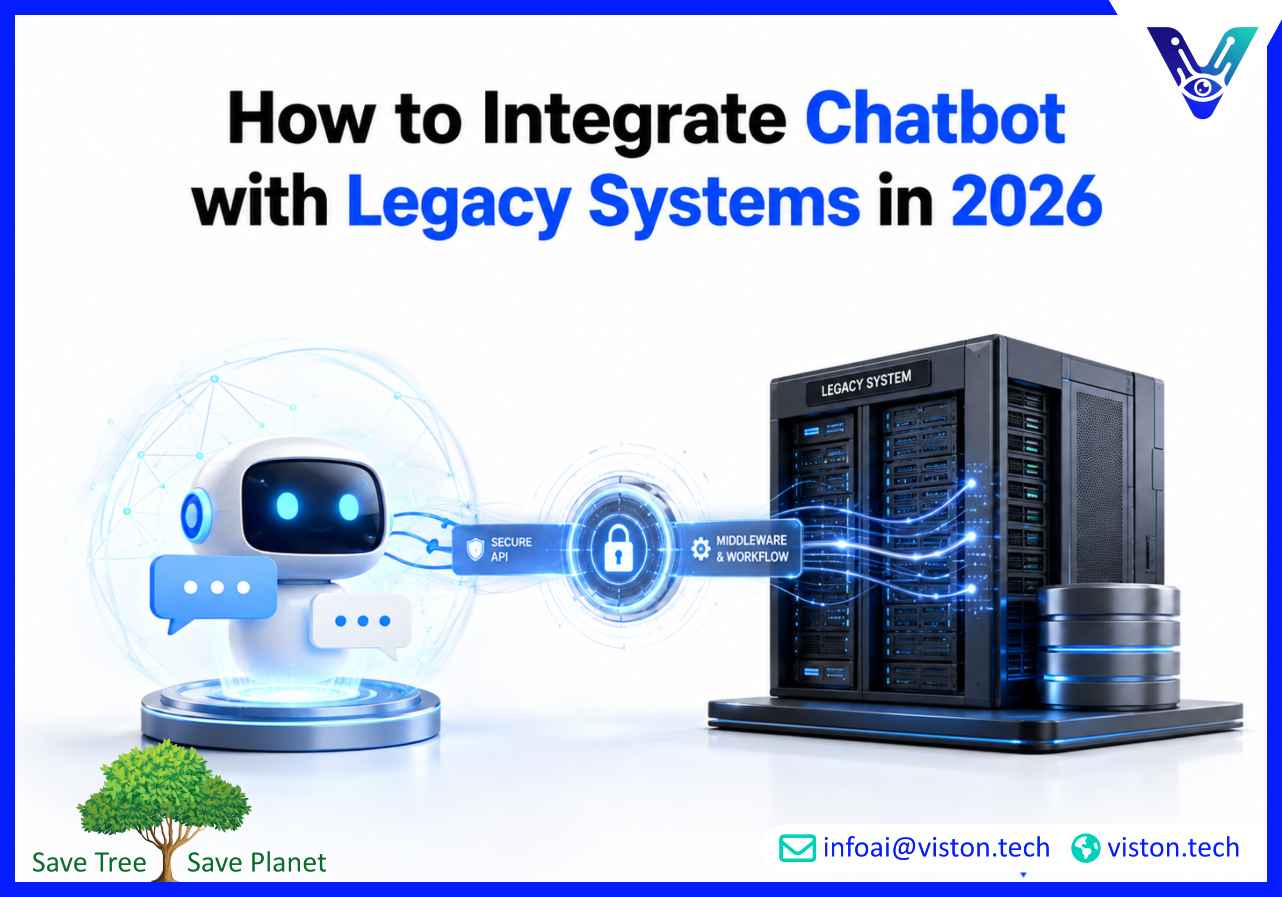
How to Integrate Chatbot with Legacy Systems in 2026
Many organizations rely on legacy systems that continue to support critical business operations. However, as customer expectations evolve and automation becomes a competitive necessity, businesses often face a common challenge: how to integrate chatbot technology with older systems that were not originally designed for modern AI-driven interactions. A strategic chatbot integration approach allows companies to modernize customer experiences without replacing essential legacy infrastructure.
Why Legacy System Integration Matters for Chatbot Success
Legacy systems often contain valuable business data, customer records, operational workflows, and transactional information that chatbots need to access in order to provide meaningful assistance.Without proper integration, chatbots may operate in isolation, limiting their ability to:
Retrieve customer information
Access order and inventory data
Provide account-specific support
Automate service requests
Process transactions
Deliver personalized experiences
Successful AI chatbot integration bridges the gap between modern conversational interfaces and existing enterprise systems, allowing businesses to improve efficiency while protecting previous technology investments.
Common Challenges When Integrating Chatbots with Legacy Systems
Limited API Availability
Many older platforms were developed before API-first architectures became standard. As a result, they may lack modern integration interfaces required for real-time chatbot communication.
Data Silos
Legacy environments frequently store information across multiple disconnected databases, making it difficult for chatbots to access complete customer or operational data.
Outdated Technologies
Older systems may use proprietary protocols, unsupported software versions, or custom-built applications that require specialized integration approaches.
Security and Compliance Risks
Connecting AI solutions to sensitive business systems introduces concerns around authentication, authorization, data privacy, and regulatory compliance.
Performance Limitations
Legacy applications may not be designed to handle large volumes of real-time chatbot requests, creating potential performance bottlenecks.Understanding these challenges early helps organizations build a realistic and effective chatbot integration strategy.
Key Approaches to Chatbot Integration with Legacy Systems
API Layer Development
When legacy platforms lack modern connectivity options, businesses often create custom API layers that expose essential system functionality to chatbot applications.This approach allows organizations to:
Protect core systems
Control data access
Improve scalability
Enable future integrations
Support real-time chatbot responses
Middleware Integration
Middleware platforms act as intermediaries between chatbots and legacy systems. They simplify communication between different technologies and reduce direct dependencies.Benefits include:
Centralized integration management
Improved system interoperability
Reduced development complexity
Enhanced monitoring capabilities
Database Connectivity
In some environments, chatbots may securely access approved databases directly to retrieve information required for customer interactions.This approach requires careful governance, access controls, and security policies.
Robotic Process Automation (RPA)
When direct integration is difficult, RPA can serve as a bridge between chatbots and legacy applications.RPA bots can:
Log into older systems
Retrieve information
Update records
Trigger workflows
Execute repetitive tasks
This method is particularly useful when modernization projects are still in progress.
Best Practices for Legacy System Chatbot Integration
Start with High-Value Use Cases
Organizations should focus initially on processes that provide measurable business value, such as customer support automation, account inquiries, order tracking, or appointment scheduling.Starting small reduces implementation risks while demonstrating ROI.
Prioritize Data Quality
A chatbot can only perform effectively when the underlying data is accurate and accessible.Before integration, businesses should review:
Data consistency
Duplicate records
Access permissions
Data governance standards
Information accuracy
Implement Strong Security Controls
Modern chatbot deployments should include:
Role-based access control
Data encryption
Secure API gateways
Identity management systems
Audit logging
Compliance monitoring
These controls help protect sensitive information while supporting regulatory requirements.
Design for Scalability
Integration architectures should support future expansion across departments, channels, and business functions.Scalable designs prevent organizations from rebuilding integrations as chatbot adoption grows.
Maintain Human Escalation Paths
Not every request can or should be automated.Businesses should create seamless handoff mechanisms that allow users to connect with human agents when necessary.
Business Benefits of Integrating Chatbots with Legacy Systems
When implemented correctly, chatbot integration can extend the value of legacy technology investments while delivering modern customer experiences.Key benefits include:
Faster customer response times
Improved operational efficiency
Reduced manual workload
Greater system utilization
Enhanced customer satisfaction
Better access to business information
Lower support costs
Improved service availability
Rather than replacing existing infrastructure immediately, organizations can gradually modernize through strategic AI chatbot integration.
How Viston AI Supports Legacy System Chatbot Integration
Integrating conversational AI with legacy environments requires more than chatbot deployment. Businesses need reliable connectivity between existing systems, customer-facing channels, operational workflows, and business data.Viston AI specializes in AI Chatbot Integration solutions that help organizations connect modern chatbot capabilities with established technology ecosystems. This includes integrating chatbots with CRM platforms, ERP systems, internal databases, customer support applications, communication channels, and other business-critical systems.By focusing on interoperability, workflow automation, scalability, and security, Viston AI helps organizations modernize customer interactions without disrupting existing operations. Its integration-focused approach enables businesses to unlock the value of legacy systems while delivering faster, more efficient, and more personalized experiences.As organizations continue balancing digital transformation initiatives with existing infrastructure investments in 2026, effective chatbot integration strategies play a critical role in achieving operational efficiency and long-term technology modernization goals.
Frequently Asked Questions
Can chatbots work with very old legacy systems?
Yes. Through APIs, middleware, database connections, or RPA technologies, chatbots can often integrate with older systems that lack modern interfaces.
Do legacy systems need to be replaced before chatbot integration?
No. Many businesses successfully integrate chatbots with existing systems and modernize gradually without undertaking costly full-system replacements.
What is the biggest challenge in chatbot integration with legacy systems?
The most common challenges include limited APIs, fragmented data, security requirements, and compatibility with outdated technologies.
Is chatbot integration secure for legacy environments?
Yes, when implemented correctly using secure APIs, encryption, access controls, authentication mechanisms, and compliance-focused governance practices.
Can Viston AI help integrate chatbots with legacy business systems?
Yes. Viston AI provides AI Chatbot Integration services designed to connect conversational AI platforms with legacy applications, enterprise systems, databases, and operational workflows.
Conclusion
Understanding how to integrate chatbot with legacy systems is becoming increasingly important as businesses pursue automation without abandoning critical existing infrastructure. A well-planned AI Chatbot Integration strategy enables organizations to connect modern conversational experiences with valuable business data, workflows, and operational systems. By leveraging APIs, middleware, RPA, and secure integration architectures, companies can improve efficiency, customer service, and scalability while protecting previous technology investments. For organizations seeking a practical and sustainable modernization approach, experienced integration specialists such as Viston AI can help bridge the gap between legacy systems and next-generation chatbot capabilities.