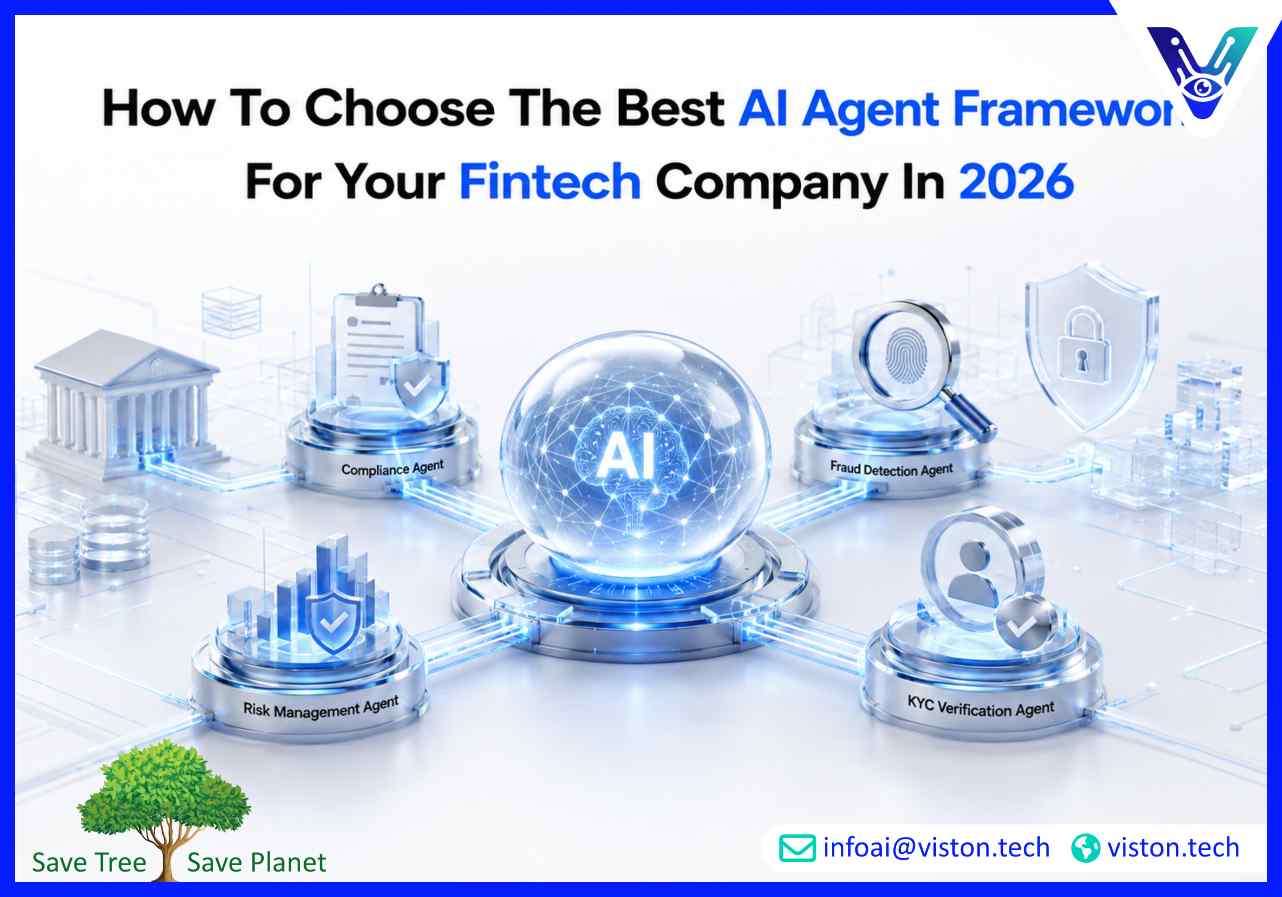
How to Choose the Best AI Agent Framework for Your Fintech Company in 2026
Introduction
Financial institutions are moving beyond AI chatbots and copilots. The question now is which AI agent framework can safely execute real workflows across compliance, risk, and operations. For fintech companies, the choice determines how quickly automation moves from experimentation to governed production.
What Fintech Companies Need From an AI Agent Framework
Not every AI agent framework belongs in a regulated environment. General-purpose frameworks excel at prototyping but often lack the governance architecture financial institutions require. Before evaluating specific options, understand what separates a demo-ready framework from one that can handle KYC screening, fraud detection, or month-end close processes.
Governance and Auditability Are Non-Negotiable
A framework built for fintech must provide full audit logging, role-based access controls, and explainability for every agent action. Financial regulators expect traceability. When an agent makes a recommendation or executes a workflow, your firm needs to answer why that decision occurred. Frameworks without native compliance features create manual oversight burdens that defeat automation’s purpose.
Integration With Core Banking Systems
Your existing stack matters more than the framework’s feature list. Fintech companies rely on core banking platforms, payment systems, CRMs, and compliance databases. A framework’s value depends on how easily it connects to these systems through pre-built integrations or standard protocols. Without deep integration, agents cannot access the real-time data they need to function.
Multi-Agent Orchestration Capabilities
Single agents handling isolated tasks offer limited value. The real efficiency gains come from multi-agent systems where specialized agents collaborate across workflows. For example, a fraud detection agent might hand off suspicious activity to a compliance agent for investigation, which then escalates to a human reviewer. Frameworks should support this orchestration natively.
Key Decision Factors for Fintech Leaders in 2026
Security and Compliance Readiness
Evaluate whether the framework supports SOC2, PCI-DSS, and financial services compliance standards. Can it handle sensitive customer data without exposing it to external models? Look for features like data masking, private deployment options, and configurable guardrails that prevent agents from taking unauthorized actions.
Deployment Flexibility
Financial institutions face varying data sovereignty requirements. A framework that forces cloud-only deployment may not work for firms handling regulated data. Options for on-premises or VPC deployment give you control over where customer information resides and how it gets processed.
Model Agnosticism
The AI model landscape changes rapidly. Frameworks that lock you into a single provider’s models create future risk. A model-agnostic architecture lets you swap models as better options emerge or as pricing changes. This flexibility matters for long-term cost management and performance optimization.
How Agentic AI Workflows Solve Real Fintech Problems
The shift toward agentic AI represents a fundamental change in how financial operations run. Traditional automation follows fixed rules. Agentic systems reason, plan, and adapt in real time.
Always-On Compliance Monitoring
Manual compliance reviews happen periodically—often after issues arise. Agentic workflows enable continuous monitoring. AI agents can screen transactions, flag anomalies, and generate audit trails in real time. For compliance officers, this means moving from reactive investigation to proactive risk management.
Automated KYC and Onboarding
Customer onboarding requires gathering documents, verifying identities, and screening against watchlists. Agents can orchestrate this entire sequence, pulling from multiple data sources and escalating only when exceptions occur. The result is faster onboarding with cleaner audit trails.
Fraud Detection and Triage
Agentic systems analyze transaction patterns continuously, identifying suspicious behavior that rule-based systems miss. When an agent detects potential fraud, it can initiate investigation workflows, freeze accounts, or route cases to human analysts with complete context already assembled.
Implementation Considerations for Regulated Environments
Start With One Process, Then Scale
The most successful fintech deployments begin with a narrow, well-defined workflow. Pick a process that already has clear owners, policies, and review structures—KYC reviews, credit memo preparation, or reconciliation are good candidates. Test the framework on this single use case, validate controls, then expand.
Human Review Remains Essential
Agents should support human judgment, not replace it. Before any output reaches a client file, compliance record, or trade document, a qualified reviewer should sign off. The framework must make this handoff seamless, preserving context and maintaining audit trails throughout.
Define Boundaries Before Deployment
Establish exactly what data agents can access, which tools they can use, and what actions require approval. Configurable guardrails prevent agents from taking unauthorized steps. These boundaries should be documented and auditable.
Why Fintech Companies Need Specialized Frameworks
General-purpose AI frameworks prioritize flexibility over safety. For fintech, the priority is reversed. A framework built for financial services includes pre-built banking agents, native integrations with core systems, and governance architecture already in place. Starting from a general framework means building these capabilities yourself—a costly and risky undertaking.The regulatory landscape is also evolving rapidly. In 2026, financial authorities are scrutinizing AI governance more closely. APRA recently called for a step change in AI risk management across banks and insurers, warning that AI use is growing faster than governance practices. The FCA is testing agentic use cases including payments and AML detection through 2026.
Viston AI: Agentic AI Workflows for Regulated Fintech
Viston AI specializes in agentic AI workflows for financial services and fintech companies operating in regulated environments. The company’s solutions help organizations automate risk management, compliance monitoring, and operational workflows while maintaining the auditability and control regulators require.For CFOs, risk managers, and compliance officers, Viston AI bridges the gap between automation and regulatory adherence. Its approach prioritizes explainable AI—providing clear, auditable trails for every automated decision so firms can answer the “why” behind any agent action. This focus on transparency addresses one of the biggest barriers to AI adoption in financial services: the black box problem.Viston AI’s capabilities span proactive threat detection, automated KYC and AML checks, and dynamic compliance monitoring that adapts to regulatory updates in real time. By integrating AI into risk management frameworks, the company helps financial institutions shift from reviewing past incidents to predicting future risks. For fintech companies in the UK, Europe, and global markets, Viston AI offers a practical path to harnessing AI’s efficiency without breaching complex regulations.
Frequently Asked Questions
What is an AI agent framework for fintech?
An AI agent framework is a software environment where financial institutions build, deploy, and orchestrate AI agents across workflows. Unlike traditional automation, agentic frameworks enable systems that reason, plan, and execute multi-step actions while maintaining compliance controls.
How do agentic AI workflows differ from RPA?
Robotic process automation follows fixed rules and cannot adapt when exceptions occur. Agentic workflows use AI that can reason about context, make decisions, and handle variations. For fintech, agentic systems offer greater flexibility but require stronger governance.
Can AI agents handle regulated financial workflows?
Yes, but only when deployed on frameworks built with governance-first architecture. Production-ready frameworks include audit logging, role-based access controls, and explainability features that meet regulatory requirements.
What compliance standards should a fintech AI framework support?
Look for SOC2, PCI-DSS, and financial services compliance readiness. The framework should also support data masking, private deployment options, and configurable guardrails that prevent unauthorized agent actions.
How do I start implementing agentic AI in my fintech company?
Start with one narrow workflow that already has clear ownership and review structures. KYC screening, reconciliation, or compliance monitoring are good entry points. Validate controls on this use case before expanding.
Conclusion
Choosing the right AI agent framework for your fintech company requires looking beyond feature lists to focus on governance, integration capabilities, and compliance readiness. The frameworks that succeed in production are not necessarily the most popular in open-source communities—they are the ones built for regulated environments from the ground up.Agentic AI workflows represent the next frontier for financial automation, enabling always-on compliance, faster onboarding, and more effective fraud detection. But these benefits only materialize when the underlying framework provides the auditability and control financial institutions require. For fintech leaders in 2026, the smart path forward is to start small, prioritize governance, and work with specialists who understand both the technical and regulatory dimensions of financial AI deployment. Viston AI offers the expertise and solutions to help organizations navigate this transition safely and effectively.