
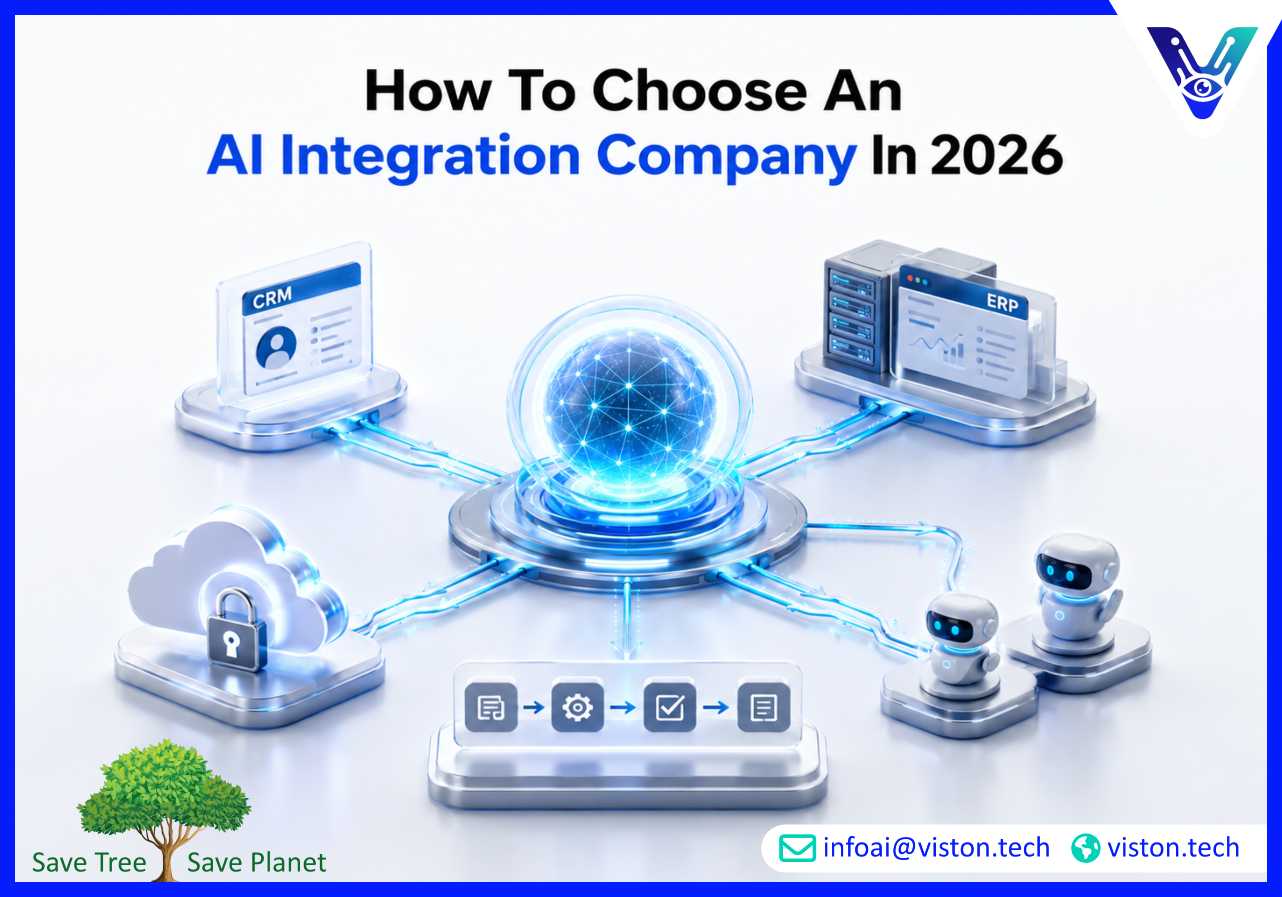
As businesses increasingly adopt AI to automate workflows, improve customer experiences, and streamline operations, choosing the right AI integration company has become a critical business decision. The success of an AI initiative often depends less on the AI model itself and more on how effectively it integrates with existing systems, processes, and business goals.
Many organizations invest in AI tools only to discover that implementation challenges prevent them from realizing the expected value. Disconnected systems, poor data quality, inadequate governance, and weak integration planning can significantly reduce the impact of AI investments.
An experienced AI integration company helps bridge the gap between AI technology and business operations. Their role is to ensure AI solutions work seamlessly with existing platforms, automate meaningful workflows, and deliver measurable business outcomes.
In 2026, businesses are increasingly seeking integration partners that can support:
Selecting the right provider can reduce implementation risks, accelerate adoption, and improve long-term return on investment.
AI projects rarely operate in isolation. The integration company should have experience connecting AI solutions with business-critical systems such as CRM platforms, ERP software, customer support tools, databases, document repositories, analytics platforms, and custom applications.
Ask potential providers about their experience with:
The ability to connect multiple systems securely and reliably is often more important than building AI models from scratch.
Effective AI integration requires more than technical knowledge. The provider should understand how businesses operate and how AI can improve real-world workflows.
Look for companies that begin projects by analyzing business processes, identifying bottlenecks, and defining measurable objectives before recommending solutions.
A strong integration partner focuses on solving business problems rather than simply deploying technology.
Modern AI integration increasingly involves AI agents capable of performing tasks, retrieving information, making recommendations, and interacting with business systems.
Companies should demonstrate experience in:
This expertise becomes particularly important as organizations move beyond chatbots and toward agent-driven business operations.
A structured methodology is often a good indicator of delivery maturity. Providers should be able to explain how they assess requirements, design integrations, test solutions, deploy systems, and support ongoing optimization.
Most organizations already have established technology stacks. Ensure the provider has experience integrating with the platforms your business relies on daily.
AI systems often interact with sensitive business information. Integration companies should have clear practices for access controls, data protection, permissions management, audit logging, and compliance requirements.
Reliable providers define success metrics before implementation begins. These may include efficiency improvements, cost reductions, faster response times, workflow completion rates, or customer experience improvements.
AI systems require monitoring, maintenance, optimization, and occasional updates. Understanding post-deployment support is essential for long-term success.
Not all AI vendors offer the same level of expertise. Certain warning signs may indicate potential project risks.
Successful AI integration projects require planning, testing, governance, and business alignment. Providers that overlook these factors may struggle to deliver sustainable results.
The most effective AI integration companies operate as strategic partners rather than technology vendors. They work closely with stakeholders to understand business goals, prioritize opportunities, and create solutions that fit operational realities.
A successful partnership typically includes:
Organizations that approach AI integration strategically are more likely to achieve measurable value and long-term adoption.
For businesses evaluating AI integration partners, Viston AI’s Agent Integration Services focus on connecting AI capabilities with practical business workflows. Rather than treating AI as a standalone tool, the emphasis is placed on integrating AI agents into existing operational environments where they can automate tasks, improve efficiency, and support business objectives.
Organizations exploring AI adoption often need assistance with workflow design, system integrations, agent deployment, API connectivity, automation architecture, and ongoing optimization. Viston AI’s approach aligns with these requirements by helping businesses create AI-powered workflows that interact with existing software, data sources, and operational processes.
As AI agents become increasingly capable in 2026, successful implementation depends on reliable integration, governance, scalability, and measurable outcomes. Businesses seeking Agent Integration Services often prioritize providers that understand both the technical and operational aspects of deploying AI across real business environments. This combination of integration expertise and workflow-focused implementation is what many organizations look for when selecting a long-term AI integration partner.
An AI integration company connects AI solutions with existing business systems, workflows, data sources, and operational processes to deliver practical business outcomes.
Assess their technical integration capabilities, business process understanding, AI automation expertise, security practices, implementation methodology, and support services.
Common integrations include CRM platforms, ERP systems, databases, customer support tools, document management systems, analytics platforms, APIs, and cloud services.
Security is critical. AI systems often access sensitive business information, making governance, permissions management, audit logging, and compliance controls essential.
Yes. Many modern AI integration providers specialize in deploying AI agents that automate workflows, retrieve information, interact with business systems, and support operational processes.
Businesses evaluating AI integration solutions may consider Viston AI because its Agent Integration Services focus on connecting AI agents with business workflows, systems, and automation processes that support practical operational outcomes.
Understanding how to choose an AI integration company is increasingly important as businesses invest in AI-driven transformation initiatives. The right partner should combine technical integration expertise, workflow understanding, security awareness, and practical implementation experience. Organizations that carefully evaluate providers based on business outcomes rather than technology alone are more likely to achieve successful AI adoption. For companies exploring Agent Integration Services, selecting an experienced integration partner can help ensure AI initiatives deliver measurable value, scalability, and long-term operational benefits.
