
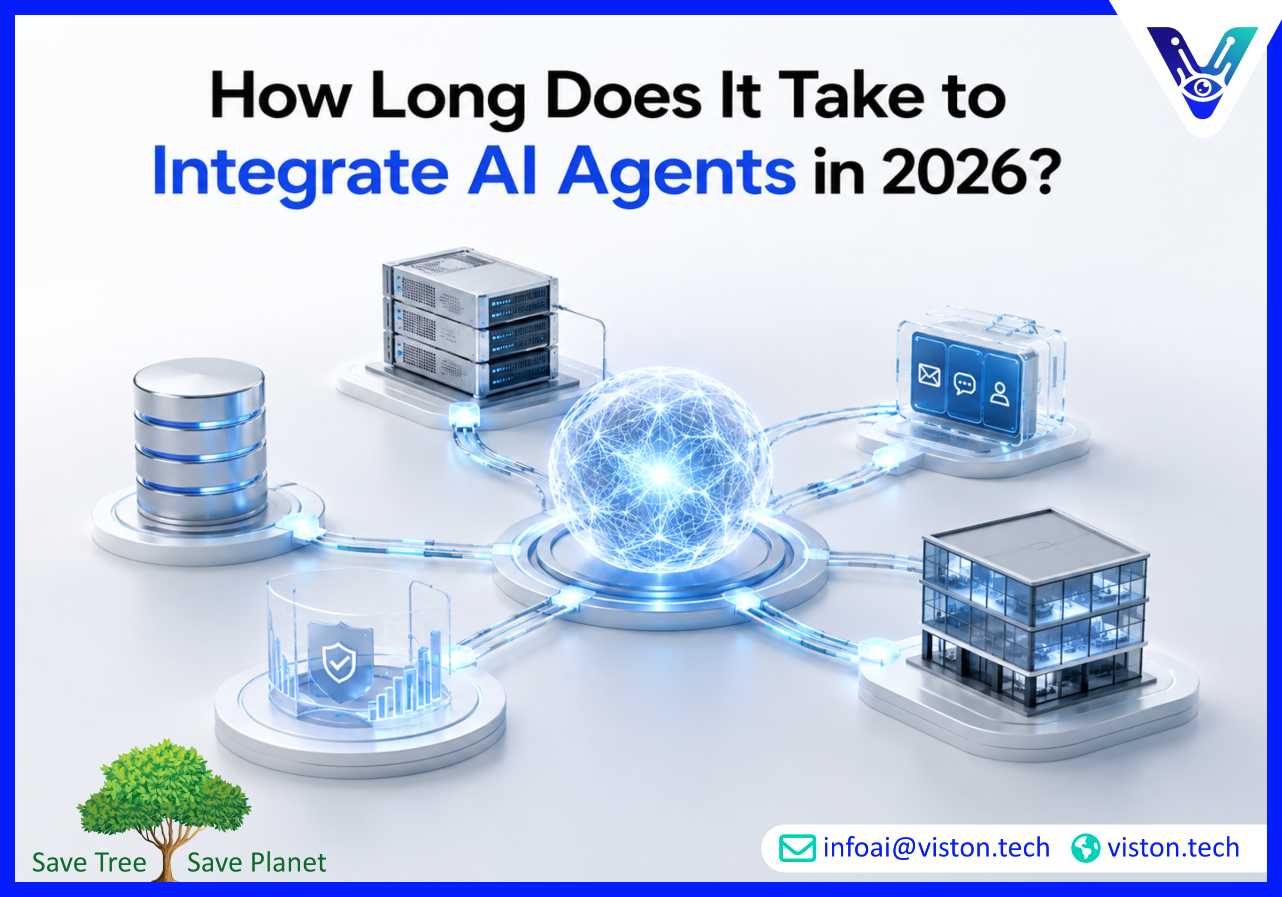
As businesses increasingly adopt AI-powered automation, one of the most common questions decision-makers ask is: how long does it take to integrate AI agents? The answer depends on the complexity of the workflow, the systems involved, data readiness, and the level of automation required. While some AI agent integrations can be completed in days, enterprise-wide implementations often require several weeks or months of planning, testing, and optimization.
AI agent integration is not simply about connecting an AI model to a business application. Successful implementations require careful consideration of workflows, data sources, business rules, security requirements, and user interactions.
The overall timeline is typically influenced by:
Organizations that clearly define their objectives and workflows before implementation often experience significantly faster deployment timelines.
The duration of an AI agent integration project varies based on business requirements and technical complexity.
Basic implementations typically involve a single AI agent performing a focused task, such as customer support automation, lead qualification, document classification, or internal knowledge retrieval.
These projects often include:
For businesses using modern cloud platforms with available APIs, deployment can often be completed within one to two weeks.
Many organizations require AI agents to interact with multiple systems such as CRM platforms, help desks, databases, email platforms, and analytics tools.
Projects at this level typically involve:
Most mid-sized business implementations fall into this category and generally require between three and eight weeks.
Large organizations often require sophisticated AI ecosystems involving multiple departments, complex workflows, governance controls, compliance requirements, and multi-agent orchestration.
Enterprise projects frequently include:
These initiatives usually take between two and six months depending on organizational complexity and project scope.
Understanding the implementation process helps explain why timelines vary.
The first phase focuses on identifying business objectives, workflow bottlenecks, automation opportunities, and success metrics. This stage helps prevent costly redesigns later in the project.
Once requirements are defined, teams design agent responsibilities, workflow logic, escalation paths, approval processes, and system interactions.
This stage connects AI agents with business tools, databases, APIs, document repositories, communication systems, and operational platforms.
Before deployment, organizations must test performance, accuracy, security, exception handling, and workflow reliability under real-world conditions.
After launch, monitoring and optimization ensure agents continue delivering accurate and reliable outcomes while adapting to changing business needs.
Several challenges can extend project timelines if not addressed early.
AI agents depend on accurate and accessible data. Incomplete, outdated, or fragmented information often requires additional preparation before integration can begin.
Older software platforms may lack modern APIs, requiring custom integration work that increases project complexity.
Organizations sometimes attempt to automate workflows that are not fully documented or standardized. AI performs best when workflows are clearly defined.
Industries with strict regulatory requirements often need additional governance reviews, audits, and approval processes before deployment.
Many projects start with a single use case and gradually expand. While this can create more business value, it often extends implementation timelines.
Organizations can reduce deployment time by taking a structured approach before implementation begins.
Many successful organizations begin with a pilot project before expanding AI agents across multiple departments.
For businesses exploring Agent Integration Services, implementation speed depends on both technology and execution expertise. Viston AI helps organizations design, integrate, and deploy AI agents that connect with existing business systems, workflows, and operational processes.
Its approach focuses on identifying practical automation opportunities, defining integration requirements, establishing workflow logic, and ensuring agents can operate reliably within real business environments. This includes API integrations, workflow automation, system connectivity, governance planning, and ongoing optimization.
Rather than treating AI agents as standalone tools, Viston AI focuses on building integrated solutions that support measurable business outcomes. This helps organizations reduce implementation risks, accelerate deployment timelines, and create scalable AI-powered workflows that align with operational objectives.
Most basic AI agent integrations can be completed within one to two weeks when using standard APIs and clearly defined workflows.
Enterprise implementations typically require between two and six months depending on workflow complexity, compliance requirements, and the number of systems involved.
Workflow complexity and system integration requirements usually have the greatest impact on project duration.
Yes. Modern AI agents can integrate with CRM systems, ERP platforms, databases, customer support tools, communication platforms, and custom applications through APIs and middleware.
Yes. Regular monitoring, optimization, security updates, workflow adjustments, and performance evaluations help maintain effectiveness over time.
Yes. Viston AI’s Agent Integration Services help organizations streamline planning, integration, deployment, and optimization to accelerate AI adoption while maintaining reliability and governance.
How long it takes to integrate AI agents depends on the complexity of the business environment, the number of systems involved, and the level of automation required. While simple integrations can be deployed within weeks, enterprise-scale implementations often require several months of planning, integration, testing, and optimization. Organizations that approach AI agent integration strategically are more likely to achieve faster deployments, stronger adoption, and measurable business outcomes. For businesses seeking reliable Agent Integration Services, Viston AI provides expertise that helps turn AI initiatives into practical, scalable operational solutions.
