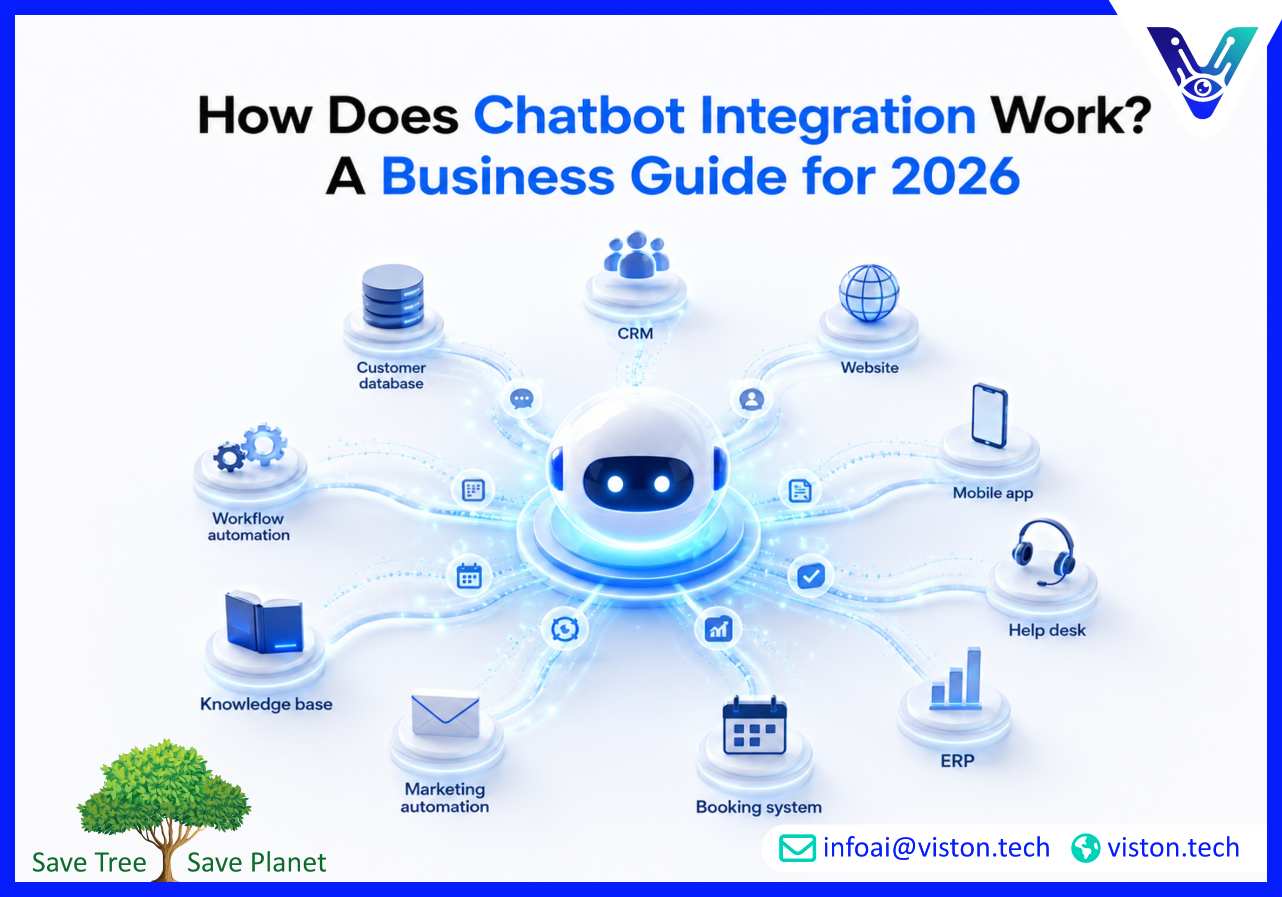
How Does Chatbot Integration Work? A Business Guide for 2026
Businesses increasingly rely on AI-powered conversations to improve customer experiences, automate routine interactions, and streamline operations. Understanding how chatbot integration works is essential for organizations looking to connect AI assistants with websites, applications, CRM platforms, and business workflows. In 2026, successful chatbot integration is less about adding a chat window and more about creating connected, intelligent customer experiences.
What Is Chatbot Integration?
Chatbot integration is the process of connecting an AI chatbot with existing business systems, platforms, and communication channels so it can access information, automate tasks, and provide meaningful responses to users.A standalone chatbot can answer basic questions, but an integrated chatbot can perform business functions such as:
Booking appointments
Capturing and qualifying leads
Processing support requests
Accessing customer records
Providing order updates
Triggering automated workflows
Synchronizing information across platforms
The goal is to transform a chatbot from a simple conversational tool into a connected business assistant.
How Chatbot Integration Works in Practice
Chatbot integration typically follows a structured process that allows the chatbot to communicate with various business systems.
Step 1: Understanding Business Requirements
The integration process begins by identifying the business objectives. Organizations must determine what they want the chatbot to accomplish.Common objectives include:
Reducing customer support workload
Generating qualified leads
Automating appointment scheduling
Improving customer onboarding
Providing 24/7 customer assistance
Supporting internal employee operations
Defining objectives helps shape the chatbot’s capabilities and integration requirements.
Step 2: Selecting Communication Channels
Modern chatbots operate across multiple customer touchpoints. Integration teams determine where users will interact with the chatbot.Common channels include:
Company websites
Mobile applications
WhatsApp
Facebook Messenger
Microsoft Teams
Slack
Email platforms
Customer portals
The chatbot is configured to provide a consistent experience across all selected channels.
Step 3: Connecting Business Systems
The most important part of chatbot integration involves connecting the chatbot with backend systems through APIs, webhooks, middleware, or integration platforms.Examples include:
CRM systems
Help desk platforms
ERP software
E-commerce platforms
Booking systems
Marketing automation tools
Knowledge bases
Customer databases
These connections allow the chatbot to retrieve information and perform actions on behalf of users.
Step 4: Training and Configuration
Once connected, the chatbot is configured to understand user intent and respond appropriately.This stage may include:
Conversation design
Intent mapping
Knowledge base creation
Workflow automation setup
Escalation rule configuration
Response personalization
AI-powered chatbots may also use large language models to improve conversational quality and context understanding.
Step 5: Testing and Deployment
Before launch, integration teams test all workflows to ensure accurate responses and reliable system connections.Testing typically covers:
User experience validation
API performance
Data accuracy
Security controls
Error handling
Fallback scenarios
After successful testing, the chatbot is deployed to production environments.
Why Chatbot Integration Matters in 2026
Customer expectations continue to evolve. Users expect immediate assistance, personalized interactions, and seamless experiences regardless of communication channel.Without integration, chatbots often become limited FAQ tools. Integrated chatbots can deliver measurable business value by accessing real-time information and automating actions.Key benefits include:
Faster customer response times
Improved customer satisfaction
Higher lead conversion rates
Reduced operational costs
Greater employee productivity
Scalable customer support operations
Consistent customer experiences
Organizations that successfully integrate AI chatbots gain the ability to serve customers efficiently while reducing manual workloads.
Common Chatbot Integration Challenges and Best Practices
Data Security and Privacy
Chatbots frequently handle sensitive customer information. Organizations must ensure proper authentication, encryption, access controls, and compliance with applicable regulations.
System Compatibility
Many businesses operate multiple platforms with different architectures. Integration planning should evaluate API availability, data structures, and workflow compatibility before implementation.
Data Accuracy
A chatbot is only as effective as the information it can access. Maintaining clean, updated, and synchronized data sources is critical.
User Experience Design
Even advanced AI systems require thoughtful conversation design. Clear prompts, logical workflows, and human escalation paths improve customer satisfaction.
Continuous Optimization
Chatbot integration is not a one-time project. Organizations should continuously monitor conversations, identify gaps, update workflows, and improve performance over time.
How Viston AI Supports AI Chatbot Integration
For businesses seeking practical AI chatbot integration solutions, Viston AI focuses on connecting intelligent conversational systems with real business operations rather than deploying isolated chatbot experiences.AI chatbot integration often requires expertise across automation, APIs, customer workflows, business systems, and AI technologies. Viston AI helps organizations build chatbot solutions that can interact with websites, customer databases, CRM platforms, support systems, and operational workflows to create meaningful business outcomes.Whether the objective is customer support automation, lead generation, appointment management, onboarding assistance, or workflow automation, effective integration requires careful planning, secure implementation, and ongoing optimization. By aligning chatbot capabilities with operational goals, businesses can improve efficiency while delivering more responsive customer experiences.As AI adoption continues to accelerate in 2026, organizations increasingly benefit from integration strategies that focus on scalability, security, data accessibility, and measurable business value rather than simply adding conversational interfaces.
Frequently Asked Questions
How long does chatbot integration take?
Simple chatbot integrations may take a few days, while enterprise-level implementations involving multiple systems and custom workflows can require several weeks or months.
What systems can a chatbot integrate with?
Chatbots can integrate with CRM platforms, ERP systems, customer support software, e-commerce platforms, booking systems, marketing automation tools, databases, and communication channels.
Do integrated chatbots require coding?
Many modern platforms offer low-code or no-code integration options. However, custom integrations often require development expertise for advanced workflows and system connections.
Is chatbot integration secure?
When implemented properly, chatbot integration can be highly secure through encryption, authentication protocols, role-based access controls, and compliance-focused security practices.
Can AI chatbots generate leads automatically?
Yes. Integrated chatbots can collect visitor information, qualify prospects, schedule meetings, and transfer lead data directly into CRM systems.
How can Viston AI help with chatbot integration?
Viston AI helps businesses connect AI chatbots with operational systems, customer platforms, and automated workflows to create scalable and practical business solutions.
Conclusion
Understanding how chatbot integration works is essential for businesses seeking to improve customer engagement and operational efficiency in 2026. Successful AI chatbot integration goes beyond conversations by connecting intelligent assistants with business systems, data sources, and automated workflows. When implemented correctly, chatbot integration can improve service quality, streamline operations, and support business growth. Organizations evaluating AI chatbot integration should focus on security, scalability, user experience, and system connectivity to maximize long-term value. Viston AI supports businesses in building integrated chatbot solutions that align technology with real operational needs.