
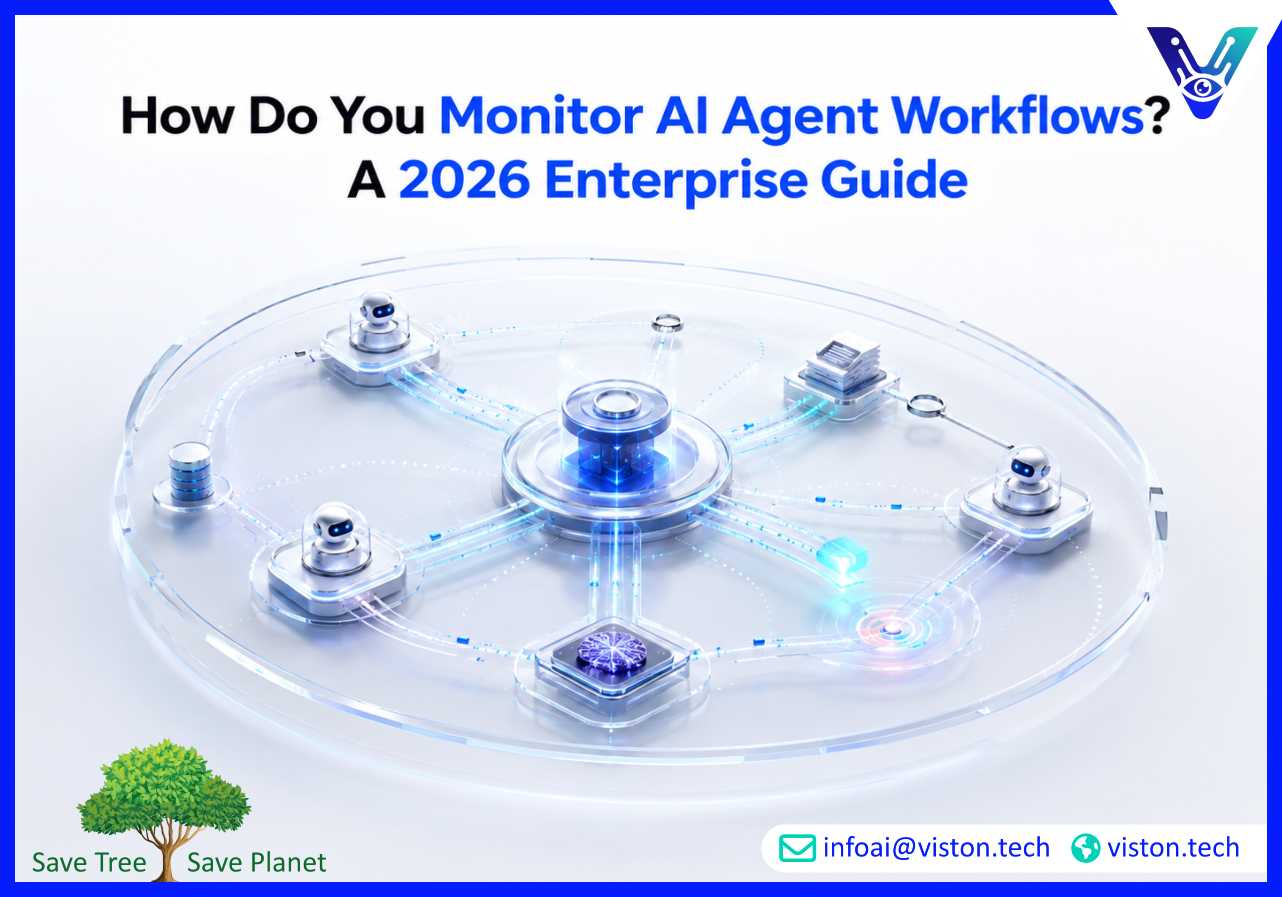
As agentic AI workflows move from proof-of-concept into revenue-bearing operations, the question is no longer whether to monitor them — it is how to do it reliably. Without robust observability, even well-designed multi-agent systems can fail silently, drift in output quality, or burn through infrastructure budget with no clear trace of what went wrong and why.
Traditional application performance monitoring was built for predictable systems. If an API call fails, a log captures it. If a server goes down, an alert fires. These tools were designed around binary outcomes — something either works or it does not.
Agentic AI workflows do not behave that way. A workflow can technically complete — returning a status of 200, consuming tokens, writing an output — and still be wrong. An agent might retrieve stale information from a vector store, select the incorrect tool for a subtask, hand off context to the next agent in a degraded state, or produce an output that looks plausible but contains a factual error. None of these failures trigger a conventional alert.
This is the core challenge: AI agents fail in ways that binary monitoring cannot see. The same input can trigger different tool sequences across runs. Outputs that appear correct on the surface can be semantically wrong in context. Latency that spikes only during complex reasoning chains may be invisible in aggregate dashboards.
Effective monitoring of agentic workflows requires a fundamentally different observability layer — one that captures reasoning traces, tool invocations, inter-agent handoffs, memory state, token usage, and output quality in real time.
Monitoring a production agentic system means tracking several interconnected layers simultaneously. Each layer answers a different operational question.
Every action an agent takes — calling a tool, querying a retrieval system, passing context to another agent, invoking an LLM — should produce a structured trace span. These spans collectively create a visual map of exactly what the system did, in what order, and how long each step took.
For multi-agent systems, tracing must capture cross-agent handoffs. When Agent A delegates a subtask to Agent B, the trace must preserve the parent-child relationship so engineers can pinpoint where a failure originated — whether in the orchestrating agent, a specialist subagent, or a downstream tool call.
OpenTelemetry has emerged as the standard instrumentation framework for this purpose in 2026. Its GenAI semantic conventions define standardized span types for agent creation, agent invocation, workflow execution, and tool use. This means trace data stays portable across observability backends, whether a team is using Datadog, Grafana, LangSmith, or an equivalent platform.
Trace data tells you what the agent did. Quality evaluation tells you whether what it did was correct.
In production, quality evaluation should run continuously on a sampled percentage of live traffic. This means scoring outputs against defined criteria — factual accuracy, goal adherence, tone, completeness — automatically, without waiting for user complaints to surface problems.
This is particularly important after prompt updates or model version changes, where regressions in output quality can be subtle and gradual. Teams that rely purely on user feedback cycles to detect quality degradation are typically weeks behind the actual failure event.
Agentic workflows are token-intensive by design. A multi-agent system with several reasoning steps, retrieval calls, and tool integrations can consume significantly more tokens per transaction than a simple LLM call. Without visibility at the workflow and agent level, cost attribution becomes guesswork.
Effective monitoring tracks token usage per agent, per workflow, and per request. It identifies which reasoning paths are disproportionately expensive, where cheaper models could handle routing or classification steps, and whether any agent is consuming tokens unnecessarily due to a poorly structured prompt or a retrieval system returning irrelevant context.
Stateful agents that operate across extended sessions — handling tasks that span hours, days, or multiple user interactions — depend on accurate memory management. If an agent loses context mid-task, retrieves an outdated state, or overwrites memory incorrectly, the downstream consequences can be significant and difficult to diagnose without state-level monitoring.
Monitoring must include visibility into what information agents are reading from and writing to memory stores, whether state transitions are occurring as designed, and whether context windows are approaching limits that could cause truncation.
Not all metrics carry equal operational weight. For engineering and product teams managing production agentic systems, the following metrics form a practical monitoring baseline in 2026.
Monitoring must be designed into an agentic system from the beginning, not bolted on after deployment. Retrofitting observability into a production agent network is significantly more complex and typically results in gaps in trace coverage that persist long after the initial build.
The practical approach for engineering teams in 2026 involves several architectural decisions made at the design stage.
First, instrument every agent node explicitly. Each node in the workflow graph should emit structured spans from day one. Using frameworks like LangGraph, the node structure already maps naturally to traceable execution steps — but the instrumentation must be intentional to capture the data points that matter operationally.
Second, standardize on open telemetry formats. Proprietary logging formats create vendor lock-in and make it harder to migrate observability backends as requirements evolve. Open standards mean trace data remains usable regardless of which platform the team uses to visualize and alert on it.
Third, connect quality evaluation to deployment pipelines. Production failures should feed back into evaluation datasets, and the same quality scoring used in production monitoring should gate pull requests during development. This creates a continuous improvement loop where every regression becomes a test case rather than a repeated incident.
Fourth, set granular alerting thresholds rather than aggregate ones. An alert on overall workflow error rate can mask localized failures in specific agent nodes that have low traffic volume but high business impact. Alerting at the node and tool level provides faster, more actionable signal.
Viston AI is an agentic AI and LLMOps engineering firm with over 15 years of experience building production-grade multi-agent systems for clients across the USA, Europe, and Australia. Its engineering teams specialize in constructing stateful, deterministic agent networks using frameworks including LangGraph, CrewAI, and Camunda — with observability treated as a core architectural requirement rather than an afterthought.
Viston implements deep tracing with LangSmith from the first day of a build, ensuring that every node execution, tool invocation, and inter-agent handoff is visible and debuggable in production. This observability-first methodology means engineering teams can trace exactly which node failed, where latency spiked, and which tool returned an unexpected result — without sifting through unstructured logs.
For businesses managing complex multi-agent workflows, Viston’s approach includes cost-aware architecture design that minimises unnecessary token consumption, guardrails to enforce safe and compliant agent behaviour, and legacy system integration that connects agent workflows to existing ERPs, SQL databases, and internal APIs without disrupting current infrastructure.
Viston’s track record spans over 2,860 client deployments, working with organisations that need reliable, scalable agentic systems in production — not experimental prototypes. For engineering leaders and CTOs who require deterministic control over agentic AI workflows and the monitoring infrastructure to support them, Viston provides the specialist depth that this category of work demands.
Traditional application monitoring detects binary failures — a service is down, an API returns an error. AI agent monitoring must also evaluate behavioural correctness, output quality, reasoning paths, and tool selection decisions. A workflow can complete without errors and still produce a wrong or harmful output. Agent monitoring requires trace-level visibility into what the agent reasoned, decided, and produced at each step.
LangSmith is widely used for tracing LangGraph-based workflows, providing node-level visibility, run comparisons, and integration with evaluation frameworks. For broader observability across multiple frameworks, platforms built on OpenTelemetry standards — including Datadog with its GenAI conventions support, Langfuse, and Braintrust — offer portable, production-grade monitoring. The right choice depends on deployment model, data residency requirements, and evaluation workflow needs.
Token usage should be tracked at the span level — per agent node, per tool call, and per LLM invocation — rather than only at the overall request level. This granularity reveals which workflow paths are disproportionately expensive, where cheaper models could perform routing tasks effectively, and whether retrieval systems are returning excessive context that inflates prompt size without improving output quality.
Priority alerts for production agentic workflows include: tool call failure rate exceeding a defined threshold, end-to-end latency spikes at specific agent nodes, output quality score regressions on sampled traffic, guardrail trigger frequency increases, and token cost anomalies per workflow run. Alerting should be set at the node and tool level, not just at aggregate workflow level, to enable fast, targeted debugging.
Viston implements observability infrastructure — including LangSmith tracing, structured logging, cost monitoring, and guardrail enforcement — as a built-in component of every agent system it engineers. Its teams design workflows with explicit state management, traceable control flows, and alert thresholds configured to production requirements, giving engineering leaders and CTOs full visibility into how their agentic AI systems behave at scale.
Human-in-the-loop validation is appropriate when an agent workflow involves high-stakes decisions, irreversible actions, regulatory compliance checkpoints, or tasks where the cost of an incorrect autonomous decision exceeds the operational benefit of full automation. Monitoring data — specifically escalation rates, quality scores, and failure categories — should inform where human checkpoints are necessary and where they can be safely removed as agent performance improves.
Monitoring AI agent workflows is one of the most operationally important disciplines in enterprise AI engineering in 2026. As agentic systems take on more consequential business processes, the ability to trace agent reasoning, evaluate output quality continuously, attribute costs accurately, and alert on behavioural anomalies at the node level becomes a direct competitive requirement. Organisations that treat observability as a first-class architectural concern — not a post-deployment concern — build agent systems that are reliable, cost-efficient, and improvable over time. For businesses building or scaling production agentic AI workflows, working with a specialist like Viston AI provides the engineering depth and monitoring infrastructure needed to move from experimental builds to mission-critical, production-grade systems with confidence.
