
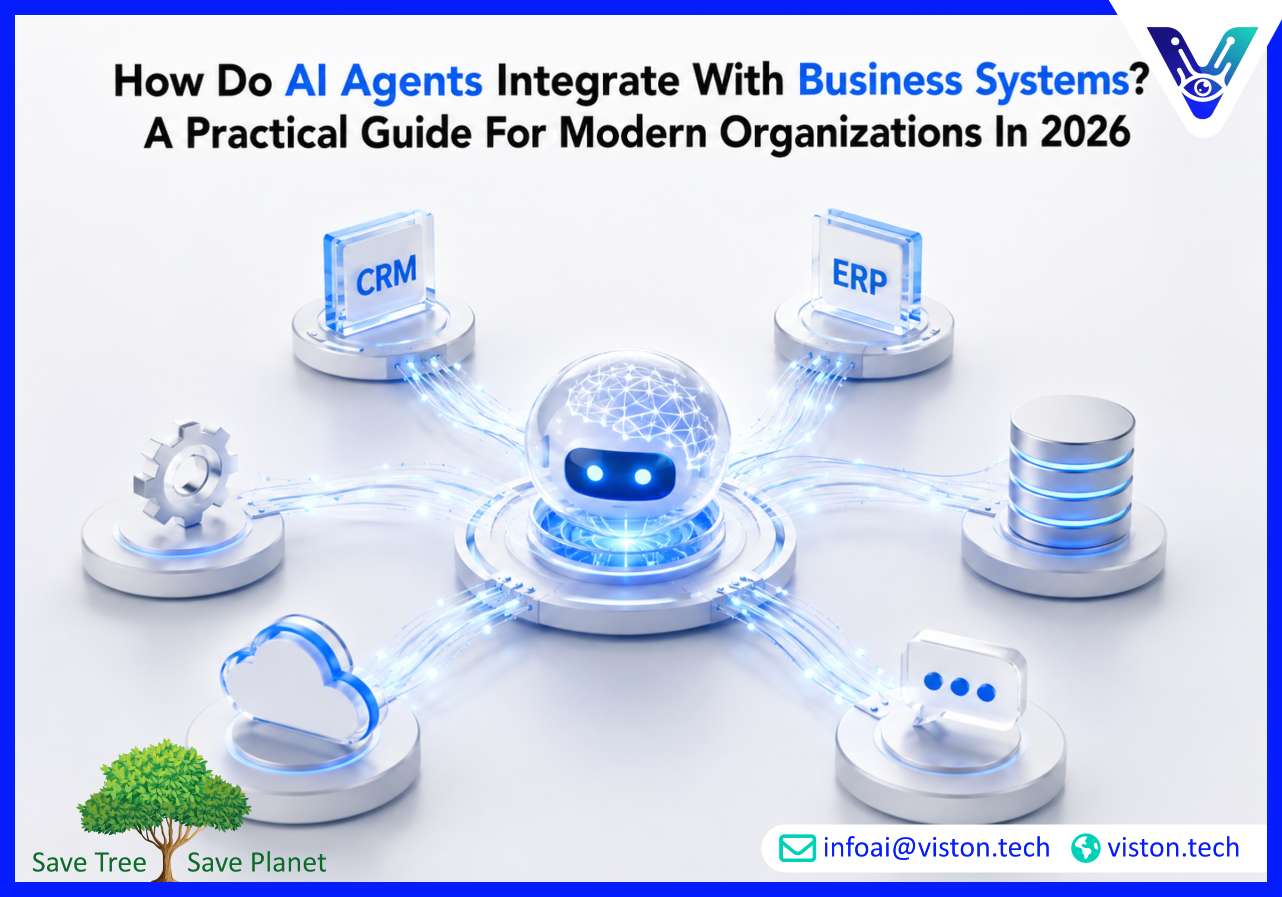
As businesses increasingly adopt AI-powered automation, one question continues to drive decision-making: how do AI agents integrate with business systems? The answer goes beyond simply connecting an AI model to software. Effective AI agent integration involves creating secure, reliable, and intelligent connections between AI agents and the systems that power daily business operations.
In 2026, organizations are using AI agents to automate workflows, improve decision-making, streamline customer interactions, and reduce operational bottlenecks. However, the value of these agents depends largely on how well they integrate with existing business infrastructure.
AI agent integration refers to the process of connecting AI-powered agents with business applications, databases, workflows, communication platforms, and operational systems. This allows agents to access information, perform actions, trigger processes, and collaborate across multiple platforms.
Unlike standalone chatbots, modern AI agents can interact directly with business tools to complete meaningful work. They can retrieve customer information, update records, generate reports, schedule tasks, process documents, and support employees across departments.
The objective is not simply to provide answers but to enable AI agents to participate in business operations while following established rules, permissions, and workflows.
Most organizations already operate through a complex ecosystem of software platforms. Customer data may reside in CRM systems, financial information in ERP platforms, support interactions in ticketing systems, and operational data across multiple databases and applications.
If AI agents cannot access these systems, their usefulness becomes limited. Integration enables agents to move beyond conversation and become operational assistants capable of supporting real business outcomes.
Organizations that successfully integrate AI agents often see greater value than those deploying isolated AI tools that operate separately from core business systems.
AI agent integration typically relies on several technical and operational components working together. The exact approach depends on business requirements, system architecture, security policies, and workflow complexity.
Application Programming Interfaces (APIs) are the most common integration method. APIs allow AI agents to communicate directly with software applications and exchange information securely.
Through APIs, an AI agent can:
Modern business software increasingly provides APIs specifically designed to support automation and AI-driven workflows.
Many AI agents require access to business data stored in databases. Secure database integration allows agents to retrieve relevant information, analyze records, and support decision-making processes.
For example, an AI sales agent may access customer purchase history before generating recommendations, while a support agent may review previous interactions before responding to inquiries.
Workflow automation tools help connect AI agents with multiple systems simultaneously. These platforms enable agents to trigger actions across different applications without requiring extensive custom development.
This approach simplifies integration and allows businesses to automate complex workflows involving multiple systems and approval stages.
Larger organizations often require integration with enterprise platforms such as ERP systems, customer service platforms, document management solutions, and internal knowledge repositories.
Enterprise integrations typically require additional considerations around security, compliance, scalability, governance, and performance monitoring.
AI agents can support a wide variety of business functions when properly integrated with operational systems.
Integrated AI agents can:
This improves response speed while maintaining service quality.
Sales-focused AI agents often integrate with CRM systems to:
By automating administrative activities, sales teams can focus more time on relationship building and revenue generation.
AI agents can connect with document repositories and knowledge systems to:
This reduces the time employees spend searching for information.
Operational AI agents can support processes such as:
These integrations help organizations reduce manual effort while improving process consistency.
Although AI agent integration offers significant opportunities, successful implementation requires careful planning.
AI agents should only access authorized information. Organizations must implement role-based permissions, encryption, authentication, and monitoring to protect sensitive data.
AI performance depends on accurate information. Poor-quality data can lead to incorrect recommendations, workflow failures, and reduced trust in automation systems.
Many organizations operate dozens of applications across departments. Integrating AI agents into these environments requires careful architecture planning and testing.
Businesses operating in regulated industries must ensure AI agents comply with industry standards, internal policies, audit requirements, and data governance frameworks.
Not every business decision should be automated. Effective integrations often include human approval workflows for sensitive actions involving finance, legal matters, customer commitments, or regulatory requirements.
Organizations exploring AI agent integration often discover that connecting agents to business systems requires far more than basic software implementation. Successful projects involve integration strategy, workflow analysis, system architecture, API connectivity, security planning, orchestration logic, testing, and ongoing optimization.
Viston AI specializes in Agent Integration Services that help businesses connect AI agents with operational systems and workflows in a practical, business-focused manner. This includes integrating agents with CRM platforms, internal databases, customer service tools, communication systems, enterprise applications, and workflow automation environments.
Rather than deploying isolated AI solutions, the focus is on building connected systems that support measurable business outcomes. By aligning AI agents with operational processes, organizations can improve efficiency, streamline workflows, reduce manual work, and create more scalable automation capabilities.
As businesses increasingly adopt agentic AI technologies in 2026, structured integration becomes essential for ensuring reliability, security, governance, and long-term business value.
AI agent integration is the process of connecting AI-powered agents with business systems, applications, databases, and workflows so they can access information and perform operational tasks.
Most AI agents connect through APIs, database connections, workflow automation platforms, enterprise integration tools, and secure application interfaces.
AI agents can integrate with CRM platforms, ERP systems, customer support software, project management tools, communication platforms, databases, document repositories, analytics systems, and custom applications.
They can be when implemented properly. Security measures typically include authentication, authorization controls, encryption, monitoring, audit logging, and role-based access management.
In many cases, AI agents can automate significant portions of workflows. However, critical decisions often benefit from human oversight and approval mechanisms.
Viston AI provides Agent Integration Services that help businesses connect AI agents with operational systems, workflows, and enterprise applications while supporting scalability, governance, and business-focused automation.
Understanding how AI agents integrate with business systems is essential for organizations seeking meaningful AI adoption in 2026. The true value of AI agents comes from their ability to interact with existing software, access business data, automate workflows, and support operational decision-making. Effective Agent Integration Services help organizations move beyond standalone AI tools and create connected systems that deliver measurable business outcomes. For businesses looking to implement secure, scalable, and practical AI integrations, Viston AI provides expertise that aligns AI capabilities with real-world operational requirements.
