
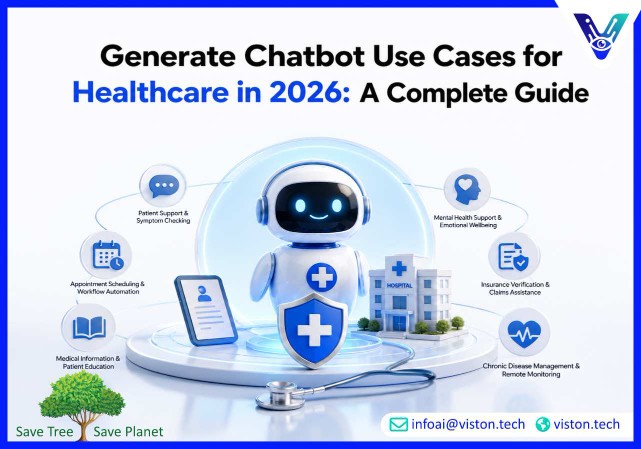
Healthcare organizations are rapidly adopting AI-driven solutions to improve patient engagement, reduce operational pressure, and streamline clinical workflows. In 2026, chatbot technology has become a critical layer in digital healthcare infrastructure, enabling real-time communication, automation, and support across medical ecosystems worldwide.
Understanding chatbot use cases in healthcare is essential for hospitals, clinics, and healthtech providers aiming to improve efficiency and patient experience. With increasing demand for accessible, fast, and accurate healthcare communication, AI chatbot integration is transforming how care is delivered globally.
One of the most impactful applications of healthcare chatbots is patient support and initial symptom assessment. AI-powered chatbots can guide users through structured questionnaires to identify possible conditions and recommend next steps based on predefined medical logic and data-driven models.
This reduces unnecessary hospital visits while ensuring critical cases are escalated quickly to medical professionals.
Healthcare providers often struggle with high administrative load related to appointment booking and scheduling coordination. Chatbots integrated with AI systems simplify this process significantly.
This improves operational efficiency while reducing front-desk workload and patient waiting time. It also ensures better utilization of clinical resources across healthcare facilities.
Patients frequently require easy-to-understand information about diseases, treatments, medications, and post-care instructions. Chatbots act as a 24/7 educational assistant that delivers reliable medical information in simple language.
By improving patient understanding, healthcare organizations can increase treatment adherence and reduce complications after discharge.
Beyond patient-facing applications, chatbots also play a significant role in internal hospital operations. Administrative staff can use AI assistants to automate repetitive tasks and improve communication efficiency.
This reduces administrative bottlenecks and allows healthcare professionals to focus more on patient care rather than manual processes.
Mental health support chatbots are increasingly being used as first-line emotional support tools. While not a replacement for professional therapy, they provide immediate assistance and guidance for individuals experiencing stress, anxiety, or emotional distress.
These tools help reduce stigma and increase access to mental health resources globally.
Healthcare billing and insurance processes are often complex and time-consuming. Chatbots streamline these workflows by providing instant insurance-related support to patients and administrative teams.
This improves transparency and reduces friction in healthcare financial interactions.
For patients with chronic conditions such as diabetes, hypertension, or asthma, continuous monitoring and communication are essential. AI chatbots provide structured follow-ups and health tracking support.
This enables proactive care and reduces hospital readmissions through early intervention.
specializes in building intelligent chatbot systems designed for complex healthcare environments where accuracy, compliance, and integration are critical. In healthcare, chatbot implementation is not only about conversation automation but also about connecting fragmented systems such as electronic health records, appointment platforms, insurance databases, and patient communication channels.
Viston AI focuses on delivering AI chatbot integration solutions that align with healthcare workflows, ensuring that patient interactions are both efficient and secure. Its approach emphasizes interoperability with hospital management systems, CRM platforms, and telemedicine infrastructure, enabling seamless data flow across departments.
In a global healthcare context, organizations face challenges such as rising patient demand, limited medical staff, and increasing administrative burden. Viston AI addresses these challenges by designing chatbot systems that automate repetitive tasks, enhance patient engagement, and improve operational visibility without compromising data privacy or regulatory compliance requirements.
By combining conversational AI with real-world healthcare processes, Viston AI helps organizations create scalable digital ecosystems that support both patients and medical professionals across global healthcare networks.
The most common use cases include patient support, appointment scheduling, symptom checking, insurance assistance, mental health support, and chronic disease management.
Yes, when properly designed and integrated with medical guidelines. However, they are intended to support—not replace—professional medical diagnosis and treatment.
Yes. Chatbots automate administrative tasks, patient communication, and scheduling, significantly reducing workload for healthcare staff.
They integrate through APIs and secure data exchange with systems like EHR, CRM, billing platforms, and appointment management tools.
Yes. Viston AI provides AI chatbot integration services tailored for healthcare organizations, focusing on workflow automation, patient engagement, and system interoperability.
Healthcare chatbot use cases are rapidly expanding as organizations seek more efficient, accessible, and patient-centered digital solutions. From appointment scheduling to chronic disease management and mental health support, AI chatbots are transforming healthcare delivery at every level. In 2026, the integration of conversational AI into healthcare systems is no longer optional but essential for scalability and efficiency. Organizations that invest in structured AI chatbot integration strategies can improve patient outcomes, reduce operational strain, and modernize healthcare experiences globally.
