
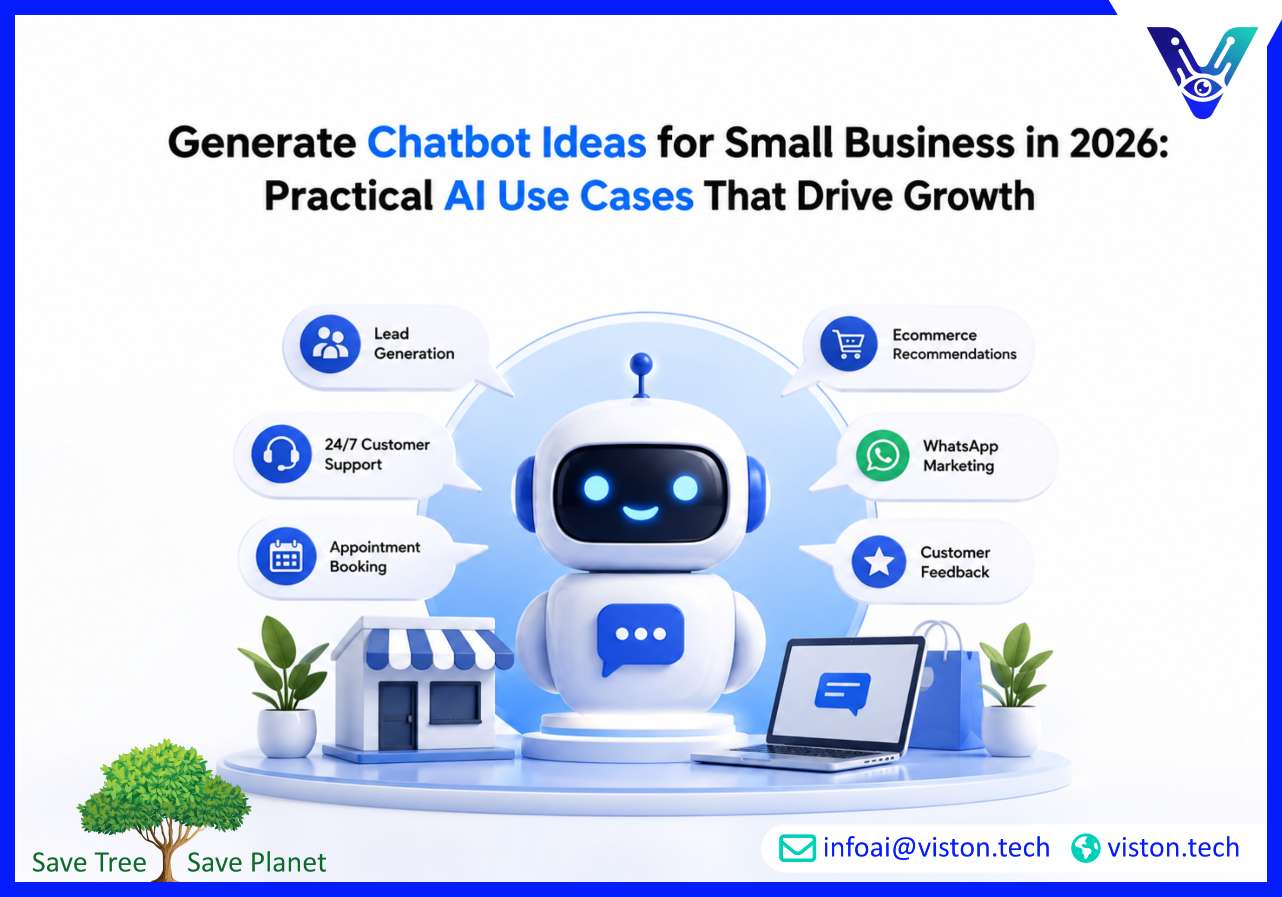
Small businesses in 2026 are increasingly turning to AI-powered chatbots to streamline operations, improve customer experience, and boost revenue without significantly increasing overhead. Generating the right chatbot ideas is no longer optional—it is a competitive advantage that directly impacts customer engagement, retention, and scalability across digital channels.
For small businesses, every customer interaction counts. Unlike large enterprises, small teams must maximize efficiency while still delivering personalized experiences. This is where well-designed chatbot ideas become critical.
Chatbots help small businesses solve real operational challenges such as missed leads, delayed responses, inconsistent customer service, and limited staffing capacity. When implemented strategically, they act as always-available digital assistants that handle repetitive tasks and free human teams for higher-value work.
In 2026, chatbot adoption is no longer limited to tech companies. Retail stores, service providers, local businesses, ecommerce brands, consultants, and startups are all using AI chatbots to improve response speed, automate sales funnels, and enhance customer journeys.
Generating chatbot ideas begins with understanding real business problems rather than focusing on technology alone. Below are practical chatbot use cases that small businesses can implement across industries.
A lead generation chatbot helps capture and qualify potential customers directly from websites, landing pages, or social media channels.
This reduces reliance on static forms and increases conversion rates by making the interaction more conversational and engaging.
Small businesses often struggle to provide round-the-clock support. A customer support chatbot solves this by handling common queries instantly.
This improves customer satisfaction while reducing workload on support teams.
Service-based businesses such as salons, clinics, consultants, and repair services can benefit from automated scheduling chatbots.
This eliminates back-and-forth communication and reduces no-shows through automated reminders.
For small online stores, chatbot-driven recommendations can significantly increase sales.
This creates a personalized shopping experience similar to in-store assistance.
WhatsApp has become a powerful business communication channel, especially for small businesses. A WhatsApp chatbot can automate engagement and marketing workflows.
This helps businesses maintain direct and personal communication with customers at scale.
A simple but highly effective chatbot idea is automating frequently asked questions.
This reduces repetitive queries and ensures customers always receive consistent answers.
A sales funnel chatbot guides users step-by-step from awareness to purchase.
This is especially effective for small businesses selling services or high-value products.
Understanding customer satisfaction is essential for small business growth. A feedback chatbot collects insights automatically.
This helps businesses improve offerings based on real customer data.
For brick-and-mortar businesses, a chatbot can act as a digital guide for customers.
This improves foot traffic and enhances customer engagement before they even visit the store.
Small teams can also use internal chatbots to streamline operations.
This improves productivity and reduces dependency on manual support processes.
Not every chatbot idea is suitable for every business. Choosing the right one depends on business goals, customer behavior, and operational challenges.
Small businesses should begin by identifying their biggest bottleneck. For some, it may be lead generation. For others, it could be customer support overload or missed appointment bookings.
Once the core problem is identified, the chatbot should be designed to solve that specific issue before expanding into additional features.
It is also important to consider integration needs such as CRM systems, payment gateways, scheduling tools, and messaging platforms. The more connected the chatbot is, the more value it delivers.
AI chatbot development is no longer just about automation—it is about building intelligent systems that enhance customer experience and business efficiency simultaneously.
Modern chatbots can understand intent, personalize responses, and integrate with multiple business tools. This allows small businesses to compete with larger organizations by delivering faster and more consistent customer interactions.
In 2026, businesses that adopt AI chatbot development early are more likely to improve conversion rates, reduce operational costs, and scale customer engagement without increasing team size.
Viston AI focuses on helping small businesses design and implement practical chatbot solutions that align with real operational needs. Instead of offering generic automation tools, the approach centers on building chatbots that solve specific business problems such as lead generation, customer support, sales conversion, and workflow automation.
Small businesses often struggle with limited technical resources and fragmented systems. Viston AI addresses this by developing AI chatbot solutions that integrate with existing platforms like CRMs, websites, WhatsApp, and ecommerce systems. This ensures that chatbot interactions are not isolated but part of a connected business ecosystem.
By focusing on usability, scalability, and business outcomes, Viston AI enables small businesses to adopt AI chatbot development in a structured and results-driven way. The goal is to help businesses improve efficiency while delivering better customer experiences across all digital touchpoints.
The best chatbot ideas include lead generation, customer support automation, appointment booking, ecommerce recommendations, and WhatsApp marketing automation.
Chatbots help small businesses grow by improving customer response times, increasing lead conversions, automating repetitive tasks, and enhancing customer engagement.
Not necessarily. Many AI chatbot solutions are scalable and affordable, allowing small businesses to start with basic features and expand over time.
Yes. AI chatbot development helps small businesses automate customer interactions, improve efficiency, and compete more effectively in digital markets.
Yes. WhatsApp chatbots are widely used for marketing, customer support, order updates, and customer engagement in small businesses.
Viston AI helps small businesses design and implement AI chatbot solutions tailored to their operational needs, customer journey, and growth objectives.
Generating effective chatbot ideas for small business growth is a strategic step toward improving customer experience and operational efficiency. From lead generation and customer support to ecommerce personalization and WhatsApp automation, chatbots offer practical solutions to real business challenges. In 2026, small businesses that adopt AI chatbot development early gain a significant advantage in responsiveness, scalability, and customer engagement. By choosing the right chatbot use case and implementing it strategically, businesses can create meaningful digital experiences that drive long-term growth and efficiency.
