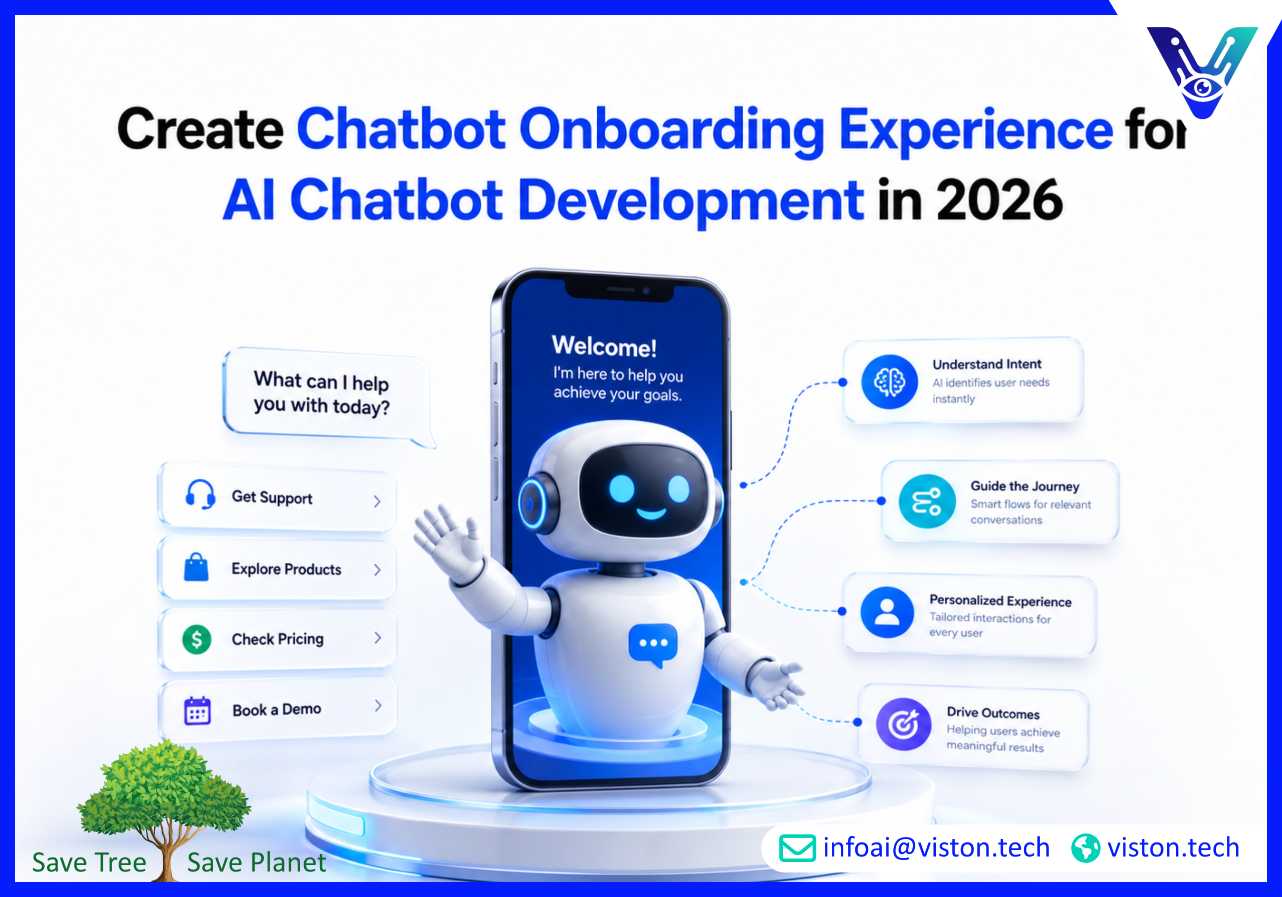
Create Chatbot Onboarding Experience for AI Chatbot Development in 2026
In 2026, businesses adopting conversational AI are no longer competing on whether they use chatbots—but on how effectively those chatbots engage users from the very first interaction. A well-designed chatbot onboarding experience is now a critical factor in user adoption, conversion rates, and long-term customer satisfaction. For organizations investing in AI Chatbot Development, onboarding is where trust, clarity, and business value are established.
What a Chatbot Onboarding Experience Means for Modern Businesses
A chatbot onboarding experience refers to the structured first-time interaction journey a user has with a chatbot. It is designed to introduce capabilities, understand user intent, and guide users toward meaningful outcomes with minimal friction.In modern AI Chatbot Development, onboarding is not just a welcome message. It is a carefully engineered conversational framework that determines whether users continue engaging or abandon the experience altogether.Businesses today use onboarding to:
Increase chatbot adoption rates
Reduce early-stage user drop-offs
Improve lead qualification accuracy
Accelerate customer support resolution
Build trust in AI-driven interactions
Guide users toward high-value actions
Why Chatbot Onboarding Experience Is Critical in 2026
User expectations for conversational systems have significantly evolved. People now expect AI chatbots to understand intent quickly, respond naturally, and provide immediate value. A poorly designed onboarding flow creates confusion and leads to disengagement within seconds.
Key Challenges Businesses Face Without Proper Onboarding
Users not understanding chatbot purpose
High abandonment rates after first message
Low conversion from chatbot interactions
Incomplete or irrelevant user inputs
Lack of personalization in conversations
Difficulty in guiding users to actions
A strong onboarding experience solves these challenges by structuring the user journey from the very first interaction.
Core Elements of an Effective Chatbot Onboarding Experience
1. Clear Value Introduction
Users should immediately understand what the chatbot can do. A concise introduction sets expectations and reduces confusion.
2. Intent Recognition Flow
The chatbot should quickly identify why the user is interacting—support, sales, onboarding, or information gathering.
3. Guided Conversation Structure
Instead of open-ended questioning, onboarding should use guided options to reduce cognitive load.
4. Progressive Data Collection
Information should be collected gradually rather than through long forms or excessive questioning upfront.
5. Personalization Layer
Modern AI Chatbot Development allows onboarding flows to adapt based on user behavior, industry, and historical data.
6. Human Escalation Option
Users must always have access to human support when needed to maintain trust and reliability.
How to Create Chatbot Onboarding Experience That Converts
Step 1: Define the Primary Business Objective
Every onboarding flow must align with a business goal such as lead generation, customer support automation, or product discovery. Without this clarity, onboarding becomes generic and ineffective.
Step 2: Map User Intent Scenarios
Businesses should identify why users are engaging with the chatbot and design branching flows accordingly. Common intents include:
Asking product questions
Requesting support
Exploring pricing
Booking services
Searching for information
Step 3: Design Conversational Entry Points
The first 3–5 messages determine engagement success. Entry points should be simple, direct, and action-oriented.
Step 4: Build Decision-Based Flow Logic
Instead of free-text-heavy onboarding, use structured decision paths with quick replies, buttons, or selectable options.
Step 5: Integrate AI Personalization
Advanced AI Chatbot Development enables onboarding flows to dynamically adjust based on user profile data, device type, or referral source.
Step 6: Optimize for Speed to Value
Users should reach a meaningful outcome within the first interaction cycle—whether that is finding information, booking a demo, or resolving a query.
Types of Chatbot Onboarding Experiences Across Industries
Customer Support Onboarding
Focuses on issue identification and rapid resolution. Users are guided toward FAQs, ticket creation, or live agent escalation.
Lead Generation Onboarding
Designed to qualify prospects by gathering business needs, budget range, and intent before passing leads to sales teams.
Ecommerce Onboarding
Helps users discover products based on preferences, behavior, and purchase intent while improving conversion rates.
SaaS Onboarding
Guides users through account setup, feature discovery, and integration steps to improve product adoption.
Internal Employee Onboarding
Used for HR, IT support, and internal knowledge access, reducing dependency on manual processes.
Best Practices for High-Performance Chatbot Onboarding Experience
Keep the first interaction extremely simple
Avoid overwhelming users with multiple questions
Use conversational language instead of technical jargon
Provide clear navigation paths at every step
Offer instant value within the first response
Continuously test and refine onboarding flows
Track user drop-off points and optimize accordingly
Successful onboarding is not static—it evolves based on real user behavior and performance analytics.
Common Mistakes in Chatbot Onboarding Design
Long and complex welcome messages
No clear explanation of chatbot purpose
Too many options presented at once
Lack of fallback or error handling
No human support option
Ignoring mobile-first user behavior
These mistakes significantly reduce engagement and undermine the effectiveness of even advanced AI systems.
How Viston AI Builds Chatbot Onboarding Experiences
Viston AI specializes in AI Chatbot Development focused on building structured, conversion-driven onboarding experiences that align with business objectives. Instead of generic chatbot scripts, Viston AI designs onboarding journeys that connect user intent with business workflows.Its approach includes mapping customer journeys, designing conversational logic, integrating business systems, and optimizing onboarding flows through real-time performance insights. This ensures that businesses not only deploy chatbots but also achieve measurable improvements in engagement, lead generation, and customer satisfaction.By focusing on scalable AI architecture and real-world user behavior, Viston AI helps organizations build onboarding experiences that work across industries and digital channels.
Frequently Asked Questions
What is a chatbot onboarding experience?
It is the first structured interaction between a user and a chatbot, designed to introduce capabilities and guide users toward a meaningful outcome.
Why is chatbot onboarding important?
It improves user engagement, reduces confusion, increases adoption rates, and helps businesses achieve better results from chatbot systems.
How long should onboarding take?
The onboarding experience should be short and efficient, ideally helping users reach value within the first few interactions.
Can onboarding improve conversion rates?
Yes, well-designed onboarding flows significantly improve conversion by guiding users toward relevant actions quickly and effectively.
What industries benefit most from chatbot onboarding?
Ecommerce, SaaS, customer support, healthcare, finance, and internal enterprise systems benefit greatly from structured onboarding experiences.
How does Viston AI help with onboarding design?
Viston AI develops AI Chatbot Development solutions with structured onboarding workflows tailored to business goals and user engagement strategies.
Conclusion
Creating a strong chatbot onboarding experience is essential for businesses leveraging AI Chatbot Development in 2026. It determines how effectively users engage, how quickly they find value, and how well the chatbot supports business goals. A structured onboarding flow improves trust, reduces friction, and drives meaningful interactions across industries. Organizations that invest in well-designed onboarding systems are more likely to achieve higher engagement, stronger conversion rates, and better overall chatbot performance. With expert-driven design approaches, businesses can transform onboarding from a simple introduction into a powerful conversion and engagement engine.