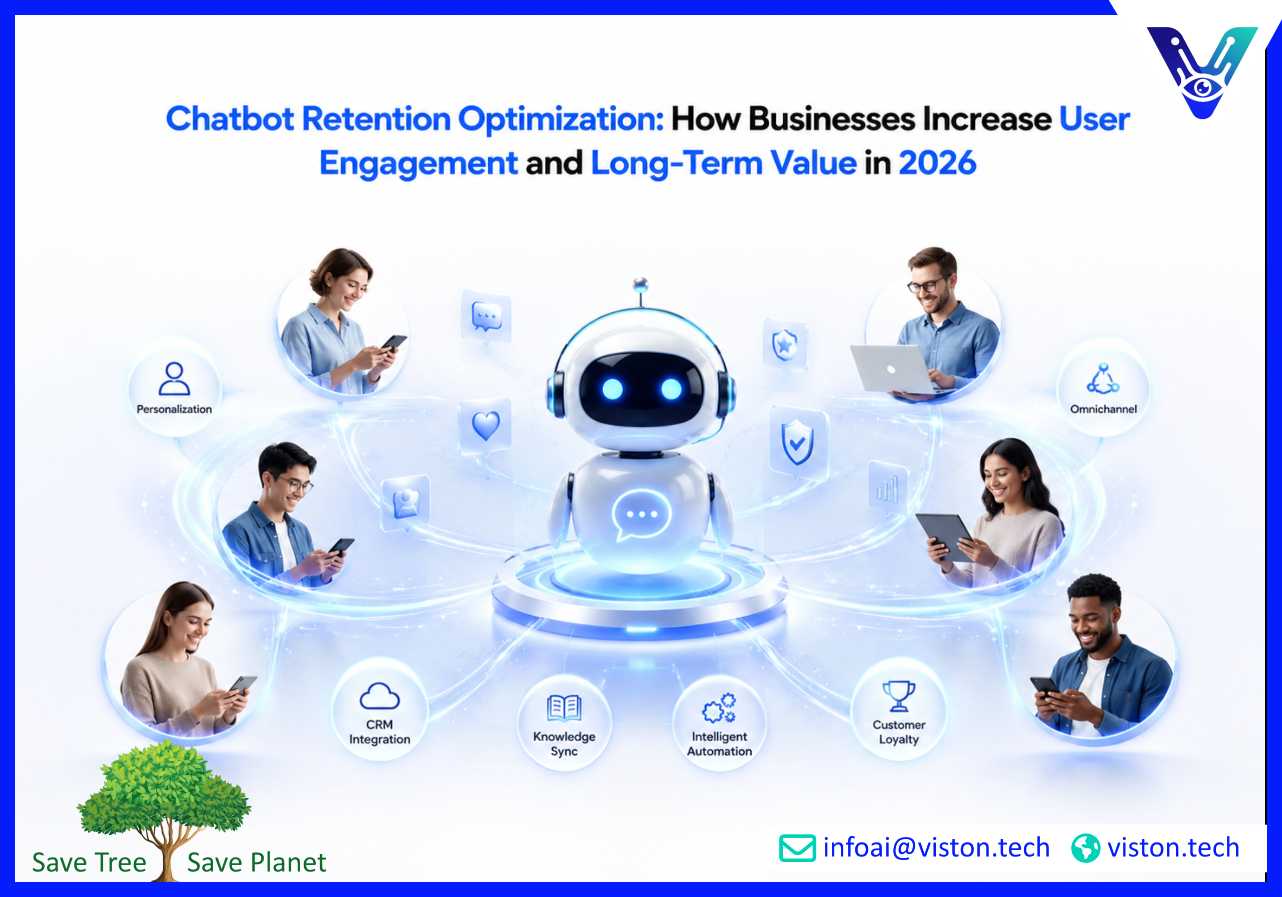
Chatbot Retention Optimization: How Businesses Increase User Engagement and Long-Term Value in 2026
Many organizations successfully deploy chatbots but struggle to maintain ongoing user engagement after the initial interaction. In 2026, chatbot retention optimization has become a critical business priority as companies focus not only on acquiring users but also on maximizing long-term engagement, customer satisfaction, and return on investment from AI-powered customer experiences.
What Is Chatbot Retention Optimization?
Chatbot retention optimization refers to the strategies, technologies, and operational improvements used to encourage users to repeatedly engage with a chatbot over time. Rather than focusing solely on first-time interactions, retention optimization aims to create ongoing value that keeps customers returning whenever they need support, information, recommendations, or services.For businesses investing in AI chatbot integration, retention directly impacts:
Customer lifetime value
Support automation efficiency
Lead nurturing effectiveness
Customer satisfaction
User adoption rates
Operational cost reduction
Overall chatbot ROI
High retention indicates that users find the chatbot useful, trustworthy, and capable of solving real problems consistently.
Why Chatbot Retention Matters More in 2026
As AI-powered customer experiences become increasingly common, businesses can no longer rely on chatbot novelty to drive engagement. Users now expect chatbots to provide fast, accurate, personalized, and context-aware assistance.Organizations that fail to optimize retention often experience:
Declining user engagement
Low chatbot adoption rates
Increased support costs
Poor customer experiences
Reduced automation effectiveness
Lower return on AI investments
Retention optimization ensures that chatbot interactions continue delivering value long after deployment.
Key Indicators of Strong Chatbot Retention
High repeat user rates
Growing conversation volumes
Longer engagement periods
Improved customer satisfaction scores
Lower escalation rates
Increased task completion rates
Consistent user adoption across channels
These indicators demonstrate that users trust the chatbot as a reliable business resource.
Key Strategies for Chatbot Retention Optimization
Retention is rarely improved through a single change. Successful businesses typically combine multiple optimization strategies to create a better user experience.
Deliver Immediate Value
Users are more likely to return when their first interaction successfully solves a problem or helps them achieve a goal.Effective approaches include:
Fast response times
Clear conversation flows
Accurate information retrieval
Simple navigation options
Efficient task completion
The faster users experience value, the stronger the foundation for long-term engagement.
Improve Personalization
Modern chatbot retention depends heavily on personalization. AI chatbots that remember preferences, recognize returning users, and adapt responses based on historical interactions create more relevant experiences.Personalization can include:
Customer-specific recommendations
Previous conversation context
Purchase history integration
Behavior-based suggestions
Personalized support journeys
Personalized interactions increase user trust and satisfaction.
Optimize Omnichannel Experiences
Customers increasingly interact with businesses across multiple channels.Retention improves when chatbot experiences remain consistent across:
Websites
Mobile applications
WhatsApp
Facebook Messenger
Email workflows
Customer portals
Support platforms
Integrated experiences prevent users from repeating information and create a seamless customer journey.
Use Proactive Engagement Carefully
Proactive chatbot interactions can improve retention when implemented strategically.Examples include:
Order status updates
Appointment reminders
Product recommendations
Renewal notifications
Support follow-ups
Knowledge updates
However, excessive messaging can have the opposite effect, making relevance and timing essential.
Common Factors That Reduce Chatbot Retention
Many chatbot retention challenges stem from avoidable implementation issues.
Poor Response Quality
Users quickly abandon chatbots that provide inaccurate, outdated, or irrelevant responses.Continuous AI training and knowledge base optimization are necessary to maintain accuracy.
Limited System Integration
Chatbots that operate in isolation often struggle to deliver meaningful value.Without integration into business systems, users may encounter:
Incomplete information
Repeated questions
Manual processes
Poor personalization
Effective AI chatbot integration helps eliminate these barriers.
Complex Conversation Flows
Overly complicated workflows frustrate users and increase abandonment rates.Businesses should regularly analyze conversation data to identify friction points and simplify user journeys.
Lack of Human Escalation
Even advanced AI systems cannot resolve every issue.Users should always have access to a clear escalation path when human assistance becomes necessary.
Measuring Chatbot Retention Performance
Optimization efforts should be guided by measurable performance indicators.
Repeat User Rate
This metric measures how often users return to interact with the chatbot after their initial session.
Conversation Completion Rate
Tracks the percentage of users who successfully complete intended tasks.
Customer Satisfaction Scores
Feedback collected after chatbot interactions provides direct insight into user experiences.
Engagement Duration
Measures how actively users interact with chatbot experiences over time.
Escalation Rate
Analyzes how often conversations require human intervention.A balanced escalation rate often indicates healthy chatbot performance rather than complete automation.
Retention Cohort Analysis
Advanced organizations analyze retention patterns among different customer segments, helping identify optimization opportunities for specific user groups.
How AI Chatbot Integration Supports Retention Optimization
Retention optimization is closely connected to the quality of chatbot integration. The more effectively a chatbot connects with business systems, customer data, workflows, and communication channels, the more value it can provide.Modern AI chatbot integration often includes:
CRM connectivity
Customer support platform integration
Knowledge base synchronization
Marketing automation integration
Ecommerce platform connectivity
Analytics and reporting systems
Customer identity management
These integrations help create personalized, accurate, and efficient experiences that encourage long-term engagement.
How Viston AI Helps Businesses Improve Chatbot Retention
Organizations seeking stronger chatbot performance often discover that retention challenges are linked to integration quality, user experience design, workflow efficiency, and ongoing optimization practices. As an AI Chatbot Integration specialist, Viston AI helps businesses connect chatbot platforms with critical operational systems, customer data sources, communication channels, and automation workflows.Effective retention optimization requires more than deploying AI technology. Businesses need integrated customer experiences, reliable data access, performance monitoring, conversation analytics, and continuous improvements based on user behavior. Viston AI supports organizations by developing chatbot integration strategies that focus on long-term business value, customer engagement, operational efficiency, and scalable automation.As customer expectations continue evolving in 2026, businesses that prioritize chatbot retention optimization alongside strong AI chatbot integration practices are better positioned to improve customer experiences, maximize adoption, and achieve sustainable returns from conversational AI investments.
Frequently Asked Questions
What is chatbot retention optimization?
Chatbot retention optimization involves improving chatbot experiences to encourage users to return and engage repeatedly over time, increasing customer value and automation effectiveness.
Why is chatbot retention important for businesses?
Strong retention improves customer satisfaction, increases chatbot adoption, enhances operational efficiency, and generates better returns on AI investments.
How can businesses improve chatbot retention rates?
Businesses can improve retention through personalization, better integrations, optimized conversation flows, proactive engagement, accurate responses, and continuous performance analysis.
Which metrics are most important for chatbot retention?
Key metrics include repeat user rate, conversation completion rate, customer satisfaction, engagement duration, escalation rate, and retention cohort analysis.
Can AI chatbot integration affect retention performance?
Yes. Effective AI chatbot integration enables access to customer data, business systems, and workflows that improve personalization, response quality, and user experience.
How does Viston AI support chatbot retention optimization?
Viston AI helps businesses implement AI chatbot integration strategies that improve user experiences, support automation goals, enable personalization, and create scalable customer engagement ecosystems.
Conclusion
Chatbot retention optimization has become a critical success factor for organizations investing in conversational AI. While attracting users to a chatbot is important, long-term value comes from encouraging ongoing engagement through personalized experiences, seamless integrations, accurate responses, and continuous optimization. Businesses that prioritize retention can improve customer satisfaction, increase automation efficiency, and achieve stronger returns from AI initiatives. Combined with effective AI Chatbot Integration, chatbot retention optimization creates a foundation for scalable, customer-centric digital experiences in 2026. Organizations looking to maximize chatbot performance can benefit from working with specialists such as Viston AI to develop sustainable engagement strategies.