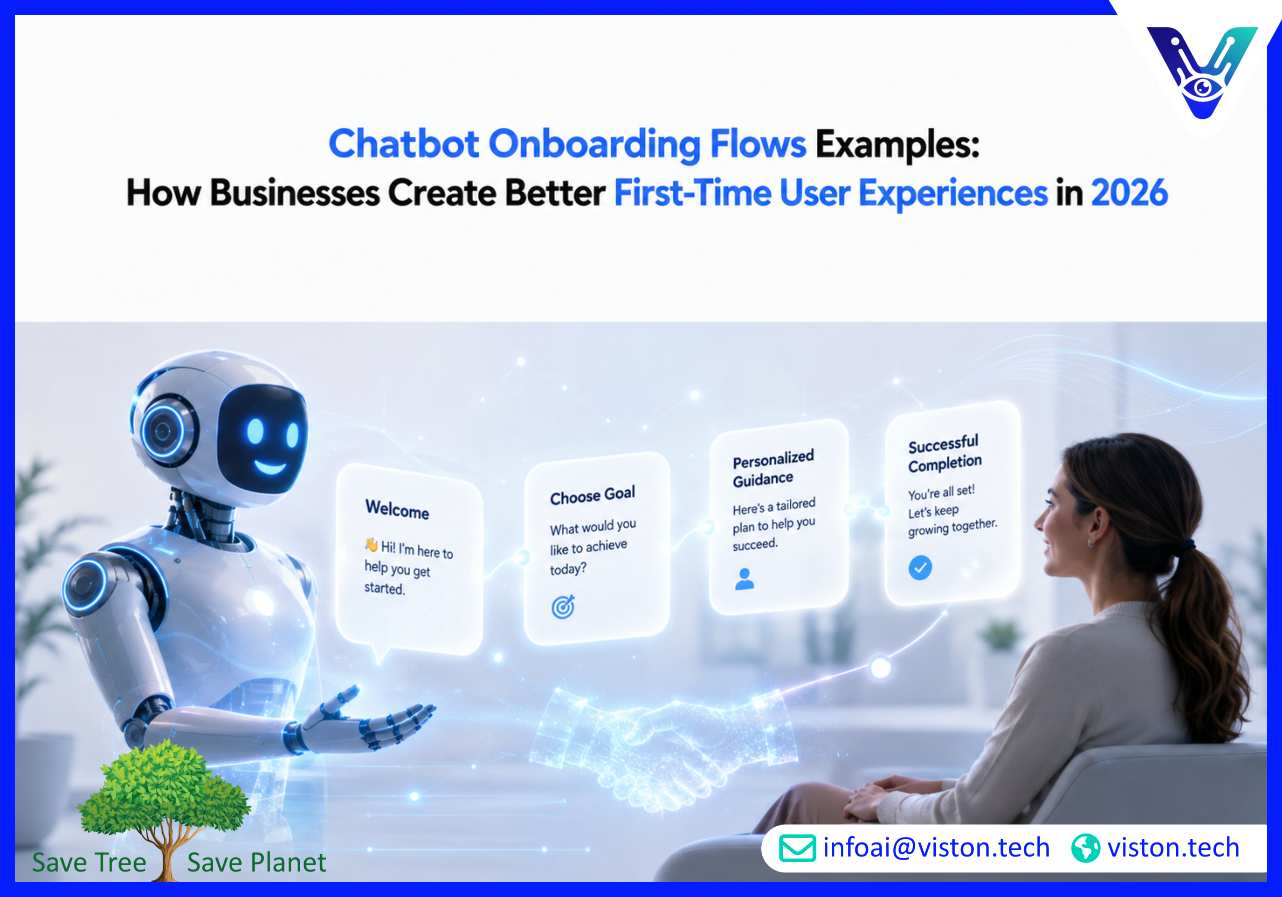
Chatbot Onboarding Flows Examples: How Businesses Create Better First-Time User Experiences in 2026
First impressions matter in every digital interaction. For businesses implementing AI-powered customer engagement, the onboarding experience often determines whether users continue engaging with a chatbot or abandon it altogether. Well-designed chatbot onboarding flows help users understand value quickly, complete tasks efficiently, and build confidence in automated interactions from the very first conversation.
What Are Chatbot Onboarding Flows?
Chatbot onboarding flows are structured conversation sequences designed to introduce users to a chatbot, guide them through initial interactions, and help them achieve a meaningful outcome quickly.Unlike traditional website onboarding, chatbot onboarding uses conversational experiences to educate, assist, and collect information while reducing friction.In 2026, businesses increasingly view onboarding as a critical component of chatbot development because it directly impacts:
User adoption rates
Customer satisfaction
Conversation completion rates
Lead generation performance
Self-service success
Customer retention
Automation ROI
A successful onboarding flow should make users feel guided rather than instructed, creating a natural path toward solving a problem or completing a task.
Why Chatbot Onboarding Matters in 2026
Modern users expect conversational experiences to be intuitive, personalized, and efficient. Businesses can no longer rely on generic welcome messages that leave users unsure about what the chatbot can actually do.Effective onboarding helps address several common challenges:
Reducing user confusion
Increasing engagement during first interactions
Improving chatbot trust and credibility
Gathering relevant user information
Accelerating customer journeys
Improving automation effectiveness
Organizations that invest in onboarding design often see higher chatbot utilization because users immediately understand the chatbot’s purpose and capabilities.
Characteristics of High-Performing Onboarding Flows
Clear introduction and expectations
Simple conversational language
Quick path to value
Minimal information requests
Personalized responses
Logical conversation progression
Easy access to human support when needed
Chatbot Onboarding Flow Examples for Different Business Goals
The most effective onboarding experience depends on the chatbot’s purpose and the business objectives it supports.
1. Customer Support Onboarding Flow
Customer support chatbots should help users identify their issue quickly and guide them toward resolution.Example Flow:
Welcome message
Identify issue category
Present common support options
Retrieve relevant information
Provide solution or escalate
Sample Conversation:Chatbot: “Welcome! How can I help you today?”
Track an order
Technical support
Billing question
Speak with an agent
This approach immediately directs users toward their goal instead of requiring them to guess how to interact with the chatbot.
2. Lead Generation Onboarding Flow
Sales-focused chatbots often use onboarding to qualify prospects while maintaining a natural conversation.Example Flow:
Introduction
Identify user needs
Gather business information
Recommend solutions
Schedule consultation
Sample Conversation:Chatbot: “What brings you here today?”
Looking for a solution
Need pricing information
Want a product demo
Researching options
By gradually collecting information, businesses can qualify leads without creating a lengthy form-filling experience.
3. SaaS Product Onboarding Flow
Software companies often use chatbots to help new users understand platform functionality and accelerate product adoption.Example Flow:
Welcome new user
Identify primary objective
Recommend setup steps
Provide guided assistance
Track onboarding completion
Sample Conversation:Chatbot: “What would you like to accomplish first?”
Set up my account
Connect integrations
Invite team members
Explore features
This onboarding structure helps reduce time-to-value and improves user retention.
4. Ecommerce Onboarding Flow
Ecommerce businesses use onboarding chatbots to help visitors discover products and navigate large inventories.Example Flow:
Greeting
Understand shopping intent
Collect preferences
Recommend products
Assist with purchase
Sample Conversation:Chatbot: “What are you shopping for today?”
New arrivals
Best sellers
Specific product category
Special offers
This approach creates a personalized shopping experience while increasing conversion opportunities.
5. Employee Self-Service Onboarding Flow
Internal business chatbots help employees access resources, policies, and support services.Example Flow:
Employee verification
Department selection
Support category identification
Resource delivery
Escalation if necessary
Organizations frequently use these chatbots for HR support, IT assistance, and internal knowledge management.
Best Practices for Designing Chatbot Onboarding Flows
Regardless of industry or use case, several best practices consistently improve onboarding performance.
Focus on One Goal at a Time
New users should not be overwhelmed with multiple options immediately. The onboarding experience should guide users toward a specific outcome before introducing additional functionality.
Keep Early Interactions Simple
The first few chatbot messages should be concise and easy to understand. Complex workflows can be introduced gradually as users become more comfortable.
Use Quick Replies and Guided Choices
Providing structured response options reduces user effort and improves conversation accuracy.
Personalize Where Appropriate
Modern AI chatbots can tailor onboarding experiences based on user behavior, referral source, customer profile, or business context.
Provide Human Escalation Paths
Even advanced AI systems should offer users access to human assistance when needed. This improves trust and prevents frustration.
Measure Onboarding Success
Businesses should track:
Completion rates
User drop-off points
Engagement metrics
Customer satisfaction scores
Lead qualification rates
Conversion performance
Continuous optimization is essential for maintaining effective onboarding experiences.
Common Chatbot Onboarding Mistakes to Avoid
Many chatbot implementations fail to achieve their objectives because onboarding receives insufficient attention.Common mistakes include:
Long introductory messages
Too many questions upfront
Unclear chatbot capabilities
Lack of user guidance
Poor conversation structure
No fallback responses
Missing escalation options
A user should never wonder what the chatbot can do or what action to take next.
How Viston AI Develops Effective Chatbot Onboarding Experiences
For businesses investing in AI chatbot development, onboarding design is often as important as the underlying technology. Viston AI develops chatbot solutions that combine conversational intelligence with structured onboarding workflows designed to support customer engagement, lead generation, support automation, and operational efficiency.Successful onboarding experiences require more than attractive conversation scripts. They depend on user journey mapping, workflow design, business process integration, AI training, analytics, and continuous optimization. Viston AI helps organizations build chatbot experiences that guide users toward meaningful outcomes while integrating with existing business systems and digital channels.As businesses increasingly adopt AI-powered automation in 2026, well-designed onboarding flows help maximize chatbot adoption, improve customer experiences, and support measurable business objectives across multiple industries.
Frequently Asked Questions
What is a chatbot onboarding flow?
A chatbot onboarding flow is a structured conversation that introduces users to a chatbot, explains its purpose, and helps users complete an initial task or achieve a specific goal.
Why is chatbot onboarding important?
Effective onboarding improves user engagement, reduces confusion, increases adoption rates, and helps businesses achieve better outcomes from chatbot implementations.
How long should a chatbot onboarding flow be?
The best onboarding flows are concise and focused. Users should reach value quickly without answering unnecessary questions or navigating lengthy conversations.
Can onboarding flows improve chatbot conversion rates?
Yes. Well-designed onboarding experiences help users understand available options, complete actions more efficiently, and move through customer journeys with less friction.
Does Viston AI develop custom chatbot onboarding flows?
Yes. Viston AI designs chatbot onboarding experiences as part of its AI chatbot development services, aligning conversational workflows with business goals, customer journeys, and automation requirements.
Conclusion
Effective chatbot onboarding flows play a critical role in the success of modern conversational AI initiatives. Whether the goal is customer support, lead generation, ecommerce assistance, or employee self-service, onboarding determines how quickly users understand and trust the chatbot experience. Businesses that invest in structured onboarding design can improve engagement, increase adoption, and generate stronger outcomes from AI chatbot development initiatives. As chatbot capabilities continue to advance in 2026, organizations that prioritize user-focused onboarding experiences will be better positioned to deliver meaningful and scalable digital interactions. Viston AI helps businesses build these experiences through practical, business-oriented AI chatbot development strategies.