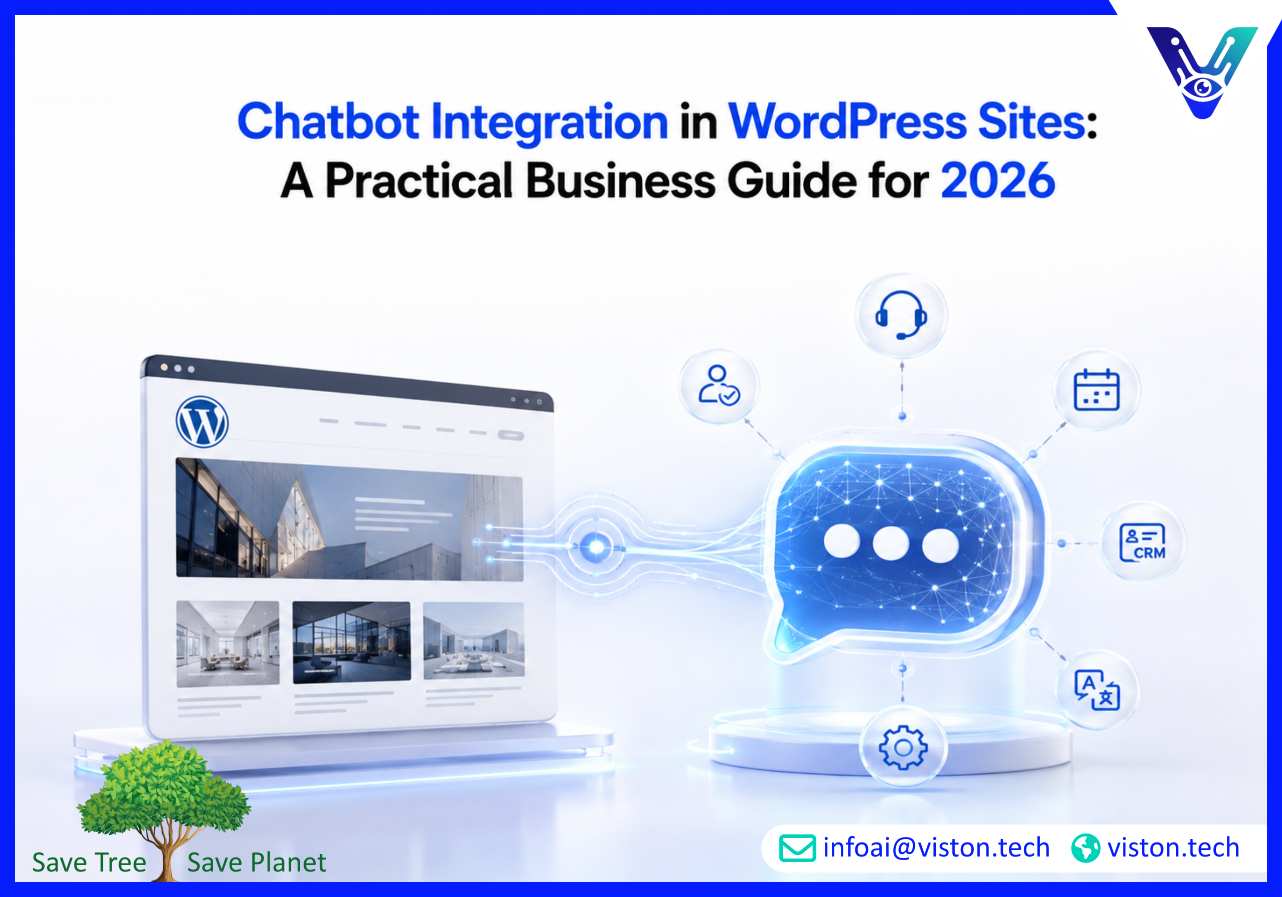
Chatbot Integration in WordPress Sites: A Practical Business Guide for 2026
WordPress continues to power a significant portion of business websites worldwide, making it a popular platform for companies looking to improve customer engagement and automate routine interactions. As customer expectations evolve, chatbot integration in WordPress sites has become an effective way to provide instant support, capture leads, streamline communication, and improve user experience without increasing operational workload.
Why Chatbot Integration in WordPress Sites Matters in 2026
Modern website visitors expect immediate answers. Whether they are looking for product information, service details, appointment scheduling, pricing guidance, or support assistance, delays can lead to lost opportunities.Chatbot integration helps businesses meet these expectations by providing automated, intelligent interactions directly within their WordPress websites.In 2026, businesses are increasingly using AI-powered chatbots to:
Provide 24/7 customer support
Capture and qualify leads automatically
Reduce support team workloads
Answer frequently asked questions instantly
Guide visitors through products and services
Schedule appointments and consultations
Support multilingual communication
Improve website engagement and conversions
Rather than functioning as simple scripted widgets, modern AI chatbots can understand user intent, maintain conversational context, and deliver more personalized responses.
Key Benefits of Chatbot Integration for WordPress Websites
Improved Customer Experience
Visitors can receive immediate assistance without waiting for email responses or business hours. Faster interactions often lead to higher satisfaction and increased trust.
Better Lead Generation
AI chatbots can engage visitors proactively, collect contact information, identify business requirements, and direct qualified prospects to sales teams.
Operational Efficiency
Support teams can focus on complex customer issues while chatbots handle repetitive inquiries, reducing overall support costs.
Higher Conversion Rates
When visitors receive timely answers during the decision-making process, businesses often experience improved conversion performance.
Scalability
Unlike human teams, chatbots can handle multiple conversations simultaneously, making them valuable during traffic spikes, campaigns, and seasonal demand periods.
How AI Chatbot Integration Works on WordPress Sites
Successful chatbot integration involves more than simply installing a plugin. Businesses need a structured implementation approach that aligns with customer journeys and operational objectives.
Website Assessment
The first step involves understanding business goals, customer behavior, support requirements, and conversion pathways.Organizations typically identify:
Common customer questions
Lead generation opportunities
Support workflows
Appointment booking requirements
CRM and marketing integrations
Knowledge base resources
Chatbot Configuration
Modern AI chatbots are configured using business-specific data, FAQs, service information, product documentation, and support processes.This allows the chatbot to provide accurate and contextually relevant responses.
WordPress Integration
Chatbots can be integrated through:
Dedicated WordPress plugins
Custom API integrations
Embedded chatbot widgets
Headless architecture deployments
CRM-connected implementations
The chosen approach depends on business requirements, security expectations, and scalability goals.
Testing and Optimization
Before deployment, chatbot performance should be tested across multiple devices, browsers, and customer scenarios.Ongoing monitoring helps improve response quality, conversation flow, lead qualification accuracy, and user satisfaction.
Common Challenges Businesses Face with WordPress Chatbot Integration
Poorly Trained Chatbots
Many businesses deploy chatbots with limited training data, resulting in inaccurate responses and frustrating user experiences.Effective AI chatbot integration requires comprehensive content preparation and continuous optimization.
Disconnected Business Systems
A chatbot that cannot access CRM systems, appointment platforms, support tools, or internal databases may provide limited value.Integration with existing business infrastructure is often essential for meaningful automation.
Security and Privacy Concerns
Businesses must ensure chatbot implementations comply with applicable privacy requirements and security standards.Data handling practices, user consent mechanisms, and secure API connections are important considerations.
Inconsistent Brand Experience
Generic chatbot responses can undermine customer confidence.Organizations should ensure chatbot interactions reflect brand voice, service standards, and customer communication preferences.
Maintenance Requirements
Business information changes regularly. Product updates, service modifications, pricing changes, and policy revisions should be reflected within chatbot knowledge bases to maintain accuracy.
Best Practices for Successful Chatbot Integration in WordPress Sites
Define Clear Business Objectives
Before implementation, organizations should determine whether the chatbot’s primary purpose is lead generation, customer support, appointment scheduling, ecommerce assistance, or a combination of these goals.
Use High-Quality Business Data
Chatbot performance depends heavily on the quality of information it receives. Accurate content, structured documentation, and updated knowledge resources improve response quality.
Integrate with Existing Systems
Connecting chatbots with CRM platforms, ticketing systems, marketing automation tools, and booking software creates more effective business workflows.
Support Human Escalation
Not every customer interaction should remain automated. Businesses should provide clear pathways for users to reach human representatives when necessary.
Monitor Performance Metrics
Key performance indicators often include:
Lead conversion rates
Conversation completion rates
Customer satisfaction scores
Response accuracy
Support ticket reduction
Appointment bookings generated
Regular analysis helps improve chatbot effectiveness over time.
How Viston AI Supports AI Chatbot Integration for WordPress Businesses
For organizations seeking AI chatbot integration, Viston AI provides specialized solutions designed to help businesses automate customer interactions while maintaining a strong user experience.The company’s AI Chatbot Integration services focus on implementing intelligent conversational systems that align with business goals rather than relying on generic chatbot deployments.For WordPress websites, Viston AI can support chatbot implementations that integrate with existing business workflows, customer engagement processes, lead generation strategies, and support operations. This includes chatbot configuration, customization, integration planning, automation workflows, and ongoing optimization.Businesses often require more than a standalone chatbot widget. Effective deployments may involve CRM connectivity, appointment booking integrations, multilingual capabilities, analytics tracking, knowledge base integration, and scalable conversational design. These elements help organizations create meaningful customer experiences while improving operational efficiency.As AI adoption continues to grow in 2026, businesses increasingly seek chatbot solutions that combine automation, reliability, security, and measurable business outcomes. A structured integration approach can help organizations maximize the value of their WordPress websites while supporting long-term growth objectives.
Frequently Asked Questions
What is chatbot integration in WordPress sites?
Chatbot integration involves adding an AI-powered conversational assistant to a WordPress website to automate customer interactions, answer questions, generate leads, and improve user engagement.
Can AI chatbots work with existing WordPress plugins?
Yes. Many chatbot solutions can integrate with CRM systems, ecommerce plugins, booking tools, contact forms, customer support platforms, and marketing automation software used within WordPress environments.
Are WordPress chatbots suitable for small businesses?
Yes. Small businesses can use chatbots to provide round-the-clock support, capture leads, answer common questions, and improve customer service without significantly increasing staffing costs.
How long does chatbot integration typically take?
Implementation timelines vary depending on customization requirements, system integrations, content preparation, and workflow complexity. Basic deployments may take days, while enterprise implementations may require several weeks.
Can chatbots support multiple languages on WordPress websites?
Many modern AI chatbots offer multilingual capabilities, allowing businesses to engage customers across different regions and language preferences.
Why choose Viston AI for AI Chatbot Integration?
Viston AI specializes in AI Chatbot Integration services that help businesses implement intelligent conversational solutions aligned with customer engagement, automation, and operational efficiency goals.
Conclusion
Chatbot integration in WordPress sites has become an important business strategy for organizations looking to improve customer engagement, automate support processes, and increase operational efficiency in 2026. A well-designed implementation can enhance user experience, generate qualified leads, and support scalable growth. Businesses evaluating AI Chatbot Integration solutions should focus on integration quality, automation capabilities, security, and long-term optimization. With specialized expertise in AI Chatbot Integration, Viston AI can help organizations build chatbot experiences that align with business objectives and evolving customer expectations.