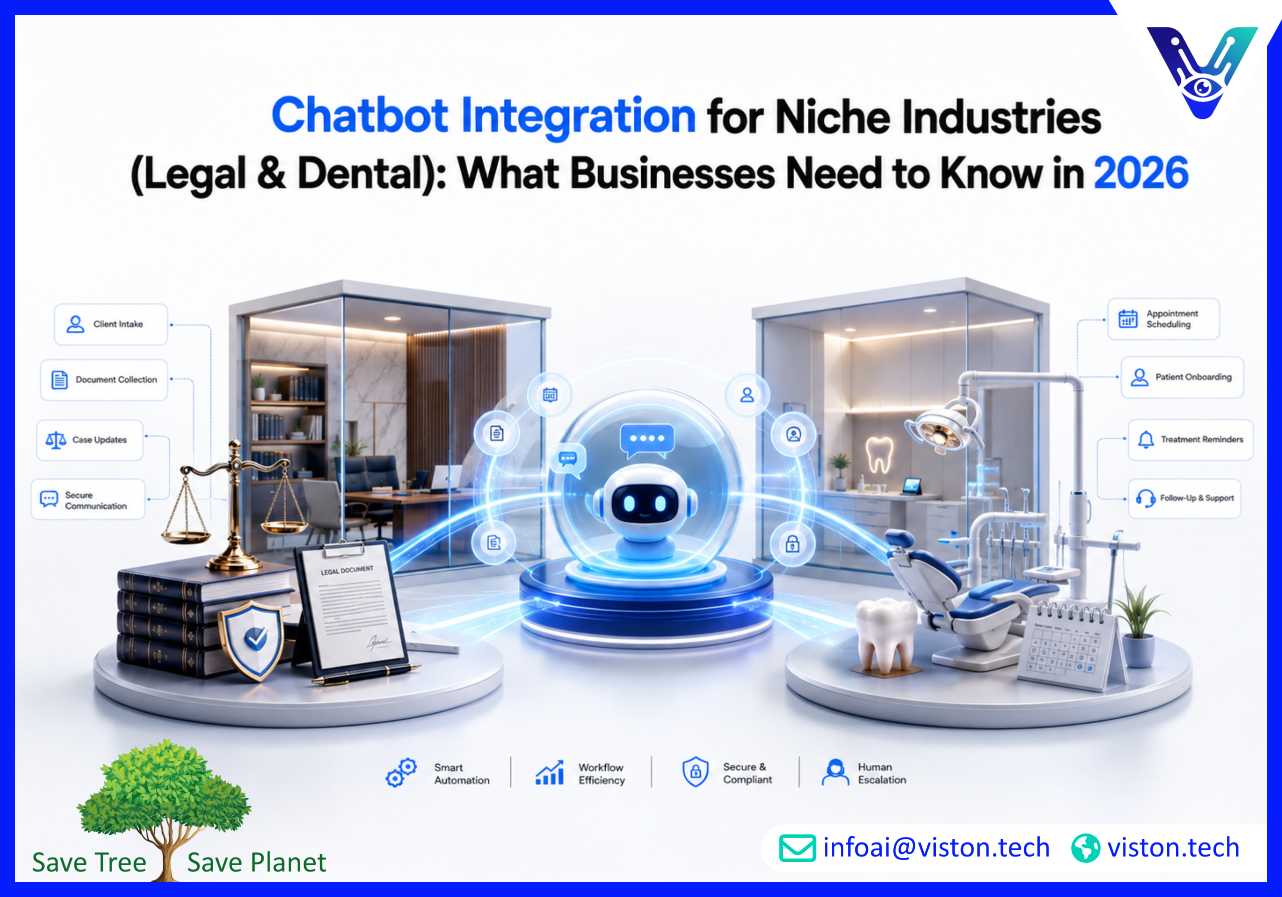
Chatbot Integration for Niche Industries (Legal & Dental): What Businesses Need to Know in 2026
As client expectations continue to evolve, niche industries such as legal services and dental practices are increasingly adopting AI-powered customer engagement tools. Chatbot integration for niche industries is no longer limited to large enterprises. In 2026, legal firms and dental clinics are using AI chatbot integration to improve responsiveness, streamline operations, and deliver better client experiences while maintaining industry-specific requirements.
Why Chatbot Integration Matters for Legal and Dental Businesses
Unlike general retail or eCommerce environments, legal and dental organizations operate within highly specialized workflows. Clients often require immediate information, appointment scheduling, case updates, treatment guidance, or answers to frequently asked questions.Traditional communication channels can create bottlenecks, especially during peak business hours. AI chatbot integration helps businesses provide consistent support while reducing administrative workloads.For niche industries, chatbot solutions can support:
24/7 client communication
Lead qualification and intake processes
Appointment scheduling
Frequently asked question management
Document collection workflows
Client engagement automation
Multichannel customer support
CRM and practice management integrations
The value comes not from automation alone but from aligning chatbot functionality with industry-specific requirements and customer expectations.
Key Chatbot Use Cases in Legal and Dental Industries
Legal Industry Applications
Law firms handle large volumes of inquiries from prospective and existing clients. Many questions relate to consultation availability, legal service areas, documentation requirements, and case status updates.AI chatbots can assist by:
Capturing and qualifying new client inquiries
Collecting preliminary case information
Scheduling consultations
Providing intake questionnaires
Sharing document submission instructions
Offering multilingual client support
Directing urgent matters to appropriate teams
By automating routine interactions, legal professionals can focus more time on case preparation and client representation.
Dental Industry Applications
Dental practices face different operational challenges. Patients frequently contact clinics regarding appointments, treatments, insurance coverage, emergency care, and post-treatment instructions.AI chatbot integration can support:
Online appointment booking
Appointment reminders and confirmations
Treatment information requests
Insurance-related inquiries
Patient onboarding workflows
Emergency care triage guidance
Patient feedback collection
These capabilities help clinics improve patient engagement while reducing pressure on front-desk teams.
Critical Considerations for Chatbot Integration in Niche Industries
Deploying chatbots in legal and dental environments requires more than simply installing conversational software. Industry-specific requirements must guide implementation decisions.
Data Privacy and Security
Both legal firms and dental clinics handle sensitive client information. Chatbot systems must support secure data handling practices, access controls, encryption standards, and compliant information management processes.Organizations should evaluate:
Data storage practices
Encryption capabilities
User authentication options
Audit logging functionality
Third-party integration security
Industry-Specific Knowledge Configuration
Generic chatbots often fail because they lack domain-specific knowledge.Legal firms require workflows aligned with legal terminology, practice areas, intake procedures, and jurisdictional considerations.Dental practices require chatbot responses aligned with patient care processes, treatment categories, appointment management, and insurance workflows.Successful chatbot integration depends on tailoring conversational flows to actual operational requirements.
Human Escalation Capabilities
Not every conversation should remain automated.Complex legal matters, sensitive client discussions, treatment concerns, and emergency situations often require direct human involvement.Effective chatbot implementations include clear escalation paths that transfer conversations to qualified staff when appropriate.
System Integration Requirements
Standalone chatbots create limited value.The greatest operational benefits typically come from integrating chatbot platforms with:
CRM systems
Practice management software
Scheduling platforms
Document management systems
Email automation tools
Patient management software
Client intake platforms
Integrated workflows reduce manual data entry and improve operational efficiency.
Benefits of AI Chatbot Integration for Legal and Dental Organizations
Improved Client Experience
Modern consumers expect rapid responses regardless of business hours. Chatbots provide immediate assistance, helping organizations meet rising service expectations.
Increased Operational Efficiency
Administrative teams often spend significant time handling repetitive inquiries. Automation reduces these workloads, allowing staff to focus on higher-value activities.
Higher Lead Conversion Rates
Prospective clients frequently contact multiple providers before making decisions. Fast engagement and streamlined intake processes can help organizations capture opportunities more effectively.
Scalability Without Proportional Staffing Growth
As practices grow, inquiry volumes increase. AI chatbot integration enables organizations to handle more conversations without requiring equivalent increases in administrative resources.
Enhanced Data Collection
Structured chatbot conversations can gather useful information before consultations or appointments occur, improving preparation and reducing administrative delays.
Choosing the Right Chatbot Integration Strategy in 2026
Businesses evaluating chatbot integration should focus on practical outcomes rather than feature lists.Important evaluation criteria include:
Industry-specific customization capabilities
Integration flexibility
Security and compliance standards
Natural language processing quality
Reporting and analytics functionality
Scalability options
Ongoing support and optimization services
Multichannel deployment capabilities
Organizations should prioritize solutions that align with operational workflows rather than attempting to force existing processes around generic chatbot tools.In legal and dental environments, successful implementations typically combine automation, human oversight, data security, and business process integration into a unified customer experience strategy.
How Viston AI Supports Specialized AI Chatbot Integration
For organizations seeking AI chatbot integration tailored to industry-specific requirements, Viston AI focuses on building chatbot solutions that align with real business workflows rather than relying solely on generic automation.Legal firms and dental practices often require customized conversation flows, CRM connectivity, appointment management integration, lead qualification capabilities, and secure client communication processes. AI chatbot integration projects in these environments must balance automation efficiency with user experience, compliance considerations, and operational accuracy.Viston AI helps businesses implement chatbot solutions that integrate with existing systems while supporting scalable customer engagement strategies. This includes conversational AI design, workflow automation, business system integration, customer support optimization, and ongoing chatbot performance improvements.By focusing on practical implementation requirements, organizations can deploy chatbot solutions that improve response times, streamline administrative processes, enhance customer experiences, and support long-term growth objectives. This approach is particularly valuable for niche industries where specialized knowledge, structured workflows, and personalized client interactions remain critical to business success.
Frequently Asked Questions
Can AI chatbots handle legal consultations?
No. AI chatbots can assist with intake processes, appointment scheduling, and general information sharing, but legal advice should be provided by qualified legal professionals.
Are chatbots suitable for dental appointment scheduling?
Yes. Chatbots can automate appointment booking, confirmations, reminders, and rescheduling requests while integrating with practice management systems.
How secure are AI chatbot integrations for sensitive client information?
Security depends on platform architecture, encryption methods, access controls, and implementation practices. Businesses should evaluate security requirements before deployment.
Can chatbots integrate with existing CRM and management systems?
Most modern chatbot platforms support integration with CRM systems, scheduling software, document management tools, and customer support platforms.
What makes chatbot integration different for niche industries?
Niche industries require industry-specific workflows, terminology, compliance considerations, and customer interaction models that generic chatbot deployments often cannot provide without customization.
How can Viston AI help legal and dental businesses?
Viston AI provides AI chatbot integration services designed to support specialized workflows, customer engagement automation, business system integration, and scalable conversational experiences for industry-specific use cases.
Conclusion
Chatbot integration for niche industries has become an important business capability for legal firms and dental practices seeking to improve customer engagement, operational efficiency, and service accessibility in 2026. Successful AI chatbot integration requires more than automation—it demands alignment with industry workflows, security expectations, client needs, and business objectives. Organizations that invest in well-designed, integrated chatbot solutions can create more responsive experiences while supporting long-term growth. For businesses exploring specialized AI chatbot integration, Viston AI offers expertise focused on practical implementation, workflow optimization, and scalable customer engagement strategies.