
B2B buyers expect fast answers, personalized interactions, and frictionless engagement throughout their purchasing journey. Traditional lead capture forms often create barriers that reduce conversions. As a result, many organizations are adopting chatbot funnels to engage prospects, qualify opportunities, and accelerate sales conversations. In 2026, chatbot funnels have become a valuable component of modern B2B growth strategies, helping businesses capture demand while improving the buyer experience.
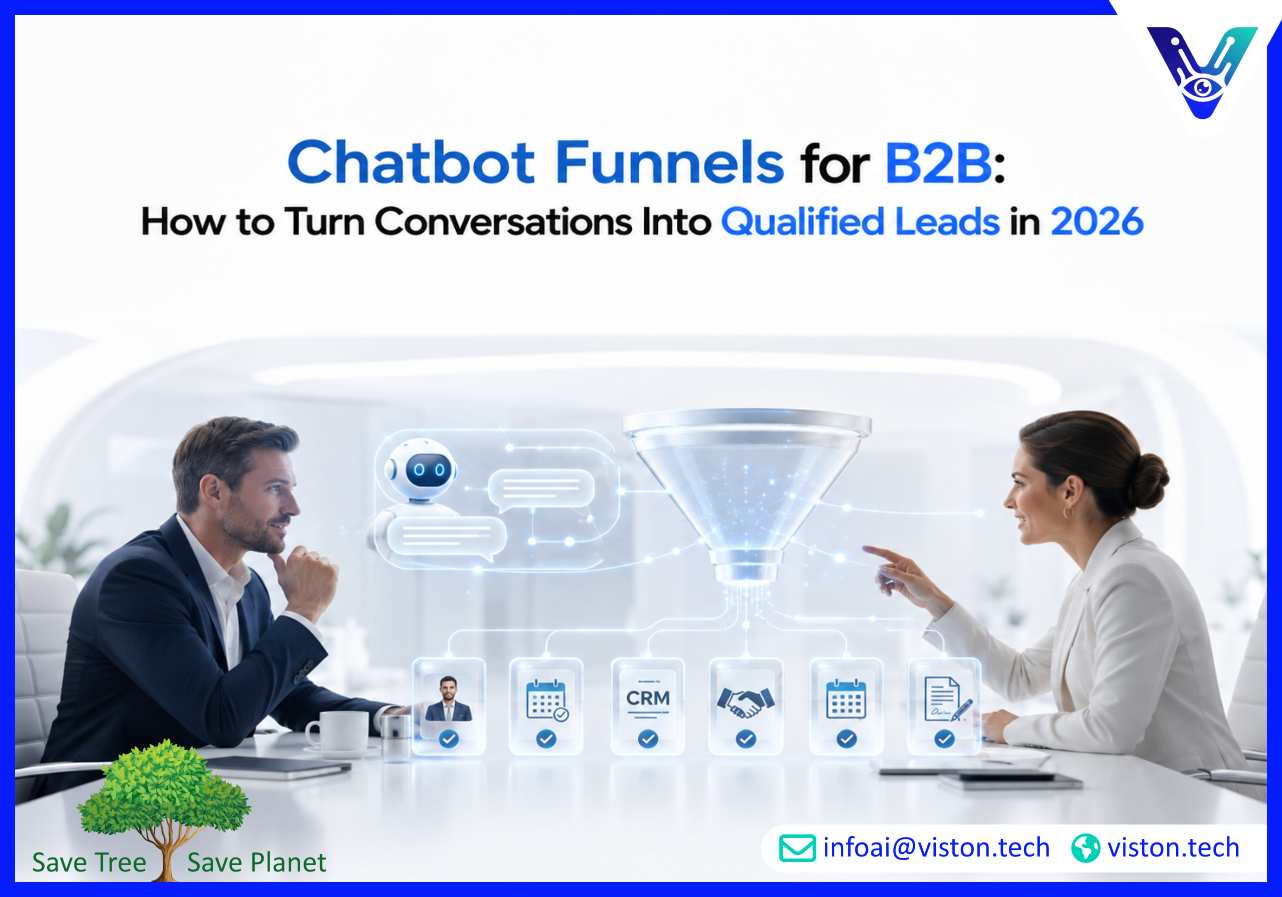
A chatbot funnel is a structured conversational journey designed to guide potential customers from initial interest to a defined business objective. Unlike static forms or generic chat widgets, chatbot funnels use interactive conversations to gather information, answer questions, qualify leads, and direct prospects toward the next stage of the sales process.
For B2B organizations, chatbot funnels often support:
The primary objective is to create meaningful interactions that help both the prospect and the business move forward efficiently.
B2B buying journeys have become more complex, involving multiple stakeholders, longer decision cycles, and greater demand for self-service research. Buyers increasingly expect immediate access to relevant information before engaging directly with a sales representative.
Chatbot funnels help address several common challenges:
Speed remains a critical factor in lead conversion. Chatbots engage visitors instantly, ensuring opportunities are not lost due to delayed follow-up.
Rather than requiring sales teams to manually evaluate every inquiry, chatbot funnels can collect information such as company size, budget range, industry, project requirements, and implementation timelines.
Modern chatbot funnels can adapt conversations based on visitor behavior, referral source, previous interactions, and business needs.
B2B companies operating across multiple time zones can provide continuous engagement without requiring round-the-clock staffing.
Prospects often prefer conversational interactions over lengthy forms. Chatbot funnels simplify information gathering while maintaining engagement.
Effective chatbot funnels follow a structured framework that aligns with the B2B buying process.
The funnel begins when a visitor arrives on a website, landing page, product page, or campaign destination.
At this stage, the chatbot should:
Example opening prompts may include:
Once engagement begins, the chatbot gathers information that helps determine lead quality.
Common qualification questions include:
The objective is to collect meaningful insights without overwhelming the prospect.
After understanding visitor requirements, the chatbot provides relevant information aligned with the prospect’s needs.
This may include:
Tailored responses improve engagement and increase trust during the evaluation process.
The chatbot guides prospects toward a meaningful next step.
Examples include:
Clear calls to action improve conversion rates while reducing decision fatigue.
The conversation should not end after the initial interaction.
Modern chatbot funnels often integrate with CRM and marketing automation systems to support:
This ensures valuable opportunities continue progressing through the sales process.
Successful chatbot funnels combine conversational design, business strategy, and system integration.
Every chatbot funnel should support measurable goals such as lead generation, sales qualification, appointment booking, or customer acquisition.
Users should feel like they are receiving guidance rather than completing a form through a chat interface.
CRM platforms, marketing automation tools, customer databases, and analytics systems should be connected to maximize operational value.
Complex sales discussions often require direct human engagement. Effective chatbot funnels include seamless handoff processes.
Key metrics include:
Continuous optimization is essential for improving long-term performance.
Many businesses fail to achieve expected results because their chatbot funnels are poorly designed or disconnected from business processes.
Common issues include:
A successful B2B chatbot funnel should balance qualification requirements with a positive user experience.
For organizations seeking to improve lead generation and customer engagement, Viston AI provides AI Chatbot Integration services that connect conversational experiences with business systems, sales workflows, and operational processes.
Effective chatbot funnels require more than conversation design alone. Businesses often need integrations with CRM platforms, marketing automation tools, scheduling systems, customer databases, and reporting environments. These integrations help ensure chatbot interactions contribute directly to lead management and revenue generation objectives.
Viston AI helps organizations implement chatbot integration strategies that support qualification workflows, automation initiatives, customer engagement goals, and scalable growth. By focusing on system interoperability, conversational design, analytics, and business outcomes, companies can create chatbot funnels that generate measurable value across the customer acquisition process.
As B2B buyers increasingly prefer digital-first engagement in 2026, integrated chatbot funnels provide businesses with an effective way to improve responsiveness, qualify opportunities, and support more efficient sales operations.
A B2B chatbot funnel is a structured conversational process that guides prospects from initial engagement through qualification and conversion, helping businesses generate and manage sales opportunities more efficiently.
Chatbot funnels engage visitors immediately, collect qualification data, answer questions, and direct prospects toward conversion actions such as demo bookings or consultation requests.
Yes. Modern chatbot integrations commonly connect with CRM platforms, marketing automation tools, scheduling software, and analytics systems to support lead management and sales processes.
Technology, SaaS, professional services, manufacturing, healthcare, finance, and many other B2B sectors can benefit from chatbot-driven lead qualification and customer engagement.
Yes. Viston AI provides AI Chatbot Integration services that help businesses design, implement, and optimize chatbot funnels connected to existing sales, marketing, and operational systems.
Chatbot funnels for B2B organizations have evolved into a strategic tool for lead generation, qualification, and customer engagement. By guiding prospects through structured conversations, businesses can reduce friction, improve responsiveness, and create more efficient sales processes. Successful implementation requires thoughtful conversational design, seamless AI Chatbot Integration, strong analytics, and alignment with business objectives. As buyer expectations continue to evolve in 2026, organizations that invest in effective chatbot funnels will be better positioned to capture demand, improve customer experiences, and support sustainable growth. Businesses seeking scalable chatbot integration solutions can benefit from working with experienced specialists such as Viston AI.
