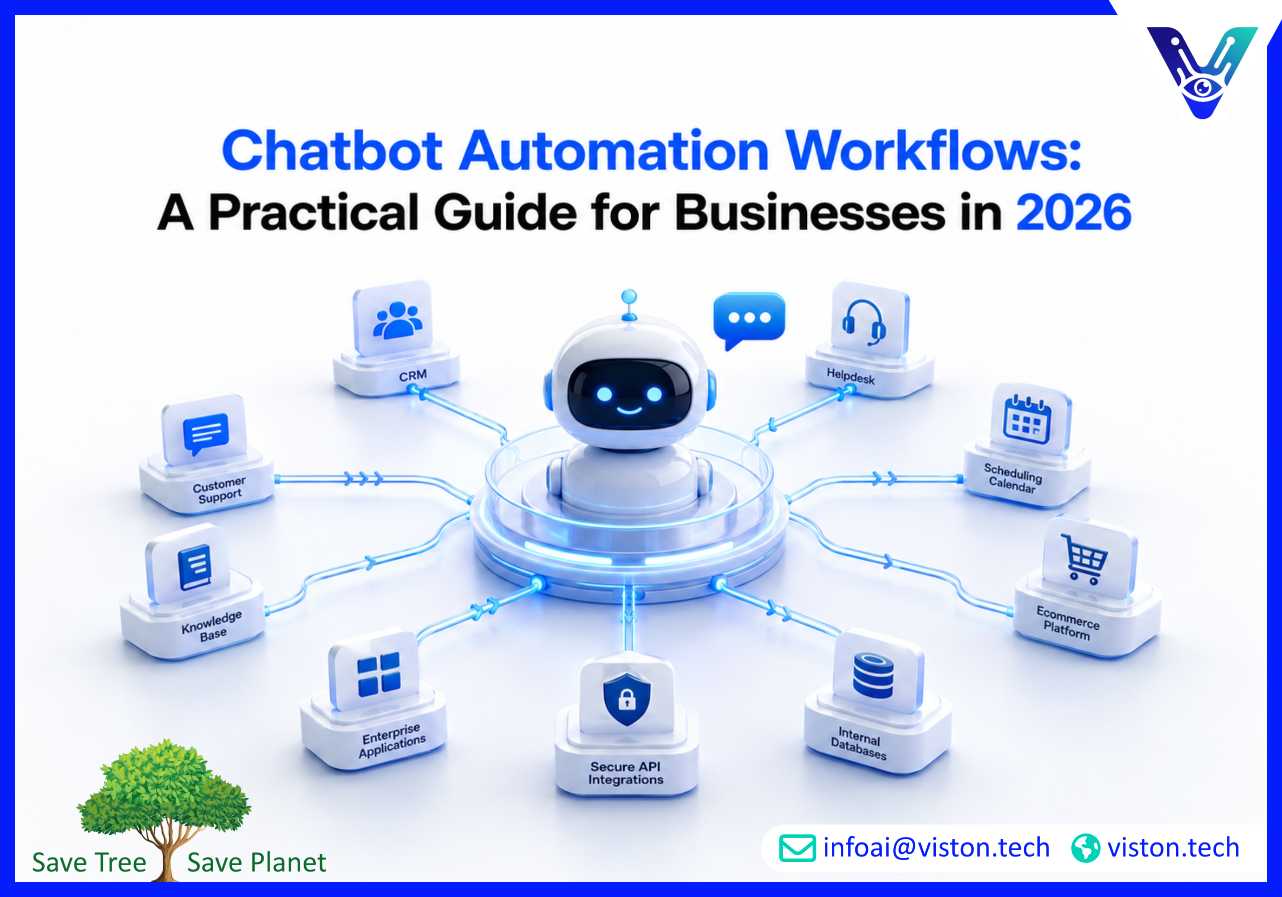
Chatbot Automation Workflows: A Practical Guide for Businesses in 2026
Businesses are under increasing pressure to deliver faster customer service, improve operational efficiency, and scale support without significantly increasing costs. As a result, chatbot automation workflows have become a core component of digital transformation strategies. When properly integrated into business systems, chatbot workflows can automate repetitive tasks, streamline customer interactions, and create more efficient operational processes across multiple departments.
What Are Chatbot Automation Workflows?
Chatbot automation workflows are structured sequences of automated actions that allow a chatbot to perform specific tasks, trigger business processes, retrieve information, and guide users through predefined journeys.Unlike basic chatbots that simply answer questions, workflow-driven chatbots can interact with multiple systems, execute actions, and support complex business processes in real time.Modern chatbot automation workflows commonly connect with:
Customer Relationship Management (CRM) platforms
Helpdesk and support systems
Marketing automation platforms
Knowledge bases
Scheduling tools
Ecommerce systems
Payment gateways
Internal databases
Enterprise applications
In 2026, businesses increasingly view chatbot workflows as part of broader automation ecosystems rather than standalone customer support tools.
Why Chatbot Automation Workflows Matter in 2026
Organizations today manage growing volumes of customer interactions, operational requests, and internal support processes. Manual handling of these activities often creates bottlenecks, delays, and unnecessary operational costs.Well-designed chatbot automation workflows help address these challenges by automating repetitive activities while maintaining consistent user experiences.
Key Business Benefits
Reduced response times
Improved customer experience
Lower operational costs
Higher employee productivity
24/7 service availability
Improved process consistency
Better data collection and reporting
Scalable customer engagement
Rather than replacing human teams, chatbot workflows allow employees to focus on higher-value tasks while automation handles routine interactions.
Common Chatbot Automation Workflow Examples
The most effective chatbot workflows are aligned with specific business objectives. Different departments often require different automation strategies.
Customer Support Workflow
Customer support remains one of the most common chatbot automation use cases.A typical support workflow may include:
User initiates conversation
Chatbot identifies support category
Customer information is retrieved from CRM
Knowledge base articles are suggested
Issue resolution is attempted
Support ticket is created if necessary
Conversation is escalated to an agent when required
This workflow reduces support workloads while improving response speed and consistency.
Lead Generation and Qualification Workflow
Sales teams increasingly use chatbot automation to qualify prospects before human engagement occurs.Common workflow steps include:
Greeting website visitors
Identifying business needs
Capturing contact information
Qualifying leads based on predefined criteria
Scheduling consultations
Sending information to CRM systems
Automated qualification helps sales teams focus on high-intent prospects while maintaining engagement with a larger audience.
Appointment Scheduling Workflow
Many organizations automate scheduling through chatbot integrations.A scheduling workflow may include:
Collecting appointment requirements
Checking calendar availability
Offering available time slots
Confirming bookings
Sending reminders
Managing cancellations or rescheduling
This reduces administrative overhead while improving convenience for users.
Order Tracking and Ecommerce Workflow
Ecommerce businesses frequently use chatbot automation to handle order-related inquiries.Typical workflow actions include:
Order identification
Real-time status retrieval
Shipping updates
Return requests
Refund processing initiation
Customer notifications
Automating these requests improves customer satisfaction while reducing support costs.
Employee Self-Service Workflow
Internal chatbot workflows help organizations automate employee support processes.Examples include:
HR policy inquiries
Leave request submissions
IT support requests
Password reset processes
Knowledge base access
Employee onboarding assistance
These workflows improve internal efficiency while reducing routine workloads for support teams.
Key Components of Effective Chatbot Automation Workflows
Successful chatbot automation depends on more than conversational design. Businesses must build workflows that integrate effectively with operational systems and business objectives.
Clear Workflow Objectives
Each workflow should solve a specific business problem or support a measurable goal. Unclear objectives often lead to poor adoption and limited business value.
System Integrations
Modern workflows require seamless connectivity with business applications. API integrations enable chatbots to access real-time data and execute actions across multiple systems.
Conversation Design
Users should always understand what the chatbot can do and what action is expected next. Well-structured conversation flows reduce friction and improve completion rates.
Human Escalation Paths
Not every interaction can be automated. Effective workflows include clear escalation mechanisms for complex situations requiring human expertise.
Security and Compliance Controls
Organizations must ensure chatbot workflows protect sensitive information through authentication, encryption, access controls, and responsible data handling practices.
Analytics and Optimization
Performance monitoring helps organizations identify workflow bottlenecks, improve automation accuracy, and continuously enhance user experiences.
How Businesses Can Build a Chatbot Automation Strategy
Implementing chatbot workflows successfully requires a structured approach.
Identify High-Impact Processes
Businesses should begin by identifying repetitive, time-consuming tasks that generate measurable operational costs or customer friction.
Map Existing Workflows
Understanding current processes helps organizations determine where automation can create the greatest value.
Prioritize Integration Requirements
Organizations should assess which systems must connect with the chatbot to support automation goals effectively.
Develop Pilot Workflows
Starting with targeted automation projects reduces implementation risk and allows teams to validate business outcomes before expanding.
How Viston AI Helps Businesses Implement Chatbot Automation Workflows
As organizations expand their use of conversational AI, chatbot automation increasingly depends on seamless integration between customer interactions, business systems, and operational processes. Viston AI specializes in AI Chatbot Integration services that help businesses connect chatbot platforms with CRM systems, support tools, knowledge bases, scheduling applications, ecommerce platforms, and other critical technologies.Effective chatbot automation workflows require more than conversational capabilities. They depend on workflow design, API integration, process mapping, security planning, analytics, and scalability considerations. Viston AI helps organizations create connected chatbot ecosystems that support customer engagement, operational efficiency, and business growth.By focusing on practical business outcomes rather than isolated automation features, organizations can build chatbot workflows that deliver measurable value across customer support, lead generation, operations, and internal service functions. As automation expectations continue to grow in 2026, integrated chatbot workflows have become an important component of modern digital business strategies.
Frequently Asked Questions
What are chatbot automation workflows?
Chatbot automation workflows are predefined sequences of actions that allow chatbots to automate tasks, interact with business systems, retrieve information, and support business processes without requiring constant human involvement.
Which business processes can be automated using chatbot workflows?
Common processes include customer support, lead qualification, appointment scheduling, order tracking, employee self-service, onboarding, ticket creation, and knowledge management.
Do chatbot automation workflows require system integrations?
Most advanced workflows benefit from integrations with CRM platforms, support systems, databases, ecommerce platforms, and other business applications to enable real-time functionality.
How can businesses measure chatbot workflow success?
Success can be measured through response times, customer satisfaction, workflow completion rates, cost savings, ticket reduction, conversion improvements, and overall return on investment.
Can Viston AI help design and implement chatbot automation workflows?
Yes. Viston AI provides AI Chatbot Integration services that help businesses design, connect, deploy, and optimize chatbot automation workflows aligned with operational goals and business processes.
Conclusion
Chatbot automation workflows are transforming how businesses manage customer interactions and operational processes in 2026. By combining conversational AI with integrated business systems, organizations can automate repetitive tasks, improve customer experiences, and increase operational efficiency. The most successful implementations focus on clear objectives, strong integrations, scalable workflow design, and continuous optimization. For businesses investing in AI Chatbot Integration, chatbot automation workflows provide a practical path toward greater efficiency, improved service delivery, and sustainable growth. Organizations looking to maximize automation outcomes can benefit from experienced integration specialists such as Viston AI.