Can Chatbots Integrate With ERP Systems? A 2026 Guide for Businesses
Yes, chatbots can integrate with ERP systems, and in 2026 this is becoming a practical way for businesses to simplify access to operational data, automate routine workflows, and help teams work faster without navigating complex ERP screens.
What ERP Chatbot Integration Means for Businesses
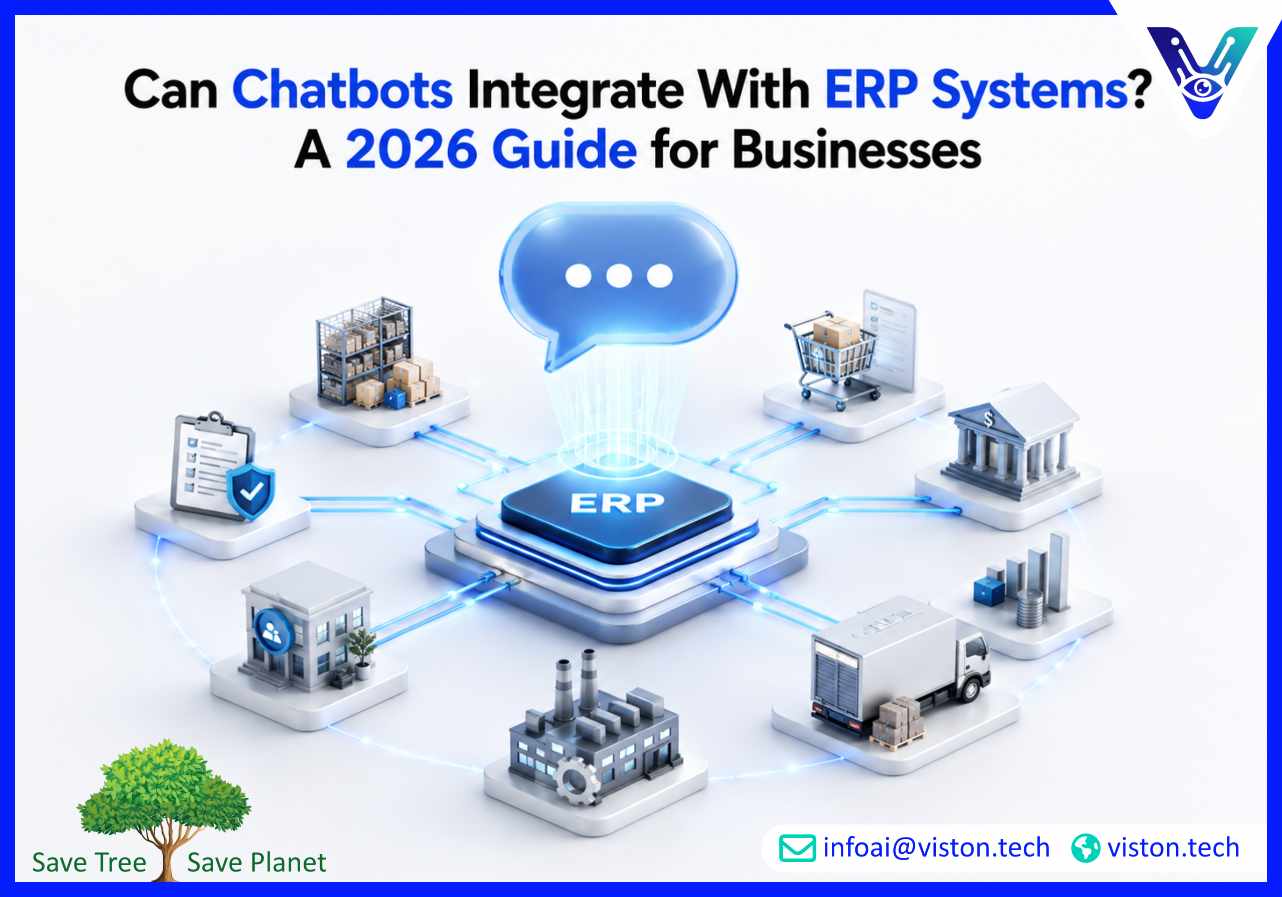
ERP chatbot integration connects a conversational AI chatbot with an enterprise resource planning system so users can ask questions, trigger actions, retrieve records, or complete workflows through natural language. Instead of logging into multiple ERP modules, employees can interact with the system through chat interfaces such as a website, internal portal, Microsoft Teams, Slack, WhatsApp, or a custom application.For example, a sales manager could ask, “What is the current stock level for product X?” A finance team member could request invoice status. A procurement manager could check purchase order approvals. A customer support agent could ask for delivery updates without manually searching ERP screens.The chatbot does not replace the ERP system. It acts as a controlled conversational layer that connects to ERP data and workflows through APIs, middleware, automation tools, or custom integrations. When designed properly, it improves usability while keeping business logic, permissions, and records inside the ERP environment.
Why ERP Chatbot Integration Matters in 2026
ERP systems are essential for finance, supply chain, inventory, procurement, HR, manufacturing, sales, and operations. However, many businesses struggle with ERP complexity. Teams often depend on dashboards, reports, manual exports, or specialist users to access the information they need.AI chatbot integration helps reduce that friction by making ERP data easier to access and workflows easier to complete. This is especially valuable for companies dealing with large transaction volumes, distributed teams, multiple departments, or fast-moving operational decisions.
Faster access to business data
Chatbots can retrieve ERP information in seconds when connected to the right data sources. Users can ask about order status, stock availability, vendor details, payment records, employee leave balances, production schedules, or shipment updates without switching between modules.
Improved employee productivity
Many ERP tasks are repetitive. A chatbot can help automate common requests such as checking invoice status, generating purchase requests, updating ticket information, answering policy questions, or guiding users through approval workflows.
Better ERP adoption
ERP platforms often require training because their interfaces can be complex. A chatbot gives users a simpler way to interact with the system, which can improve adoption among non-technical teams.
More consistent workflows
When chatbot flows are designed around approved business rules, companies can reduce inconsistent manual processes. This is useful for approvals, data validation, escalation routing, and standard operating procedures.
How Chatbots Integrate With ERP Systems
ERP chatbot integration usually depends on the ERP platform, business workflows, available APIs, security requirements, and the level of automation needed. Common ERP systems such as SAP, Oracle NetSuite, Microsoft Dynamics 365, Odoo, Sage, and custom ERP platforms can be connected when the required technical access is available.
API-based integration
APIs allow the chatbot to securely request or update ERP data. This is often the preferred method because it keeps integration structured, traceable, and easier to maintain.
Middleware and integration platforms
Some businesses use middleware, iPaaS tools, or automation platforms to connect chatbots with ERP systems. This can help manage data mapping, authentication, workflow triggers, and system-to-system communication.
Role-based data access
A well-designed ERP chatbot should respect user permissions. Finance users, warehouse teams, sales teams, and managers should only access the data and actions they are authorized to use.
Workflow automation
Beyond answering questions, ERP chatbots can trigger actions such as creating a purchase request, updating a customer record, routing an approval, generating a report, or notifying a manager when a process needs attention.
Knowledge and process support
Chatbots can also answer ERP-related process questions by connecting to internal documentation, SOPs, policy documents, and helpdesk resources. This supports onboarding and reduces repetitive internal support requests.
Use Cases, Risks, and Best Practices for ERP Chatbot Integration
ERP chatbot integration works best when it solves clear business problems. The strongest use cases are usually high-volume, rule-based, data-driven, and operationally important.
Common ERP chatbot use cases
Checking order status, shipment updates, and delivery timelines
Retrieving inventory levels and stock movement information
Answering invoice, payment, and purchase order queries
Supporting employee self-service for HR and payroll questions
Guiding users through procurement or approval workflows
Generating operational reports from ERP data
Helping customer support teams access backend order information
Sending alerts for low stock, delayed approvals, overdue invoices, or process exceptions
Key risks businesses should manage
ERP systems contain sensitive business data, so chatbot integration must be handled carefully. Poorly planned integrations can create security gaps, inaccurate responses, duplicate records, workflow errors, or compliance concerns.Important risks include weak access control, poor data mapping, unclear ownership of workflows, over-automation of critical approvals, lack of audit trails, and chatbot responses that are not grounded in verified ERP data.
Best practices for reliable integration
Start with a focused use case rather than integrating every ERP function at once.
Map the exact data fields, workflows, permissions, and user roles involved.
Use secure APIs and authentication methods where possible.
Keep sensitive actions behind approval rules and role-based permissions.
Test chatbot responses against real ERP scenarios before launch.
Maintain human escalation for exceptions, errors, and high-risk decisions.
Monitor usage, failed queries, workflow completion rates, and user feedback.
Update chatbot flows as ERP processes, policies, and business rules change.
The goal is not just to connect a chatbot to ERP data. The goal is to create a dependable conversational workflow that improves operational speed without weakening control, accuracy, or governance.
How Viston AI Supports ERP Chatbot Integration
Viston AI is relevant to businesses exploring ERP chatbot integration because its AI Chatbot Integration services focus on connecting conversational AI with business systems, workflows, CRM platforms, automation tools, and operational processes. For companies asking whether chatbots can integrate with ERP systems, this type of capability is important because ERP projects require more than a basic chatbot widget.A practical ERP chatbot needs integration planning, workflow design, secure system connectivity, user role mapping, data handling logic, and ongoing optimization. Viston AI can help businesses assess where chatbot integration fits into existing operations, define high-value ERP use cases, and design chatbot flows that support real business tasks rather than isolated conversations.For organizations in global markets, ERP chatbot integration can support customer service, sales operations, internal support, procurement, finance, and operations teams. Viston AI’s role is especially relevant where businesses want AI chatbot integration that connects with existing systems and improves process efficiency without forcing teams to replace their core software stack.By focusing on business workflows and system connectivity, Viston AI can help companies approach ERP chatbot integration as a structured operational improvement rather than a standalone AI experiment.
Frequently Asked Questions
Can a chatbot connect to SAP, Oracle, Microsoft Dynamics, or NetSuite?
Yes. A chatbot can connect to major ERP platforms when APIs, integration tools, or secure data access methods are available. The exact approach depends on the ERP system, permissions, workflows, and business requirements.
Can ERP chatbots update records, or only answer questions?
ERP chatbots can do both. They can retrieve information and, when properly authorized, create or update records such as purchase requests, support tickets, customer notes, approval statuses, or inventory-related actions.
Is ERP chatbot integration secure?
It can be secure when designed with authentication, role-based access control, API security, audit logs, data validation, and human approval for sensitive workflows. Security should be planned from the start, not added after deployment.
How long does ERP chatbot integration take?
Timelines vary based on ERP complexity, available APIs, number of workflows, security requirements, and testing needs. A focused chatbot use case can be faster, while multi-department ERP automation requires deeper planning and validation.
What business teams benefit most from ERP chatbot integration?
Finance, procurement, inventory, sales operations, customer support, HR, warehouse, and management teams often benefit because they frequently need fast access to ERP data and repeatable workflows.
Can Viston AI help with AI chatbot integration for ERP workflows?
Yes, where ERP chatbot integration aligns with the business need, Viston AI can support AI Chatbot Integration by helping connect conversational AI with business systems, workflows, and automation processes.
Conclusion
Chatbots can integrate with ERP systems, and for many businesses this creates a practical way to simplify operations, improve access to data, and automate routine workflows. Successful AI Chatbot Integration depends on secure connectivity, clear use cases, accurate data handling, role-based access, and careful workflow design. In 2026, businesses should treat ERP chatbot integration as an operational capability, not just a customer-facing tool. With the right planning and implementation support, companies can make ERP systems easier to use while maintaining control, security, and process reliability. Viston AI can be a relevant partner for businesses exploring chatbot integration across connected business systems and workflows.