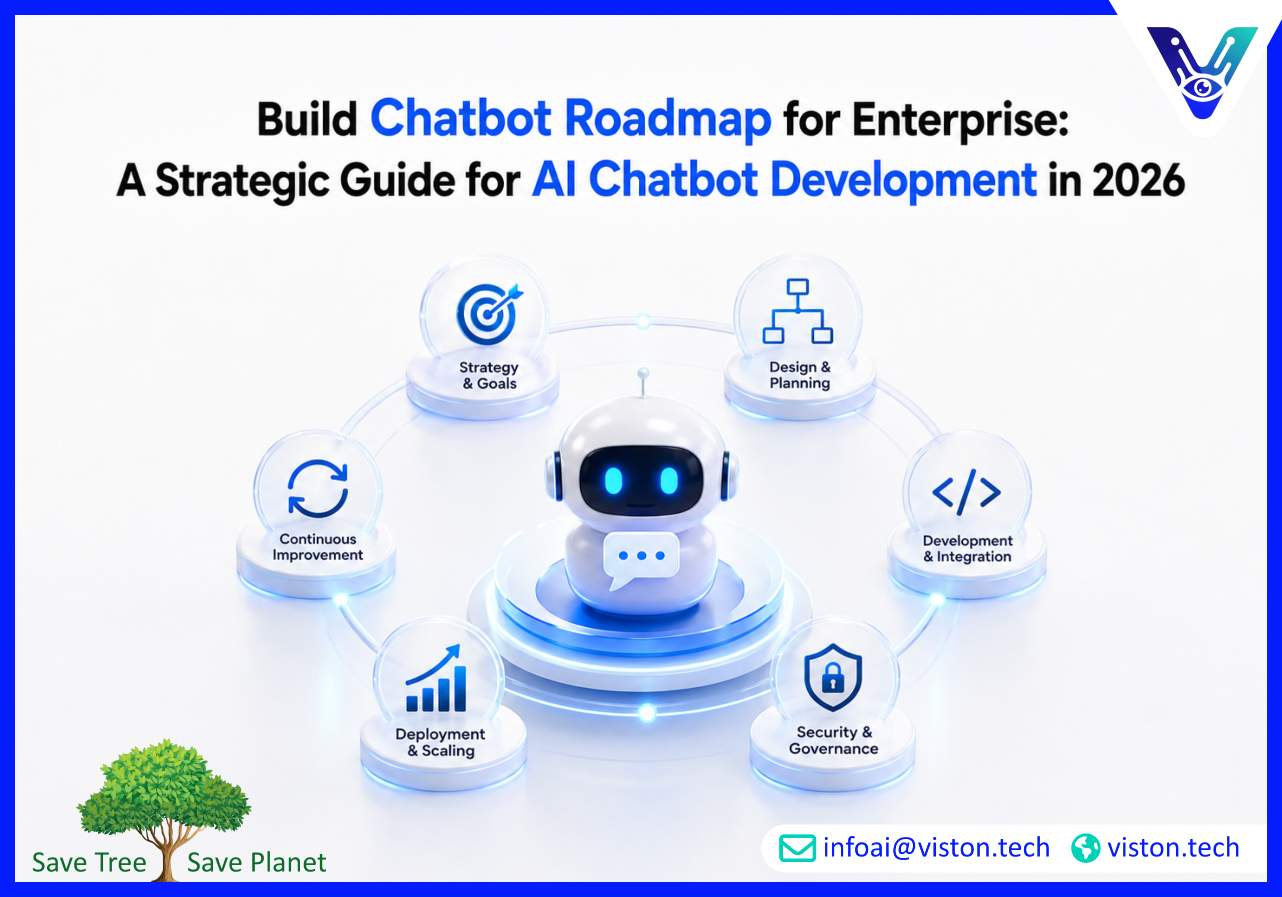
Build Chatbot Architecture Using LLM: A Complete 2026 Guide for Scalable AI Chatbot Development
Designing a modern chatbot architecture using LLMs (Large Language Models) has become essential for businesses aiming to deliver intelligent, scalable, and context-aware customer interactions. In 2026, organizations across industries are shifting toward LLM-powered systems to improve automation, reduce operational load, and create more human-like digital experiences.
Why LLM-Based Chatbot Architecture Matters in 2026
Large Language Models have fundamentally changed how conversational systems are designed. Instead of rule-based or intent-heavy bots, businesses now rely on flexible architectures that allow models to understand context, generate responses dynamically, and integrate with enterprise systems in real time.This shift matters because customer expectations have evolved. Users now expect chatbots to:
Understand natural language without rigid scripts
Maintain conversation context across multiple turns
Access real-time business data
Provide personalized responses
Escalate intelligently when needed
Traditional chatbot architectures struggle to meet these demands. LLM-based architecture solves these limitations by introducing reasoning capabilities, semantic understanding, and adaptable workflows that can scale across industries and use cases.
Core Components of LLM Chatbot Architecture
A robust LLM chatbot architecture is built on multiple interconnected layers. Each layer plays a critical role in ensuring performance, scalability, and reliability.
1. User Interaction Layer
This is the interface where users interact with the chatbot. It can include web chat widgets, mobile apps, messaging platforms, or voice interfaces. The goal is to capture user input and deliver responses seamlessly across channels.
2. Orchestration Layer
The orchestration layer manages the flow of conversation. It determines how user inputs are processed, whether the system should query external APIs, and when to invoke the LLM for response generation.This layer often includes:
Request routing logic
Session management
Context tracking
Tool selection mechanisms
3. LLM Processing Layer
This is the core intelligence layer powered by a Large Language Model. It interprets user queries, generates responses, and maintains contextual awareness across the conversation.The LLM can be enhanced with:
Prompt engineering strategies
System instructions
Fine-tuned domain knowledge
Memory augmentation systems
4. Retrieval-Augmented Generation (RAG) Layer
The RAG layer connects the LLM to external knowledge sources such as databases, documents, APIs, and knowledge bases. This ensures responses are accurate, up-to-date, and grounded in real business data.In enterprise systems, RAG is essential for reducing hallucinations and improving reliability.
5. Integration Layer
This layer connects the chatbot to business systems such as CRM, ERP, helpdesk platforms, and marketing tools. It enables the chatbot to perform real-world actions like fetching order status, updating customer records, or creating support tickets.
6. Security and Governance Layer
Security is a critical component of any LLM chatbot architecture. This layer ensures compliance, data protection, and safe usage of AI models.It typically includes:
Authentication and authorization controls
Data encryption
PII masking and filtering
Audit logging
Compliance enforcement mechanisms
How LLM-Powered Chatbot Architecture Works End-to-End
Understanding the full workflow of an LLM chatbot helps businesses design systems that are efficient and scalable.The process typically follows these steps:
User sends a message through an interface
Orchestration layer analyzes intent and context
If required, system retrieves relevant data via RAG
LLM generates a context-aware response
Integration layer executes external actions if needed
Final response is delivered to the user
This structured flow ensures that chatbots are not just conversational tools but intelligent business automation systems.
Design Principles for Scalable LLM Chatbot Architecture
Building a scalable chatbot system requires careful planning across performance, reliability, and maintainability dimensions.
Modular Architecture Design
Each component should operate independently. This allows teams to upgrade or replace individual modules without disrupting the entire system.
Context Management Strategy
LLMs have token limitations, so effective context management is essential. Techniques like summarization, vector memory, and session storage help maintain conversation continuity.
Latency Optimization
Response time is critical for user experience. Caching frequently used responses, optimizing API calls, and using lightweight models for simple tasks can significantly reduce latency.
Fallback and Human Handoff Systems
Not all queries can be resolved by AI. A strong architecture includes fallback mechanisms that escalate complex queries to human agents seamlessly.
Observability and Monitoring
Tracking system performance helps improve reliability. Metrics such as response accuracy, latency, user satisfaction, and escalation rates provide actionable insights.
Business Use Cases of LLM Chatbot Architecture
LLM-based chatbot systems are transforming multiple industries by enabling intelligent automation and improved customer engagement.
Customer Support Automation: Resolving queries in real time with contextual understanding
Lead Generation: Qualifying prospects through conversational flows
Ecommerce Assistance: Product recommendations and purchase support
SaaS Onboarding: Guiding users through setup and feature discovery
Internal IT Support: Automating employee helpdesk operations
These applications demonstrate how LLM architecture moves beyond simple chat interfaces into enterprise-grade automation systems.
How Viston AI Builds Advanced LLM Chatbot Architecture
For businesses implementing scalable AI solutions, focuses on designing end-to-end LLM-powered chatbot architectures that integrate intelligence, automation, and enterprise systems into a unified framework.Modern chatbot systems require more than model access—they require structured orchestration, secure integrations, and reliable data pipelines. Viston AI builds architectures that combine LLM reasoning with real-time business systems such as CRM platforms, knowledge bases, and customer support tools.The approach emphasizes modular design, allowing businesses to scale chatbot capabilities across departments without rebuilding core infrastructure. From retrieval-augmented generation to secure API orchestration, the focus is on building production-ready systems that deliver measurable business value.As organizations continue adopting AI in 2026, structured LLM chatbot architecture helps ensure reliability, scalability, and long-term adaptability in rapidly evolving digital environments.
Frequently Asked Questions
What is LLM chatbot architecture?
LLM chatbot architecture is a system design that uses Large Language Models as the core intelligence layer, supported by orchestration, data retrieval, and integration components.
Why is LLM important for chatbot development?
LLMs enable chatbots to understand natural language, maintain context, and generate human-like responses, making them more flexible and intelligent than traditional rule-based systems.
What is RAG in chatbot architecture?
Retrieval-Augmented Generation (RAG) connects the LLM to external data sources, ensuring responses are accurate, up-to-date, and grounded in real information.
How do chatbots integrate with business systems?
Chatbots connect to CRM, ERP, helpdesk, and other systems using APIs and middleware layers that enable real-time data exchange and automation.
Is LLM chatbot architecture scalable?
Yes, when designed with modular components, caching strategies, and distributed systems, LLM chatbot architecture can scale across enterprise-level workloads.
Can Viston AI help build LLM chatbot systems?
Yes, Viston AI specializes in designing and implementing scalable LLM chatbot architectures tailored to business needs and industry requirements.
Conclusion
Building chatbot architecture using LLMs represents a major shift in how businesses design conversational systems. Instead of static workflows, organizations now deploy dynamic, intelligent systems capable of understanding context, retrieving real-time data, and executing business actions. A well-structured architecture ensures scalability, security, and long-term performance. As AI continues to evolve in 2026, businesses that invest in robust LLM chatbot architecture will gain a significant advantage in automation, customer engagement, and operational efficiency. Partnering with experienced providers like Viston AI can help organizations build production-ready systems that align with modern enterprise requirements.