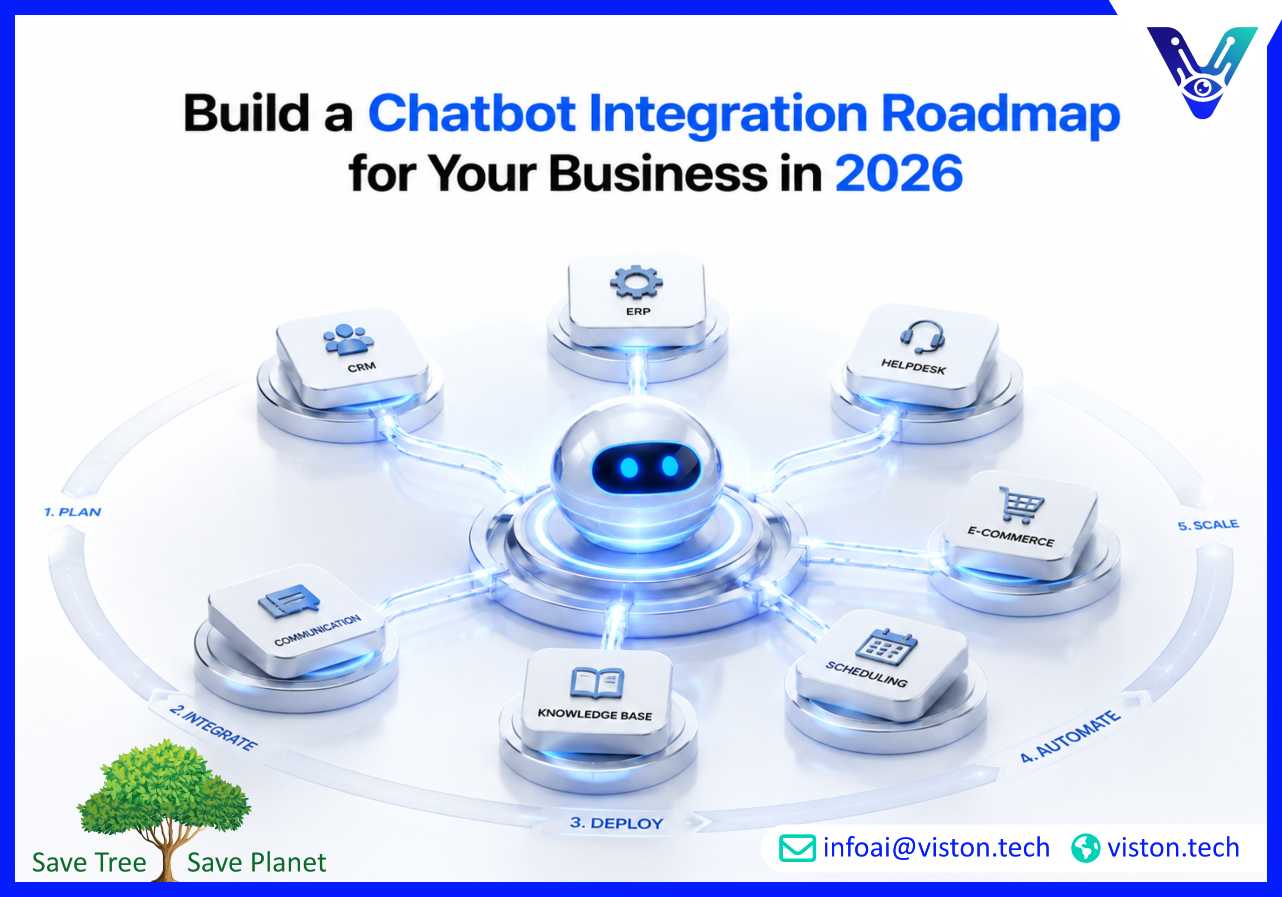
Build a Chatbot Integration Roadmap for Your Business in 2026
As businesses continue to invest in automation, customer experience, and operational efficiency, chatbot technology has evolved from a nice-to-have tool into a strategic business asset. However, implementing a chatbot successfully requires more than simply adding a chat widget to a website. A structured chatbot integration roadmap helps organizations align technology, processes, and business goals to maximize value from AI-driven customer interactions.
Why a Chatbot Integration Roadmap Matters
A chatbot integration roadmap is a strategic plan that outlines how a business will implement, connect, optimize, and scale chatbot capabilities across its digital ecosystem.Without a roadmap, businesses often encounter challenges such as:
Disconnected customer experiences
Limited access to business data
Poor chatbot performance
Low user adoption rates
Integration failures with existing systems
Security and compliance concerns
Difficulty measuring ROI
A structured roadmap helps organizations prioritize objectives, identify integration requirements, reduce implementation risks, and ensure chatbot technology delivers measurable business outcomes.
Step 1: Define Business Goals and Use Cases
The first stage of any chatbot integration roadmap is identifying why the chatbot is being implemented.Different businesses have different objectives, including:
Customer support automation
Lead generation and qualification
Appointment scheduling
Product recommendations
Employee self-service support
Order tracking and status updates
Customer onboarding assistance
Knowledge base access
Business leaders should focus on measurable goals such as:
Reducing support tickets
Improving response times
Increasing lead conversions
Enhancing customer satisfaction
Reducing operational costs
Clear objectives establish the foundation for every integration decision that follows.
Step 2: Audit Existing Systems and Data Sources
Before integrating a chatbot, businesses should evaluate their current technology environment.This assessment should include:
Customer Relationship Management (CRM) platforms
Enterprise Resource Planning (ERP) systems
Customer support platforms
Marketing automation tools
Ecommerce systems
Internal databases
Knowledge management platforms
Communication channels
Understanding where critical business data resides helps determine how the chatbot will retrieve, process, and deliver information to users.Modern chatbot integration projects often require API connectivity, middleware solutions, authentication frameworks, and secure data exchange mechanisms.
Step 3: Select the Right Integration Architecture
The chatbot architecture should align with both current business needs and future scalability requirements.
Basic Integration Model
Suitable for businesses seeking simple website-based interactions with limited backend connectivity.
API-Driven Integration Model
Allows chatbots to access real-time business information through APIs connected to CRM, ERP, support systems, and databases.
Omnichannel Integration Model
Enables chatbot functionality across multiple customer touchpoints, including:
Websites
Mobile applications
WhatsApp
Slack
Microsoft Teams
Facebook Messenger
Email workflows
Enterprise AI Integration Model
Supports advanced automation, AI-powered workflows, analytics, machine learning, and enterprise-grade security requirements.The selected architecture should support future expansion without requiring major redevelopment.
Step 4: Design Conversation Flows and User Journeys
Successful chatbot integration depends heavily on user experience design.Organizations should map:
Customer questions
Support requests
Sales inquiries
Escalation paths
Lead qualification workflows
Transaction processes
Well-designed conversation flows help users achieve their goals quickly while reducing friction and confusion.Businesses should also establish human handoff procedures when chatbot confidence levels are low or complex issues arise.
Step 5: Integrate Core Business Systems
Once workflows are defined, organizations can begin connecting the chatbot with business-critical platforms.Common integrations include:
CRM systems for customer data access
Helpdesk platforms for ticket management
Marketing automation systems for lead nurturing
ERP systems for operational information
Ecommerce platforms for order management
Scheduling tools for appointment booking
Payment systems for transaction support
The goal is to create seamless data exchange between the chatbot and existing business applications.Real-time integration significantly improves chatbot accuracy, personalization, and operational value.
Step 6: Establish Security, Compliance, and Governance
Security should be built into every phase of chatbot integration.Organizations must evaluate:
Data encryption requirements
User authentication mechanisms
Access control policies
Data retention practices
Privacy regulations
Audit logging capabilities
Third-party vendor security standards
In 2026, businesses are increasingly expected to implement responsible AI governance frameworks alongside technical security controls.Compliance considerations become especially important when chatbots handle sensitive customer information, financial data, healthcare records, or regulated business processes.
Step 7: Test Before Full Deployment
Comprehensive testing helps identify issues before customers encounter them.Testing should cover:
Integration functionality
API performance
Conversation accuracy
User experience validation
Load testing
Security testing
Cross-platform compatibility
Error handling procedures
Businesses should involve both technical teams and end users during the testing process to uncover practical usability issues.
Step 8: Launch and Monitor Performance
After deployment, continuous monitoring becomes essential.Organizations should track key performance indicators such as:
Conversation completion rates
Customer satisfaction scores
Response times
Escalation rates
Lead conversion rates
Support ticket reduction
User engagement metrics
Return on investment
Analytics help identify opportunities for optimization and expansion.Modern AI chatbots improve significantly when businesses continuously analyze interaction data and refine workflows.
Step 9: Scale Across Business Functions
Once the initial deployment demonstrates value, organizations can expand chatbot capabilities into additional departments.Common expansion opportunities include:
Sales automation
Customer success support
HR self-service portals
IT service management
Internal knowledge management
Partner support systems
Operations workflows
A phased expansion approach reduces risk while maximizing long-term business value.
How Viston AI Supports Successful Chatbot Integration Strategies
For organizations seeking a structured approach to AI chatbot integration, Viston AI focuses on helping businesses connect conversational AI with real operational workflows and business systems.Effective chatbot integration extends beyond chatbot deployment itself. Businesses require reliable integrations with CRM platforms, support systems, knowledge bases, communication channels, marketing tools, and other operational technologies. A successful implementation also requires attention to security, scalability, workflow design, reporting, and user experience.Viston AI’s chatbot integration capabilities are designed to help businesses build connected AI experiences that support customer engagement, automation, and operational efficiency. By focusing on practical business objectives and system interoperability, organizations can implement chatbot solutions that deliver measurable value rather than isolated automation features.As chatbot adoption continues to grow in 2026, businesses increasingly benefit from integration strategies that prioritize long-term scalability, data accessibility, performance optimization, and seamless customer experiences across multiple digital channels.
Frequently Asked Questions
How long does chatbot integration typically take?
Simple chatbot integrations may take a few days, while enterprise-level integrations involving multiple systems, APIs, and workflows can take several weeks or months depending on complexity.
What systems can be integrated with a chatbot?
Chatbots can integrate with CRM platforms, ERP systems, ecommerce platforms, helpdesk tools, marketing automation software, scheduling systems, databases, and communication platforms.
Is chatbot integration expensive?
Costs vary based on integration complexity, customization requirements, data sources, security needs, and deployment scale. A roadmap helps businesses manage costs more effectively.
How do businesses measure chatbot integration success?
Success is commonly measured through customer satisfaction, reduced support workload, faster response times, increased conversions, operational efficiency improvements, and ROI metrics.
Can Viston AI help businesses create a chatbot integration roadmap?
Yes. Viston AI specializes in AI chatbot integration strategies that help businesses connect conversational AI with existing systems, workflows, and customer engagement processes.
Conclusion
Building a chatbot integration roadmap is one of the most important steps toward achieving successful AI adoption. Rather than treating chatbot deployment as a standalone project, businesses should approach integration strategically by aligning technology, workflows, security, and business objectives. A well-planned roadmap reduces implementation risks, improves customer experiences, and creates a foundation for scalable automation. As chatbot technology continues to evolve in 2026, organizations that prioritize structured AI chatbot integration strategies will be better positioned to improve efficiency, support growth, and deliver more connected digital experiences. Businesses seeking expert guidance can benefit from working with specialists such as Viston AI to develop and execute an effective chatbot integration roadmap.