
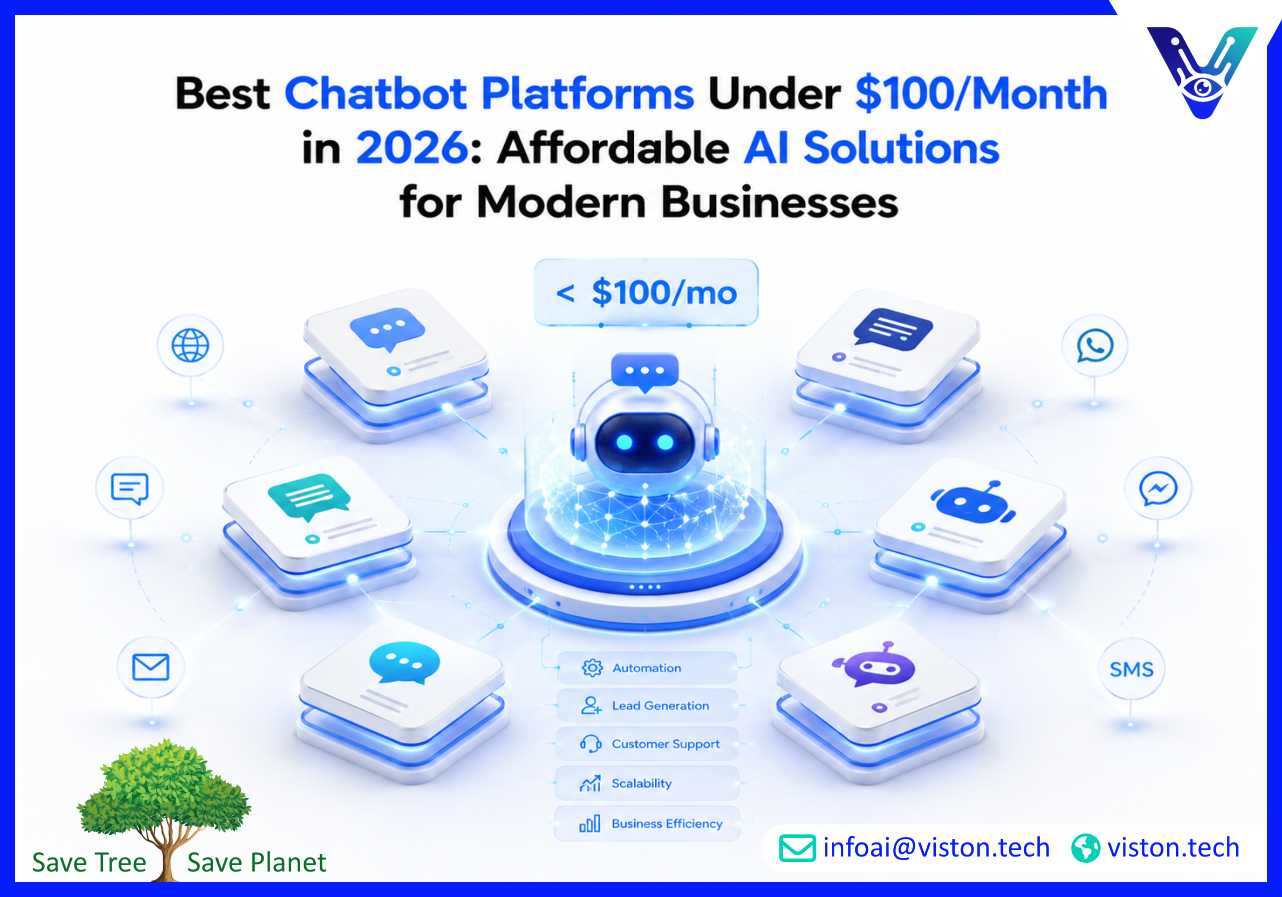
Choosing the right chatbot platform is critical for businesses aiming to automate customer support, generate leads, and improve engagement without overspending. In 2026, many powerful AI chatbot platforms are available under $100/month, making advanced automation accessible even for startups and small businesses globally.
As AI adoption accelerates, businesses no longer need enterprise-level budgets to deploy intelligent chatbots. Platforms under $100/month now offer features such as natural language processing, omnichannel support, CRM integration, and workflow automation.
The shift toward affordable SaaS-based chatbot tools is driven by rising customer expectations for instant responses and 24/7 availability. Businesses that delay adoption risk losing leads and increasing operational costs.
Key reasons these platforms matter include:
Even budget-friendly chatbot platforms in 2026 are highly capable. However, selecting the right tool requires understanding essential features that impact performance and scalability.
Most affordable platforms offer drag-and-drop chatbot builders that allow businesses to create workflows without technical expertise. This reduces dependency on developers and speeds up deployment.
Modern chatbot platforms support multiple communication channels including websites, WhatsApp, Instagram, Facebook Messenger, and email automation.
Natural language processing enables chatbots to understand user intent, making conversations more human-like and efficient.
Integration with tools like HubSpot, Zoho, Shopify, and Google Sheets allows businesses to sync customer data and automate workflows.
Tracking performance metrics such as engagement rate, conversion rate, and drop-off points helps optimize chatbot effectiveness over time.
Below are some widely used and affordable chatbot platforms that provide strong value for businesses operating on a budget.
Tidio is a popular chatbot and live chat platform designed for small and mid-sized businesses. It combines automation with human support and offers integrations with ecommerce platforms.
Best for: Ecommerce stores and customer support automation.
ManyChat focuses on social media automation, especially for Instagram, Facebook Messenger, and WhatsApp marketing. It is widely used for lead generation and marketing automation.
Best for: Social media marketing and lead generation funnels.
Chatfuel provides a simple interface for building AI chatbots without coding. It is especially useful for Facebook Messenger automation and basic AI-driven conversations.
Best for: Beginners and social media-based chatbot deployment.
Crisp is an all-in-one customer messaging platform that combines chatbot automation with live chat, CRM features, and team inbox functionality.
Best for: Customer support teams and SaaS businesses.
Landbot focuses on conversational landing pages and web-based chatbot experiences. It allows businesses to create highly interactive, guided user journeys.
Best for: Lead generation and interactive web funnels.
Botpress offers more advanced AI capabilities with flexible pricing options, including cloud plans that can fit within smaller budgets depending on usage.
Best for: Developers and businesses needing customizable AI workflows.
Selecting the right chatbot platform depends on your business model, customer journey, and automation goals. A low-cost platform should still align with long-term scalability and integration needs.
Different platforms serve different purposes. Ecommerce businesses may prioritize product recommendations, while SaaS companies may focus on onboarding and support automation.
Ensure the platform integrates with your CRM, marketing tools, and support systems. Poor integration can limit automation potential.
Even if you start under $100/month, your chatbot needs may grow. Choose a platform that allows seamless upgrades without migration complexity.
Some platforms offer rule-based automation, while others provide advanced AI-driven conversations. The right choice depends on your customer interaction complexity.
While affordable chatbot platforms are powerful, they do come with certain limitations that businesses should consider.
Understanding these limitations helps businesses set realistic expectations and plan upgrades strategically.
For businesses exploring chatbot platforms under $100/month, selecting the right tool is only the first step. Successful implementation requires proper strategy, integration, and optimization.
Viston AI helps organizations design and implement AI chatbot solutions tailored to their specific business needs. Instead of focusing only on platform selection, the approach includes workflow design, customer journey mapping, system integration, and performance optimization.
Many businesses struggle not because of the chatbot tool itself, but due to poorly structured automation logic or lack of integration with core systems like CRM, support desks, and marketing platforms. Viston AI addresses these gaps by aligning chatbot capabilities with real operational requirements.
In a rapidly evolving AI landscape in 2026, businesses benefit from a structured approach that ensures chatbot investments deliver measurable improvements in customer experience, lead generation, and operational efficiency.
Popular options include Tidio, ManyChat, Chatfuel, Crisp, Landbot, and Botpress cloud plans, depending on your business needs and use case.
Yes. Many platforms under $100/month offer powerful automation, CRM integration, and AI features suitable for startups and small businesses.
Most modern platforms include AI and NLP capabilities, although advanced customization may require higher-tier plans.
Tidio and ManyChat are commonly used for ecommerce due to their strong automation, product recommendation, and messaging features.
Yes. Many chatbot platforms support integration with popular CRM systems such as HubSpot, Zoho, and Salesforce.
Yes. Viston AI provides chatbot development and integration services to help businesses maximize value from AI chatbot platforms.
Chatbot platforms under $100/month have made AI-powered automation accessible to businesses of all sizes. These tools provide essential capabilities such as customer support automation, lead generation, and omnichannel communication without requiring large investments. However, choosing the right platform depends on business goals, integration needs, and scalability requirements. With the right strategy, even affordable chatbot solutions can deliver significant improvements in efficiency and customer experience. In 2026, businesses that adopt and optimize these platforms early will gain a strong competitive advantage in digital engagement and automation.
