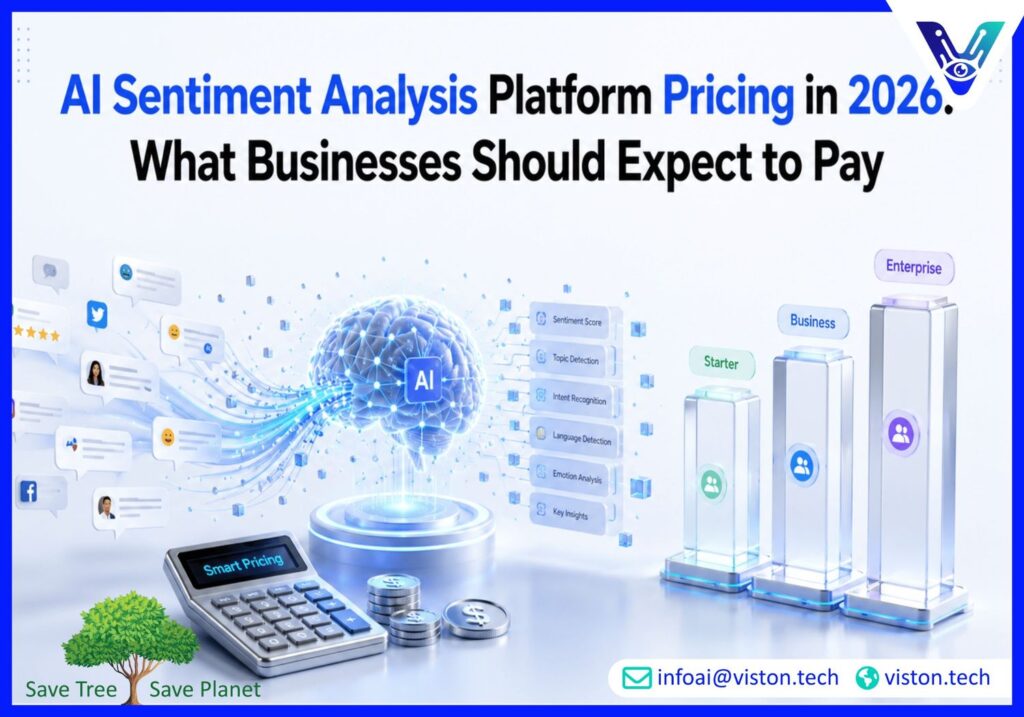
AI Sentiment Analysis Platform Pricing in 2026: What Businesses Should Expect to Pay
As organizations increasingly rely on customer feedback, social media conversations, support interactions, and market intelligence, AI sentiment analysis platforms have become valuable tools for understanding public perception at scale. However, pricing models vary significantly across vendors, making it challenging for businesses to determine what they should expect to pay. Understanding AI sentiment analysis platform pricing in 2026 can help decision-makers evaluate solutions based on business value rather than cost alone.
What Influences AI Sentiment Analysis Platform Pricing?
AI sentiment analysis platforms use natural language processing (NLP), machine learning, and linguistic models to identify emotions, opinions, and sentiment within text data. Pricing depends on several operational and technical factors.
Data Volume and Processing Requirements
Most providers charge based on the amount of text processed. This may be measured through:
Number of API requests
Characters processed
Documents analyzed
Customer interactions reviewed
Social media mentions monitored
Organizations processing millions of customer interactions monthly typically require enterprise pricing structures compared to businesses with limited analysis needs.
Real-Time vs. Batch Analysis
Real-time sentiment analysis generally costs more because it requires immediate processing capabilities, lower latency, and scalable infrastructure. Businesses that need instant customer feedback monitoring often pay premium rates compared to those using scheduled batch analysis.
Language Coverage
Platforms supporting multilingual sentiment analysis often have higher pricing tiers. Global businesses may require support for dozens of languages, dialects, and regional variations, increasing computational complexity and maintenance costs.
Accuracy and AI Model Sophistication
Basic sentiment classification models typically cost less than advanced solutions capable of understanding:
Contextual sentiment
Sarcasm detection
Intent recognition
Emotion analysis
Industry-specific terminology
Aspect-based sentiment analysis
More sophisticated AI models generally command higher subscription or usage-based fees due to their enhanced capabilities.
Common AI Sentiment Analysis Pricing Models in 2026
The sentiment analysis market continues to evolve, and vendors typically use one or more pricing structures.
Usage-Based Pricing
Usage-based pricing remains one of the most common models. Businesses pay according to actual consumption, making it suitable for organizations with fluctuating workloads.This model typically includes:
Pay-per-character analysis
Pay-per-document processing
Pay-per-API call
Pay-per-request pricing
The advantage is flexibility, but costs can become unpredictable during periods of rapid growth.
Subscription-Based Pricing
Many providers offer monthly or annual subscription plans that include predefined usage limits.These plans often provide:
Predictable budgeting
Platform access
Reporting dashboards
Standard integrations
Customer support
Subscription pricing is often preferred by organizations seeking consistent monthly operational costs.
Enterprise Licensing
Large enterprises frequently negotiate custom agreements tailored to their data volumes, compliance requirements, and integration needs.Enterprise packages may include:
Dedicated infrastructure
Advanced security controls
Private AI deployments
Custom model training
Service-level agreements
Dedicated account management
Pricing can vary substantially depending on complexity and organizational requirements.
Hybrid Pricing Models
Increasingly, vendors combine subscription fees with usage-based charges. This allows businesses to maintain baseline access while paying for additional processing beyond allocated limits.
What Businesses Should Evaluate Beyond Price
Choosing a sentiment analysis platform solely based on cost can lead to poor outcomes. Business leaders should focus on total value and operational impact.
Accuracy and Reliability
Low-cost solutions that produce inaccurate sentiment classifications can create misleading insights and poor business decisions. Accuracy should be a primary evaluation criterion.
Integration Capabilities
The platform should integrate smoothly with existing business systems such as:
CRM platforms
Customer support software
Marketing automation tools
Business intelligence platforms
Data warehouses
Customer experience solutions
Strong integration capabilities often reduce implementation costs and improve adoption.
Scalability
Organizations should consider future growth when evaluating pricing. A solution that appears affordable today may become expensive if costs rise dramatically with increased data volume.
Compliance and Data Security
In 2026, businesses are increasingly concerned about privacy regulations, data governance, and AI accountability. Sentiment analysis providers should support appropriate security and compliance standards relevant to business operations.
How Sentiment Analysis Creates Business Value
Understanding pricing becomes easier when organizations evaluate sentiment analysis through the lens of measurable business outcomes.
Customer Experience Improvement
Sentiment analysis helps businesses identify customer frustrations, satisfaction trends, and service issues before they become larger problems.
Brand Reputation Monitoring
Organizations can track public perception across social media, reviews, forums, and digital channels to identify emerging reputation risks.
Market Intelligence
Analyzing sentiment at scale provides valuable insights into customer preferences, competitor positioning, and market trends.
Operational Efficiency
Automated sentiment classification reduces the need for manual review of large datasets, allowing teams to focus on higher-value activities.
Product Development Insights
Businesses can identify recurring product issues, feature requests, and customer expectations by analyzing large volumes of feedback.
How to Budget for AI Sentiment Analysis in 2026
Organizations evaluating sentiment analysis platforms should begin with clear business objectives rather than technology features alone.Key budgeting considerations include:
Expected monthly data volumes
Required languages and markets
Integration requirements
Reporting and dashboard needs
Compliance obligations
Internal technical resources
Growth projections
Many organizations start with pilot implementations before expanding to enterprise-wide deployments. This approach helps validate ROI and establish realistic usage patterns before committing to larger investments.Decision-makers should also consider indirect costs such as implementation, customization, staff training, workflow development, and ongoing optimization.
Supporting Advanced Sentiment Analysis Initiatives with Viston AI
As businesses increasingly seek actionable insights from customer conversations and unstructured data, sentiment analysis has become an important component of broader natural language processing strategies. Viston AI specializes in Sentiment Analysis solutions designed to help organizations extract meaningful business intelligence from large volumes of textual data.Rather than focusing solely on sentiment scoring, modern implementations often require scalable processing, multilingual capabilities, real-time analytics, workflow integration, and business-specific customization. These requirements become especially important for organizations managing customer experience programs, digital engagement initiatives, market research projects, and operational intelligence systems.Viston AI supports businesses seeking practical Sentiment Analysis capabilities that align with operational goals and decision-making processes. By combining NLP technologies with scalable implementation approaches, organizations can transform raw customer feedback, reviews, support interactions, and social conversations into actionable insights.For companies evaluating AI sentiment analysis investments in 2026, selecting a specialist provider with relevant expertise, implementation knowledge, and scalable capabilities can be just as important as evaluating platform pricing.
Frequently Asked Questions
How much does an AI sentiment analysis platform typically cost?
Pricing varies based on data volume, features, deployment requirements, languages supported, and integration complexity. Costs can range from entry-level subscriptions to enterprise agreements designed for large-scale processing.
What pricing model is most common for sentiment analysis platforms?
Usage-based pricing and subscription-based pricing are the most common models. Many vendors now combine both approaches through hybrid pricing structures.
Is real-time sentiment analysis more expensive than batch processing?
Yes. Real-time analysis generally requires more infrastructure resources and lower processing latency, which often results in higher pricing.
What factors have the biggest impact on sentiment analysis costs?
Data volume, language support, AI model sophistication, integrations, reporting requirements, security controls, and deployment architecture are among the most significant pricing factors.
Can sentiment analysis deliver measurable ROI?
Yes. Many organizations use sentiment analysis to improve customer experience, identify operational issues, monitor brand reputation, enhance products, and support strategic decision-making.
How can Viston AI help with sentiment analysis initiatives?
Viston AI provides Sentiment Analysis solutions that help organizations transform customer feedback and textual data into actionable insights while supporting scalability, business integration, and operational decision-making.
Conclusion
AI sentiment analysis platform pricing in 2026 depends on much more than the software itself. Data volumes, real-time processing requirements, language coverage, integration needs, security expectations, and AI sophistication all influence costs. Organizations should evaluate sentiment analysis solutions based on business outcomes, scalability, accuracy, and long-term value rather than subscription fees alone. By aligning platform capabilities with operational objectives, businesses can maximize the return on their Sentiment Analysis investment while gaining deeper insights into customer behavior, market trends, and brand perception. Providers such as Viston AI can help organizations implement scalable sentiment analysis strategies that support meaningful business growth.