
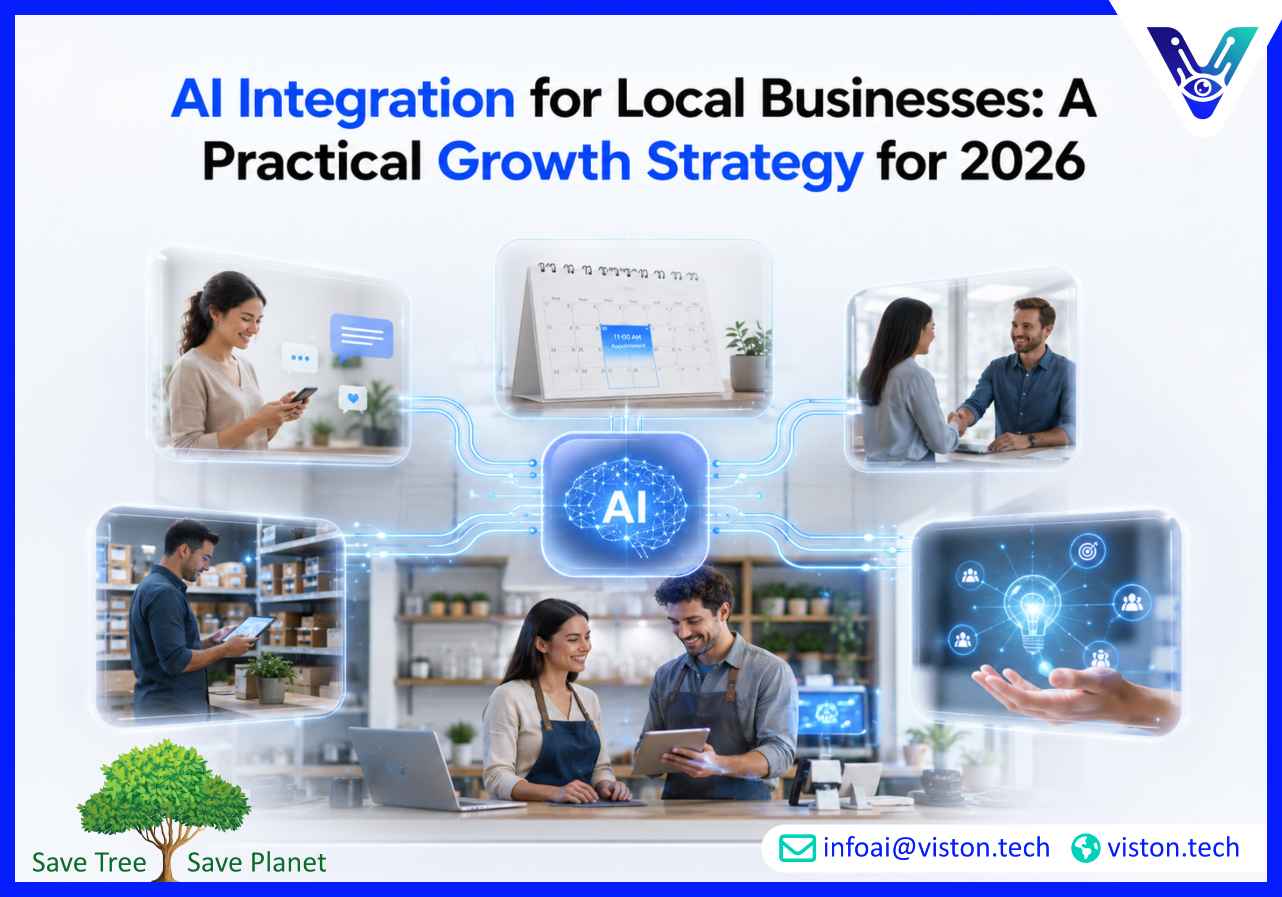
Artificial intelligence is no longer limited to large enterprises with dedicated technology teams. In 2026, local businesses are increasingly adopting AI to improve customer service, streamline operations, automate repetitive tasks, and make better business decisions. Successful AI adoption, however, depends on thoughtful integration rather than simply adding new tools.
Local businesses operate in highly competitive environments where efficiency, customer experience, and responsiveness directly impact growth. Whether serving customers through physical locations, websites, social media channels, or mobile apps, businesses are expected to provide faster and more personalized experiences.
AI integration enables businesses to connect intelligent technologies with existing systems, workflows, and customer touchpoints. Rather than creating separate processes, AI becomes part of daily operations.
For local businesses, AI integration can support:
The goal is not to replace employees but to help teams focus on higher-value activities while reducing time spent on repetitive administrative work.
Many local businesses invest in digital tools over time, often creating disconnected systems that require manual effort to manage. As customer expectations increase, these inefficiencies become more noticeable.
Responding to inquiries across websites, email, messaging platforms, and social media can consume significant staff time. Delayed responses may lead to missed opportunities and customer dissatisfaction.
Customer information, bookings, invoices, inventory records, and marketing data are often stored in separate applications. Without integration, employees spend time moving information between systems.
Many local businesses collect valuable data but struggle to turn it into actionable insights. AI-powered analytics can help identify trends, customer preferences, and operational bottlenecks.
Unlike large enterprises, local businesses often operate with lean teams. AI integration can help extend operational capacity without requiring significant increases in staffing.
Not every business needs advanced AI systems. The most successful projects focus on practical applications that solve real operational challenges.
AI-powered assistants can handle common inquiries, answer frequently asked questions, provide appointment information, and assist customers outside business hours. Integrated solutions ensure responses are based on current business information.
AI can help analyze customer behavior, personalize marketing campaigns, generate content recommendations, and improve lead nurturing efforts. This allows local businesses to create more relevant customer interactions.
Integrated AI systems can qualify leads, prioritize opportunities, automate follow-up communications, and provide insights into customer buying patterns.
AI can automate routine administrative tasks such as scheduling, document processing, reporting, inventory monitoring, and workflow management.
Modern AI tools can transform business data into meaningful insights, helping owners make informed decisions based on sales trends, customer behavior, operational performance, and financial indicators.
Successful AI implementation requires planning, realistic expectations, and alignment with business goals.
AI should address specific business challenges rather than being implemented solely because it is a popular technology. Clear objectives help prioritize projects that generate measurable value.
Businesses should assess their current software ecosystem before integrating AI. Understanding available data sources, workflows, and operational processes helps create a smoother implementation path.
Initial projects should focus on areas where automation and intelligence can quickly improve efficiency or customer experience. Early successes help build confidence and support future expansion.
AI works best when combined with human expertise. Important decisions, customer escalations, and sensitive situations should continue to involve appropriate human review.
Business needs evolve over time. AI integration strategies should support future growth, additional automation opportunities, and new technologies as they become available.
Many local businesses recognize the potential of AI but are uncertain where to begin. Strategic AI Consulting Services help organizations identify opportunities, assess readiness, prioritize investments, and develop implementation roadmaps aligned with business objectives.
Rather than focusing solely on technology selection, strategic consulting evaluates how AI can support operational goals, improve customer experiences, and generate measurable business outcomes.
Consulting engagements often include:
This structured approach helps local businesses avoid costly implementation mistakes while maximizing the value of AI investments.
For local businesses seeking practical AI adoption strategies, Viston AI provides Strategic AI Consulting Services designed to align artificial intelligence initiatives with real business objectives. Effective AI integration requires more than selecting software; it involves understanding workflows, identifying opportunities for automation, evaluating data readiness, and ensuring systems work together effectively.
Viston AI helps businesses assess where AI can create meaningful operational improvements, whether through customer service automation, workflow optimization, intelligent reporting, business process enhancement, or AI-powered decision support. By focusing on practical implementation rather than technology experimentation, organizations can pursue AI initiatives that support measurable outcomes.
Local businesses often face unique challenges related to limited resources, fragmented systems, and growing customer expectations. Through strategic planning and integration-focused guidance, Viston AI supports businesses in building scalable AI roadmaps that align with operational priorities and long-term growth objectives.
The emphasis is on creating sustainable solutions that fit existing business environments while preparing organizations for future advancements in AI capabilities.
AI integration involves connecting artificial intelligence tools with existing business systems, workflows, and data sources to improve efficiency, customer experience, and decision-making.
Yes. AI can help automate routine tasks, improve customer communication, streamline operations, and provide business insights regardless of company size.
Popular use cases include customer support automation, appointment scheduling, lead management, marketing optimization, reporting, workflow automation, and business intelligence.
The level of expertise depends on the complexity of the project. Strategic planning and professional guidance can help businesses implement AI solutions without requiring extensive internal technical resources.
Strategic AI Consulting Services help businesses identify opportunities, assess readiness, create implementation roadmaps, manage risks, and align AI investments with operational goals.
Yes. Viston AI provides Strategic AI Consulting Services that help local businesses evaluate AI opportunities, prioritize initiatives, and develop practical integration plans aligned with business objectives.
AI integration for local businesses is becoming a practical necessity rather than a future consideration. As customer expectations rise and operational efficiency becomes increasingly important, businesses that successfully integrate AI into their workflows gain valuable advantages in responsiveness, productivity, and decision-making. Strategic AI Consulting Services provide the guidance needed to navigate implementation challenges and identify high-value opportunities. For local businesses seeking a structured approach to AI adoption, Viston AI offers expertise that helps transform AI potential into measurable business outcomes through effective integration and long-term planning.
