
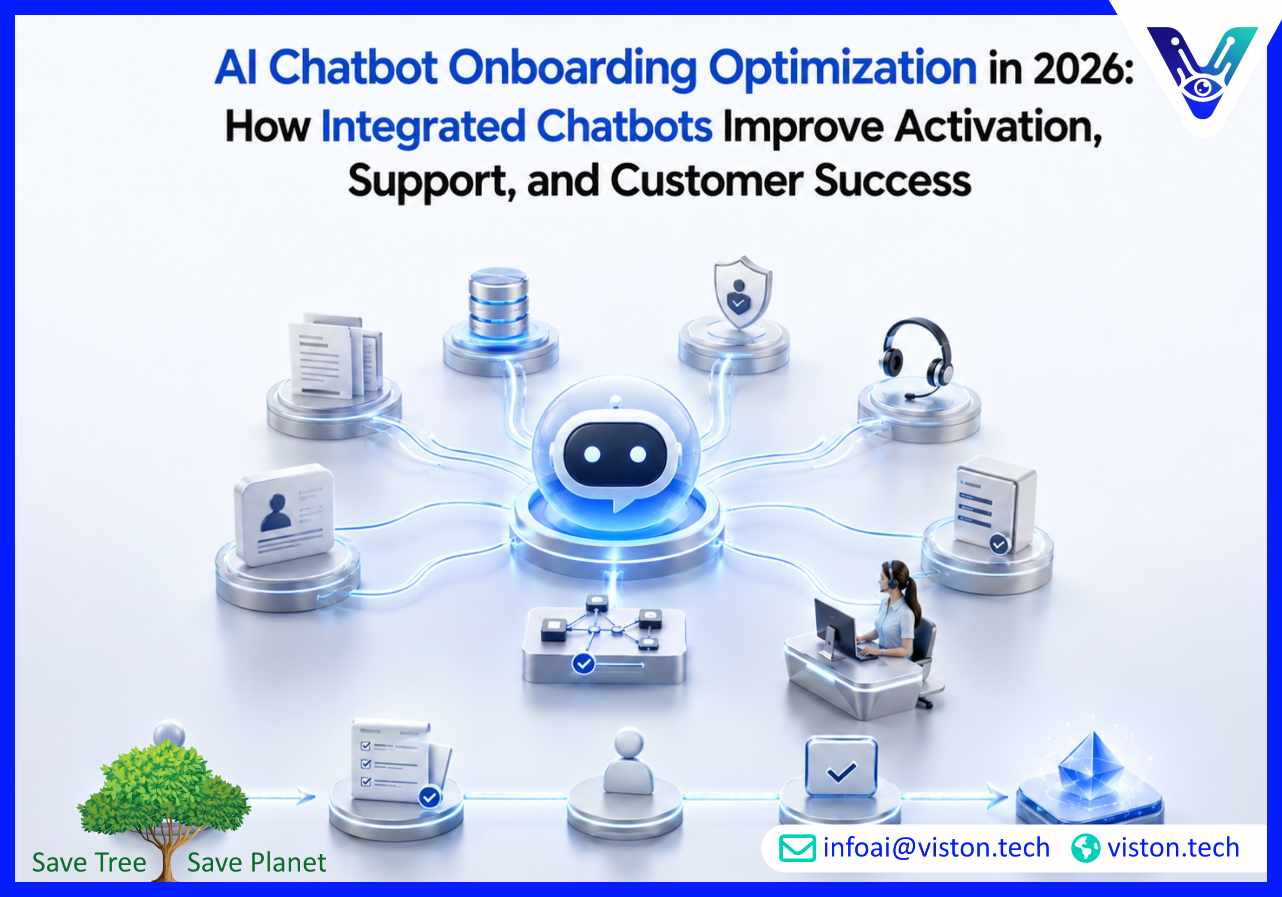
AI chatbot onboarding optimization matters because first impressions now directly influence activation, retention, support workload, and revenue confidence. For growing businesses, onboarding is no longer just a welcome sequence. It is a connected journey where conversational AI, product data, CRM workflows, and human support must work together.
AI chatbot onboarding optimization is the process of improving how new customers, users, employees, partners, or leads are guided through early-stage interactions using an integrated conversational AI system. It goes beyond adding a chatbot widget to a website or app. The goal is to help people complete the right steps, understand the right information, and reach value faster with less confusion.
In a business context, onboarding can include account setup, product education, document collection, feature guidance, support triage, lead qualification, payment assistance, compliance checks, training, or workflow activation. A basic chatbot may answer common questions, but an optimized onboarding chatbot can recognize user intent, personalize guidance, retrieve data from connected systems, trigger workflows, escalate issues, and update internal records automatically.
This is where AI Chatbot Integration becomes essential. Onboarding quality depends on whether the chatbot can communicate with systems such as CRM platforms, help desks, learning portals, billing tools, product analytics, identity systems, knowledge bases, and internal databases. Without integration, the chatbot can only provide generic answers. With integration, it becomes a practical onboarding assistant that understands where the user is in the journey and what action should happen next.
For example, a SaaS company may use an AI chatbot to guide a new customer through workspace setup, role assignment, feature configuration, and training resources. A financial services firm may use a chatbot to support document submission, eligibility questions, account opening, and compliance handoffs. A B2B service provider may use it to qualify new leads, collect requirements, schedule consultations, and prepare CRM records for the sales team.
The strongest onboarding chatbot experiences are not built around long scripted flows. They are designed around user goals, friction points, data availability, escalation logic, and measurable outcomes. The chatbot should know when to educate, when to automate, when to ask for clarification, and when to involve a human expert.
In 2026, buyers and users expect digital onboarding to be fast, personalized, accurate, and available across channels. They are less willing to wait for manual support, search through long documentation, or repeat information across teams. At the same time, businesses need onboarding processes that are scalable, secure, measurable, and aligned with real operating systems.
The pressure is especially high for companies with complex products, multi-step services, regulated workflows, or large customer volumes. When onboarding is slow or unclear, users delay activation, submit more support tickets, abandon setup, or require repeated human assistance. These issues increase operational cost and weaken customer confidence before the relationship has fully developed.
AI chatbot onboarding optimization helps reduce these risks by creating guided, responsive, and data-aware interactions. Instead of sending every new user the same instructions, an integrated chatbot can adapt based on customer type, product plan, previous actions, missing steps, support history, location of friction, and intent signals.
Modern onboarding also requires better continuity between departments. Sales, implementation, support, customer success, operations, and finance often hold different pieces of the onboarding journey. If these systems are disconnected, users receive inconsistent answers and teams lose visibility. An integrated chatbot can act as a connective layer that captures onboarding activity and keeps internal systems updated.
Another important 2026 expectation is responsible AI delivery. Businesses need chatbots that are reliable, controlled, and transparent in how they handle customer data. Onboarding may involve sensitive information, contractual details, access permissions, payment data, or compliance requirements. A chatbot must therefore be designed with clear guardrails, authentication logic, data minimization, audit trails, escalation rules, and secure API connections.
Optimization is not only about automation. It is about improving the full onboarding experience while protecting quality. A well-implemented AI onboarding chatbot should help users move forward confidently, reduce repetitive human work, and provide teams with better insight into where users struggle.
AI Chatbot Integration gives onboarding chatbots the ability to do more than answer questions. It allows the chatbot to participate in real workflows, retrieve relevant information, and complete useful actions. This is the difference between a passive support bot and an onboarding assistant that contributes directly to business outcomes.
An optimized chatbot should not treat every user the same. By connecting with CRM, product analytics, account records, or user profiles, the chatbot can understand whether someone is a new lead, trial user, paid customer, partner, employee, or enterprise stakeholder. This context allows it to deliver onboarding steps that match the user’s role, product plan, permissions, and goals.
Personalization may include recommending the next setup step, surfacing relevant training content, explaining features based on business use case, or reminding users about incomplete actions. This improves clarity and reduces the need for users to search through generic onboarding materials.
Many onboarding questions require live data. Users may ask whether their account is approved, whether documents were received, whether billing is active, whether integrations are connected, or whether a support ticket has been updated. A non-integrated chatbot cannot answer these questions reliably.
With secure integrations, the chatbot can retrieve real-time information from CRM, ERP, help desk, product, billing, or knowledge systems. This reduces repetitive requests to internal teams and gives users faster access to accurate information.
Onboarding often includes small but important tasks such as creating tickets, updating CRM fields, assigning implementation owners, sending reminders, scheduling meetings, collecting missing details, routing approvals, or creating internal tasks. These steps are easy to delay when handled manually.
An integrated AI chatbot can automate these actions based on user intent and business rules. For example, if a customer says they need help connecting an integration, the chatbot can identify the platform, collect required details, create a support ticket, attach the conversation summary, and route it to the correct team.
Human support remains important in onboarding, especially for complex, high-value, or sensitive interactions. Optimization does not mean forcing every user through automation. It means using AI to handle routine guidance while making human escalation smoother.
A strong chatbot handoff includes conversation history, user intent, completed steps, account details, urgency level, and recommended next action. This prevents users from repeating themselves and helps teams respond with context.
AI chatbot onboarding optimization should be measured over time. Important metrics may include activation rate, time to first value, completion rate, support deflection, escalation rate, user satisfaction, failed intent rate, drop-off points, and conversion from trial to paid account.
When chatbot interactions are connected to analytics and CRM data, businesses can identify patterns. They can see which onboarding steps create confusion, which questions repeat most often, which segments need more support, and where automation should be improved.
Successful onboarding chatbot projects require more than selecting a chatbot platform. Businesses need a structured implementation approach that combines conversation design, integration planning, security, testing, analytics, and operational ownership.
The first step is understanding the current onboarding journey. Teams should map each stage from first interaction to activation, including user goals, required actions, internal dependencies, common questions, failure points, and escalation triggers.
This mapping helps define where the chatbot should assist. Not every onboarding step needs automation. The best opportunities are usually repetitive, high-volume, rules-based, data-dependent, or time-sensitive interactions where AI can reduce friction without lowering quality.
An onboarding chatbot should have a defined scope. It may answer setup questions, recommend next steps, collect user data, trigger workflows, schedule calls, provide training resources, route issues, or summarize conversations. Clear scope prevents the chatbot from attempting tasks it cannot complete safely or accurately.
Businesses should also define boundaries. The chatbot should know when it cannot answer, when it should verify information, and when it should escalate to a human team. This is especially important when onboarding involves contracts, payments, compliance, regulated advice, or sensitive customer information.
Integration quality determines onboarding value. Common systems include CRM platforms, help desks, product analytics tools, identity providers, billing systems, documentation hubs, learning management systems, marketing automation platforms, and internal databases.
Good integration design should support secure authentication, controlled data access, structured data exchange, error handling, logging, and fallback responses. The chatbot must be able to read and write data safely where appropriate. For example, it may read account status from the CRM and write onboarding progress back into the customer record.
AI chatbot onboarding depends on accurate content. Businesses should organize onboarding documentation, FAQs, product guides, policy information, troubleshooting steps, and internal procedures before deployment. Outdated or inconsistent content leads to poor chatbot performance.
The knowledge base should be maintained as the product, service, pricing, process, or compliance requirements change. Ownership is important. A chatbot is not a one-time setup; it needs continuous review, testing, and improvement.
Onboarding interactions may involve business data, personal information, account credentials, payments, documents, or confidential requirements. Security should be part of the design from the beginning.
Important considerations include role-based access control, secure API connections, encryption, permission checks, audit logs, data retention rules, consent handling, and protection against unauthorized data exposure. Businesses should also avoid connecting a chatbot to sensitive systems without clear access policies and monitoring.
Testing should include expected questions, unclear language, incomplete inputs, multi-step requests, system errors, escalation paths, edge cases, and high-risk topics. Teams should validate not only whether the chatbot answers correctly, but whether it helps users complete onboarding tasks efficiently.
Post-launch optimization should include reviewing transcripts, identifying failed intents, improving prompts and workflows, updating knowledge content, and refining integrations. The most effective onboarding chatbots improve continuously as user behavior and business processes evolve.
Viston AI is relevant to AI chatbot onboarding optimization because its AI Chatbot Integration service focuses on connecting conversational AI with business systems, workflows, and enterprise platforms. For businesses that need onboarding chatbots to do more than answer static FAQs, this integration capability is central to creating useful, scalable, and operationally reliable experiences.
Viston AI’s service positioning includes AI chatbot integration, AI chatbot development, enterprise AI chatbots, workflow bots, custom AI solutions, NLP and text analysis, MLOps and model monitoring, and automation-focused AI services. These capabilities align closely with onboarding optimization because effective onboarding often requires secure CRM integration, ticketing workflows, knowledge retrieval, analytics, multi-channel communication, and automated handoffs between AI and human teams.
For B2B organizations, Viston AI can support onboarding use cases such as lead qualification, customer setup guidance, internal service desk onboarding, account support, product education, document intake, and workflow automation across connected systems. Its broader AI and automation focus makes the service relevant for companies that want chatbots integrated into real operating processes rather than isolated front-end tools.
The practical value lies in designing chatbot experiences around business outcomes: faster onboarding completion, fewer repetitive support requests, better data capture, stronger visibility for internal teams, and more consistent customer guidance. For organizations evaluating AI Chatbot Integration, Viston AI’s service scope makes it a credible specialist to consider when onboarding optimization requires both conversational AI and backend system connectivity.
AI chatbot onboarding optimization is the improvement of onboarding journeys using conversational AI that guides users, answers questions, personalizes next steps, automates workflows, and connects with business systems. The aim is to reduce friction and help users reach value faster.
Integration allows the chatbot to access real-time data, update records, trigger workflows, and provide context-aware guidance. Without AI Chatbot Integration, the bot usually works as a generic FAQ tool and cannot support complex onboarding tasks reliably.
Common systems include CRM platforms, help desks, product analytics tools, billing systems, identity providers, knowledge bases, learning portals, marketing automation tools, and internal databases. The right systems depend on the onboarding process and business model.
Useful metrics include activation rate, onboarding completion rate, time to first value, support ticket reduction, escalation rate, customer satisfaction, failed intent rate, and drop-off points. These metrics should be reviewed regularly to improve chatbot performance.
AI chatbots should not fully replace human onboarding teams in complex or high-value environments. They are most effective when they handle repetitive guidance, routine questions, workflow updates, and data collection while escalating sensitive or complex issues to human experts.
Viston AI can support businesses through AI Chatbot Integration services that connect conversational AI with CRM, help desk, workflow, knowledge, and operational systems. This helps create onboarding chatbots that are more useful, personalized, and aligned with real business processes.
AI chatbot onboarding optimization is becoming a practical priority for businesses that want faster activation, smoother support, and more consistent user experiences. The most effective onboarding chatbots are not isolated tools; they are integrated systems that connect conversations with data, workflows, teams, and measurable outcomes. AI Chatbot Integration helps businesses move from generic automation to context-aware onboarding support that improves both customer experience and operational efficiency. For organizations planning this shift, Viston AI offers relevant expertise in integrated conversational AI, workflow automation, and business-focused chatbot implementation.
