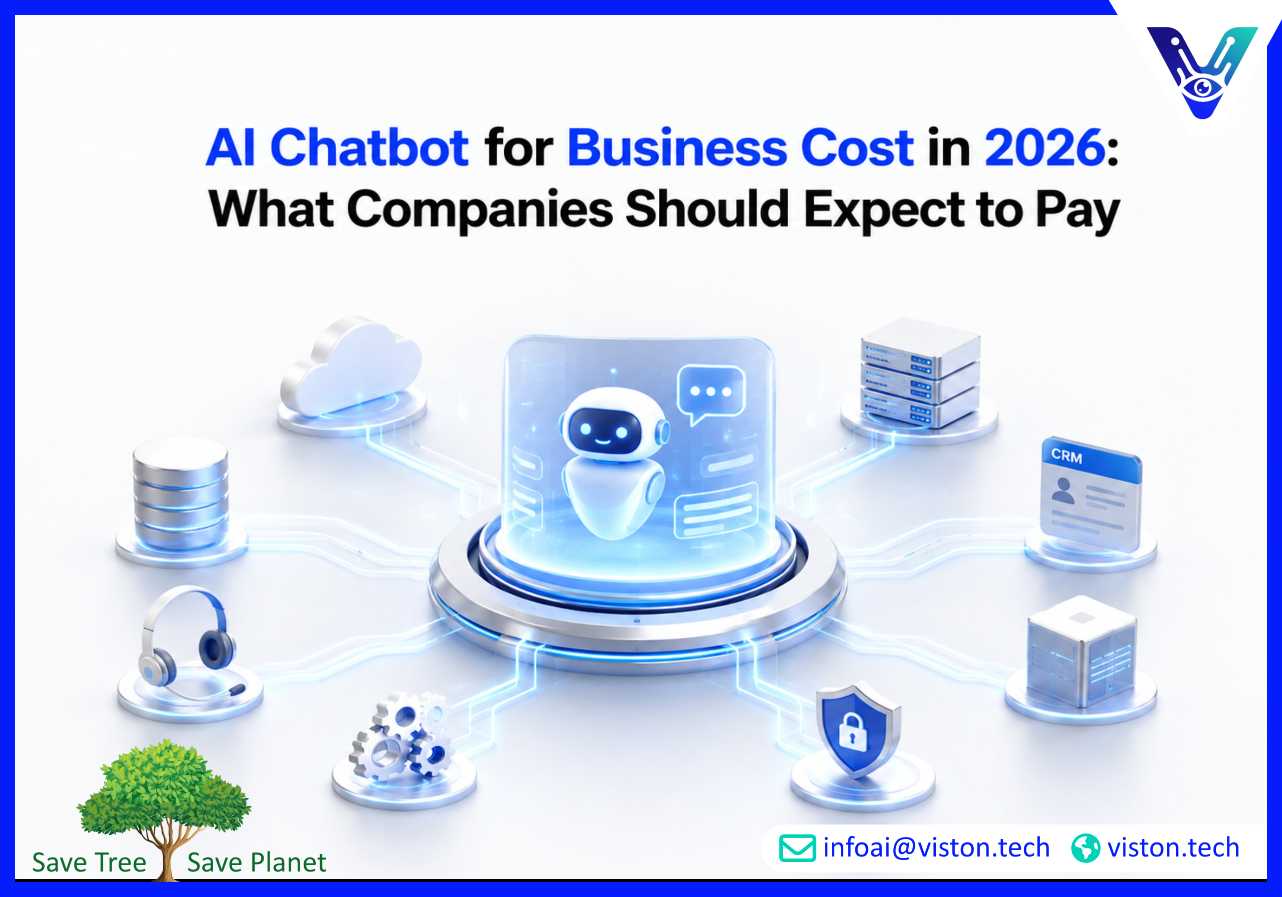
AI Chatbot for Business Cost in 2026: What Companies Should Expect to Pay
As AI adoption accelerates across industries, businesses are increasingly investing in chatbot technology to automate customer interactions, improve efficiency, and enhance customer experiences. However, one of the most common questions decision-makers ask is: how much does an AI chatbot for business cost? The answer depends on multiple factors, including integration requirements, customization, AI capabilities, and long-term scalability.
What Determines AI Chatbot for Business Cost?
The cost of an AI chatbot is influenced by far more than the chatbot itself. Modern business chatbots often operate as integrated systems connected to websites, CRM platforms, customer support tools, databases, and communication channels.Several factors affect overall investment:
Business objectives and use cases
Level of AI sophistication
Number of integrations required
Custom workflow development
Multi-channel deployment requirements
Security and compliance needs
Reporting and analytics capabilities
Ongoing maintenance and optimization
Organizations that clearly define their requirements early typically achieve better implementation outcomes and more predictable budgets.
Common AI Chatbot Cost Models in 2026
Subscription-Based Chatbot Platforms
Many businesses start with SaaS chatbot platforms that provide pre-built functionality and monthly pricing models.These solutions are often suitable for:
Small businesses
Startups
Basic customer support automation
Simple lead generation workflows
Frequently asked questions
Monthly costs typically increase based on conversation volume, user count, AI features, and integration requirements.
Custom AI Chatbot Development
Organizations with complex business processes often require custom chatbot development and integration.This approach may include:
Custom conversational workflows
CRM integration
ERP connectivity
Knowledge base integration
Industry-specific automation
Advanced AI capabilities
Custom reporting dashboards
Custom solutions generally involve higher initial investment but provide greater flexibility, scalability, and long-term business value.
Enterprise AI Chatbot Solutions
Large organizations often require enterprise-grade chatbot ecosystems that support multiple departments, business units, and customer channels.Enterprise deployments frequently include:
Advanced AI and machine learning capabilities
Multi-language support
Omnichannel communication
Role-based access controls
Compliance management
Enterprise security frameworks
Workflow automation
These implementations typically require significant planning, integration, and governance.
Key Cost Drivers Businesses Often Overlook
System Integration Requirements
One of the largest cost factors is integration with existing business systems. A chatbot that simply answers questions differs significantly from a chatbot that retrieves customer information, creates support tickets, updates CRM records, and triggers automated workflows.Integration complexity often affects:
Development effort
Testing requirements
Security implementation
Maintenance costs
Deployment timelines
Data Preparation and Knowledge Management
AI chatbots rely on quality information. Businesses frequently underestimate the effort required to organize knowledge bases, documentation, support content, and internal resources.Well-structured data improves:
Response accuracy
User satisfaction
Automation effectiveness
Customer trust
Ongoing Optimization
Successful AI chatbot implementations are not one-time projects. Continuous monitoring, conversation analysis, workflow improvements, and AI model refinement contribute significantly to long-term performance.Businesses should budget for:
Performance reviews
Conversation optimization
Feature enhancements
Security updates
System upgrades
New integrations
How AI Chatbot Integration Impacts ROI
While cost is an important consideration, business leaders should evaluate chatbot investments through the lens of return on investment.Well-integrated AI chatbots can help organizations:
Reduce customer support workloads
Improve response times
Increase lead generation efficiency
Provide 24/7 customer assistance
Improve customer satisfaction
Reduce repetitive manual tasks
Scale customer interactions without proportional staffing increases
The greatest value often comes from integration rather than automation alone. A chatbot connected to business systems can perform meaningful actions rather than simply providing information.
Budget Planning Considerations for 2026
Businesses evaluating AI chatbot investments should focus on total cost of ownership rather than initial deployment expenses.A practical budgeting framework includes:
Platform licensing costs
Integration development costs
AI model usage fees
Infrastructure requirements
Training and onboarding expenses
Maintenance and support costs
Optimization and enhancement budgets
Organizations that plan for long-term growth often avoid costly redevelopment projects later.
Why AI Chatbot Integration Matters More Than Chatbot Cost Alone
Many businesses focus exclusively on chatbot pricing, but integration quality often determines whether the project succeeds.An inexpensive chatbot with limited connectivity may deliver little business value. Conversely, a properly integrated AI chatbot can streamline workflows, improve customer experiences, and support measurable operational improvements.Businesses should evaluate providers based on:
Integration expertise
Scalability capabilities
Security standards
Workflow automation knowledge
Platform flexibility
Support services
Industry experience
The ability to connect AI chatbots with existing business processes frequently has a greater impact on outcomes than software pricing alone.
How Viston AI Helps Businesses Implement Cost-Effective AI Chatbot Integration
For organizations exploring AI chatbot investments, Viston AI specializes in AI Chatbot Integration designed to connect conversational AI with real business operations. Rather than focusing solely on chatbot deployment, the company helps businesses integrate AI solutions with CRM platforms, customer support systems, internal knowledge bases, workflow automation tools, and other operational technologies.A successful AI chatbot strategy requires careful planning around integration architecture, security, scalability, user experience, and performance measurement. Viston AI supports businesses seeking practical chatbot implementations that align with operational goals while reducing the risks often associated with disconnected automation projects.As organizations increasingly adopt AI-powered customer engagement strategies in 2026, effective integration becomes a critical factor in achieving long-term value from chatbot investments. Businesses that prioritize system connectivity and workflow alignment are often better positioned to maximize both efficiency and return on investment.
Frequently Asked Questions
How much does an AI chatbot for business cost in 2026?
Costs vary significantly depending on features, integrations, customization requirements, and deployment scale. Businesses should evaluate both implementation costs and ongoing operational expenses.
What is the biggest factor affecting chatbot costs?
Integration complexity is often one of the largest cost drivers because connecting chatbots to CRM systems, databases, support tools, and business workflows requires specialized development and testing.
Are subscription chatbot platforms cheaper than custom solutions?
Subscription platforms generally have lower initial costs, but custom solutions may provide greater flexibility and long-term value for businesses with complex requirements.
Can AI chatbots reduce operational costs?
Yes. AI chatbots can automate repetitive tasks, improve response efficiency, reduce support workloads, and help organizations scale customer interactions more effectively.
Can Viston AI help businesses implement AI chatbot integrations?
Yes. Viston AI provides AI Chatbot Integration services that help businesses connect chatbot technology with existing systems, workflows, and customer engagement processes.
Conclusion
Understanding AI chatbot for business cost requires looking beyond software pricing and evaluating the broader integration, implementation, and operational requirements involved. In 2026, organizations increasingly view chatbots as part of larger automation and customer experience strategies rather than standalone tools. Businesses that invest in well-planned AI Chatbot Integration can achieve greater efficiency, improved customer engagement, and stronger long-term returns. For companies seeking connected, scalable AI solutions, Viston AI offers expertise in integrating chatbot technology with real business processes and systems.