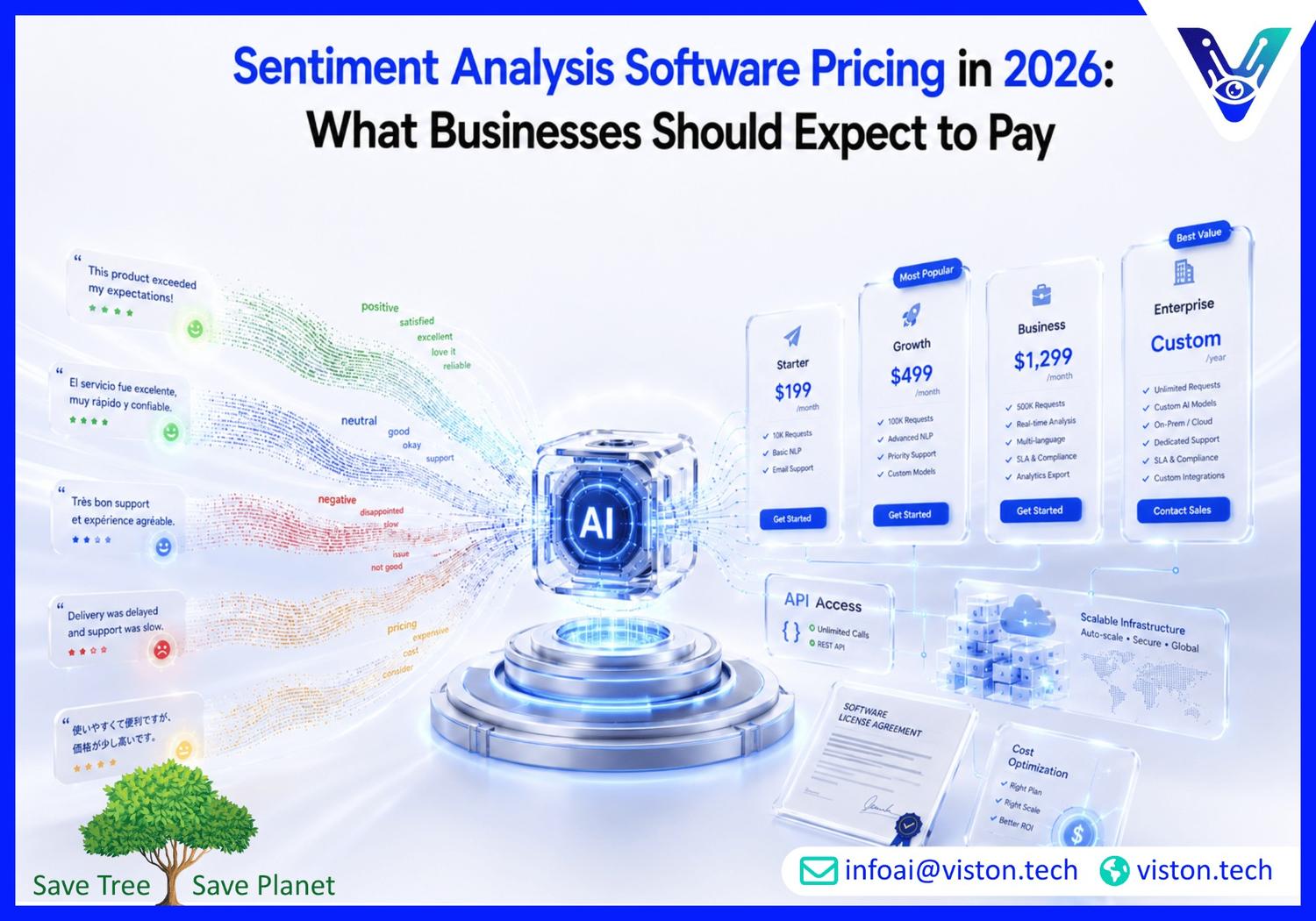
Sentiment Analysis Software Pricing in 2026: What Businesses Should Expect to Pay
As organizations increasingly rely on customer feedback, social media conversations, reviews, surveys, and support interactions to guide business decisions, sentiment analysis software has become a valuable investment. Understanding sentiment analysis software pricing is essential for businesses evaluating solutions that can transform unstructured customer opinions into actionable insights. In 2026, pricing models vary significantly depending on capabilities, data volume, integrations, accuracy requirements, and deployment needs.
What Is Sentiment Analysis Software?
Sentiment analysis software uses Natural Language Processing (NLP), machine learning, and artificial intelligence to identify emotions, opinions, and attitudes expressed within text data. Businesses use these platforms to understand whether customer feedback is positive, negative, or neutral while uncovering trends that impact customer experience and business performance.Modern sentiment analysis solutions can process information from:
Customer reviews
Social media platforms
Support tickets
Email communications
Survey responses
Chat conversations
Product feedback forms
Online forums and communities
Advanced platforms now support multilingual analysis, industry-specific sentiment models, real-time monitoring, intent detection, and predictive analytics.
Factors That Influence Sentiment Analysis Software Pricing
Pricing varies because different organizations have different analytical requirements. Several factors typically determine the final cost.
Data Volume
The amount of text processed each month significantly impacts pricing. Businesses analyzing thousands of customer interactions will generally pay less than enterprises processing millions of records daily.
Accuracy and AI Models
Basic sentiment classification is less expensive than advanced models capable of detecting sarcasm, context, emotion intensity, customer intent, and industry-specific language.
Integration Requirements
Organizations often require integrations with:
CRM systems
Customer support platforms
Marketing automation tools
Business intelligence software
Data warehouses
Contact center solutions
More integrations typically increase implementation and subscription costs.
Real-Time Analytics
Real-time sentiment monitoring demands greater processing power and infrastructure than batch analysis, resulting in higher pricing tiers.
Customization and Training
Businesses operating in specialized sectors such as healthcare, finance, legal services, or technology may require custom sentiment models trained on industry-specific datasets.
Common Sentiment Analysis Software Pricing Models
Software vendors typically offer several pricing approaches depending on their target market and deployment strategy.
Subscription-Based Pricing
This is the most common model in 2026. Businesses pay a recurring monthly or annual fee based on usage and features.Typical ranges include:
Small business plans: $50–$500 per month
Mid-market solutions: $500–$5,000 per month
Enterprise platforms: $5,000–$50,000+ per month
Usage-Based Pricing
Many cloud-based platforms charge according to the number of records, API calls, characters processed, or documents analyzed.This model benefits organizations with fluctuating workloads because costs scale with actual usage.
API Pricing
Companies integrating sentiment analysis into applications often purchase API access. Pricing is typically based on:
Number of requests
Characters processed
Monthly transaction volume
Processing speed requirements
Custom Enterprise Licensing
Large enterprises frequently negotiate custom contracts that include:
Dedicated infrastructure
Security controls
Compliance requirements
Custom AI model development
Professional services
Technical support agreements
What Features Justify Higher Pricing?
Not all sentiment analysis platforms provide the same level of business value. Premium solutions generally include capabilities that improve insight quality and operational efficiency.
Emotion Detection
Beyond simple positive or negative classification, advanced systems identify emotions such as frustration, satisfaction, excitement, disappointment, and urgency.
Multilingual Processing
Global organizations increasingly require sentiment analysis across multiple languages while maintaining accuracy and contextual understanding.
Aspect-Based Sentiment Analysis
This capability identifies sentiment toward specific products, services, features, or business areas rather than providing a general sentiment score.
Real-Time Monitoring
Businesses can respond quickly to emerging issues, brand reputation concerns, and customer experience challenges as they occur.
Predictive Insights
Modern AI-powered platforms can identify patterns that indicate churn risk, customer dissatisfaction, or potential opportunities before they become visible through traditional reporting.
Pricing is only one factor in selecting the right solution. Organizations should evaluate software based on business outcomes and long-term value.Key evaluation criteria include:
Model accuracy and reliability
Scalability for future growth
Data security standards
Compliance capabilities
Integration flexibility
Reporting and visualization tools
Customization options
Technical support quality
Implementation complexity
Total cost of ownership
Businesses that focus exclusively on subscription costs may overlook hidden expenses related to deployment, maintenance, integration, and data management.
How Viston AI Supports Sentiment Analysis Initiatives
Organizations seeking sentiment analysis capabilities often require more than simple text classification. They need solutions that align with business objectives, customer experience strategies, operational workflows, and data-driven decision-making.Viston AI specializes in sentiment analysis solutions that help organizations extract meaningful insights from customer interactions, feedback channels, reviews, support conversations, and other unstructured text sources. By combining advanced NLP technologies, machine learning models, and scalable AI infrastructure, businesses can gain deeper visibility into customer perceptions and market sentiment.For companies looking to improve customer satisfaction, strengthen brand reputation management, automate feedback analysis, or enhance decision-making processes, sentiment analysis capabilities can become a valuable component of broader AI and data intelligence initiatives. As organizations generate increasing volumes of textual data in 2026, scalable sentiment analysis solutions can help transform that information into measurable business intelligence and operational improvements.When evaluating sentiment analysis investments, businesses should prioritize solution fit, implementation requirements, analytical depth, and long-term scalability rather than focusing solely on software pricing.
Frequently Asked Questions
How much does sentiment analysis software typically cost?
Pricing ranges from approximately $50 per month for basic solutions to over $50,000 per month for enterprise-grade platforms with advanced analytics, customization, and large-scale processing capabilities.
What affects sentiment analysis software pricing the most?
Data volume, AI model sophistication, real-time processing requirements, integrations, customization needs, and support services are among the biggest pricing factors.
Is API-based sentiment analysis cheaper than full software platforms?
API-based solutions can be more cost-effective for organizations building custom applications, but total costs depend on usage volume and development requirements.
Can sentiment analysis software support multiple languages?
Many modern platforms offer multilingual capabilities, although advanced language support and higher accuracy models may increase subscription costs.
Is sentiment analysis suitable for small businesses?
Yes. Many vendors offer entry-level plans that allow smaller organizations to analyze customer feedback and monitor brand sentiment without significant upfront investment.
How can Viston AI help with sentiment analysis projects?
Viston AI provides sentiment analysis solutions designed to help businesses convert large volumes of textual data into actionable insights that support customer experience improvement, operational efficiency, and informed decision-making.
Conclusion
Understanding sentiment analysis software pricing requires evaluating more than monthly subscription costs. Factors such as scalability, accuracy, integrations, customization, security, and business outcomes play an important role in determining overall value. As customer expectations continue to evolve in 2026, sentiment analysis solutions are becoming essential tools for organizations seeking deeper insight into customer opinions and market perception. Businesses that choose solutions aligned with their operational needs and growth objectives are more likely to achieve measurable returns from their sentiment analysis investments. For organizations exploring advanced sentiment analysis capabilities, Viston AI offers specialized solutions designed to support meaningful business intelligence and customer insight initiatives.