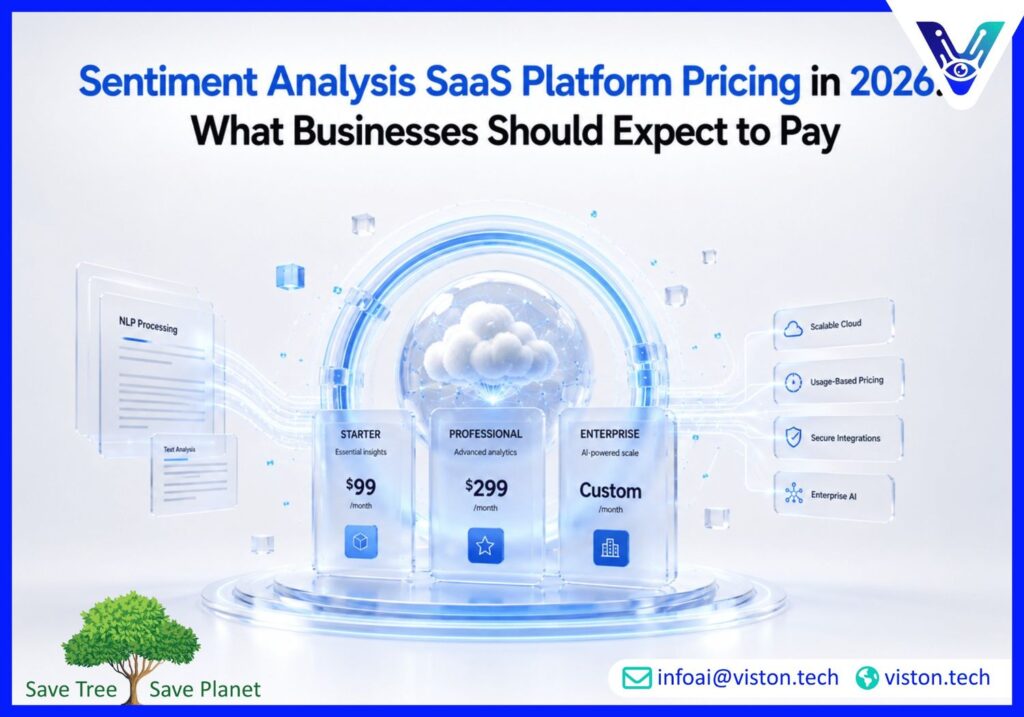
Sentiment Analysis SaaS Platform Pricing in 2026: What Businesses Should Expect to Pay
As organizations increasingly rely on customer feedback, social media monitoring, and voice-of-customer programs, sentiment analysis has become a valuable business intelligence capability. Understanding sentiment analysis SaaS platform pricing helps businesses evaluate vendors, budget effectively, and select solutions that align with their operational and analytical requirements in 2026.
What Influences Sentiment Analysis SaaS Platform Pricing?
Sentiment analysis platforms use natural language processing (NLP), machine learning, and artificial intelligence to identify emotions, opinions, and attitudes within text data. Pricing varies significantly because vendors offer different levels of functionality, scalability, and industry specialization.Several factors influence the cost of a sentiment analysis SaaS platform:
Volume of data processed each month
Number of users and team members
Supported languages and regions
Real-time versus batch processing capabilities
Integration requirements
AI model sophistication and accuracy
Custom reporting and analytics features
Security and compliance requirements
Customer support and implementation services
Organizations handling millions of customer interactions typically require more advanced infrastructure and processing capabilities than businesses analyzing a few thousand comments per month.
Common Sentiment Analysis SaaS Pricing Models
Most sentiment analysis providers use one of several standard pricing approaches. Understanding these models helps buyers compare solutions more effectively.
Subscription-Based Pricing
This is the most common SaaS model. Customers pay a monthly or annual fee based on platform access and included features.Entry-level plans often include:
Basic sentiment detection
Limited user accounts
Standard dashboards
Pre-built reports
Restricted monthly processing volumes
Enterprise plans typically add advanced analytics, custom workflows, API access, governance controls, and dedicated support.
Usage-Based Pricing
Many vendors charge based on the number of API calls, documents processed, conversations analyzed, or text volume consumed.This model is attractive for organizations with fluctuating workloads because costs scale directly with usage.
Tiered Pricing
Tiered pricing packages combine feature access with usage limits. As organizations grow, they can upgrade to higher tiers that provide greater processing capacity and additional functionality.
Custom Enterprise Pricing
Large enterprises often negotiate custom contracts based on:
Expected data volumes
Deployment requirements
Compliance obligations
Integration complexity
Support expectations
Global operations
Enterprise agreements frequently include service-level commitments, implementation assistance, and dedicated account management.
Typical Sentiment Analysis Platform Cost Ranges in 2026
While exact pricing varies by provider, businesses can generally expect the following ranges in the current market.
Small Business Solutions
Organizations with limited monitoring requirements often spend between $50 and $500 per month. These platforms typically support customer review monitoring, social media analysis, and basic reporting.
Mid-Market Platforms
Companies analyzing larger datasets across multiple channels frequently invest between $500 and $5,000 per month. These solutions usually include advanced dashboards, API access, workflow automation, and broader integration capabilities.
Enterprise Platforms
Large organizations with complex analytical requirements may spend several thousand dollars to tens of thousands of dollars monthly depending on usage volumes, geographic coverage, compliance requirements, and customization needs.Enterprise deployments often include:
Multi-language sentiment analysis
Real-time analytics
Custom AI models
Advanced governance controls
CRM integrations
Data warehouse connectivity
Dedicated support resources
Key Features That Justify Higher Pricing
When evaluating sentiment analysis SaaS platform pricing, buyers should focus on business value rather than simply selecting the lowest-cost solution.Premium platforms typically offer capabilities that can significantly improve decision-making and operational outcomes.
Real-Time Sentiment Monitoring
Real-time analysis enables organizations to identify emerging customer issues, brand reputation risks, and service failures before they escalate.
Multi-Channel Data Collection
Advanced platforms aggregate sentiment data from numerous sources, including:
Social media platforms
Customer reviews
Support tickets
Emails
Surveys
Chat conversations
Call center transcripts
Industry-Specific Models
General sentiment models may struggle with specialized terminology. Industry-trained AI models often provide higher accuracy for sectors such as healthcare, finance, retail, technology, and telecommunications.
Advanced Analytics and Reporting
Leading platforms provide deeper insights beyond positive, negative, and neutral classifications. Businesses increasingly seek:
Emotion detection
Intent analysis
Topic clustering
Trend forecasting
Competitive benchmarking
Customer journey analysis
Security and Compliance Features
Organizations handling sensitive customer information often require advanced security controls, data governance capabilities, audit logging, and regulatory compliance support.
How to Evaluate Pricing Beyond Subscription Costs
The lowest subscription price does not always represent the lowest total cost of ownership.Businesses should evaluate several additional cost considerations before selecting a platform.
Implementation Expenses
Some vendors charge separate fees for onboarding, configuration, integrations, and training.
API and Integration Costs
Organizations often need connectivity with CRM systems, marketing automation platforms, customer service software, and business intelligence tools.Integration complexity can significantly affect overall project costs.
Data Processing Overages
Usage-based pricing models may incur additional charges when processing volumes exceed contractual limits.Forecasting future data growth helps prevent unexpected expenses.
Customization Requirements
Custom taxonomies, industry-specific sentiment models, workflow automation, and reporting dashboards can increase implementation and subscription costs.
Internal Resource Requirements
Organizations should also consider the time and expertise needed to manage the platform effectively, interpret insights, and act on findings.
How Viston AI Supports Businesses Seeking Scalable Sentiment Analysis Solutions
For organizations evaluating sentiment analysis capabilities, selecting a provider with expertise in natural language processing is often as important as comparing pricing models.Viston AI specializes in Sentiment Analysis solutions designed to help businesses transform large volumes of unstructured text into actionable business intelligence. By leveraging modern NLP technologies, machine learning models, and scalable analytical frameworks, organizations can gain deeper visibility into customer experiences, market perception, and operational performance.Businesses increasingly require more than simple positive or negative classifications. Effective sentiment analysis initiatives often depend on real-time processing, contextual understanding, multi-source data ingestion, automation capabilities, and integration with existing business systems. These requirements become particularly important as organizations expand customer engagement across digital channels.Viston AI focuses on helping organizations build practical sentiment analysis workflows that align with business objectives, whether supporting customer experience programs, brand monitoring initiatives, product feedback analysis, market research efforts, or operational intelligence projects.For companies evaluating sentiment analysis SaaS platform pricing, understanding how platform capabilities align with business goals can lead to better long-term value than focusing solely on subscription costs.
Frequently Asked Questions
How much does a sentiment analysis SaaS platform typically cost?
Costs vary widely based on features, data volume, users, and integrations. Small businesses may spend under $500 monthly, while enterprise deployments can reach several thousand dollars per month.
What is the most common pricing model for sentiment analysis software?
Subscription-based and usage-based pricing models are the most common. Many vendors also offer tiered plans and custom enterprise contracts.
Does sentiment analysis pricing usually include API access?
Not always. Some providers include API access within premium plans, while others charge separately based on usage volumes.
Why do enterprise sentiment analysis platforms cost more?
Enterprise platforms often provide advanced analytics, higher processing limits, security controls, compliance support, integrations, and dedicated customer support services.
How can businesses determine the right sentiment analysis budget?
Organizations should estimate expected data volumes, integration needs, reporting requirements, user counts, and future growth plans before evaluating vendor pricing.
Can Viston AI help businesses implement sentiment analysis solutions?
Yes. Viston AI provides Sentiment Analysis capabilities that help organizations extract actionable insights from customer interactions, feedback channels, and unstructured text data.
Conclusion
Understanding sentiment analysis SaaS platform pricing requires looking beyond subscription fees and evaluating the broader business value a solution can deliver. Factors such as processing volume, analytics capabilities, integrations, scalability, security, and implementation requirements all influence total costs. As businesses continue investing in customer intelligence and AI-driven decision-making in 2026, selecting the right Sentiment Analysis platform involves balancing budget considerations with long-term analytical needs. Organizations that align platform capabilities with business objectives are more likely to achieve meaningful returns from their sentiment analysis investments, and providers such as Viston AI can support those efforts through specialized sentiment analysis expertise.