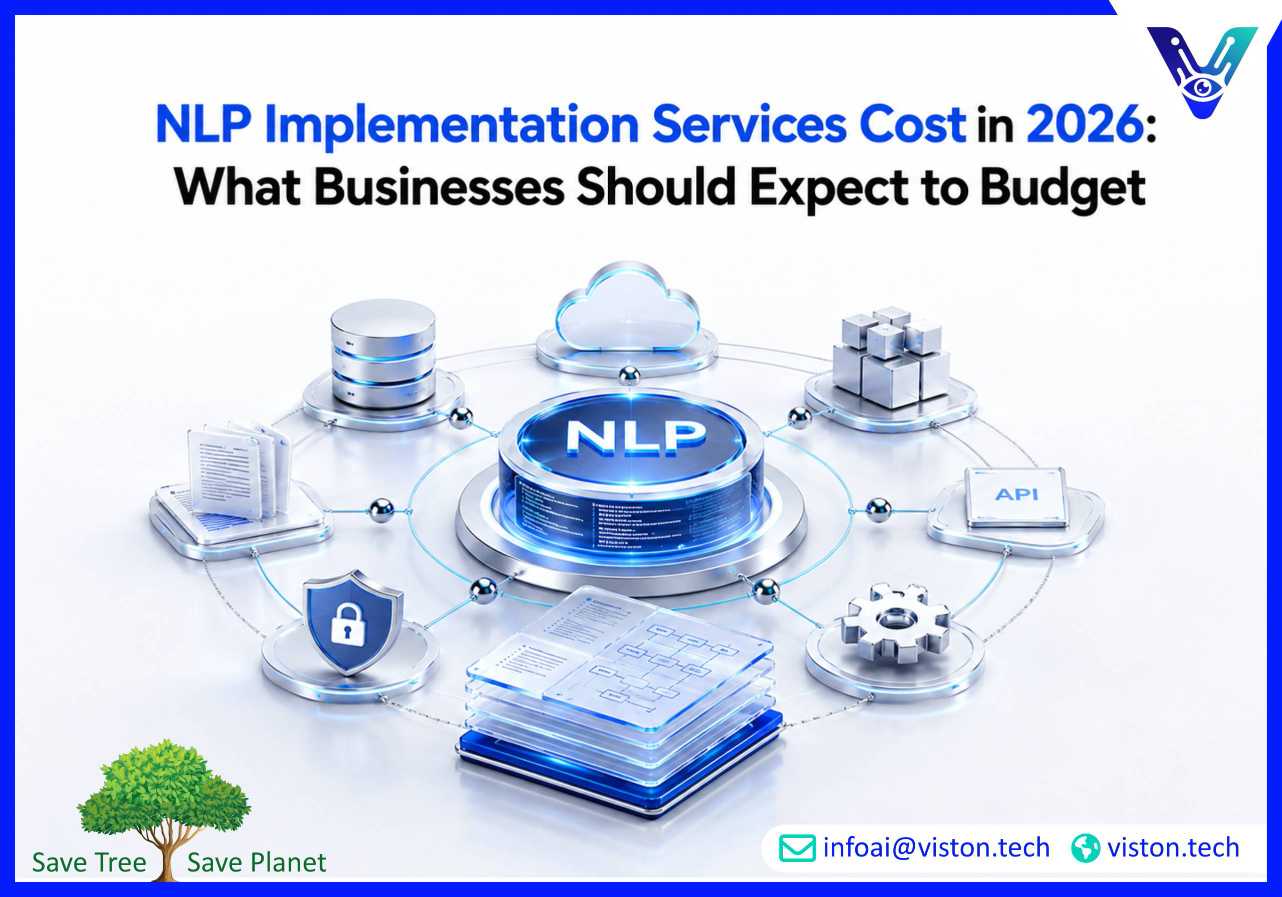
NLP Implementation Services Cost in 2026: What Businesses Should Expect to Budget
Natural Language Processing (NLP) has become a core technology for organizations looking to automate communication, analyze text data, improve customer experiences, and build intelligent business applications. However, one of the most common questions decision-makers ask is: how much do NLP implementation services cost? The answer depends on project scope, complexity, integration requirements, data readiness, and long-term business objectives. Understanding the key cost drivers helps organizations plan investments more effectively and avoid unexpected implementation challenges.
What Influences NLP Implementation Services Cost?
NLP implementation is not a one-size-fits-all service. Costs vary significantly depending on business requirements and technical complexity.The primary factors that influence NLP implementation services cost include:
Project objectives and business use cases
Volume and quality of data
Custom model development requirements
Third-party integrations
Cloud infrastructure needs
Security and compliance requirements
Deployment environment
Ongoing optimization and support
A simple document classification solution typically requires less investment than a multilingual conversational AI platform integrated with enterprise systems.
Business Objectives Drive Scope
The intended use of NLP technology significantly impacts implementation costs. Organizations may use NLP for:
Customer support automation
AI-powered chatbots
Sentiment analysis
Document processing
Knowledge management systems
Contract analysis
Email classification
Voice-to-text workflows
Search and recommendation engines
Each use case requires different levels of development, training, testing, and integration effort.
Typical NLP Implementation Cost Components
Businesses evaluating NLP implementation services should understand where costs are typically allocated.
Discovery and Requirements Analysis
The initial phase involves understanding business goals, workflows, data sources, integration requirements, and expected outcomes.Activities may include:
Stakeholder workshops
Technical assessments
Data audits
Architecture planning
Risk evaluation
This stage helps reduce project risks and establishes a clear implementation roadmap.
Data Preparation and Management
Data often represents one of the largest components of NLP implementation.Organizations frequently need assistance with:
Data collection
Data cleansing
Labeling and annotation
Data normalization
Data governance
Privacy compliance
Poor-quality data can significantly increase implementation timelines and costs.
Model Development and Customization
Businesses can choose between pre-trained NLP models and custom-developed solutions.Pre-trained models generally reduce costs and accelerate deployment. Custom NLP models may require:
Domain-specific training
Industry terminology adaptation
Fine-tuning large language models
Performance optimization
Advanced testing procedures
The more specialized the use case, the greater the customization effort required.
System Integration Costs
Most NLP projects require integration with existing business systems.Common integrations include:
CRM platforms
ERP systems
Customer support tools
Knowledge bases
Business intelligence platforms
Communication channels
Workflow automation systems
Integration complexity often becomes a major cost factor in enterprise implementations.
Expected NLP Implementation Cost Ranges in 2026
While every project is unique, businesses can use the following ranges as general planning guidance.
Small NLP Projects
Organizations implementing basic NLP functionality such as text classification, simple chatbots, or sentiment analysis can typically expect lower implementation costs.
Limited integrations
Standard NLP models
Small datasets
Focused use cases
These projects are often suitable for pilot programs and proof-of-concept initiatives.
Mid-Sized NLP Implementations
Businesses requiring broader automation and multiple integrations typically fall into a mid-range investment category.
Custom workflows
Multiple data sources
Advanced analytics
Customer-facing applications
Cross-department functionality
These implementations often deliver measurable operational improvements and scalability benefits.
Enterprise NLP Solutions
Large-scale NLP deployments generally involve:
Complex business processes
Large language model integration
Multi-language support
Enterprise security controls
Compliance requirements
High-volume transaction processing
Global deployment environments
Enterprise projects require extensive planning, governance, testing, and ongoing optimization, resulting in higher implementation investments.
Hidden Costs Businesses Should Consider
Many organizations focus solely on development costs and overlook operational expenses associated with NLP deployments.
Infrastructure and Cloud Usage
NLP solutions often rely on cloud platforms, AI inference services, storage systems, and monitoring tools.Ongoing infrastructure costs may include:
Compute resources
Model hosting
API usage fees
Data storage
Network traffic
Backup systems
Model Maintenance and Optimization
Language evolves constantly. NLP systems require ongoing maintenance to preserve performance and accuracy.Typical maintenance activities include:
Model retraining
Performance monitoring
Error analysis
Dataset updates
Security patching
Feature enhancements
Compliance and Security Requirements
Organizations operating in regulated industries often face additional implementation costs related to:
Data privacy controls
Access management
Audit logging
Regulatory reporting
Risk assessments
Data residency requirements
These considerations are increasingly important in 2026 as AI governance expectations continue to evolve.
How Businesses Can Control NLP Implementation Costs
Successful NLP projects balance innovation with practical business value.
Start with Clearly Defined Use Cases
Organizations should avoid attempting to solve every business challenge at once. Focusing on high-impact use cases allows teams to demonstrate value before expanding investments.
Leverage Existing Models Where Appropriate
Many NLP applications can benefit from proven foundation models rather than building custom solutions from scratch.This approach often reduces:
Development time
Training costs
Infrastructure requirements
Project risks
Prioritize Integration Planning
Unexpected integration challenges frequently drive budget overruns. Early technical assessments help identify system dependencies and implementation risks.
Invest in Data Readiness
Well-structured, high-quality data often delivers better outcomes while reducing development and maintenance costs.
How Viston AI Helps Businesses Implement NLP Solutions Effectively
Organizations exploring NLP implementation services often require more than technical development. They need practical solutions that align with business goals, integrate with existing systems, and deliver measurable outcomes.Viston AI specializes in Natural Language Processing Solutions that help businesses transform unstructured language data into actionable insights and automated workflows. Whether the objective involves intelligent document processing, conversational AI, sentiment analysis, knowledge management, text classification, or language-driven automation, successful implementation depends on careful planning, scalable architecture, and strong integration capabilities.By focusing on business requirements, data quality, workflow alignment, and long-term scalability, Viston AI supports organizations seeking reliable NLP implementations that can evolve alongside changing operational needs. As AI adoption accelerates across industries in 2026, businesses increasingly benefit from implementation strategies that emphasize accuracy, security, maintainability, and measurable business value rather than simply deploying technology for its own sake.
Frequently Asked Questions
How much do NLP implementation services typically cost?
Costs vary based on project scope, data complexity, integrations, customization requirements, and deployment scale. Small projects generally require lower investments than enterprise-wide NLP initiatives.
What is the biggest cost factor in NLP implementation?
Data preparation and system integration are often among the most significant cost drivers, especially when organizations have multiple data sources or complex business processes.
Can businesses reduce NLP implementation costs?
Yes. Clearly defined use cases, high-quality data, phased deployment strategies, and leveraging existing NLP models can help control implementation expenses.
Do NLP solutions require ongoing maintenance?
Yes. NLP systems typically require monitoring, optimization, model updates, security management, and performance improvements to maintain effectiveness over time.
Can Viston AI support custom NLP implementation projects?
Yes. Viston AI provides Natural Language Processing Solutions that support business-specific requirements, integrations, automation initiatives, and scalable AI-driven workflows.
Conclusion
Understanding NLP implementation services cost requires looking beyond initial development expenses and considering data preparation, integration requirements, infrastructure, security, and long-term maintenance. The most successful NLP projects focus on solving specific business challenges while delivering measurable operational value. As Natural Language Processing Solutions continue to play a larger role in automation, analytics, and customer engagement throughout 2026, organizations that plan strategically and invest in scalable implementation approaches will be better positioned to maximize returns. Businesses seeking expert support can benefit from working with specialists such as Viston AI to develop NLP solutions aligned with practical business objectives and sustainable growth.