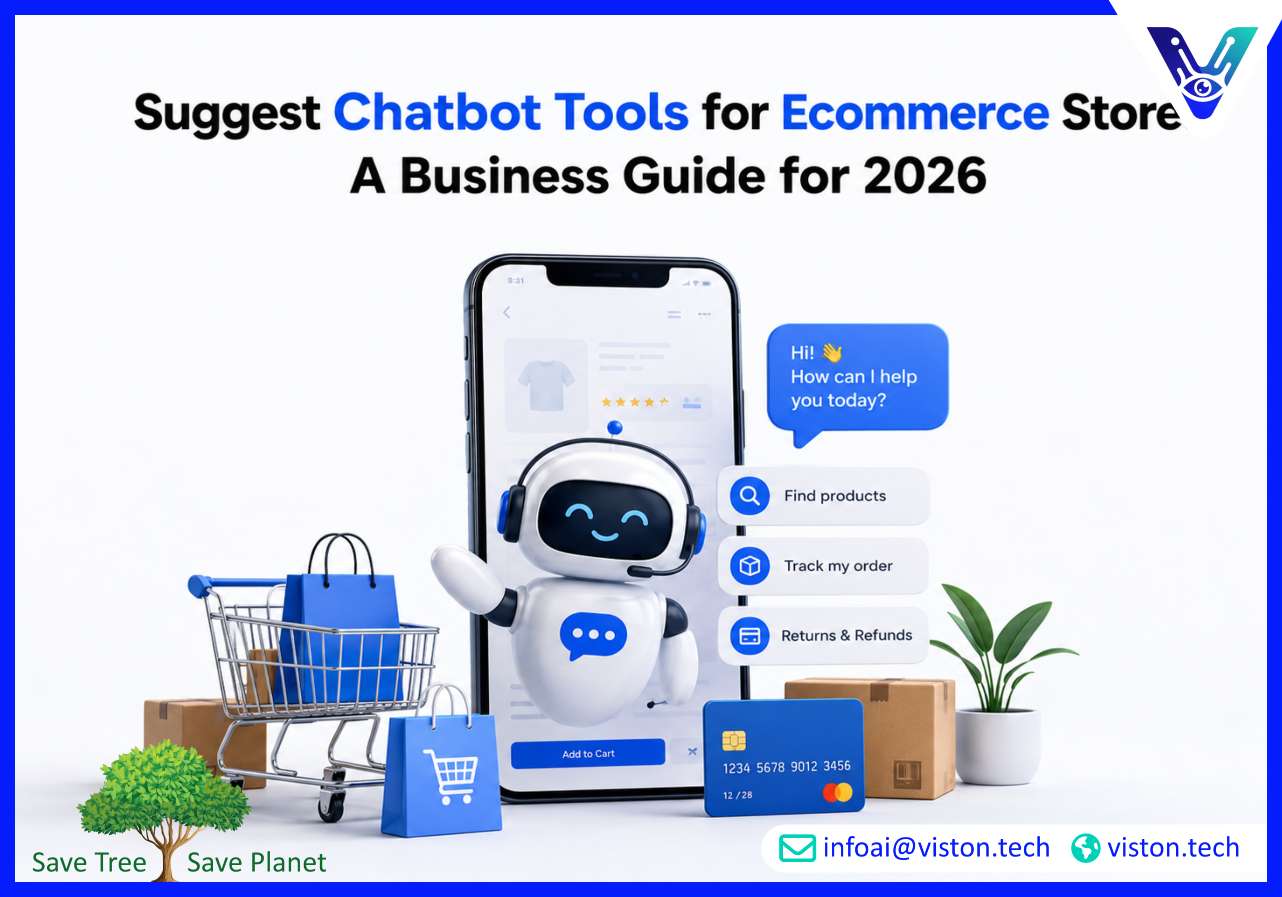
Suggest Chatbot Tools for Ecommerce Store: A Business Guide for 2026
Ecommerce businesses are under constant pressure to deliver faster customer support, personalized shopping experiences, and higher conversion rates. As online competition continues to increase in 2026, AI-powered chatbots have become a practical tool for automating customer interactions, reducing operational workload, and improving the overall shopping journey. Choosing the right chatbot platform, however, requires understanding your business goals, integration requirements, and customer expectations.
Why Ecommerce Businesses Are Investing in AI Chatbots
Modern ecommerce customers expect immediate responses regardless of time zones, business hours, or support team availability. AI chatbots help retailers provide real-time assistance while maintaining consistent service quality across multiple digital channels.Common ecommerce objectives supported by chatbots include:
Product discovery and recommendations
Order tracking and delivery updates
Customer support automation
Cart abandonment recovery
Lead generation and qualification
Upselling and cross-selling opportunities
Returns and refund assistance
Customer onboarding and engagement
Businesses that implement chatbot solutions strategically often improve customer satisfaction while reducing repetitive support workloads.
Top Chatbot Tools for Ecommerce Stores in 2026
The best chatbot platform depends on business size, sales volume, technical requirements, and integration needs. The following tools are commonly used by ecommerce businesses to support customer engagement and sales automation.
1. Shopify Inbox
Shopify Inbox is a practical option for businesses operating within the Shopify ecosystem. It allows merchants to communicate directly with customers, answer product questions, and manage conversations from a centralized dashboard.Suitable for:
Small and medium-sized Shopify stores
Basic customer support automation
Product inquiry management
2. Tidio
Tidio combines live chat functionality with AI-powered chatbot capabilities. Its visual workflow builder makes it attractive for businesses seeking automation without extensive development resources.Key capabilities include:
Customer support automation
Lead generation workflows
Multichannel messaging
Ecommerce platform integrations
3. Intercom
Intercom is widely used by growing ecommerce brands that require advanced customer engagement, personalized messaging, and automated support processes.Popular features include:
AI-powered support assistants
Customer segmentation
Behavior-based messaging
Knowledge base integration
4. Zendesk AI
Businesses managing large customer service operations often use Zendesk AI to automate ticket handling, self-service support, and customer inquiries.Benefits include:
Helpdesk integration
Automated ticket routing
AI-generated responses
Customer service analytics
5. ManyChat
ManyChat specializes in conversational commerce across social media platforms such as Instagram, Facebook Messenger, and WhatsApp.Ideal for:
Social commerce businesses
Marketing automation
Lead capture campaigns
Promotional messaging workflows
6. Drift
Although traditionally associated with B2B environments, Drift can support ecommerce businesses focused on high-value products and personalized sales engagement.Key use cases include:
Sales qualification
Product consultations
Customer engagement automation
Lead nurturing workflows
7. Custom AI Chatbots
Many growing ecommerce companies are moving beyond off-the-shelf chatbot tools and investing in custom AI chatbot development. Custom solutions allow businesses to connect directly with inventory systems, CRM platforms, order management software, customer databases, and proprietary business workflows.This approach provides greater flexibility, personalization, and scalability compared to generic chatbot platforms.
How to Choose the Right Ecommerce Chatbot Tool
Selecting a chatbot should be based on business requirements rather than platform popularity. The right solution aligns with operational goals and customer experience expectations.
Define Your Primary Objective
Businesses should first identify the primary outcome they want to achieve.
Reduce support tickets
Increase sales conversions
Improve product discovery
Automate order management
Support customer retention
Different chatbot tools are optimized for different objectives.
Evaluate Integration Capabilities
Modern ecommerce operations rely on multiple software platforms. Chatbots should integrate seamlessly with:
CRM systems
Ecommerce platforms
Inventory management tools
Payment gateways
Customer support systems
Marketing automation platforms
Integration quality often determines the long-term effectiveness of a chatbot solution.
Consider AI and Personalization Features
Customers increasingly expect personalized shopping experiences. AI-powered chatbots can analyze customer behavior, purchase history, and browsing activity to provide more relevant recommendations.Important capabilities include:
Natural language understanding
Product recommendation engines
Customer segmentation
Intent recognition
Context-aware conversations
Assess Scalability Requirements
A chatbot solution should support future business growth. Businesses should evaluate:
Conversation volume limits
Multi-language support
Omnichannel capabilities
Workflow expansion options
Advanced reporting functionality
Scalability becomes particularly important during seasonal sales periods and rapid business expansion.
Common Ecommerce Chatbot Use Cases
Successful chatbot implementations often focus on specific customer journeys where automation creates measurable value.
Product Recommendation Assistance
AI chatbots can help shoppers discover products based on preferences, budget, and requirements, creating a more personalized buying experience.
Order Tracking and Status Updates
One of the most common customer inquiries relates to order status. Chatbots can provide instant updates without involving support teams.
Cart Recovery Automation
Automated chatbot conversations can engage customers who abandon shopping carts and encourage purchase completion.
Customer Support Automation
Routine questions regarding shipping, returns, payments, and product details can be resolved through automated conversations.
Post-Purchase Engagement
Chatbots can support customer retention through follow-up communications, product recommendations, and loyalty program interactions.
How AI Chatbot Development Creates Competitive Advantages
While many ecommerce businesses start with prebuilt chatbot platforms, growing retailers often require capabilities beyond standard templates. Custom AI chatbot development enables businesses to create conversational experiences aligned with their specific products, customer journeys, and operational workflows.Custom development allows deeper integrations, advanced automation, improved personalization, and greater control over customer interactions. Businesses can design workflows that reflect their sales process, support requirements, and brand experience while maintaining flexibility for future enhancements.As ecommerce technology continues to evolve in 2026, organizations increasingly view chatbot development as a strategic investment rather than simply a customer support tool.
How Viston AI Supports Ecommerce AI Chatbot Development
For ecommerce businesses seeking tailored conversational AI solutions, Viston AI specializes in AI chatbot development designed around real business workflows, customer journeys, and operational objectives. Rather than relying solely on generic chatbot templates, businesses often require solutions that integrate with ecommerce platforms, CRM systems, inventory management software, customer support tools, and marketing automation platforms.Viston AI focuses on building scalable chatbot solutions that support customer engagement, sales automation, support efficiency, lead qualification, and personalized shopping experiences. By combining AI capabilities with practical business integrations, ecommerce companies can create chatbot experiences that improve operational performance while delivering better customer interactions.As online retail competition intensifies, businesses increasingly benefit from chatbot solutions that provide measurable value through automation, personalization, and seamless system connectivity.
Frequently Asked Questions
Which chatbot tool is best for a small ecommerce store?
Tools such as Shopify Inbox and Tidio are often suitable for smaller ecommerce businesses because they offer straightforward setup, customer support automation, and ecommerce integrations.
Can chatbots increase ecommerce sales?
Yes. Chatbots can improve product discovery, answer customer questions instantly, recommend products, recover abandoned carts, and support personalized shopping experiences that contribute to higher conversions.
Do ecommerce chatbots integrate with CRM systems?
Many modern chatbot platforms support integrations with CRM systems, allowing businesses to personalize interactions and manage customer data more effectively.
Are custom AI chatbots better than prebuilt platforms?
Custom AI chatbots offer greater flexibility, deeper integrations, and tailored workflows. They are often preferred by growing businesses with complex operational requirements.
Can Viston AI develop custom ecommerce chatbots?
Yes. Viston AI provides AI chatbot development services that help ecommerce businesses build customized conversational solutions integrated with their existing systems, workflows, and customer engagement strategies.
Conclusion
Choosing the right chatbot tools for an ecommerce store depends on business goals, customer expectations, integration requirements, and long-term growth plans. While platforms such as Tidio, Intercom, Zendesk AI, Shopify Inbox, and ManyChat provide valuable capabilities, many businesses eventually require more tailored solutions through AI chatbot development. As ecommerce competition continues to evolve in 2026, organizations that invest in effective chatbot strategies can improve customer experiences, automate operations, and support sustainable business growth. For businesses seeking scalable and customized solutions, Viston AI offers expertise in AI chatbot development that aligns conversational technology with practical ecommerce objectives.