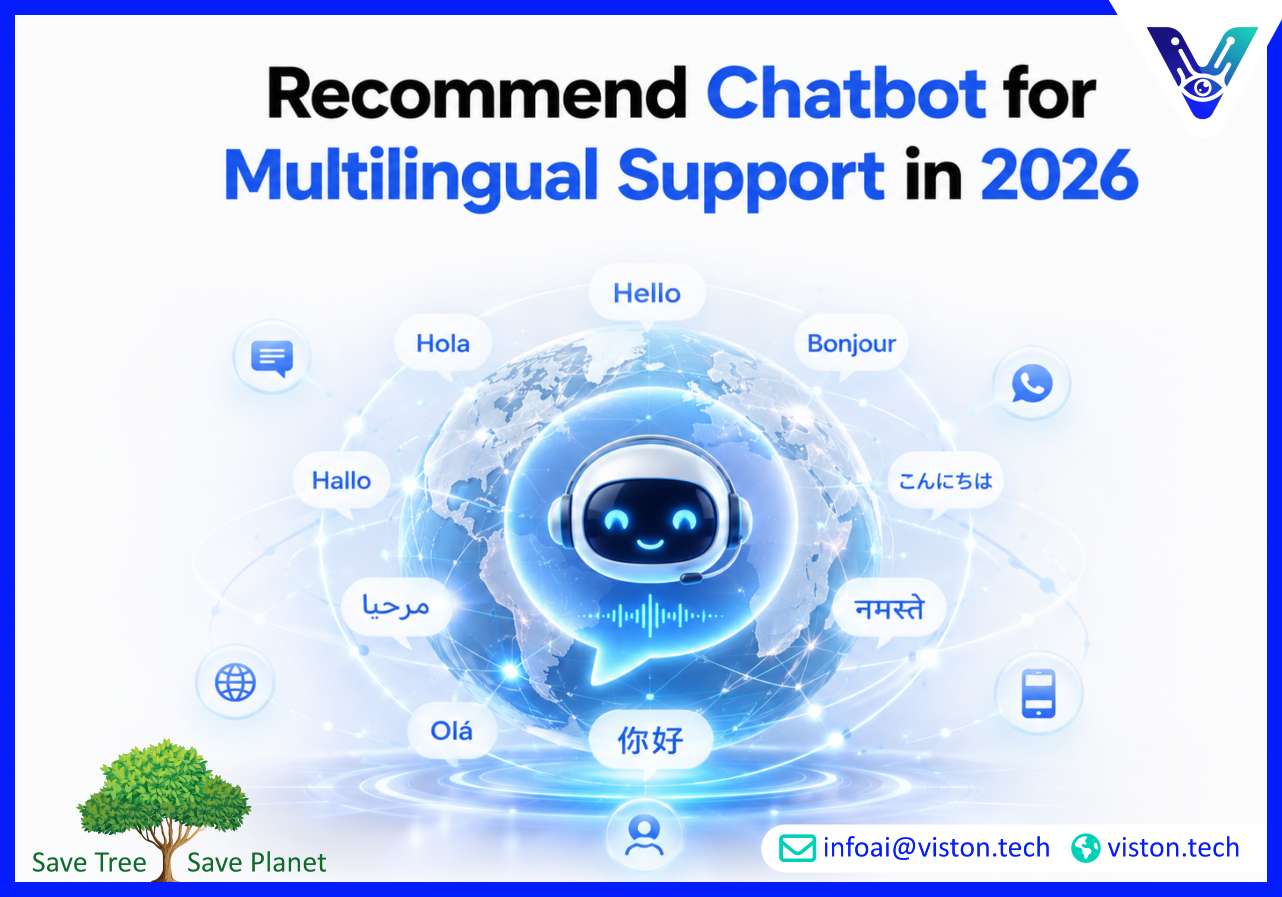
Recommend Chatbot for Multilingual Support in 2026
In today’s global digital economy, businesses are no longer limited by geography—but language barriers still remain a major challenge. A multilingual chatbot has become a critical solution for organizations that want to deliver consistent customer experiences across different regions. In 2026, companies operating globally must prioritize conversational systems that can understand, respond, and adapt across multiple languages in real time.
Why Multilingual Chatbots Matter for Global Businesses
A multilingual chatbot is an AI-powered conversational system capable of interacting with users in multiple languages while maintaining context, accuracy, and intent understanding. For global businesses, this capability is no longer optional—it directly impacts customer satisfaction, conversion rates, and brand trust.Modern customers expect instant support in their preferred language. When this expectation is not met, businesses often face higher drop-off rates, lower engagement, and lost revenue opportunities.In 2026, multilingual chatbot systems play a key role in:
Global customer support automation
Cross-border ecommerce assistance
International lead generation
Localized onboarding experiences
24/7 customer engagement across regions
Key Capabilities to Look for in a Multilingual Chatbot
1. Real-Time Language Detection
A strong multilingual chatbot automatically detects the user’s language and responds without requiring manual selection. This improves usability and reduces friction during first interactions.
2. High-Accuracy Natural Language Understanding (NLU)
Understanding intent across languages is more complex than translation. The chatbot must accurately interpret meaning, context, and cultural nuances to respond appropriately.
3. Seamless Translation Engine Integration
Advanced chatbots integrate with AI translation systems to ensure consistent responses across languages while preserving tone and intent.
4. Omnichannel Language Support
Multilingual capability must extend across all channels including websites, mobile apps, WhatsApp, social media, and customer portals.
5. Context Retention Across Languages
Users may switch languages during conversations. A robust chatbot maintains context without restarting the interaction flow.
6. Regional Customization and Cultural Adaptation
Beyond language, businesses must adapt tone, phrasing, and recommendations based on regional expectations and cultural behavior patterns.
Types of Chatbots for Multilingual Support
Rule-Based Multilingual Chatbots
These chatbots rely on predefined scripts translated into multiple languages. They are suitable for simple workflows but lack flexibility for complex queries.
AI-Powered NLP Chatbots
These systems use machine learning and natural language processing to understand user intent across languages. They are more scalable and adaptable for global operations.
Hybrid Multilingual Chatbots
A combination of rule-based logic and AI-driven intelligence, hybrid systems are widely used in enterprise environments where accuracy and control are both important.
LLM-Based Conversational AI Systems
Modern large language model (LLM) chatbots provide advanced multilingual capabilities, enabling natural, human-like conversations across dozens of languages with strong contextual awareness.
Business Use Cases of Multilingual Chatbots
Global Customer Support
Businesses can resolve customer queries in real time without language barriers, reducing dependency on multilingual human agents.
International Ecommerce
Multilingual chatbots assist users with product discovery, checkout support, and order tracking in their native language, improving conversion rates.
Lead Generation and Sales
Sales chatbots can qualify leads across regions by engaging users in their preferred language and collecting relevant business information.
Travel and Hospitality
Hotels, airlines, and travel platforms use multilingual chatbots to assist global travelers with bookings, inquiries, and itinerary management.
Financial Services
Banks and fintech companies use multilingual chatbots to support customers with transactions, account queries, and financial guidance across regions.
Benefits of Implementing Multilingual Chatbots
Improved Customer Experience
Users feel more comfortable interacting in their native language, which increases satisfaction and trust.
Higher Engagement Rates
Localized communication improves response rates and reduces drop-offs during conversations.
Reduced Operational Costs
Automating multilingual support reduces the need for large international support teams.
Faster Global Expansion
Businesses can enter new markets faster without building separate support infrastructures for each region.
24/7 Global Availability
AI chatbots ensure uninterrupted service across time zones and languages.
Challenges in Multilingual Chatbot Implementation
Language Complexity and Accuracy
Some languages have complex grammar structures and cultural nuances that require advanced AI modeling.
Data Quality and Training Limitations
Low-quality training data can reduce accuracy in certain languages, especially less commonly used ones.
Integration with Business Systems
Multilingual chatbots must connect with CRM, ERP, and support systems to provide consistent responses.
Maintaining Consistent Tone Across Languages
Ensuring brand consistency across translations is a major challenge for global organizations.
Compliance and Data Privacy
Different countries have varying data protection regulations that must be followed during chatbot interactions.
How Viston AI Supports Multilingual Chatbot Development
Viston AI specializes in AI Chatbot Development solutions designed to help global businesses implement scalable multilingual conversational systems. As organizations expand into international markets, the need for consistent, localized, and intelligent customer communication becomes essential.Viston AI focuses on building chatbot systems that combine natural language understanding, real-time translation capabilities, and enterprise system integration. These solutions are designed to support multilingual customer engagement across industries such as ecommerce, SaaS, healthcare, travel, and financial services.In global deployments, multilingual chatbot success depends on more than translation—it requires intelligent conversation design, contextual memory handling, CRM integration, and workflow automation. Viston AI develops systems that address these requirements while ensuring scalability and performance across multiple regions.By aligning chatbot behavior with business goals, Viston AI helps organizations improve customer engagement, reduce operational complexity, and deliver consistent experiences across languages and markets. This makes it easier for businesses to expand globally without rebuilding their support infrastructure for every new region.
Frequently Asked Questions
What is a multilingual chatbot?
A multilingual chatbot is an AI system that can communicate with users in multiple languages while maintaining context, intent, and conversational accuracy.
How do multilingual chatbots work?
They use natural language processing, machine translation, and AI models to detect language, interpret user intent, and generate responses in the appropriate language.
Which industries benefit most from multilingual chatbots?
Industries such as ecommerce, travel, financial services, SaaS, healthcare, and global customer support benefit significantly from multilingual chatbot implementation.
Are multilingual chatbots better than human support?
They complement human support by handling high-volume, repetitive queries instantly, while complex cases can still be escalated to human agents.
Can multilingual chatbots improve sales?
Yes. By engaging customers in their preferred language, chatbots increase trust, reduce friction, and improve conversion rates.
Does Viston AI build multilingual chatbot systems?
Yes. Viston AI develops AI chatbot solutions with multilingual capabilities designed for global business operations and scalable customer engagement.
Conclusion
Choosing the right chatbot for multilingual support is essential for businesses operating in global markets. As customer expectations continue to rise in 2026, organizations must invest in AI systems that deliver accurate, context-aware, and culturally relevant communication across languages. Multilingual chatbots help businesses improve engagement, reduce operational costs, and scale internationally with ease. With the right implementation strategy and technology partner, companies can transform customer interactions into seamless global experiences that drive long-term growth and competitive advantage.