
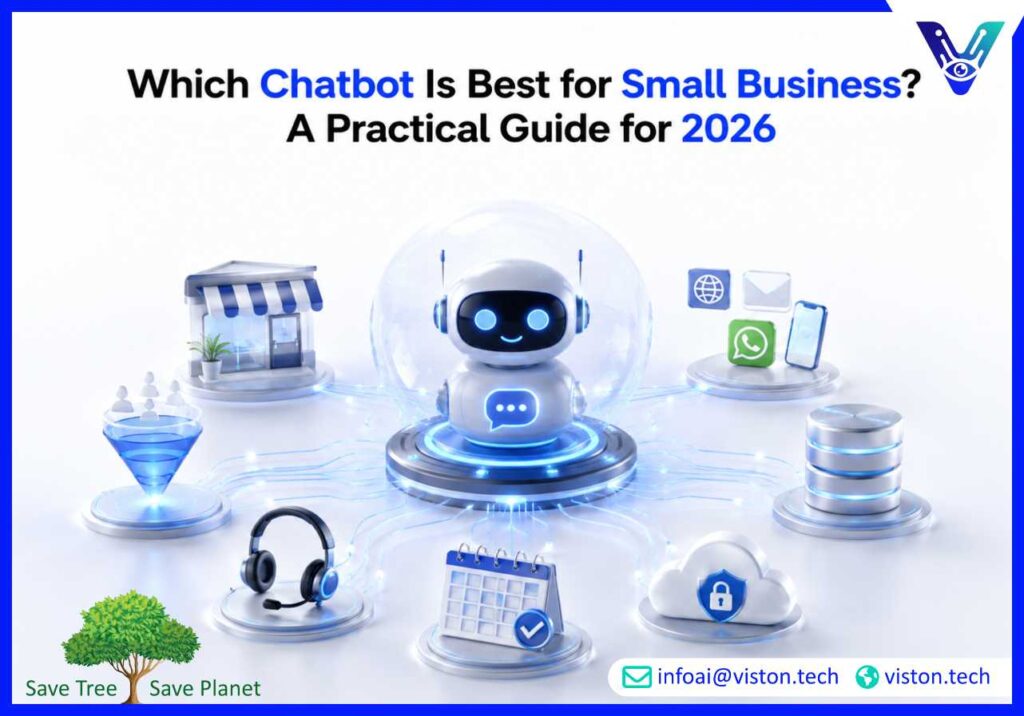
Small businesses are increasingly adopting AI-powered chatbots to improve customer service, automate repetitive tasks, generate leads, and provide faster responses across digital channels. However, with dozens of chatbot platforms available, choosing the right solution can be challenging. The best chatbot for a small business depends on its goals, budget, customer engagement requirements, and integration needs.
Customer expectations continue to rise. Buyers expect immediate responses, personalized interactions, and support outside traditional business hours. Small businesses often operate with limited staff, making it difficult to deliver consistent service at scale.
Modern chatbots help businesses:
As AI technology advances, chatbots are becoming more capable of understanding customer intent, accessing business data, and integrating with existing business systems.
The best chatbot is not necessarily the platform with the most features. It is the solution that aligns with specific business requirements and delivers measurable value.
Small businesses often need solutions that can be deployed quickly without extensive technical resources. User-friendly setup processes and straightforward integrations reduce implementation complexity.
A chatbot becomes significantly more valuable when connected to CRM systems, customer support platforms, appointment scheduling tools, ecommerce systems, and marketing automation software.
Businesses should select a chatbot that can support future growth without requiring complete redevelopment as customer volumes increase.
Modern chatbots should provide natural language processing, workflow automation, knowledge base integration, and intelligent routing capabilities.
Performance measurement is essential. Businesses should evaluate reporting features that provide insights into customer interactions, conversions, response times, and chatbot effectiveness.
These chatbots primarily focus on answering common customer questions, providing support resources, and routing inquiries to appropriate teams.
They are ideal for:
Lead-focused chatbots engage website visitors, qualify prospects, collect contact information, and schedule consultations.
They are commonly used by:
Ecommerce-focused chatbots assist shoppers with product discovery, recommendations, order tracking, and purchase support.
These solutions are particularly valuable for online retailers seeking to improve customer experiences and increase conversions.
Advanced AI chatbots operate across multiple communication channels, including websites, WhatsApp, Facebook Messenger, email workflows, and mobile applications.
These solutions provide consistent customer experiences regardless of where conversations begin.
Rather than focusing solely on features, small businesses should evaluate chatbot solutions based on business outcomes.
Businesses receiving high volumes of repetitive inquiries often benefit from support-focused automation.
If customer acquisition is a priority, businesses should prioritize chatbot capabilities that support qualification, scheduling, and CRM integration.
Different industries have unique requirements. Healthcare organizations may require compliance-focused workflows, while ecommerce businesses prioritize product recommendations and order management.
Businesses should identify which existing systems need to connect with the chatbot before selecting a solution.
Costs extend beyond software subscriptions. Businesses should consider implementation, customization, integration, maintenance, optimization, and support expenses.
Many chatbot projects fail to achieve expected results because businesses focus on technology rather than business objectives.
Common mistakes include:
A successful chatbot strategy begins with identifying business needs and customer expectations rather than simply choosing the most popular platform.
For many small businesses, the challenge is not finding chatbot software but implementing a solution that genuinely supports business objectives. Viston AI specializes in AI Chatbot Integration, helping organizations connect conversational AI with real-world business processes, customer journeys, and operational systems.
Effective chatbot deployment often requires more than basic chatbot functionality. Businesses may need integrations with CRM platforms, customer support systems, marketing automation tools, scheduling software, knowledge bases, and communication channels. Proper integration ensures that chatbot interactions contribute to measurable business outcomes rather than operating as isolated automation tools.
Viston AI focuses on helping businesses design chatbot experiences that improve customer engagement, automate routine tasks, support lead generation, and enhance operational efficiency. By aligning chatbot technology with practical business goals, organizations can build scalable solutions that continue delivering value as customer expectations evolve.
As AI adoption accelerates in 2026, small businesses increasingly benefit from chatbot strategies that prioritize usability, integration, security, scalability, and measurable performance.
The best chatbot depends on your business goals, customer interaction needs, integration requirements, and budget. There is no single solution that fits every business.
AI-powered chatbots can provide significant value by automating customer support, lead generation, appointment booking, and repetitive business processes.
Yes. Many modern chatbot solutions integrate with CRM platforms, enabling businesses to manage customer information, automate workflows, and improve personalization.
Costs vary depending on platform selection, customization requirements, integrations, AI capabilities, and ongoing support needs. Businesses should evaluate total implementation costs rather than subscription fees alone.
Yes. Viston AI specializes in AI Chatbot Integration, helping businesses connect chatbot technology with CRM systems, support platforms, communication channels, and operational workflows.
Choosing which chatbot is best for a small business depends on the organization’s objectives, customer expectations, integration requirements, and growth plans. Businesses that focus on practical outcomes rather than feature lists are more likely to achieve successful implementations. Whether the goal is customer support automation, lead generation, sales assistance, or operational efficiency, a well-integrated chatbot can deliver substantial value. In 2026, organizations that prioritize thoughtful AI Chatbot Integration strategies will be better positioned to create efficient, scalable, and customer-focused digital experiences. Viston AI supports businesses seeking to implement chatbot solutions that align technology with measurable business goals.
