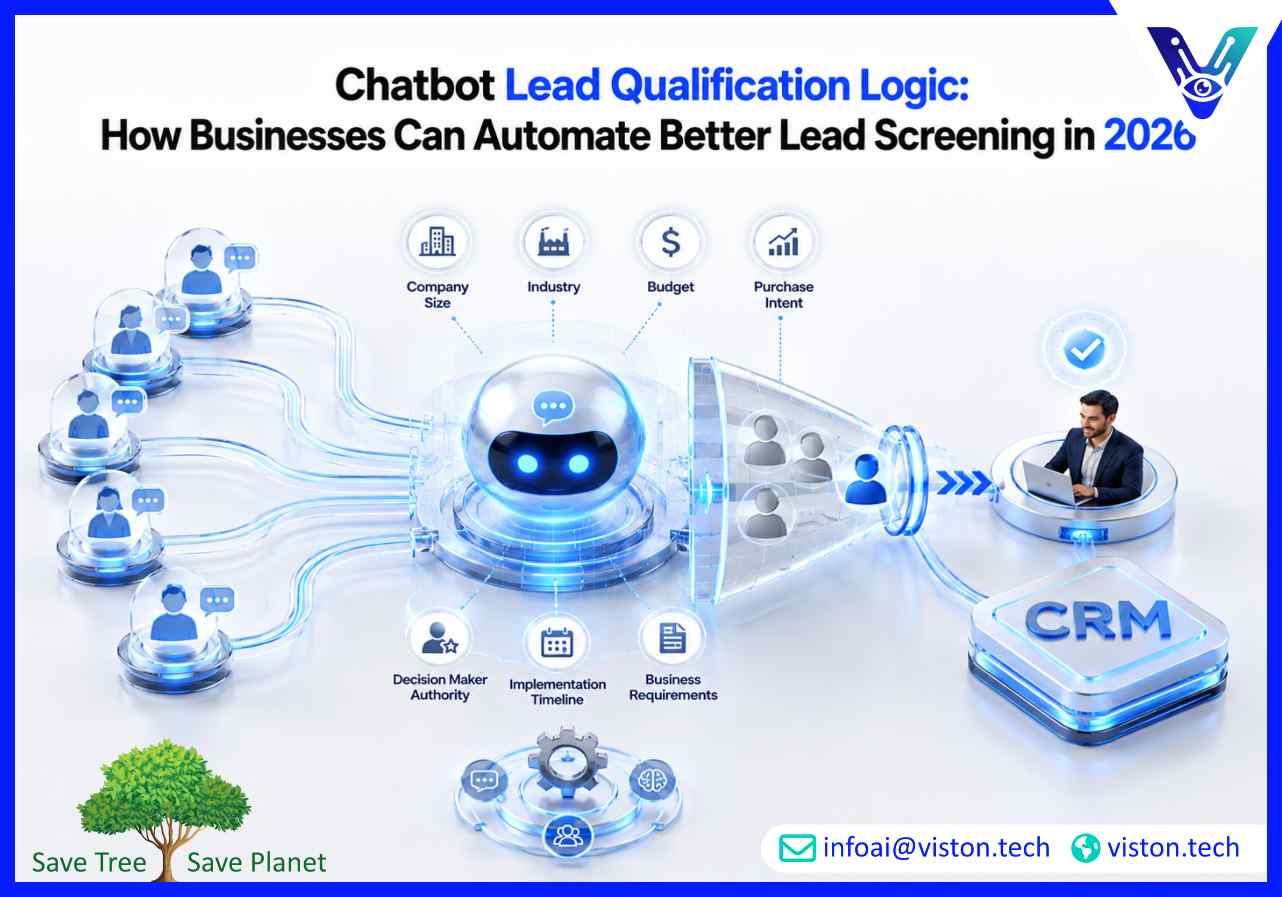
Chatbot Lead Qualification Logic: How Businesses Can Automate Better Lead Screening in 2026
Generating leads is only the first step in the sales process. The real challenge lies in identifying which prospects are genuinely ready to engage, purchase, or move further down the pipeline. In 2026, businesses are increasingly using chatbot lead qualification logic to automate this process, improve sales efficiency, and ensure high-value opportunities reach the right teams faster. Well-designed qualification workflows help organizations reduce manual effort while delivering faster and more personalized customer experiences.
What Is Chatbot Lead Qualification Logic?
Chatbot lead qualification logic refers to the rules, workflows, decision trees, AI models, and conversation frameworks that determine whether a prospect meets predefined qualification criteria.Instead of collecting basic contact information and passing every inquiry to sales teams, modern AI chatbots can evaluate lead quality during the conversation itself.The qualification process typically considers factors such as:
Business size
Industry
Budget availability
Decision-making authority
Purchase timeline
Business requirements
Current challenges
Product or service interest
The objective is to identify high-intent prospects while providing helpful guidance to leads that may require additional nurturing.
Why Chatbot Lead Qualification Matters in 2026
Sales teams face increasing pressure to improve conversion rates while managing growing volumes of inbound inquiries across multiple channels. Manual qualification processes often create delays, inconsistencies, and missed opportunities.Effective chatbot lead qualification logic helps businesses:
Respond instantly to inquiries
Reduce sales team workload
Improve lead quality
Accelerate sales cycles
Increase conversion rates
Deliver personalized customer experiences
Improve CRM data accuracy
Support scalable growth
As AI-powered customer engagement becomes more sophisticated, businesses are shifting from simple lead capture forms toward conversational qualification strategies that provide immediate value to prospects.
Core Components of Effective Chatbot Lead Qualification Logic
Intent Identification
The first step is understanding why the visitor initiated the conversation.Common intents include:
Requesting pricing information
Seeking a product demonstration
Comparing solutions
Researching options
Looking for implementation support
Exploring service capabilities
Accurate intent recognition allows the chatbot to route conversations through the most relevant qualification path.
Progressive Information Gathering
Rather than overwhelming users with lengthy questionnaires, modern qualification logic collects information gradually throughout the conversation.Examples include:
Company size
Industry sector
Current business challenges
Technology environment
Project objectives
Expected timeline
This approach feels more natural and typically improves completion rates.
Lead Scoring Rules
Qualification logic often includes scoring mechanisms that assign values to specific responses.For example:
Enterprise company = Higher score
Immediate implementation need = Higher score
Decision-maker role = Higher score
Defined budget = Higher score
Specific business requirement = Higher score
Leads that exceed a predefined threshold can be automatically routed to sales representatives.
Dynamic Conversation Paths
Modern AI chatbots do not follow rigid scripts.Instead, qualification logic adapts based on user responses.For example:
A startup may receive different questions than an enterprise organization.
An ecommerce company may require a different qualification flow than a healthcare provider.
A prospect requesting pricing may follow a different path than someone seeking technical integration support.
Dynamic logic creates more relevant and engaging conversations.
Best Practices for Building Chatbot Lead Qualification Workflows
Start With Clear Qualification Criteria
Before building chatbot workflows, businesses should define what constitutes a qualified lead.This often involves collaboration between:
Sales teams
Marketing departments
Customer success teams
Business leadership
Qualification standards should align with actual sales objectives and customer profiles.
Keep Conversations User-Centric
Qualification should feel like a helpful conversation rather than an interrogation.Users are more likely to engage when they receive useful information alongside qualification questions.For example, after understanding a user’s requirements, the chatbot can recommend relevant resources, solutions, or next steps.
Integrate With CRM Systems
Qualification logic becomes significantly more valuable when connected to CRM platforms.CRM integration enables:
Automatic lead creation
Contact enrichment
Lead scoring updates
Sales notifications
Pipeline management
Performance reporting
Real-time synchronization helps ensure sales teams receive complete and actionable lead information.
Enable Human Handoffs
High-value leads often benefit from immediate human engagement.Effective qualification logic should trigger handoffs when:
Lead scores exceed thresholds
Users request live assistance
Complex requirements emerge
Sales opportunities are identified
This ensures qualified prospects do not experience unnecessary delays.
Common Chatbot Lead Qualification Mistakes to Avoid
Many organizations implement chatbot qualification workflows but fail to achieve expected results because of avoidable design issues.
Asking Too Many Questions Too Early
Lengthy qualification sequences often increase abandonment rates. Businesses should prioritize collecting only the information necessary to advance the conversation.
Using Generic Qualification Logic
Every industry and sales process has unique requirements. Generic workflows often fail to identify meaningful opportunities.
Ignoring Customer Context
Returning visitors, existing customers, and new prospects may require different qualification paths.
Failing to Update Qualification Models
Buyer behavior evolves over time. Qualification criteria should be reviewed and optimized regularly using conversation analytics and sales performance data.
Lack of System Integration
Disconnected chatbots create information silos and reduce operational efficiency. Integration with CRM, marketing automation, and reporting platforms is essential.
How Viston AI Helps Businesses Build Smarter Lead Qualification Workflows
For organizations investing in AI chatbot integration, lead qualification represents one of the highest-impact automation opportunities. Viston AI develops chatbot integration solutions that help businesses create intelligent qualification workflows aligned with real sales processes and customer journeys.Effective chatbot lead qualification logic requires more than scripted conversations. It involves workflow design, CRM integration, conversation intelligence, automation rules, lead scoring frameworks, reporting capabilities, and seamless handoffs between AI systems and sales teams. Viston AI focuses on integrating conversational AI into broader business ecosystems so organizations can capture, qualify, route, and manage leads more efficiently.As customer expectations continue to evolve in 2026, businesses increasingly benefit from chatbot qualification systems that combine automation with personalization. By connecting AI-driven conversations with operational workflows and business data, organizations can improve lead quality, accelerate response times, and support scalable revenue growth.
Frequently Asked Questions
What is chatbot lead qualification logic?
Chatbot lead qualification logic is the set of rules, workflows, and AI-driven decision processes used to assess whether a prospect meets predefined qualification criteria before being passed to sales teams.
How do chatbots qualify leads automatically?
Chatbots gather information through conversations, evaluate responses against qualification criteria, assign lead scores, and route prospects based on business-defined workflows.
Can chatbot qualification improve sales efficiency?
Yes. Automated qualification helps sales teams focus on high-value opportunities while reducing time spent on unqualified inquiries and manual data collection.
What systems should chatbot qualification workflows integrate with?
Most businesses benefit from integrating qualification workflows with CRM platforms, marketing automation systems, analytics tools, customer support platforms, and sales engagement software.
Can Viston AI help businesses implement chatbot lead qualification logic?
Yes. Viston AI provides AI chatbot integration services that help businesses design, implement, and optimize lead qualification workflows connected to existing sales and customer engagement systems.
Conclusion
Chatbot lead qualification logic has become an essential component of modern sales and customer engagement strategies. By automating lead assessment, gathering meaningful prospect data, and integrating directly with business systems, organizations can improve lead quality while reducing operational workload. Successful AI chatbot integration requires thoughtful workflow design, CRM connectivity, intelligent routing, and continuous optimization. As businesses continue expanding automation initiatives in 2026, chatbot lead qualification workflows will play a critical role in helping sales teams focus on the opportunities most likely to generate measurable business results. Organizations seeking scalable qualification solutions can benefit from specialist AI chatbot integration expertise from Viston AI.